

Nohée Book Prize 2026 : Alexis Salatko Wins
Nohée Book Prize 2026: The Child with His Head Bowed by Alexis Salatko
Today, 8:36 AM PT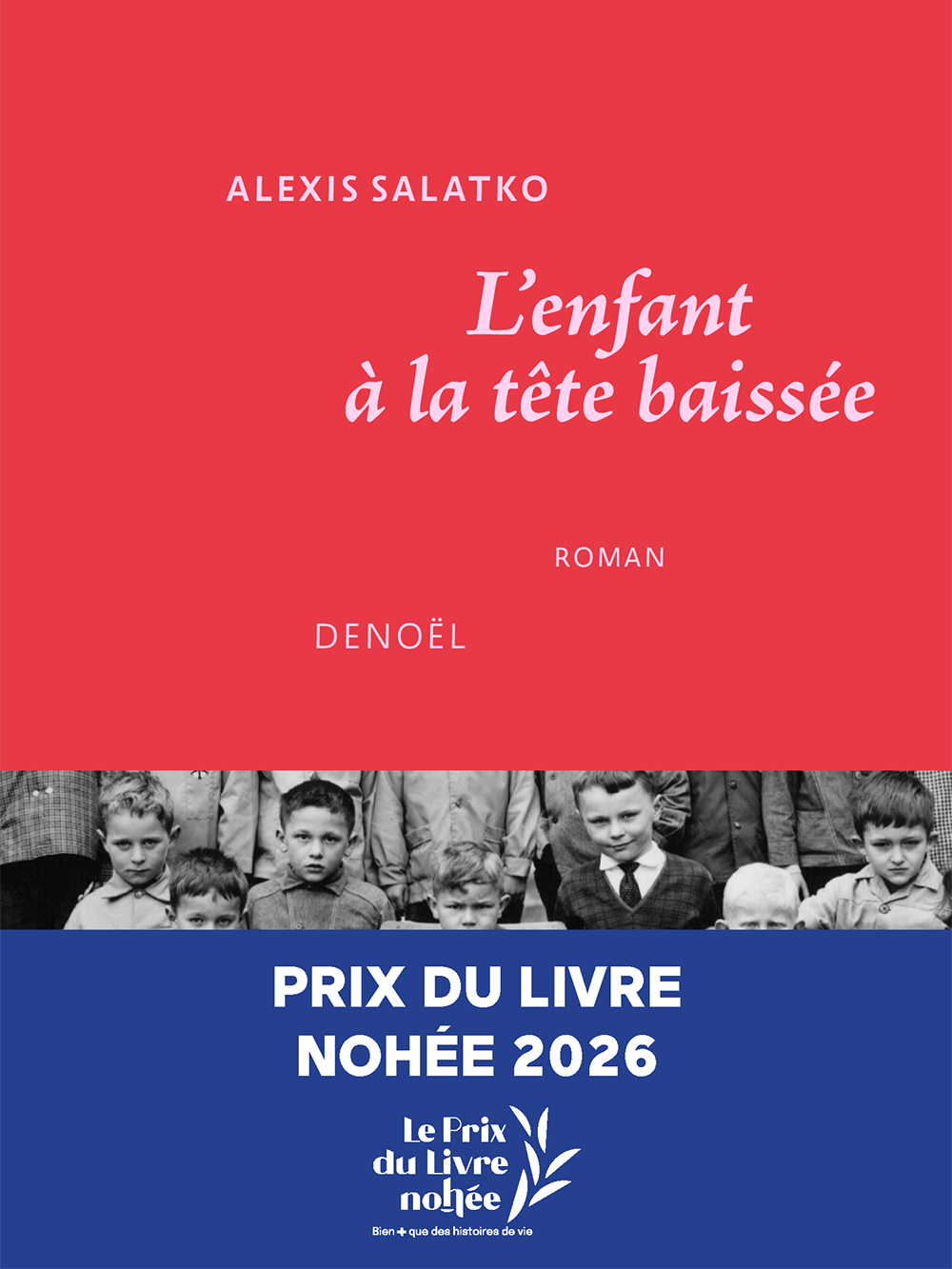
Alexis Salatko won the 2026 Nohée Book Prize for L’enfant à la tête baissée, published by Denoël on August 20, 2025. This prize, worth €5,000, is awarded to a novel or short story in French that explores the themes of family and legacy. According to a press release from the organizers, the book received four of the jury’s six votes, beating out On l’appelait Bennie Diamond by Michaël Dichter and Loin du Mékong by Louis Raymond, both published in January 2026 by Les Léonides and Calmann-Lévy, respectively.
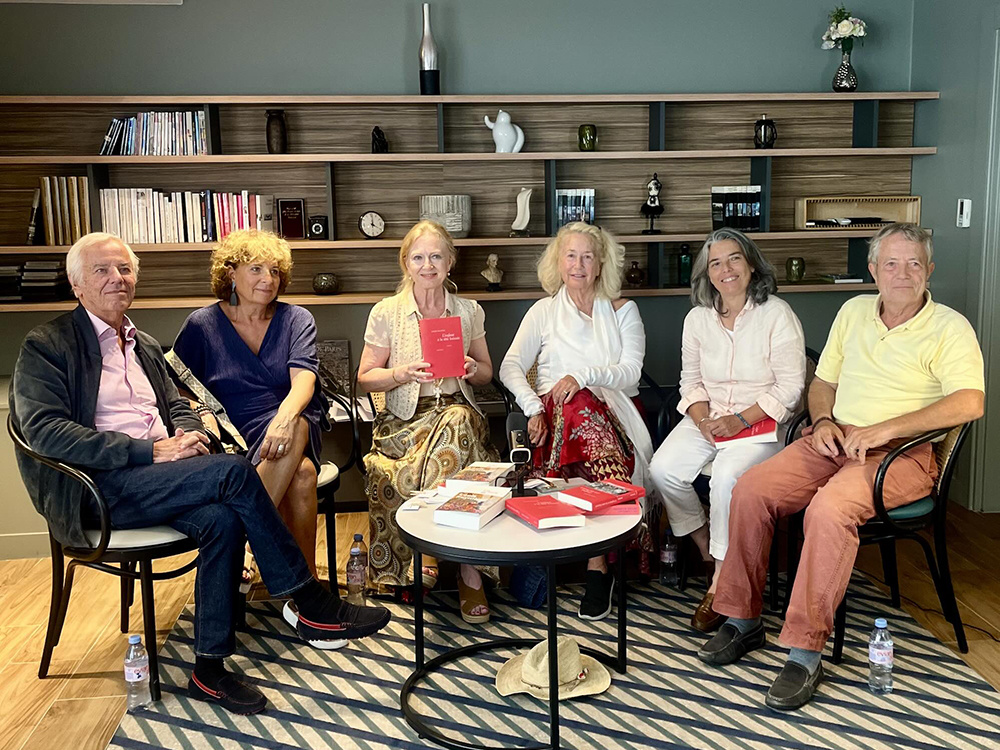
The decision was made on September 14 at the Nohée Issy-les-Moulineaux Residence – Media Library. Chaired by Brigitte Fossey, the jury included Éric Bouhier, Philippe Grimbert, Francesca Mantovani, and Pascale Senk. Unable to attend, Élodie Fondacci submitted her vote to the award’s secretary general, Florence Batisse-Pichet. Residents and book club ambassadors were present for the discussion, the vote, and the tallying of votes—a telling detail for an award in which readers participate well before the final result is announced.
The child with his head bowed transforms the isolation of childhood into a literary work
At the heart of this book is a child who is unable to eat in the presence of others. In his presentation for the Mollat bookstore, Alexis Salatko discusses the fear that shaped his childhood and how his family responded to it. The story takes place in Cherbourg, where the father is a cardiologist and the mother once taught philosophy. Books become an essential resource in a household that struggles to understand the child’s relationship with food and the outside world.
This connection gives the title a dual meaning. A bowed head evokes physical fragility, but also recalls the posture of someone reading or writing. Mollat’s presentation highlights this transformation, which the jury’s comments further emphasize. For an award dedicated to the transmission of knowledge, the relationship between mother and child is particularly relevant: what is passed between them is a love of words, even when other forms of care seem unable to reach the child.

Why the jury chose the winning book
The comments provided by the organizers reveal several ways of approaching this same work. Brigitte Fossey focused on the long interval that elapsed before Alexis Salatko was able to put his hidden suffering into writing. Her interpretation centers on the emergence of a voice: that of the child who, though unable to eat in front of others, nevertheless absorbed her surroundings, preserving experiences that would eventually become literature. She presented the book as the story of a writer’s birth, thereby lending the theme of transmission—chosen for this award—a decidedly intimate dimension.
Philippe Grimbert spoke of realizing this much more quickly, saying he knew within the first three or four pages that this book would become his favorite. He praised its humor, inventive phrasing, unbridled energy, and unforgettable characters. His observation that the figure with its head bowed could be that of a reader skillfully draws a connection between the title, the story, and those discovering it today.
For Francesca Mantovani, the emotional power lay in the child’s resilience, the role of writing, and her encounter with Jacques Prévert. Pascale Senk highlighted the alternation between brilliant passages and a more direct narrative, while emphasizing the dysfunctional nature of the family and the humor of the mother’s character. She approached the book more as a personal account than as a coming-of-age novel.
The most striking anecdote about reading the book came fromÉric Bouhier, who said he had highlighted about a hundred pages and taken numerous notes. The references to literature, film, painting, and theater gave the work an unusual cultural richness. At first, he thought he was reading a fairy tale before realizing its autobiographical nature. His account helps explain the diversity of the jury’s reactions: the story sparked discussions both as a childhood memory, as a literary creation, and as an imaginary world in its own right.
Senior readers are shaping the Nohée Literary Prize
Established in 2020, the award will mark its seventh edition in 2026. According to the organizers, the selection process begins with the Nohée book clubs, which operate in 39 residential facilities in partnership with Mollat. Residents choose three finalists from among six books; the jury then selects the winner. The announcement is accompanied by celebrations within the clubs.
The 2026 selection announced by Nohée confirms the scope of this first round. Alongside the finalists were Une mère en fuite by Michka Assayas, Nourrices by Séverine Cressan, and Haute-Folie by Antoine Wauters. This system gives residents a decisive role: their choices determine which books will be submitted to the jury.
Previous winners put Alexis Salatko in good company. Anne Icart received the first prize in 2020 for Lettres de Washington Square, followed by Olivier Mak-Bouchard for Le Dit du Mistral in 2021 and Mathias Malzieu for Le Guerrier de Porcelaine in 2022. Marie Charrel won the prize with Les mangeurs de nuit in 2023, François Garde with Mon oncle d’Australie in 2024, and Sandrine Collette with Madelaine avant l’aube in 2025.
A screen-free reading festival is planned at the Postal Museum
The organizers also announced a new initiative open to the public as part of the award: a reading event organized in collaboration with The Offline Club Paris at the Postal Museum. Centered around the winning book, this event—for which registration will be required—will begin with a silent group reading, followed by discussions and a tour of the museum’s collections. The date has not yet been specified in the announcement.
This event is being held as part of the exhibition Once Upon a Time… La Poste and Fairy Tales, scheduled to run from November 18, 2026, to April 19, 2027. The museum is located at 34 Boulevard de Vaugirard, in Paris’s 15th arrondissement. The intersection of postal heritage and fairy tales provides a fitting setting for an award dedicated to the way stories are passed down from one person to another and from one generation to the next. Please do not confuse the exhibition dates with those of the reading event, which have not yet been confirmed.
Photos : Copyright Eric Garault
(Source: press release)