

Barco : HDR Cinema Comes Home to Kinepolis Kortrijk
Belgium’s First HDR by Barco Auditorium to Open at Kinepolis Kortrijk
Yesterday, 1:20 PM PT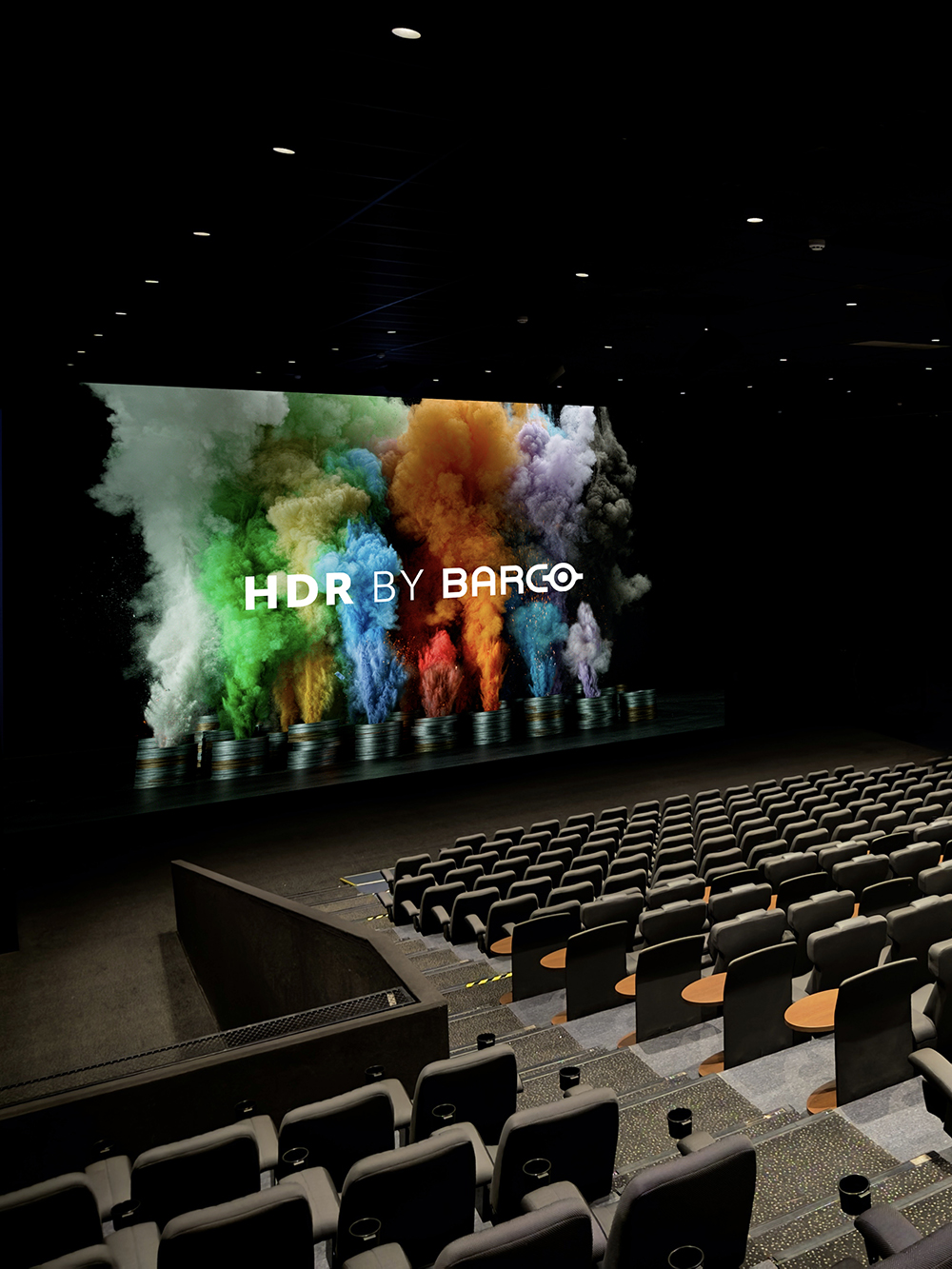
Belgium is preparing to welcome its first HDR by Barco auditorium, and the location gives the announcement particular significance. According to Barco’s October 29 announcement supplied to the press, the company has partnered with Kinepolis to introduce the premium cinema format at Kinepolis Kortrijk, close to its headquarters. Construction is underway, with the official opening scheduled for November 18, 2026. The upgraded auditorium will combine HDR by Barco projection with immersive audio and premium seating. For the two companies, it extends a relationship that has already helped bring successive generations of digital and laser projection into cinemas.
HDR by Barco Returns to Its Belgian Hometown
The homecoming is central to the announcement. Carl Rijsbrack, Barco Cinema’s Senior Vice President of Strategy and Product, describes the Belgian debut as especially meaningful because it is taking place in Kortrijk. Gerwin Damberg, Executive Vice President of Barco Cinema, makes the connection explicit: “HDR by Barco was invented here, so bringing it home to Kortrijk with Kinepolis closes a circle for us.”
That international journey began with a public pilot rather than an immediate worldwide rollout. In April 2024, Barco announced plans to introduce the technology at selected AMC, B&B Theatres and Regal locations in the United States, targeting major markets including Los Angeles, New York and Dallas for the holiday season. Its 2025 annual reporting subsequently identified CinemaCon in April 2025 as the format’s full market debut following the 2024 pilots.
How Lightsteering Changes Cinema Projection
HDR stands for High Dynamic Range, describing the ability to present a greater range between dark and bright parts of an image. HDR by Barco uses the company’s patented Lightsteering technology to redistribute illumination within the picture. The intention is to give bright areas more impact while preserving shadow detail, rather than simply increasing brightness across the whole screen.
Barco’s technical explanation describes a system that redirects existing light toward the areas that need it and away from darker regions. The manufacturer reports highlights around six times brighter and blacks five times deeper than conventional cinema projection, with a simultaneous contrast ratio of 60,000:1. These are Barco’s stated technology performance figures, rather than measurements independently established for the forthcoming Kortrijk auditorium. [3]
The distinction matters when interpreting the announcement’s promise of highlights more than six times brighter than traditional projection. It concerns the bright elements within a scene, rather than an assertion that every image is uniformly six times brighter. Barco also says its redistribution of light allows greater brightness and contrast in selected areas without requiring a corresponding increase in overall power consumption.
Dedicated HDR Versions Preserve Filmmakers’ Intentions
The presentation system extends beyond the projector. In the supplied announcement, Gerwin Damberg explains that every HDR by Barco title receives a dedicated version, graded and approved by the original creative team. That distinction makes the format a coordinated process between production, post-production and exhibition, with the theatrical image prepared specifically for its display capabilities.
Barco’s original CinemaCon announcement supports that broader approach: the HDR offering was presented as an ecosystem incorporating cinema projectors alongside technology and software tools for studios and post-production professionals. The objective is a continuous workflow from the preparation of a film to its presentation in an equipped auditorium.
For Kinepolis, the emphasis is on what those capabilities contribute to the film itself. Nicolas Hamon, Head of Projection and Sound at Kinepolis Group, says the format allows the operator to show more detail, colour and contrast while doing greater justice to filmmakers’ creative intentions. His comments position technical innovation as a means of improving the audience experience, alongside the auditorium’s seating and sound.
A Partnership with a History of Cinema Firsts
The Kortrijk project follows an established collaboration. In March 2014, Kinepolis and Barco formalised a strategic partnership that included four flagship laser projector installations in Antwerp, Brussels, Madrid and Lomme. The agreement combined equipment deployment with a commitment to developing new cinema concepts together. [5]
A particularly fitting historical detail followed that December. Kinepolis launched Laser ULTRA in Brussels on December 10, 2014, timed to the release of The Hobbit: The Battle of the Five Armies. The concept brought together Barco laser projection and Dolby technology, with Brussels, Antwerp, Lomme and Madrid serving as its first locations.
The relationship continued beyond individual premium screens. Kinepolis’ subsequent corporate account records the August 2016 opening of its ten-screen Breda cinema as Europe’s first all-laser cinema complex, powered by Barco. Against that background, the Belgian HDR debut represents a further development in a long-running collaboration around theatrical image quality.
What Audiences Can Expect at Kinepolis Kortrijk
The October 29 announcement identifies existing HDR by Barco locations in the United States, United Kingdom, Germany, India, Italy and the Netherlands, and references three recent German additions. The confirmed auditorium features in the supplied release are HDR by Barco presentation, immersive audio and premium seating. The announcement does not identify an opening film, ticket prices, auditorium capacity or the specific audio system.
Kinepolis lists the cinema at President Kennedylaan 100A, 8500 Kortrijk. Audiences can consult Kinepolis Kortrijk for venue information and www.hdrbybarco.com for the format’s locations and film information. The immediate milestone remains November 18: a planned commercial homecoming for cinema technology developed in Kortrijk.
(Source : press release)