

SDCC 2026: Inside the Exclusive Composers Roundtable Where Hollywood's New Generation of Film Music Redefined Superhero Storytelling
Thursday 23 July, 2:55 PM PT San Diego, Hilton San Diego Bayfront, salle Indigo 204A 2026-07-23
While blockbuster reveals, surprise celebrity appearances and Hall H presentations traditionally dominate the headlines at San Diego Comic-Con, one of the convention's most consistently rewarding events remains The 12th Annual Musical Anatomy of a Superhero and Other Heroes. Held on July 23, 2026, in the Indigo Room of the Hilton San Diego Bayfront, the panel once again celebrated the artists whose work gives emotional identity to the world's biggest films and television series. Following the discussion, Mulderville was invited to participate in the exclusive composers' press roundtable, continuing a tradition that now spans more than a decade as the only French media outlet granted access to these intimate conversations with some of Hollywood's most influential musical storytellers. Across a series of in-depth interviews with Kris Bowers, Michael Dean Parsons, Mick Giacchino, and Claudia Sarne, one idea emerged repeatedly: modern film music has evolved far beyond simply accompanying spectacular images—it has become one of the primary engines of cinematic storytelling.
Although each composer arrived with a distinctly different background, career path and musical language, their philosophies proved remarkably aligned. Rather than discussing orchestration, technology or genre conventions as ends in themselves, each described music first and foremost as a way of understanding character. Whether scoring a superhero, a historical drama, an intimate documentary or a science-fiction mystery, they consistently returned to the same principle: emotion must always lead the creative process. That common thread has become increasingly evident in contemporary genre filmmaking, where audiences expect scores that deepen psychology rather than merely punctuate action. Throughout the afternoon, it became clear that today's composers are no longer viewed as technical collaborators working in the background, but as creative partners shaping the emotional architecture of entire franchises.
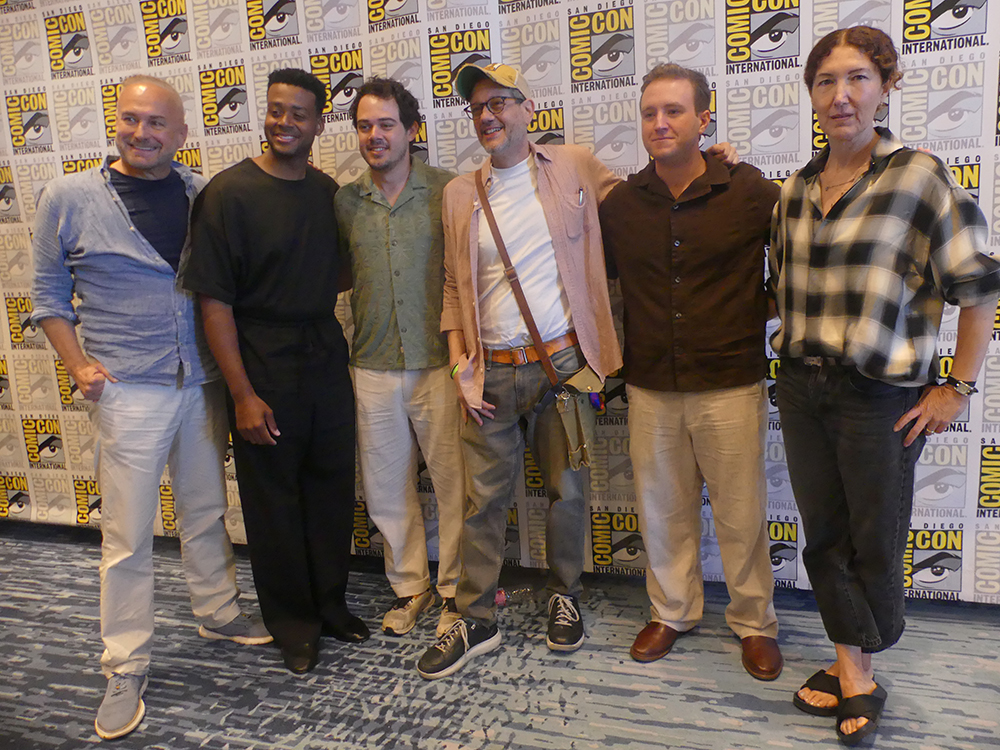
Among the strongest examples of this philosophy was Mick Giacchino, who spoke extensively about Marvel Television's upcoming VisionQuest. Rather than approaching the series as another superhero production, he described it as an intimate exploration of identity, relationships and memory, even jokingly referring to it as "family therapy." His musical approach deliberately avoids relying on familiar Marvel motifs simply for audience recognition, choosing instead to allow returning themes to appear only when they genuinely support the drama. He also revealed how Vision's unique sonic identity emerged through the electronic transformation of live woodwind performances, creating sounds that remain recognisably human while simultaneously feeling artificial—a perfect reflection of the character's dual nature. For Giacchino, orchestration, sound design and electronics are no longer separate disciplines but complementary tools serving emotional storytelling.
A similarly character-driven philosophy guided Claudia Sarne, whose work on Craig Gillespie's Supergirl represents a historic milestone as the first woman to compose the score for a live-action DC superhero feature film. Rather than focusing on superhero spectacle, Sarne explained that her priority was following Kara Zor-El's emotional evolution through grief, anger, revenge and ultimately acceptance. Drawing upon decades of experience that began in London's underground electronic music scene before evolving into collaborations with Atticus Ross and Leopold Ross, she described orchestral writing and electronic textures not as opposing musical languages but as complementary colours available to serve whichever emotional truth a particular scene required. Her reflections demonstrated how years of experimentation across documentaries, independent cinema and television ultimately prepared her for one of the biggest productions of her career without ever abandoning her deeply personal artistic voice.
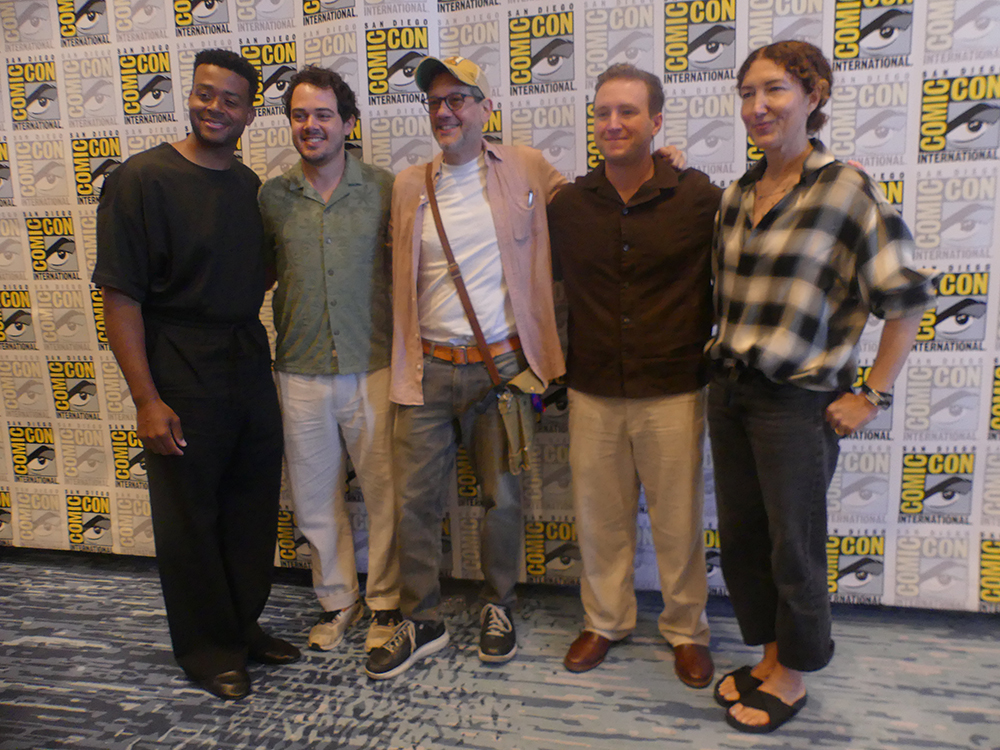
If Sarne illustrated the value of artistic evolution, Kris Bowers embodied the remarkable versatility increasingly expected of today's composers. Equally comfortable writing for jazz ensembles, historical dramas, documentaries, romantic period pieces and superhero adventures, Bowers repeatedly emphasised that genre is never his starting point. Instead, every score begins with character and emotional honesty before any stylistic decisions are made. His background as a pianist and jazz performer continues to influence the organic way his themes develop, while long-standing collaborations with filmmakers have allowed him to refine an approach built on trust rather than spectacle. The conversation also highlighted how his Oscar-winning documentary work and his commitment to music education remain inseparable from his career as a Hollywood composer, illustrating a creative philosophy where artistic excellence and social engagement naturally coexist.
That collaborative spirit also defines the career of Michael Dean Parsons, whose résumé bridges concert music, prestige television and blockbuster cinema. Having worked alongside Kris Bowers, James Newton Howard and numerous other leading composers, Parsons described filmmaking as an inherently collective art in which mentorship, flexibility and collaboration often matter as much as individual authorship. Discussing projects ranging from Spider-Noir to documentaries and major studio productions, he explained that modern composers increasingly move between orchestral concert traditions and streaming platforms that demand cinematic ambitions equal to—or even greater than—many feature films. His perspective offered an illuminating portrait of an industry where composers no longer specialise within rigid categories but adapt constantly to changing forms of visual storytelling without sacrificing their own artistic identities.
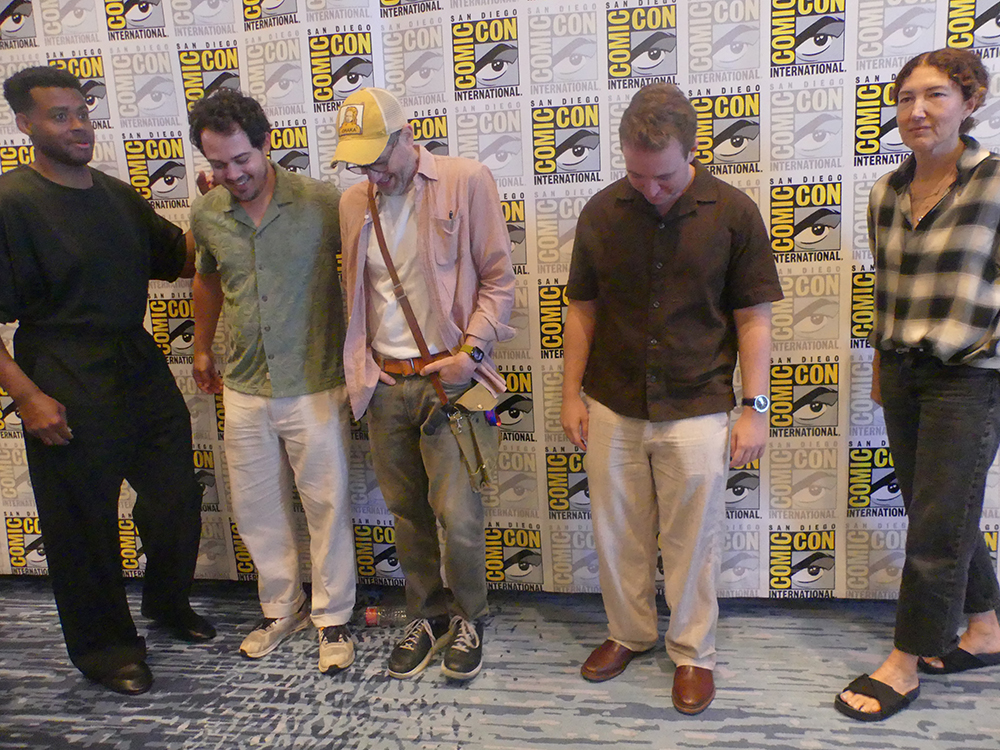
Taken together, the four conversations painted an unusually optimistic portrait of the current state of film music. Despite their different backgrounds—electronic experimentation for Sarne, jazz performance for Bowers, classical composition for Parsons and hybrid orchestral storytelling for Giacchino—they all rejected the idea that blockbuster filmmaking requires formulaic musical solutions. Instead, each demonstrated how deeply personal creative approaches can flourish even within some of the entertainment industry's biggest franchises. Their discussions revealed a generation of composers comfortable blending orchestral traditions with electronic sound design, intimate character studies with large-scale spectacle, and decades of musical history with constantly evolving technology.
Perhaps the most striking conclusion emerging from this year's roundtable was how dramatically Comic-Con itself has changed. Once primarily associated with actors, directors and exclusive footage, the convention now devotes increasing attention to the artists responsible for shaping the emotional memories audiences carry long after the credits roll. The enthusiastic response surrounding The Musical Anatomy of a Superhero and Other Heroes reflects this evolution perfectly, demonstrating that today's fans are as eager to understand the creative decisions behind a memorable score as they are to discover the next blockbuster announcement. For Mulderville, returning once again as the only French publication invited to this exclusive press room, the experience reaffirmed that some of Comic-Con's most fascinating stories are found not only on the convention's biggest stages but also within conversations where composers quietly reveal how music continues to define the emotional soul of modern cinema and television.
You can found our photos in our Flickr page
Photos and video 4K : Boris Colletier / Mulderville