

SDCC 2026: Hiroshi Kanatani celebrates the enduring power of kaiju art
SDCC 2026: Hiroshi Kanatani on Godzilla, Ultraman, Gamera and hand-drawn kaiju art
Monday 27 July, 12:59 AM PT San Diego, San Diego Convention Center, Booth 2304 2026-07-22 → 2026-07-26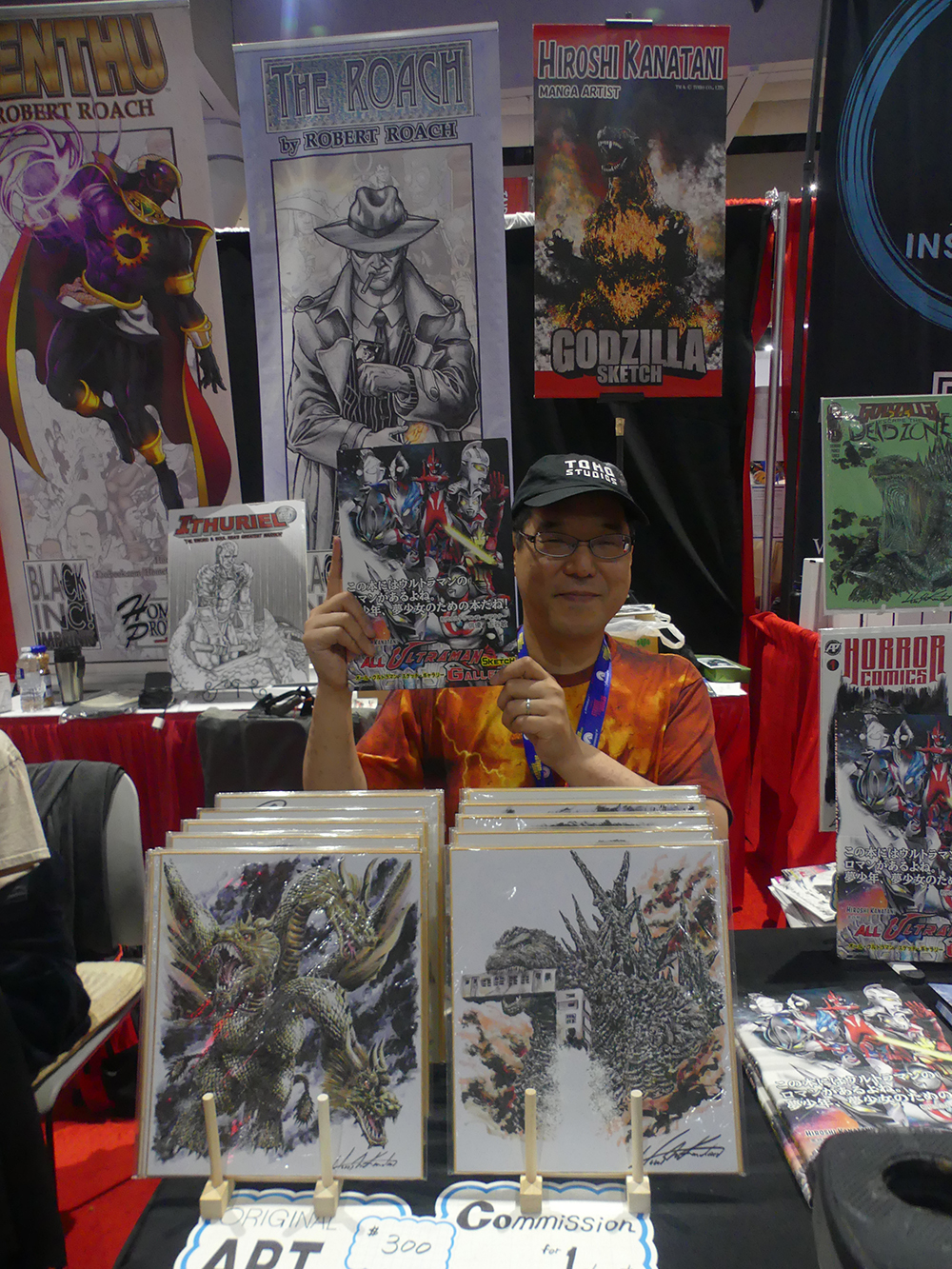
San Diego Comic-Con has long functioned as a crossroads for comics, cinema, television, collectibles and fan cultures from around the world. The 2026 convention ran July 23-26 at the San Diego Convention Center, following Preview Night on July 22. Against that global backdrop, Hiroshi Kanatani brought a particularly personal corner of Japanese pop culture to Booth 2304: hand-drawn monsters, superheroes and manga shaped by a lifelong fascination with kaiju and tokusatsu.
Born and raised in Kagawa Prefecture on Shikoku Island, Hiroshi Kanatani describes childhood as the starting point of everything he does today. He recalled being physically weak when he was young and spending considerable time drawing, watching television and going to the movies. Heroes, giant monsters and animals became recurring obsessions. That detail helps explain an important feature of his art: his kaiju are not simply enormous threats. He approaches them with the eye of someone fascinated by living creatures, silhouettes, movement and personality.
That affection has developed into an international career. His official biography lists manga and illustration work published in Japan, the United States, Hong Kong, Macau and Taiwan, while convention biographies also identify projects associated with major Japanese properties and companies. His credits include Godzilla-related commissions for TOHO, Ultraman and Dinosaur War Izenborg work for Tsuburaya Productions, Gamera material for Kadokawa, and manga based on P-Production heroes such as Spectreman, Lion Maru and Electroid Zaborger. His own creations include Coaraptor: Kaiju of the Wind and Kaiju Cooking.

Godzilla and Ultraman: two icons, one lifelong fascination
Asked about moving between worlds as recognizable as Godzilla and Ultraman, Hiroshi Kanatani did not frame the distinction as a rivalry. Instead, he returned repeatedly to enthusiasm: Godzilla’s extraordinary visibility in the United States, the enduring popularity of the character in Japan, and his own pleasure in drawing many different kaiju. For him, Comic-Con is valuable precisely because the same images can create conversations with fans from different countries.
Ultraman occupies an equally personal place. In another 2026 SDCC interview, Hiroshi Kanatani explained that he had watched Ultraman since childhood and regarded the hero as one of his formative inspirations. His professional connection to that universe has continued for years, and his official portfolio lists numerous Tsuburaya-related titles. That relationship is also visible in All Ultraman Sketch Gallery, a bilingual 112-page hardcover art book scheduled by PIE International for worldwide release on September 1, 2026.
The combination is unusual and revealing. Hiroshi Kanatani works across properties whose histories are distinct, yet his visual language links them through an affection for practical-effects culture, creature design and the dramatic clarity of manga illustration. At SDCC, the result was less a corporate showcase than a conversation about why these characters survive: they remain visually immediate, emotionally legible and endlessly adaptable.

Reviving classic tokusatsu heroes for new generations
Beyond the internationally famous Godzilla, Ultraman and Gamera, Hiroshi Kanatani has devoted substantial energy to older tokusatsu properties. During our conversation, he emphasized his respect for classic heroes while explaining that bringing them back for younger readers sometimes requires reworking stories rather than simply reproducing them. The objective is preservation through renewed accessibility: retain the identity of the original while finding a form capable of speaking to a different generation.
His published credits support that broad interest. The artist’s official site lists work connected to Lion Maru, Electroid Zaborger, Dinosaur War Izenborg, Spectreman and other Japanese special-effects properties. This makes his career a kind of living map of tokusatsu history, extending beyond the handful of brands already familiar to mainstream Western audiences.
That bridge-building role matters at a convention such as SDCC. Fans who arrive because they recognize Godzilla or Ultraman can discover a much larger lineage of Japanese television heroes and monsters through a single artist’s table. Hiroshi Kanatani said that tokusatsu is growing around the world and that showing his work internationally remains both fun and interesting to him. His goal, expressed simply, is to introduce Japanese tokusatsu to audiences everywhere.

Gamera, giant monsters and the pleasure of meeting fans
When the conversation turned to Gamera and future work, Hiroshi Kanatani remained careful about details but enthusiastic about the creative territory. His answer returned to the elemental attraction of scale: he loves drawing giant monsters, American audiences clearly enjoy giant monsters, and conventions allow him to discuss those creatures directly with the people who care about them.
That fan interaction is central to his view of Comic-Con. Rather than treating a convention appearance only as a place to sell books or prints, he described SDCC as an opportunity to meet fans, friends and business partners while showing his work to as many people as possible. His official biography lists appearances at numerous North American and Asian conventions, including San Diego Comic-Con, G-FEST, C2E2, MEGACON and events in Tokyo, Osaka, Macau and Taiwan.
His original series also demonstrates how comfortably he can move from homage to invention. Kaiju Cooking turns the aftermath of giant-monster battles into a comic culinary premise, following restaurateur Haruka Ohara as kaiju destruction unexpectedly becomes a source of ingredients. The series continued in 2025 and 2026 releases, a playful reminder that kaiju storytelling can stretch far beyond destruction scenes and city skylines.

Hand-drawn art in the age of artificial intelligence
The most contemporary part of our discussion concerned artificial intelligence. Hiroshi Kanatani acknowledged that AI-generated imagery has become highly visible in Japan and that the results can be beautiful. His response, however, was not to imitate the technology but to reaffirm what he considers distinctive about his own practice: drawing by hand.
For Hiroshi Kanatani, uniqueness is inseparable from the artist’s physical process and accumulated experience. Every monster he draws carries traces of childhood television, animal observation, decades of manga work and direct contact with fans. That does not make digital tools irrelevant, but it does explain why he believes hand-drawn illustration retains a value that cannot be reduced to surface polish.
At SDCC 2026, that position felt especially appropriate. Comic-Con is increasingly a showcase for global entertainment industries, but it remains rooted in artists, pages, sketches, signatures and face-to-face encounters. Hiroshi Kanatani’s presence offered a compact illustration of that continuity: legendary characters can cross oceans, old tokusatsu can find new readers, and traditional drawing can remain forward-looking without abandoning the hand that made it.
Photos and video 4K : Boris Colletier / Mulderville