

SDCC 2026 Exclusive: Ben Mattes on Building the Next Angry Birds Universe
Friday 24 July, 5:00 PM PT San Diego, Convention Center, stand The Loyal Subjects, 2026-07-24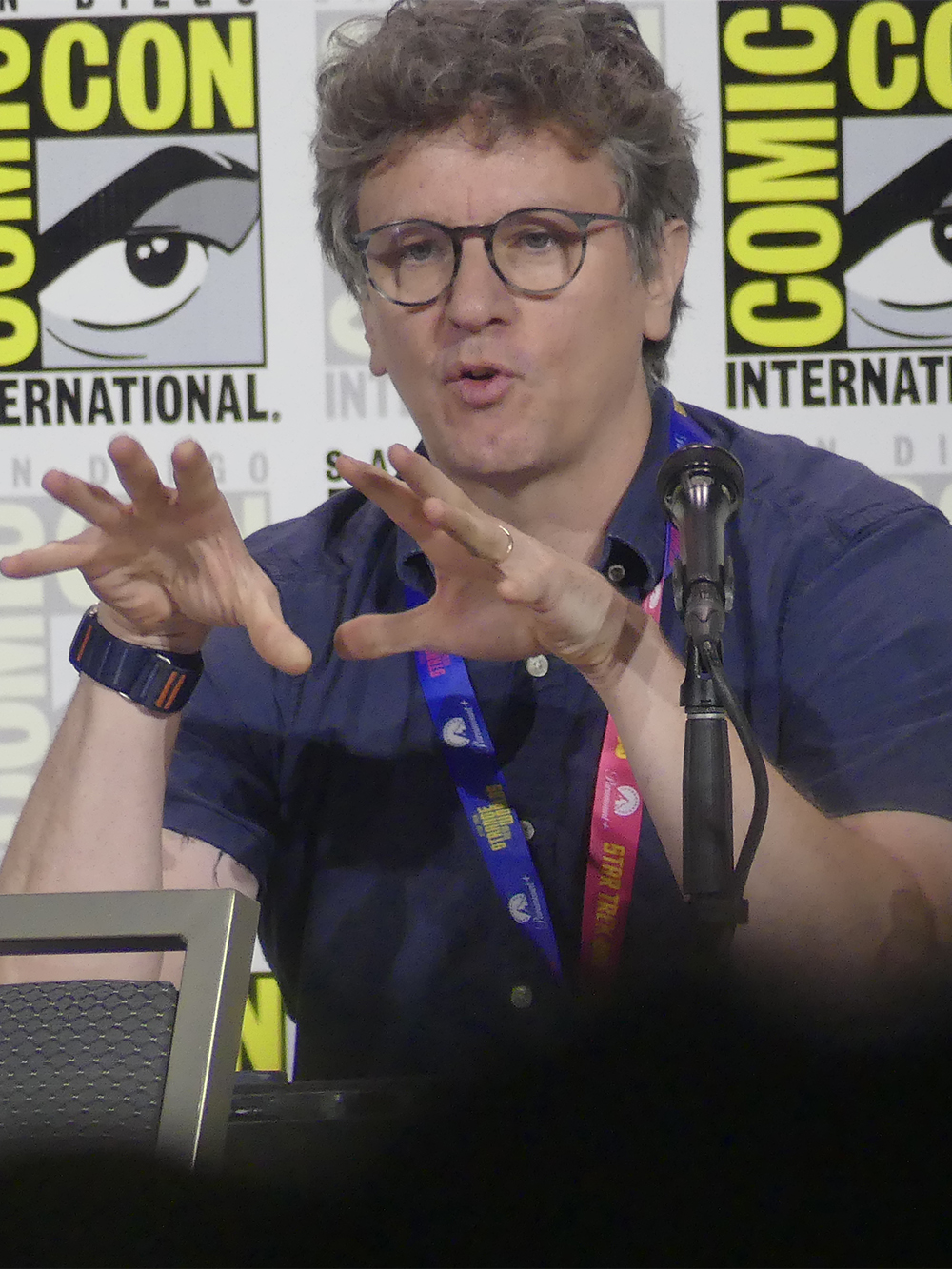
Ben Mattes is one of the key creative voices behind the modern evolution of the Angry Birds franchise. As Creative Officer at Rovio, he oversees the long-term vision of the brand across games, entertainment, licensing, and transmedia projects, helping ensure that Angry Birds continues to evolve while staying true to the charm that made it a global phenomenon. A veteran of the video game industry with decades of experience on acclaimed franchises including Prince of Persia and Far Cry, Mattes brings a unique blend of creative leadership and storytelling expertise to Rovio's flagship property. In this interview, he discusses the future of the franchise, the expanding Angry Birds universe, and what fans can expect in the years ahead.
Q : Angry Birds has remained relevant for more than 15 years. What do you believe is the secret to keeping the franchise fresh while staying true to what fans love about it ?
Ben Mattes : Yeah. So, it's a great question to start with. so I mean I think it starts from a strong uh a strong place, a strong foundation I think, right? So there's a lot of great IP out there. There's a lot of great IP here on the show floor. There's also a lot of new IP. Angry Birds has an incredible legacy, right? It's been around for 17 years and because it reached its crazy peak that it reached in like 2012 or whatever it did and has continued all these years there's incredible awareness. So you stop almost anyone on the show floor and you show them this guy and you say who is this? They're going to know who it is. Maybe they haven't seen all the movies. Maybe they haven't played all the games. Maybe they haven't bought all the toys but they're going to recognize the character. So because of that awareness, we have a really strong opportunity to get permission, right? We have permission to talk to people. We have permission to show them what we're doing, the new movies that we're doing, the new toys that we're doing, the new games that we're doing, and then the onus is on us to do something that they, you know, that they actually like. So that's that strong foundation that we start with. From there, I think we have the benefit of an IP that is very flexible, right? You can be a grandmother and you're playing, you know, Angry Birds super casually while you're waiting for uh to pick up your kids at ballet school. You can be someone who grew up seeing the movies and is going with all their friends because they want to, you know, whatever, relive their nostalgic moments from high school or whatnot. you can be the competitive clans who are playing Angry Birds 2 and then like trading strategies online on YouTube. There's the IP is very flexible. It allows itself to appeal to a lot of different demographics. And then of course we try and take advantage of that. We try and make sure that this game is really tailored to that audience, that this comic or this movie is really going to speak to, for example, the family audience. And some IP, I don't know, The Walking Dead, right? An amazing IP. I'm a huge fan of The Walking Dead. You can't so easily make a casual game with The Walking Dead. You can't so easily make a a kid focused experience with The Walking Dead. With an IP like Angry Birds, you can be serious, you can tell serious stories, and you can have a lot of fun as well.
Q : As Creative Officer, how do you balance nostalgia for longtime fans with the need to attract a new generation of players who may be discovering Angry Birds for the first time ?
Ben Mattes : I mean that's a fantastic question. I would say building those bridges, it is a huge part of my job. I I take it very seriously. You have the people who are diehard classic fans. That's all they want to do is they want to, you know, play the classic games. They want to collect the classic plush. Maybe they look at the movies and they sort of say, "Oh, weird." Like those birds have limbs. And they talk like, "That's not my Angry Birds." And then on the flip side, you have kids, you know, who are going to be going to the theaters in a few months with their parents discovering Angry Birds for the first time. Obviously, we want those families to play the games, to buy the plushs, to read the comics in the same way that we want the nostalgic players to excitedly go see the movies and talk about it online with their friends. One way to do that is we believe to build bridges to give them things whether it be Easter eggs or little bits of trivia or little nods to their favorite experiences that allows them to sort of find elements of their branch of the fandom in these other ones, but then also to try and tell the stories intertwined, right? So to create characters in classic that we then continue to explore in the movies or create uh little snippets in the movies or core scenes in the movies that we then turn into gameplay experiences in the games so that when they find something that they like and they latch on to, we can use that as the bridge to bring them over to other parts of the IP.
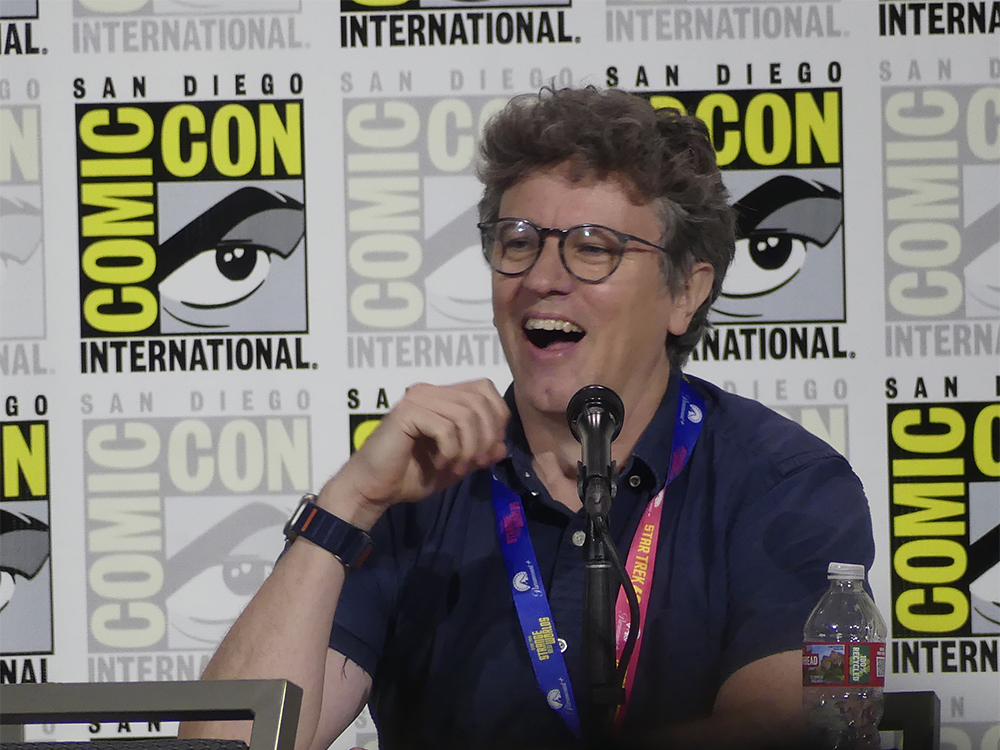
Q : The Angry Birds universe has expanded beyond games into movies, animation, toys and licensing. How does that broader universe influence the way you approach new game development ?
Ben Mattes: The Angry Birds universe has expanded beyond games into movies, animation, toys. How does that broader universe influence the way you approach new game development? Yeah, I mean that's a really great question as well. So, you know, the one thing we try and do is we call it the Angryverse, right? Like the Spider-Verse or Marvel or whatever, you know, we have our version of the world that is the classic characters' universe. Red in the classic universe is the same Red as in the movie. He has the same personality, the same leadership skills, the same things that make him an appealing character in movies as in games and, you know, vice versa. What we don't try and do is sort of say this is the right version of Angry Birds and this is the wrong version of Angry Birds. We don't try and say if you're true Angry Birds fans, you like this but you don't like that. As a transmedia IP, all of the different flavors, all of the different expressions of the IP are equally important to us in terms of how we build and nurture and grow our fandom. And we try and treat all of them as canon, right? The movies for us are canon, the classic games and the classic stories, the animated series, Toons, and that sort of thing are canon. And we try and find ways to sort of interweave all of those into one sort of holistic approach to the IP. So when we're making a new game, we have to decide who the audience is. And what are they looking for? If they're looking for, if they're more familiar with and sort of prefer the classic universe, we're obviously going to choose characters more in this style. Perhaps if it were a game made for a family audience, then it might make sense that we would lean towards, say, the movie style.
Q : Mobile gaming has changed dramatically since the original Angry Birds launched. What are the biggest creative challenges and opportunities facing Rovio today ?
Ben Mattes: Mobile gaming has changed dramatically since the original Angry Birds launched. What are the biggest creative challenges and opportunities facing Rovio today? Yeah, it really has changed, and then it's changed and changed again and changed again. When Angry Birds started, right, in 2009, just a really good original game was enough, and Angry Birds was, right? No one had ever seen anything like it. So, it exploded because of that, because it had memorable characters, because it had sort of elements to the IP that worked in a sort of transmedia fashion. It was a really successful licensing juggernaut, and it kind of took off the way it did. But then free-to-play hit, and free-to-play fundamentally changed the way mobile gaming is made, the way it's advertised, the way it's marketed. Um, and it created a very different world where, you know, the way that you grew a mobile game was not necessarily by having the best story or the most memorable characters. It might be who had the best user acquisition funnel or the best conversion to paid players or whatever various other metrics, and for years that sort of KPI-led or analytics-led way of making mobile games really sort of dominated the industry. What we're seeing today is that because of all sorts of changes, there's a bit of a shift back to a world where an IP that has characters that people know and they love and they recognize is increasingly important. That just having great user acquisition funnels isn't necessarily enough to have a really successful mobile game. You want to be able to do out-of-home, you want to be able to do product licensing, you want to be able to do comics and movies and various other transmedia elements, and there are not a ton of mobile IPs like Angry Birds that have the potential to be truly transmedia like that. So this shift in a world where user acquisition is no longer enough the way it was, say, five or six years ago, we think that puts us—we hope and we think that puts us—in a really good place.
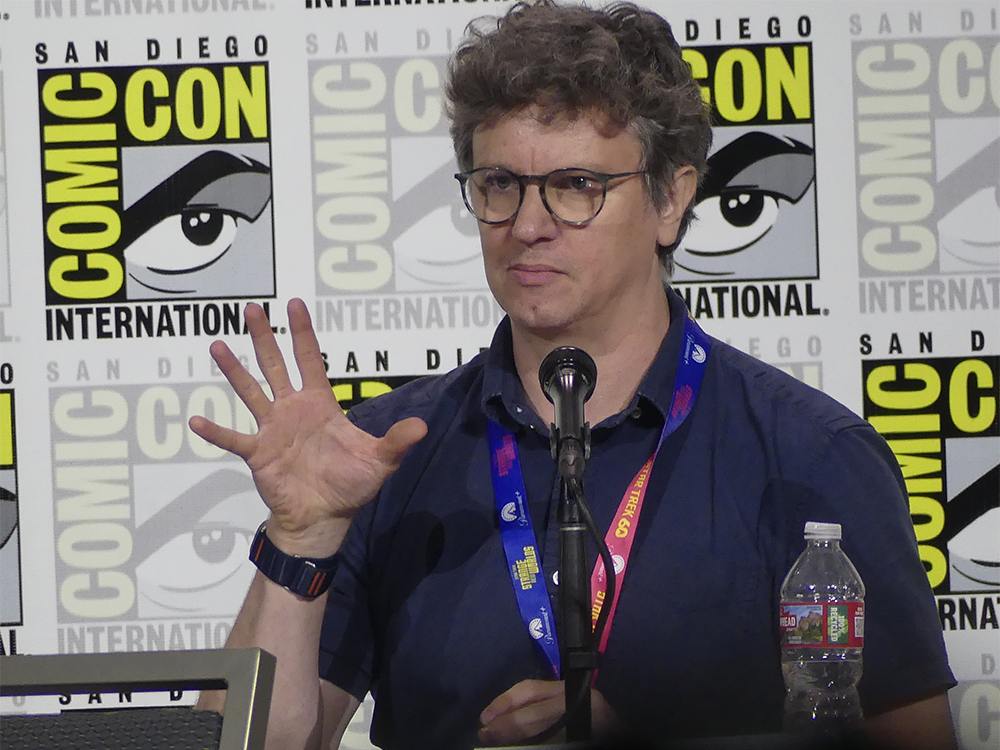
Q : What role does player feedback play in shaping the future of Angry Birds? Can you share an example where the community directly influenced a creative decision ?
Ben Mattes: Yeah, I mean, so I spend a lot of time on Twitter. I spend a lot of time on Discord. I spend a lot of time interacting with the community. I really like our community. I think they're really, really smart and really creative. and so there's a couple of examples that come to mind. A very famous one that we talk a lot about is this new character, Ruby. So, a couple of years back, there was an artist. He goes by the handle Krema Draws. He's a Mexican artist, a really talented young man. And he took a character that everyone used to just call Girl Bird, which kind of looked like Red but had, like, a little bow on his head, and sort of retconned it. His artwork was really great. The community really took to it. They started talking about this character, and they really liked this character. And so we reached out to Krema, and he and I started chatting and sort of got to know each other a little bit and talked about the character and sort of where it would fit into our canon, where it could fit into our IP. Ultimately, with his blessing, we embraced the character and have made Ruby now a canonical part of the IP. There's a story where Ruby suddenly appears after having been missing for many, many years, and she shows up, and Red, who never thought he had siblings, suddenly has a long-lost sister. So that's one example of a place where we could sort of embrace some of the community feedback with the targeted creation of a specific character.
Q : Many classic gaming franchises are embracing crossovers and collaborations. How do you decide which partnerships make sense for Angry Birds without diluting its identity ?
Ben Mattes: Yeah. So, I mean, of course, we get approached many, many, many times a year about potential crossovers. Of course, there's a business side to it, right? And I won't speak to that. We'll let the business people talk about the business part of this. But I'm asked, "Does it fit?" And I look for a few things. So I can tell you some things that I don't want. Right? So, one thing we try and avoid is violence against animals. That doesn't fit. We try and avoid projectile weapons because the birds are the projectile weapon, right? It doesn't really fit for me to have a game where you're running around with a gun and you're firing your weapons, and then having this character whose power is supposed to be the ability to projectile his body sort of devalues or deemphasizes their heroic element. So that's another example of something we try and avoid.
We look for potential crossovers where the partner is interested in the narrative of the crossover. That's very important to me. How did the birds arrive in your universe? Why are they there? So, a perfect example of that is Sonic. Now, it's a little easy because they're an internal sister IP. But Takashi Iizuka, who's the Chief Creative Officer of Sonic, and myself, in one of our early meetings, sort of agreed, "Look, you know, Angry Birds fans are not necessarily Sonic fans, and Sonic fans are not necessarily Angry Birds fans." Of course, there's going to be some crossover there, but if we want our audience to embrace Sonic and we want your audience to embrace Angry Birds, we have to do justice to and honor the rationale and the narrative behind this collaboration. Why did the birds arrive on South Island? Why does Sonic need Red's help? What is it that Sonic was facing that he couldn't solve on his own that makes it make sense for the Angry Birds to be there? And then vice versa. Why bring Sonic and his characters into the world of Angry Birds? And frankly, how do they get home ?
And once we find partners who care about those kinds of conversations, it's amazing how well the collaboration goes. Whereas when you have a partner who's like, "Oh, who cares? Doesn't matter. No one's going to pay attention to that. Just stick your birds in our world, and it's going to be great." It's interesting to see how problematic those collaborations can be. And I think the fans feel it, and they react. They react. So we definitely lean towards the sort of collaborations where it makes sense for those characters to intermix.
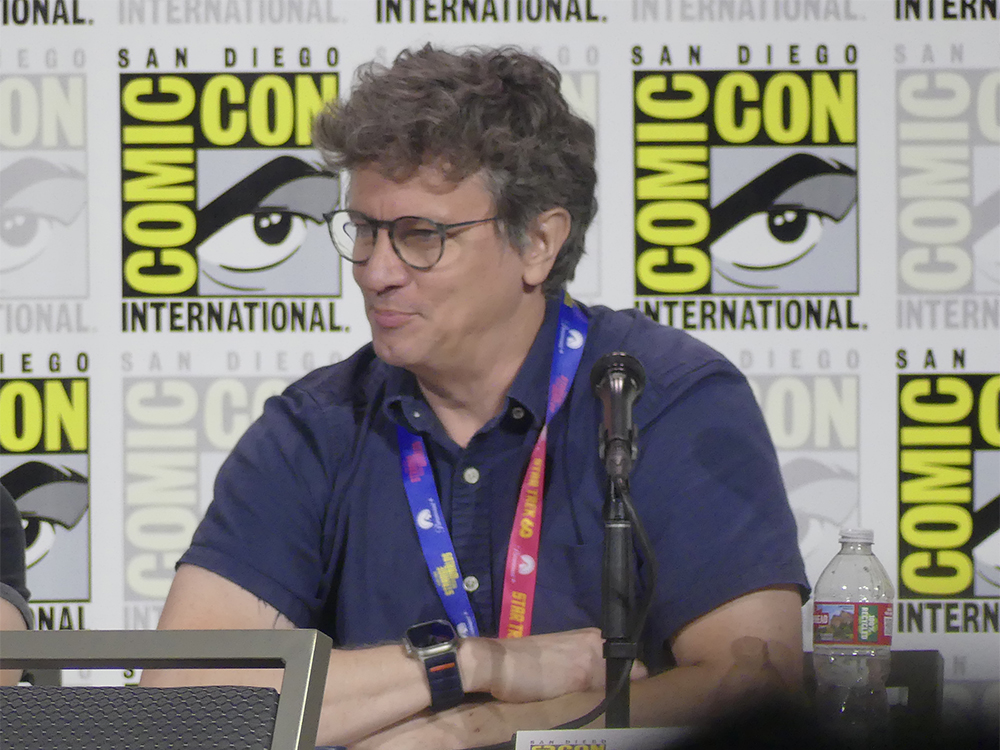
Q : Looking ahead, what excites you the most about the future of Angry Birds? Are there creative directions you’ve always wanted to explore but haven’t had the opportunity to pursue yet ?
Ben Mattes: Yeah. I mean, obviously, you know, it's been amazing to have a chance to work on the movie, right? that's been a dream, and I'm really excited to see people's reactions to the movie. I think we have a lot of stories that we want to tell. Short-form video is great for YouTube series and that sort of thing. And we have a lot in development that I'm really excited, you know, for people to see when we get to that. I think one of the things that's sort of at the heart of the origins of the IP that we're looking for more and more opportunities to highlight and showcase is the sort of action side of it. The humor stuff is great. Obviously, the movies put the humor front and center, certainly in the trailer. The characters are great. They stand out in all the casual games. You know, everyone loves them. But there's a sort of action element to the existential conflict between the birds and the pigs that was sort of part of the heart and the core of the original game that we see a lot of the nostalgic fans longing for and wanting us to find an opportunity to bring back. And maybe mobile free-to-play isn't necessarily the best home for that. But there are lots of other platforms that we're exploring, some interactive, like some gaming platforms, and then some narrative, like short-form video or long-form video, where we think we can do that justice. So that's an element of the IP that I've always found really exciting, and I'm really excited about some of the stuff we're working on to bring that along.
Q : San Diego Comic-Con celebrates storytelling across every medium. Do you see opportunities for Angry Birds to expand into new forms of interactive storytelling or entertainment in the coming years ?
Ben Mattes: I mean, honestly, it's hard to find a sort of classical vertical that Angry Birds isn't in, right? We've got the animated series, we've got the short-form content, we've got, you know, whatever social media. We've got a lot of presence in the sort of transmedia space. But what I get really excited about is that sort of thing I talked about earlier: those bridges, right? I get really excited about people who say, "I discovered Angry Birds by playing Topgolf, and now I'm reading the comics," or, "I discovered Angry Birds through your TikTok account, and now I can't wait to see the movie." I get really excited about that. And I think today's consumer, almost by definition, is a very sophisticated consumer, right? The world is at their fingertips. Within seconds, they can find all of the connections for a character or a story or whatever game or IP they might be interested in. And they also can afford to be very selective, very picky, right? Because there's infinite competition for their attention. So, you know, if you can catch them, if you can use a bridge to bring them from one part of your IP to another, then you know you're doing something right. To me, a platform like San Diego Comic-Con is really exciting because I would argue these are some of the most sophisticated consumers in the world. Yeah. Yeah. Incredibly developed in terms of their tastes, their interests, and their sophistication in interacting with an IP. So, if and when we can engage with this audience and get them excited about some of the stuff we're doing, then that, to me, is evidence that we're on the right track.
Q : If you could describe the next chapter of Angry Birds in just three words, what would they be—and why ?
Ben Mattes: Yeah, I thought about this one. It's tough. I would say, "raise the stakes." That's it. It has multiple meanings. It does. So if we just look at it from a narrative point of view, for much of their history, the birds and the pigs lived on an island and they fought over three eggs. We're at San Diego Comic-Con, so this reference is perfect. You'll get it right away. That's like the origins of Spider-Man, right? The friendly neighborhood Spider-Man who stops the mugger from stealing the little grandma's purse on the street corner of the Bronx. It's very, very narrow in terms of the stakes. Spider-Man today is, like, punching gods in the face, right? Saving the multiverse, sort of thing, right? The stakes have grown exponentially. I think that's really exciting from a narrative point of view. I think that's really exciting from an IP point of view, to find natural ways to take your characters and raise the stakes of what they're fighting for. Is it only just against the pigs? Is it only just on Piggy Island? Is it only just about the eggs? Or can we take that conflict and raise it up? Take it to new arenas. Make them fight for different reasons. Put them in different environments whereby maybe sometimes they need to collaborate, but they do so against their will because there's an even bigger threat that they're facing. All of those, for me, are very exciting opportunities to explore. So that's one definition of "raise the stakes." And then I think the other is, like, well, if we want to succeed as a San Diego Comic-Con-worthy IP, right? We have to be more than just mobile games. We have to be amazing at movies. We have to be amazing at comics. We have to be amazing at licensed products. So as an organization, Rovio and Sega have to raise the stakes for Angry Birds to sort of reclaim its potential glory. So yeah, I guess "raise the stakes" are the three words that I like.
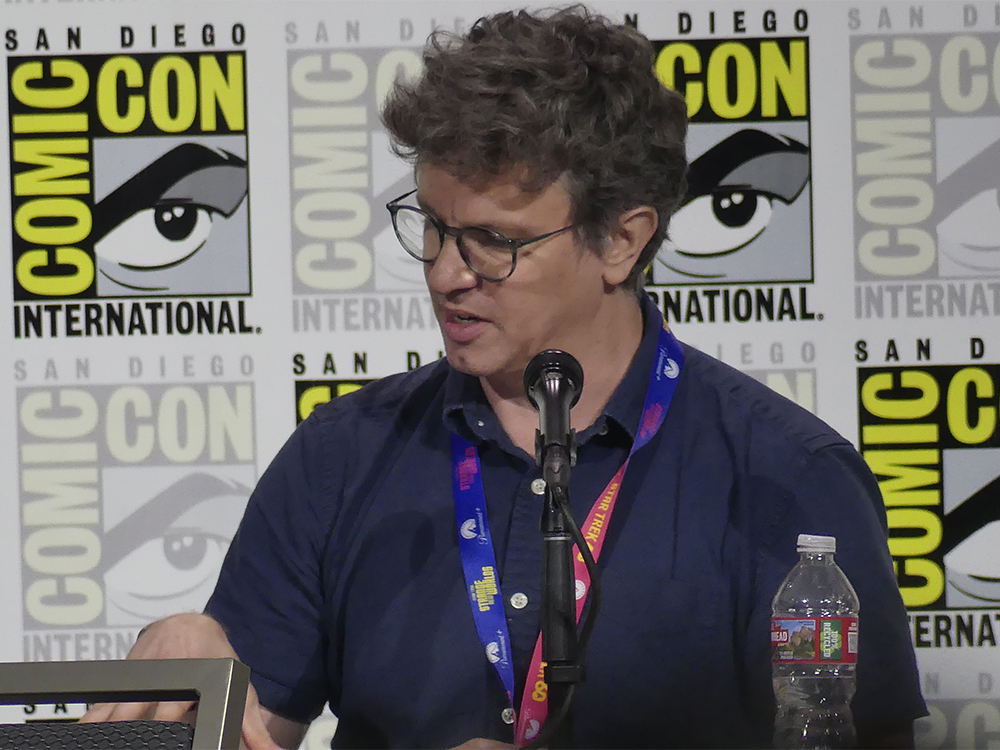
Q : Comic-Con brings together some of the world's most passionate fans. Is there anything you're especially excited to showcase or discuss with the community here at SDCC 2026, and how important is fan interaction in shaping Rovio's future ?
Ben Mattes: Yeah, I mean, I sort of mentioned it on the panel. But I guess what I would reiterate is, like, my job is to make sure that no matter what the platform is, whether it be a movie, a TV show, a web episode, a comic book, a graphic novel, a toy, like, whatever it is, a new game developed by an internal partner, a game developed by an external partner, that the sort of core of Angry Birds is respected and honored. And I look to the community, who have been passionate Angry Birds supporters for 15, 17 years, to guide me on what those core elements are. I didn't make them up. I didn't invent the IP, right? At best, I'm a shepherd, right? So I look to the community to sort of say, "What is it that made you fall in love with Angry Birds 10 years ago?" And how can I distill that into sort of what we call pillars, right? How can I distill that into pillars and then try and be the guardian of those pillars in all of these various products and experiences? And so I guess, you know, my message to the Angry Birds fans out there would be, like, trust me when I say I take that responsibility very, very seriously. I am really working hard to try and honor the legacy of what made them fall in love with the IP in the first place. Condense that into something sort of pure. Make sure that that is the foundation of all of these new experiences and then, from that strong foundation, explore new ideas, new characters, new settings that can help us grow, expand the stakes, and potentially reach new audiences.
More than 15 years after the original game took the world by storm, Angry Birds remains one of gaming's most recognizable entertainment brands. Since its debut in 2009, the franchise has grown far beyond mobile games into animation, publishing, consumer products, theme park attractions, and feature films, reaching billions of players and fans worldwide. Now part of the SEGA family, Rovio continues to expand the Angry Birds universe through new games, cross-media storytelling, and global partnerships. The next major milestone arrives with The Angry Birds Movie 3, directed by John Rice and featuring the return of Jason Sudeikis, Josh Gad, Rachel Bloom, and Danny McBride alongside an expanded cast. Scheduled for release in theaters on December 23, 2026, the film represents the latest chapter in the ongoing evolution of one of gaming's most enduring and beloved franchises
Synopsis :
During this holiday season, an Angry Bird will have to face his greatest challenge yet: surviving fatherhood… all while saving the world!
The Angry Birds Movie 3
Directed by John Rice
Written by Thurop Van Orman
Based on Angry Birds by Rovio Entertainment
Produced by John Cohen, Dan Chuba, Carla Connor, Namit Malhotra
Starring Jason Sudeikis, Josh Gad, Emma Myers, Rachel Bloom, Walker Scobell, Danny McBride, Marcello Hernández, Tim Robinson, Anna Cathcart, Maitreyi Ramakrishnan, Nikki Glaser, MrBeast, Salish Matter, Psalm West, Sam Richardson, James Austin Johnson, Lily James, Keke Palmer
Edited by Sarah K. Reimers
Music by Heitor Pereira
Production companies : Rovio Entertainment, Sega Sammy Group, Prime Focus Studios
Distributed by Paramount Pictures
Release date : December 23, 2026 (France, United States)
Running time : 96 minutes
Photos and video 4K : Boris Colletier / Mulderville