

SDCC 2026: The 12th Annual Musical Anatomy of a Superhero and Other Heroes celebrates the composers shaping tomorrow's blockbusters
Thursday 23 July, 2:55 PM PT Hilton San Diego Bayfront, Indigo Ballroom 2026-07-23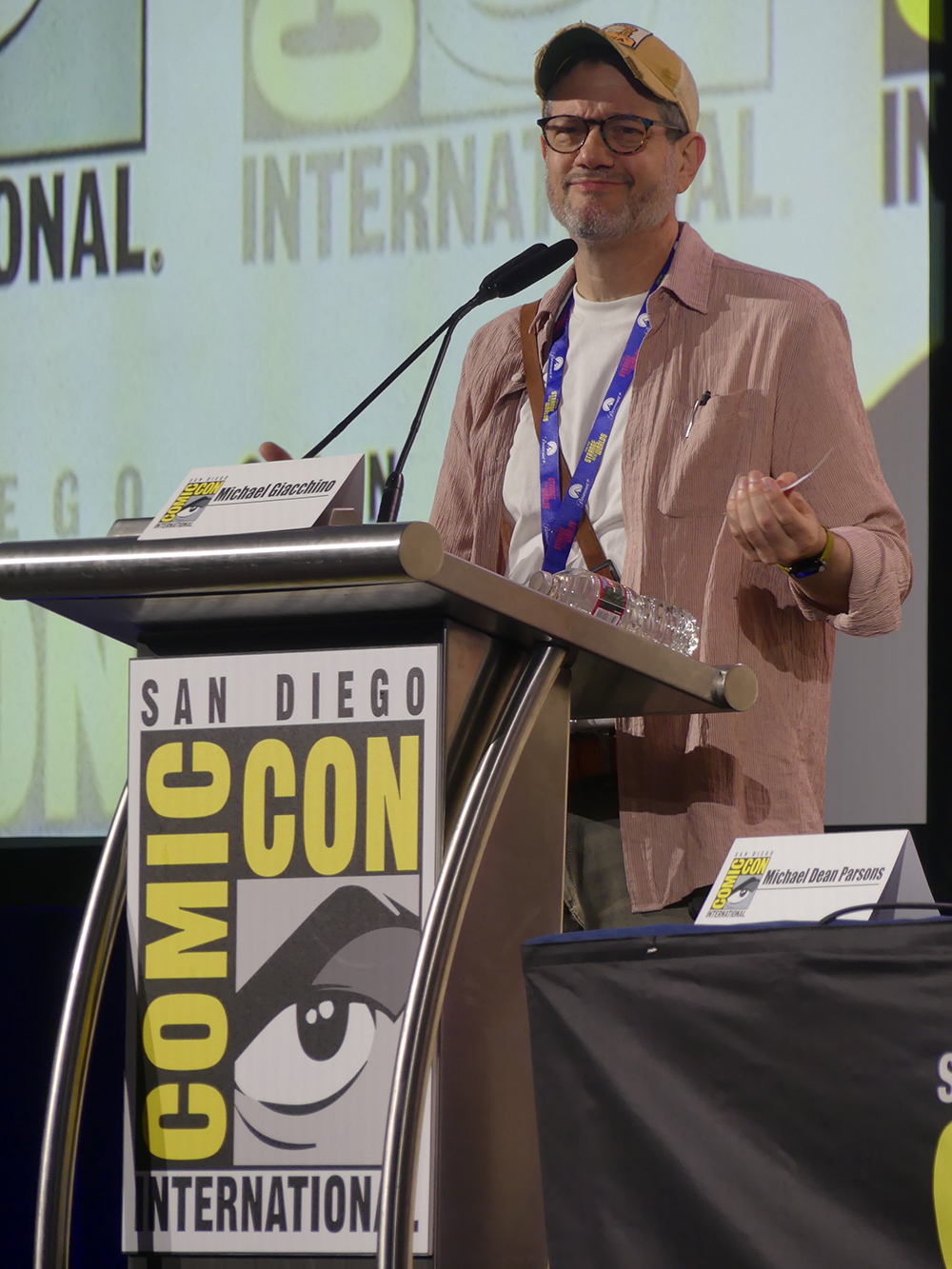
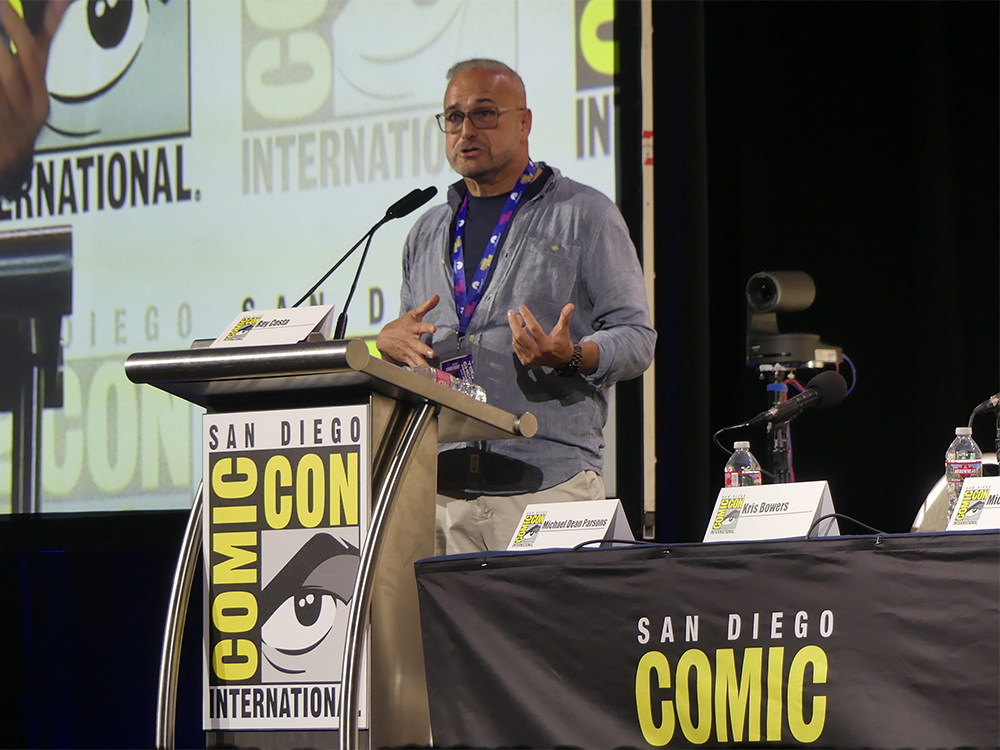
Music has always been one of the invisible superheroes of cinema, capable of transforming a spectacular sequence into an unforgettable emotional moment. At San Diego Comic-Con 2026, the 12th Annual Musical Anatomy of a Superhero and Other Heroes panel once again proved why it has become one of the convention's longest-running and most respected traditions. Held on Thursday, July 23, 2026, in the Indigo Ballroom of the Hilton San Diego Bayfront, the event brought together some of Hollywood's most acclaimed composers for an in-depth discussion of the creative process behind superhero, fantasy and television scores. Produced by Costa Communications and supported by ASCAP, BMI, GMR, SESAC and the Society of Composers & Lyricists, the panel has built its reputation on offering audiences far more than a standard Q&A session, combining exclusive footage, unreleased music and candid behind-the-scenes stories from the artists themselves.
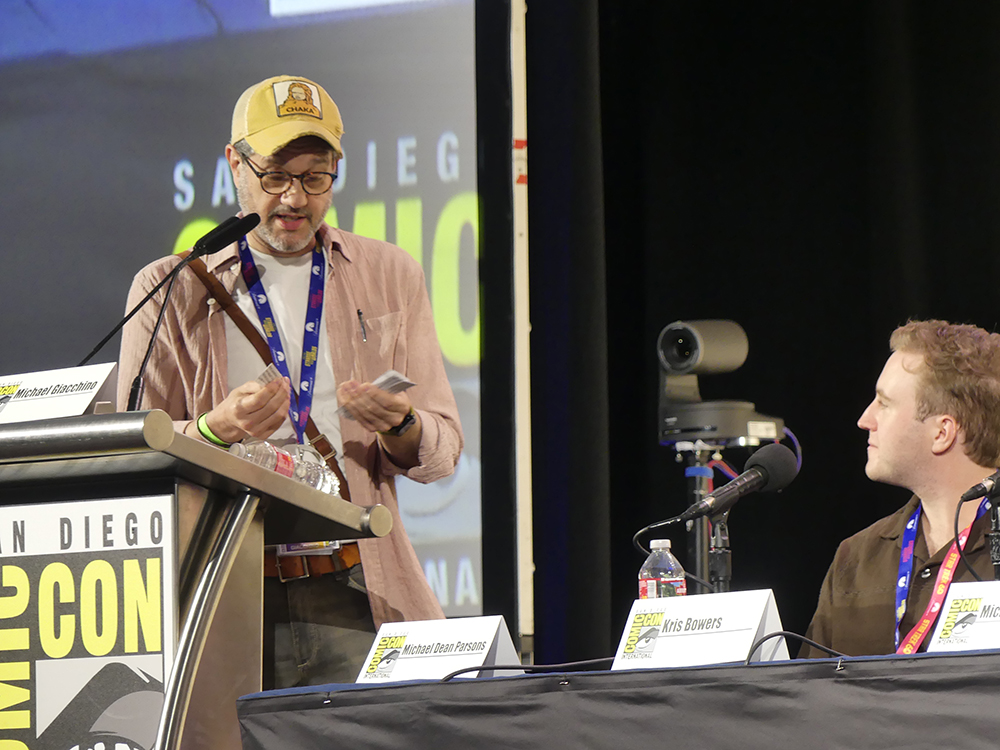
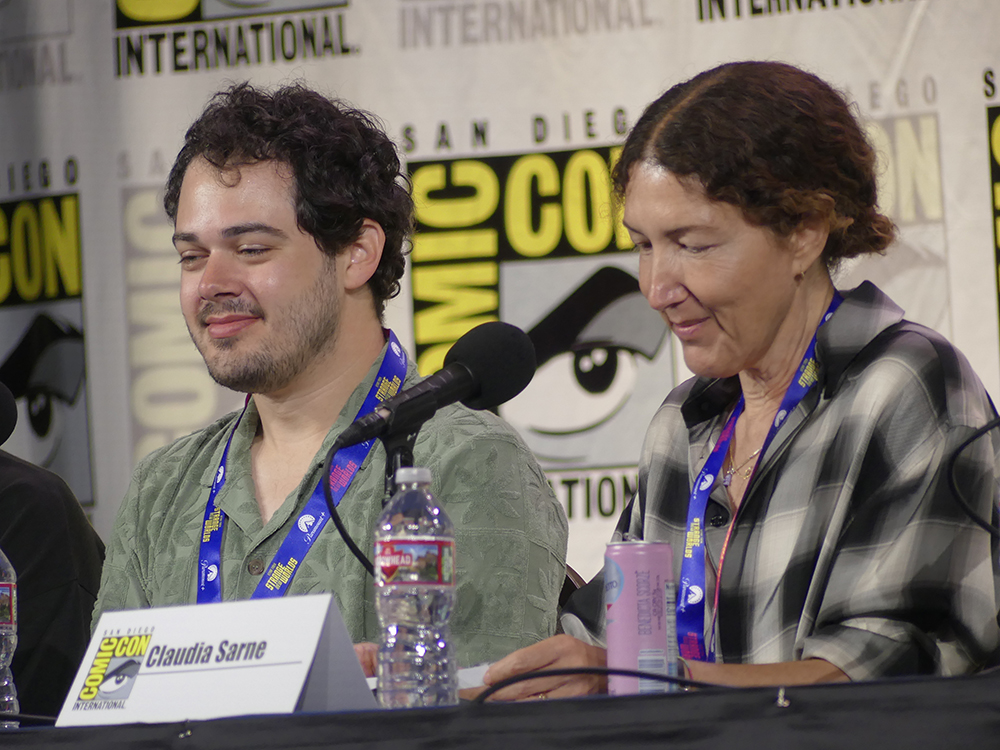
Moderated with his customary wit by Michael Giacchino, the Academy Award-winning composer behind Up, The Batman, The Incredibles, Ratatouille and numerous other modern classics, the discussion featured Mick Giacchino, Kris Bowers, Michael Dean Parsons and Claudia Sarne. Although Brian Tyler had originally been announced among the guests, he ultimately did not participate in the panel. Throughout the hour, the conversation focused less on celebrity anecdotes than on the collaborative relationship between composers, filmmakers and editors, illustrating how a film's emotional identity often begins long before audiences ever hear its finished soundtrack.
One of the panel's biggest highlights came when Michael Giacchino unveiled an exclusive preview from Spider-Man: Brand New Day, presenting attendees with a never-before-seen sequence accompanied by an unreleased musical cue. Explaining his creative approach, he revealed that this fourth cinematic chapter represented an unprecedented challenge in his career, as it marked the first time he had composed the score for a fourth installment in an established franchise. To reflect Peter Parker's profound isolation following the events that erased much of his personal life, Giacchino deliberately stripped Spider-Man's signature theme of many of its familiar notes, reducing it to its emotional core. Rather than emphasizing triumph, the new arrangement embraces melancholy and loneliness, mirroring the character's fragile emotional state. He also confirmed that the score was recorded at the legendary Abbey Road Studios in London, whose orchestral acoustics continue to attract many of the world's leading film composers.
The veteran composer also shared an amusing story from his earlier work on J.J. Abrams' Star Trek (2009). He explained that he had originally composed an extensive musical passage designed to accompany Spock's backstory, only to see the entire cue removed because Abrams felt the scene already contained too much dialogue. The anecdote perfectly illustrated one of the recurring themes of the panel: even celebrated composers frequently see significant portions of their work disappear in the editing room when storytelling ultimately demands restraint rather than musical expansion.

A significant portion of the discussion focused on Spider-Noir, the live-action series inspired by the Marvel character. Michael Dean Parsons explained that its musical identity blends traditional noir orchestration, theremin, synthesizers and orchestral writing with unexpected textures such as 1990s punk rock guitar inspired by New York City. One of the most memorable anecdotes came when he recalled receiving unexpected feedback from showrunner Oren Uziel, who rejected the original score for episode six with a simple instruction: "Get weirder." Parsons embraced the challenge by intentionally learning to play instruments incorrectly in order to create an unsettling, chaotic atmosphere. Ironically, the revised version became Uziel's favorite episode precisely because of its unconventional musical direction.
His collaborator Kris Bowers, whose recent career has included acclaimed scores for The Wild Robot, King Richard, The Color Purple, Bridgerton and Spider-Noir, described their partnership as an unusually fluid creative exchange in which ideas constantly circulate between both composers before being refined deep into the night. Preparing for Spider-Noir involved listening to a playlist of approximately 250 classic noir and superhero scores over the course of two weeks, not to imitate them but to absorb the genre's musical language before deliberately setting those influences aside to create something original. Their description offered a fascinating glimpse into the increasingly collaborative nature of modern blockbuster composition.
Representing a younger generation of composers, Mick Giacchino discussed his work on Marvel Television's Vision Quest, scheduled to premiere on Disney+ on October 14, 2026. He revealed that he composed distinct musical identities for Vision, portrayed by Paul Bettany, and Ultron, once again voiced by James Spader, balancing delicate harp motifs with progressively richer orchestration to underline the contrast between artificial intelligence and human emotion. Reflecting on his own creative process, he admitted that if he dislikes a cue, he simply deletes it instead of attempting to recycle it into another project, preferring to begin again from scratch rather than force an idea that no longer feels authentic.
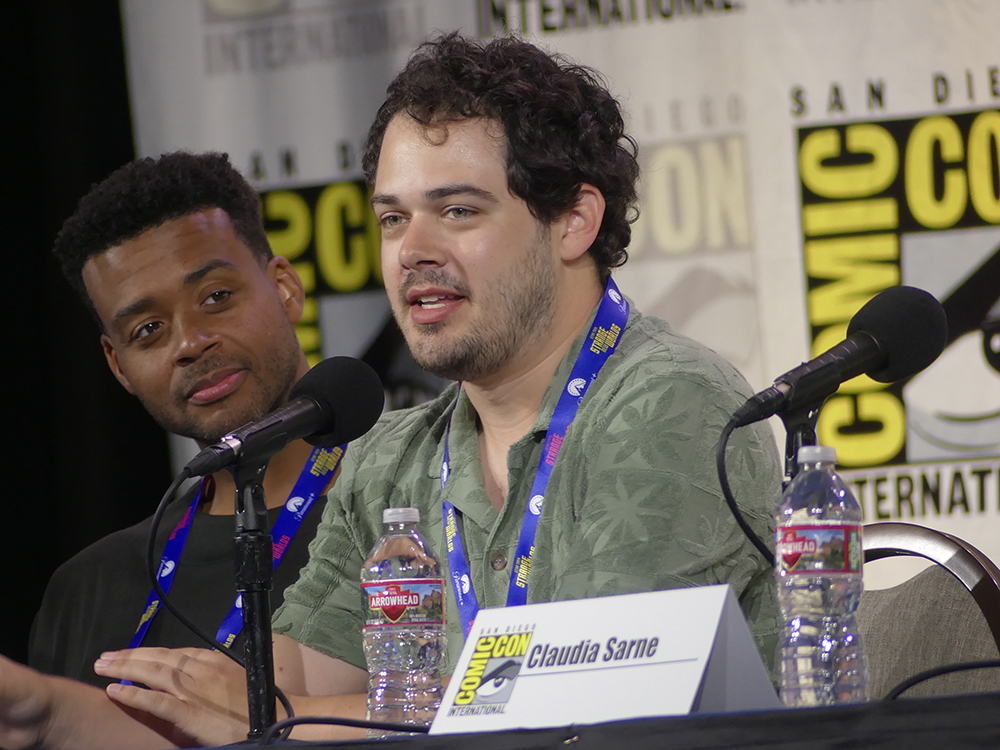
Claudia Sarne, whose work on Supergirl made her the first woman to compose the score for a DC feature film, explained that director Craig Gillespie encouraged her to avoid a conventional superhero sound in favor of something more rebellious and emotionally complex. Her score therefore attempts to balance Kara Zor-El's grief, loneliness and personal vulnerability alongside the film's larger action sequences. She also shared one of the panel's most striking anecdotes, revealing that she once reworked the same cue approximately eighty-two times following repeated notes from a director, only to conclude that none of those revisions ultimately improved the final result. The story drew laughter from both the audience and fellow composers, who clearly recognized the familiar reality of endless creative revisions.
The atmosphere became considerably lighter when the discussion turned toward the composers' hidden musical Easter eggs. Echoing his father's playful habits, Mick Giacchino explained that many of the choir lyrics in Vision Quest secretly consist of the names of his cats, dogs, cousins and other family members. During recording sessions, choir members reportedly spent considerable time trying to identify mysterious names such as "Walter" and "Cleo" before eventually discovering that several belonged to household pets. Michael Giacchino responded with an equally entertaining confession, recalling that during the recording of Speed Racer he had the choir loudly sing the names of his own children — Mick, Grace and Griffy — only to later joke that perhaps the voices had been mixed a little too prominently over the film's sound effects.
The panel concluded with a nostalgic conversation about childhood inspirations, reminding the audience that even Oscar-winning composers once dreamed through toys before writing music for global franchises. Michael Dean Parsons fondly remembered his double-bladed Darth Maul lightsaber, Kris Bowers recalled owning a Wolverine action-figure projector, Mick Giacchino spent countless hours creating stop-motion films with LEGO bricks, Claudia Sarne preferred skateboarding and playing recorders, while Michael Giacchino reminisced about his vintage 3.75-inch Star Wars action figures. It was a fitting conclusion to a panel that consistently demonstrated how childhood imagination often evolves into the creative passion responsible for defining the sound of modern popular culture.
Event recap :
Where: Indigo Ballroom, Hilton San Diego Bayfront, San Diego, California.
When: Thursday, July 23, 2026, from 10:00 a.m. to 11:00 a.m. (PT).
What: The 12th edition of Musical Anatomy of a Superhero and Other Heroes brought together leading film and television composers to discuss the artistic process behind superhero scores, present exclusive music and footage from upcoming productions, and share rare behind-the-scenes anecdotes about composing for major Hollywood franchises. Highlights included an exclusive preview from Spider-Man: Brand New Day, extensive discussions about the musical identities of Spider-Noir, Vision Quest and Supergirl, as well as humorous stories about hidden Easter eggs, creative revisions and the childhood influences that shaped some of today's most celebrated composers.
You can found our photos in our Flickr page
Photos and video 4K : Boris Colletier / Mulderville