

Golden Axe: SEGA’s cult arcade saga returns on Paramount+
Golden Axe : SEGA’s Arcade Legend Returns as an Animated Comedy
Wednesday 16 September, 10:51 AM PT
More than three decades after players first marched across Yuria with sword, axe and magic at the ready, Golden Axe has returned in a form few could have predicted: an adult animated comedy. The new Paramount+ series premiered in the United States on September 16, 2026, with a ten-episode first season inspired by SEGA’s 1989 arcade hit. The original game built its appeal on immediate pleasures rather than elaborate exposition: choose a warrior, fight through Death Adder’s forces, steal magic potions from tiny thieves and occasionally climb onto a rideable beast. That directness gives the television adaptation unusual freedom.
Instead of manufacturing a solemn mythology around the property, the series turns the strange logic of the games into part of its identity, treating Yuria as a fantasy world in which decades-old arcade conventions suddenly have consequences. Paramount’s official September schedule confirms Golden Axe as a new Paramount+ animated series launching on September 16, while the project itself began publicly in April 2024, when it was announced as a ten-episode Comedy Central order produced by CBS Studios in association with Sony Pictures Television and Original Film.
A familiar quest with a deliberately absurd new companion
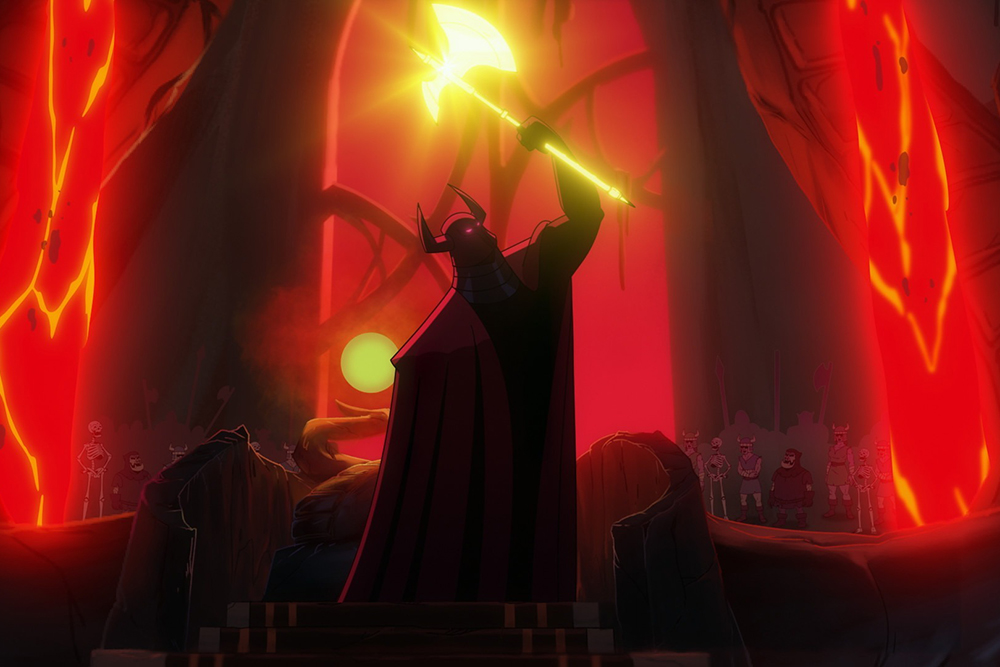
The central mission remains reassuringly recognizable. Veteran warriors Ax Battler, Tyris Flare and Gilius Thunderhead are once again drawn into battle against Death Adder, the giant villain whose refusal to remain dead has become a joke in itself. The adaptation then breaks the classic trio apart and uses that separation to create two different comic dynamics. Gilius travels with Hampton Squib, an inexperienced would-be adventurer who has spent his life dreaming of heroic combat without acquiring anything close to the experience of his idol.
Ax and Tyris, meanwhile, cross paths with Chronos “Evil” Lait, the humanoid panther associated with Golden Axe III. Hampton is the crucial new ingredient because he gives the series a character who can look at the veterans, the monsters and the bizarre customs of Yuria with something approaching an outsider’s perspective. The result resembles an arcade campaign expanded into television: quests lead to detours, creatures interrupt the route, alliances wobble and the journey keeps pushing toward another confrontation with Death Adder.
The comedy mines the games instead of merely referencing them
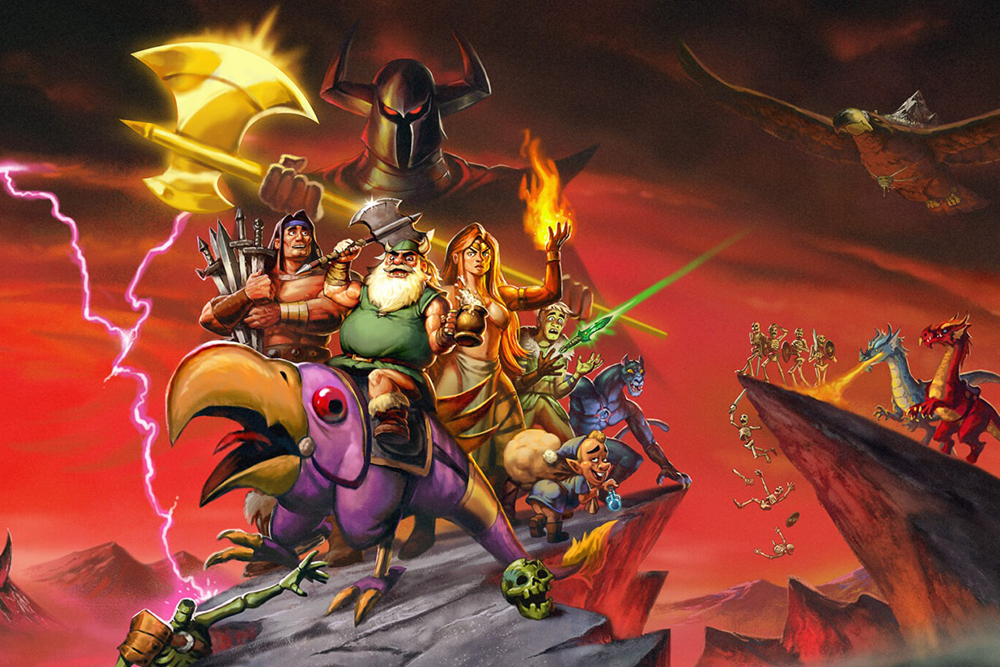
The most distinctive idea behind Golden Axe is that its nostalgia is functional rather than decorative. Familiar mechanics are not simply hidden in the background as Easter eggs; they become jokes, story devices and occasionally entire pieces of world-building. Ax Battler’s name is an obvious comic target because the famously named barbarian is generally seen carrying a sword. The potion-carrying thieves from the arcade games, once little more than targets players kicked for supplies, become evidence of how bizarre this universe would look if its rules were taken literally. Skeleton warriors are no longer anonymous obstacles waiting to be smashed but inhabitants capable of opinions, complaints and conversations.
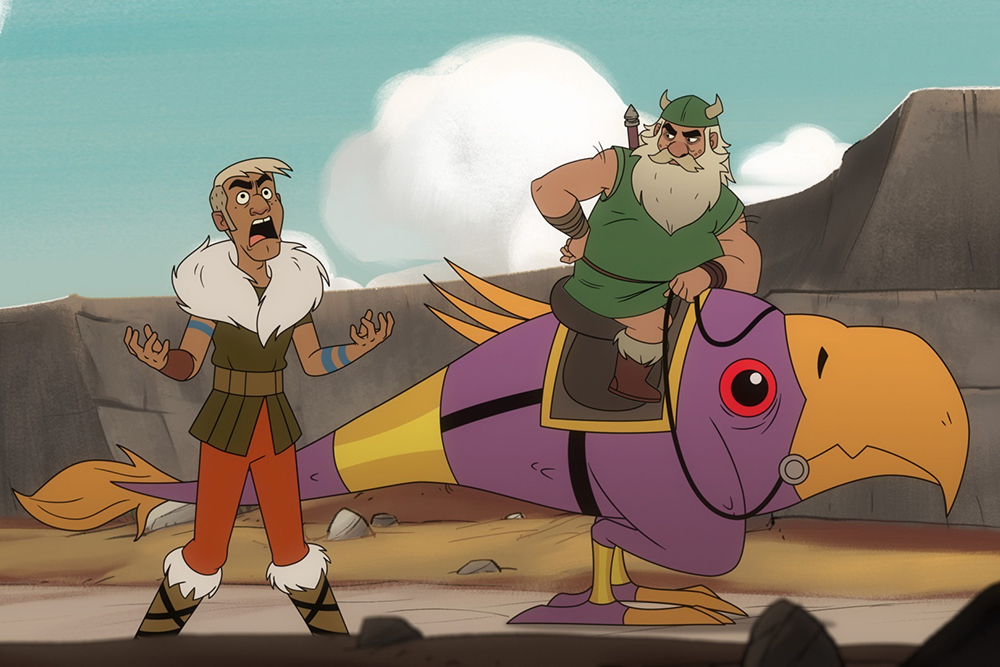
Even the rideable beasts that helped make the original game memorable are treated as part of everyday Yuria. That approach allows the adaptation to acknowledge the gap between 1989 game design and 2026 television storytelling without treating the source material as an embarrassment. The joke is not simply that Golden Axe was old or primitive; it is that its wonderfully economical arcade logic becomes gloriously strange when somebody has to live inside it.
Mike McMahan and Joe Chandler turn sword-and-sorcery into fast comedy
The creative pairing also explains the show’s pace. Mike McMahan, whose credits include Star Trek: Lower Decks and Solar Opposites, and Joe Chandler, known for American Dad!, executive produce the series; Joe Chandler serves as showrunner, and the two co-wrote the first episode according to the original production announcement. Their comic instincts favor rapid dialogue, punctured heroic declarations and characters who are rarely allowed to maintain dignity for long. The opening stretch can feel almost aggressively busy, with punchlines arriving on top of fantasy clichés, fights and grand speeches, but the season gains texture once the characters are given more room to interact. The episode structure itself reinforces the game-like progression.
Paramount’s official press pages identify installments including “The Legend of the Emerald Blade,” “Rideable Beasts,” “Fly Like An Eagle,” “The Brothers Bad,” “The Cold Bard Truth” and the season finale, “For Yuria.” Those titles make the first season feel less like one continuous prestige-fantasy narrative than a succession of stages, side quests and escalating encounters.
A voice cast that commits completely to Yuria’s ridiculous stakes
The principal voice cast is one of the adaptation’s strongest assets. Matthew Rhys voices Gilius Thunderhead, giving the veteran dwarf a grand seriousness that becomes funnier whenever the world refuses to respect it. Danny Pudi plays Hampton Squib with an enthusiasm that keeps the novice adventurer from becoming only a punchline; his eagerness gives the story a useful emotional counterweight to Gilius’s experience and irritation. Lisa Gilroy voices Tyris Flare, while Liam McIntyre takes on Ax Battler and Carl Tart plays Chronos.
Paramount’s current Golden Axe press materials list all five performers and identify them together in imagery from the tenth episode, “For Yuria.” The ensemble works because the performances do not approach the fantasy setting as disposable parody. The characters may be ridiculous, and the dialogue may constantly undermine heroic posturing, but the actors generally play their immediate goals as if saving Yuria still matters. That commitment is essential: without it, the series would risk becoming a collection of references rather than an adventure with a comic personality of its own.
Titmouse expands an arcade backdrop into a living fantasy world
The visual strategy follows the same principle. Titmouse, confirmed as the animation studio when the series was announced, gives Golden Axe broad silhouettes, elastic reactions and energetic action rather than attempting to disguise the property as solemn prestige fantasy. Yuria still carries the muscular sword-and-sorcery DNA associated with the games, but the television version can finally linger on places and inhabitants that once existed mainly as scrolling scenery between fights. The violence can be extravagant and bloody, yet its stylization keeps it connected to the comedy.
There is a particular pleasure in seeing creatures, ruins and enemies that once occupied a few seconds of arcade screen time become parts of a functioning animated setting. The production was announced under CBS Eye Animation Productions, CBS Studios, Sony Pictures Television and Original Film, with Titmouse handling animation. Executive producers announced for the project include Mike McMahan, Joe Chandler, Haruki Satomi, Shuji Utsumi, Toru Nakahara, Neal H. Moritz, Pavun Shetty, Toby Ascher, Chris Prynoski, Shannon Prynoski, Antonio Canobbio and Ben Kalina.
From a 2024 Comedy Central order to a 2026 Paramount+ premiere
Golden Axe also arrives after an interesting change in destination. The project was formally unveiled on April 17, 2024 as a Comedy Central animated series, with the network ordering ten episodes and describing it as a loving, comedic homage to the SEGA franchise. By September 2026, Paramount’s own streaming calendar positioned the completed show as a Paramount+ Original Animated Series, with all of the familiar ingredients intact: the returning heroes, Death Adder, Hampton Squib and the principal voice ensemble. That path is a reminder of how much the television landscape can shift during an animation production cycle.
What has not changed is the central creative gamble. Rather than asking Golden Axe to imitate a contemporary epic, the adaptation leans into the oddities that arcade players accepted without question: heroes with bluntly descriptive names, monsters appearing in waves, magical resources acquired through slapstick violence and beasts that function like fantasy vehicles. For longtime players, those details provide recognition; for newcomers, they operate as a self-contained comic vocabulary.
Golden Axe finds a modern identity without hiding its arcade roots
What makes this revival notable is the way it treats nostalgia as raw material rather than a destination. Golden Axe could easily have been rebuilt as a grim fantasy drama or reduced to a procession of cameos, but the animated format offers a third route: preserve the recognizable characters and iconography while interrogating the logic that made the games memorable. The series’ best ideas come from that tension between sincere adventure and affectionate mockery. It can celebrate a rideable creature and simultaneously ask what owning one would actually involve; it can stage a heroic confrontation and then puncture the speech that precedes it.
The approach will naturally depend on a viewer’s appetite for rapid-fire adult animation, and the density of jokes can sometimes compete with the fantasy story, but the concept has a clear point of view. Golden Axe is not trying to prove that an arcade classic secretly contained an enormous dramatic mythology. It argues something more playful: a simple game can generate a rich television world precisely because its unanswered questions, improbable rules and eccentric details leave so much space for invention.
Synopsis :
Veteran warriors Ax Battler, Tyris Flare, and Gilius Thunderhead return to action to rescue Yuria from the clutches of the evil giant Death Adder. This time, they are joined by Hampton Squib, an inexperienced adventurer who has dreamed of going into battle his whole life.
Golden Axe
Created by Mike McMahan, Joe Chandler
Based on Golden Axe by Sega
Developed by Mike McMahan
Showrunner : Joe Chandler
Starring Matthew Rhys, Danny Pudi, Lisa Gilroy, Liam McIntyre, Carl Tart
Executive producers : Mike McMahan, Joe Chandler, Haruki Satomi, Shuji Utsumi, Toru Nakahara, Neal H. Moritz, Pavun Shetty, Toby Ascher, Chris Prynoski, Shannon Prynoski, Antonio Canobbio, Ben Kalina
Producer : Nicholas Cofrancesco
Production companies : Chandyland, Important Science, Sony Pictures Television, Original Film, Sega Sammy Group, Titmouse, Inc., CBS Eye Animation Productions
Network : Paramount+
Release : September 16, 2026 (United States)
Running time : 21 minutes (10 episodes)
Score : 8/10
Photos : Copyright Paramount+