

Reacher Season 4 Begins by Breaking Its Hero’s Certainty
Wednesday 12 August, 2:00 AM PT
The fourth season of Reacher begins with a failure, and that reversal gives the Prime Video series a sharper pulse. On a nearly empty Philadelphia subway, Jack Reacher notices a distraught woman, Anna Merrick, displaying signs he associates with a suicide bomber. He intervenes, says he is a police officer and watches the encounter end in tragedy. The scene turns the audience’s trust in his observation, confidence and instinct against him: Reacher reads the clues but fails to understand the person. His conclusion is comprehensible, yet the result leaves him carrying something unfamiliar—doubt that his presence made an already desperate situation worse.
Adapted from Gone Tomorrow, the thirteenth Jack Reacher novel by Lee Child, the eight-episode season therefore feels less like another accidental investigation than an act of atonement. This time, Reacher is not pulled in by an old military debt or a murdered former colleague. He stays for a stranger he could not save. Prime Video launched the first three episodes on August 12, 2026; the remaining five arrive weekly through September 16, making the mystery a six-week appointment rather than an all-at-once binge.
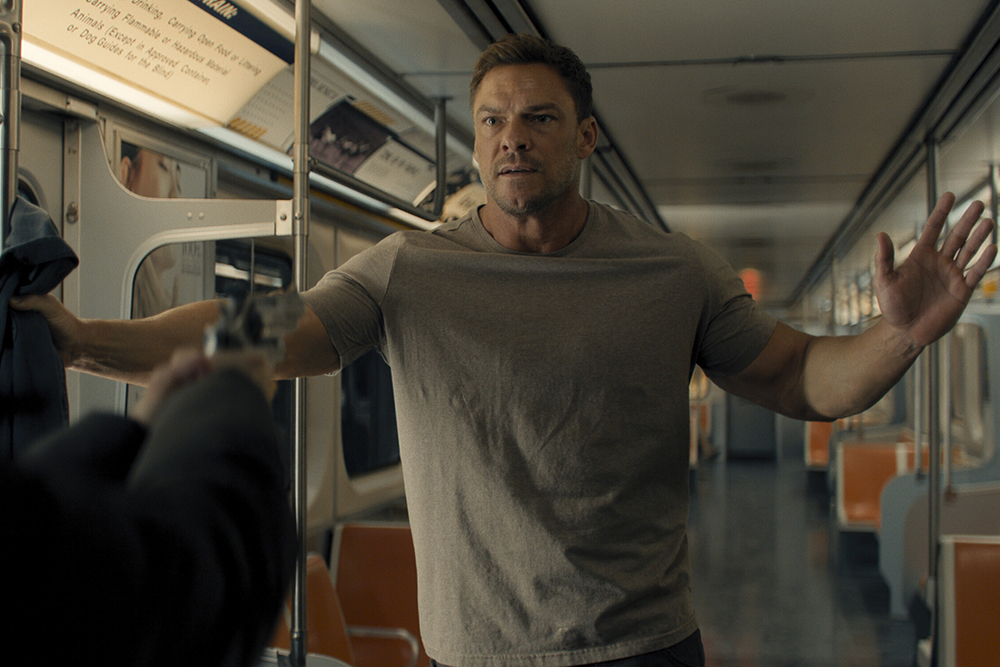
A Philadelphia Conspiracy with Political Reach
The inquiry quickly expands beyond the train carriage. A mysterious flash drive, federal agencies, mercenaries, hidden military history and Congressman John Sampson (a presidential candidate with a carefully managed public image) form an increasingly dense web. Showrunner Nick Santora relocates the novel’s New York story to Philadelphia and updates its political context. That choice makes the adaptation less predictable for readers, while the city’s civic symbolism and institutional corridors give the intrigue an effective modern-frontier setting.
The complication is not always the same as sophistication. Early episodes introduce multiple operatives and organisations chasing an object whose value remains deliberately obscure; later scenes must pause to untangle the mechanics before the next attack. Yet the overload serves a useful dramatic purpose: for once, Jack Reacher is not several moves ahead. He misjudges people, overlooks signals and discovers that other players have already shaped the board. The most interesting threat is consequently not a larger opponent, but incomplete information.
Alan Ritchson Makes Vulnerability Look Monumental
Alan Ritchson uses that uncertainty intelligently. His performance still depends on economy (a measured walk, a fixed stare and dialogue delivered so flatly it becomes comic) but guilt now interrupts the character’s composure. The season’s revealing paradox is that Reacher’s minimalism is material, not emotional. He may travel with little more than a toothbrush, yet he collects responsibility for nearly everyone he meets. Alan Ritchson is especially effective when the giant appears to make himself smaller, listening rather than intimidating, before violence forces him to fill the frame again.
That adjustment matters because previous seasons often made suspense a question of how inventively Reacher would defeat an opponent, not whether his judgement could fail. Season 4 preserves his physical dominance while making certainty costly. It does not weaken the hero; it gives his strength something morally complicated to carry.
A New Temporary Family—and a Noticeable Absence
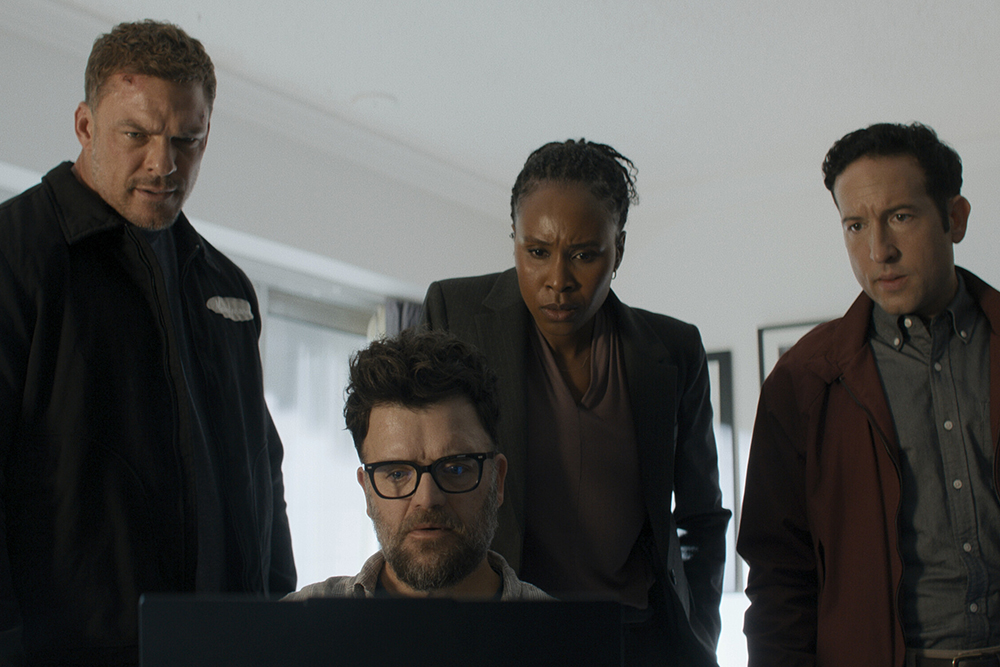
Reacher again assembles a temporary family while insisting he is better alone. Detective Tamara Green, played with dry authority by Sydelle Noel, has learned the professional cost of challenging powerful people. Anna’s brother Jacob Merrick, portrayed by Christopher Marquette, begins as a grieving small-town officer overwhelmed by the scale of the case and gradually becomes its emotional anchor. Kevin Weisman brings nervous wit to disgraced journalist and hacker Russell Plum, while Kevin Corrigan gives Detective Shaun Docherty a weary, sour-edged presence.
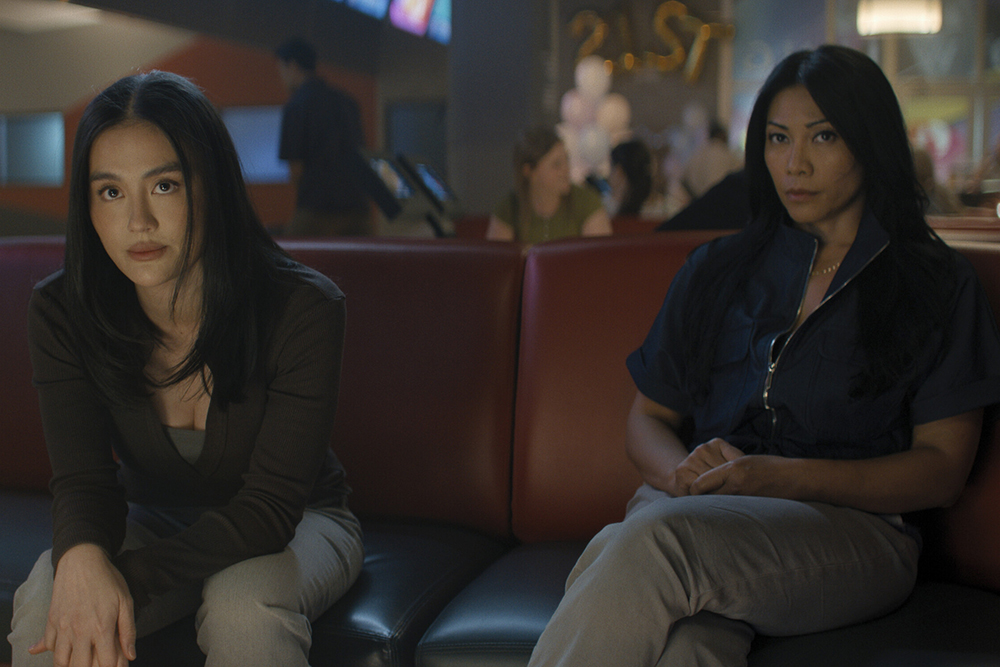
AGNEZ MO and Anggun, playing Lila Hoth and Amisha Hoth, bring a different physical rhythm and complicate Reacher’s habitual protector role: neither woman fits neatly into the category of helpless victim or transparent ally. Kathleen Robertson suggests further tensions as Elsbeth Sampson, even when the crowded plot restricts her space. The absence of Frances Neagley, previously played by Maria Sten, is conspicuous whenever technical expertise or an ally fluent in Reacher’s moral shorthand would help. Still, refusing to summon a familiar partner preserves the loneliness at the core of the character.

The Most Tactile Action of the Prime Video Series
The action is exceptionally confident. Rather than repeatedly placing another enormous man opposite Reacher, the choreography turns libraries, stairwells, rooftops, vehicles and rail spaces into active participants. A prolonged Philadelphia pursuit directed by Gary Fleder is particularly effective because it forces a hero associated with immovable strength to run, improvise and escape. At moments, the season resembles a Mission: Impossible premise rebuilt around a human battering ram: Reacher is abducted, hunted by institutions that should represent the law and pushed into motion before he fully understands the assignment.
Practical stunt work keeps the spectacle tactile. Bodies occupy recognisable spaces, collisions have momentum, and exhaustion registers rather than vanishing between scenes. The escalation has a price: increased brutality suppresses some of the mordant humour that once kept Reacher’s vigilantism buoyant, while repeated betrayals, kidnappings and deaths can make the experience feel punishing. Even so, the physical storytelling remains lucid, heavy and inventive.

Reacher Season 4 Review: Bigger, Bleaker and Productively Uncertain
Season 4 does not reinvent Reacher, nor does it need to. Its conspiracy is overstuffed, its opening stretch occasionally mistakes disorientation for intrigue, and several late explanations carry too much narrative weight. Nevertheless, it finds a productive crack in the franchise’s armour by confronting its hero with the limits of certainty. Jack Reacher can calculate distances, remember tiny details and dismantle a roomful of attackers, but he cannot always know what a frightened stranger needs to hear.
That recognition adds moral weight to the bone-breaking entertainment and gives Alan Ritchson unusually demanding material. Bigger, bleaker and sometimes unwieldy, the season remains a muscular, compulsively watchable thriller. Its best insight is simple: the strongest way to challenge an unstoppable man is not merely to find someone stronger, but to let him be wrong.
Synopsis :
Based on the 13th book in Lee Child’s global best-selling series, Gone Tomorrow, in the fourth season of the action-packed series, when a chance encounter with a distraught stranger on a subway goes horribly wrong, Jack Reacher (Alan Ritchson) is drawn into a complex and deadly game that pits him against ruthless foes from the highest echelons of power. New to the cast this season are Chris Marquette, Sydelle Noel, AGNEZ MO, Anggun, Kevin Weisman, Marc Blucas, Kevin Corrigan, and Kathleen Robertson.
Reacher
Based on Jack Reacher by Lee Child
Developed by Nick Santora
Showrunner : Nick Santora
Starring Alan Ritchson, Sydelle Noel, Agnez Mo, Anggun, Christopher Marquette, Kevin Corrigan
Composer : Tony Morales
Executive producers : Nick Santora, Scott Sullivan, Thomas Vincent, Paula Wagner, Marcy Ross, Lee Child, Don Granger, David Ellison, Dana Goldberg, Bill Bost, Adam Higgs, Matt Thunell, Mick Betancourt, Alan Ritchson
Cinematography : Bernard Couture, Michael McMurray, Ronald Plante
Production companies : Blackjack Films, Paramount Television Studios, Skydance Television (seasons 1–3), Amazon MGM Studios
Network : Amazon Prime Video
Release : February 4, 2022 – present
Running time ; 42–56 minutes
Photos : Copyright Amazon Content Services LLC