

Paris Manga by TGS 2026 : Cosplay, Creativity and Community
Paris Manga by TGS 2026 : Cosplay Celebrates Creativity and Shared Passion
Saturday 3 October, 11:00 AM PT Villepinte, Parc des Expositions Paris Nord Villepinte, Hall 7 2026-10-03 → 2026-10-04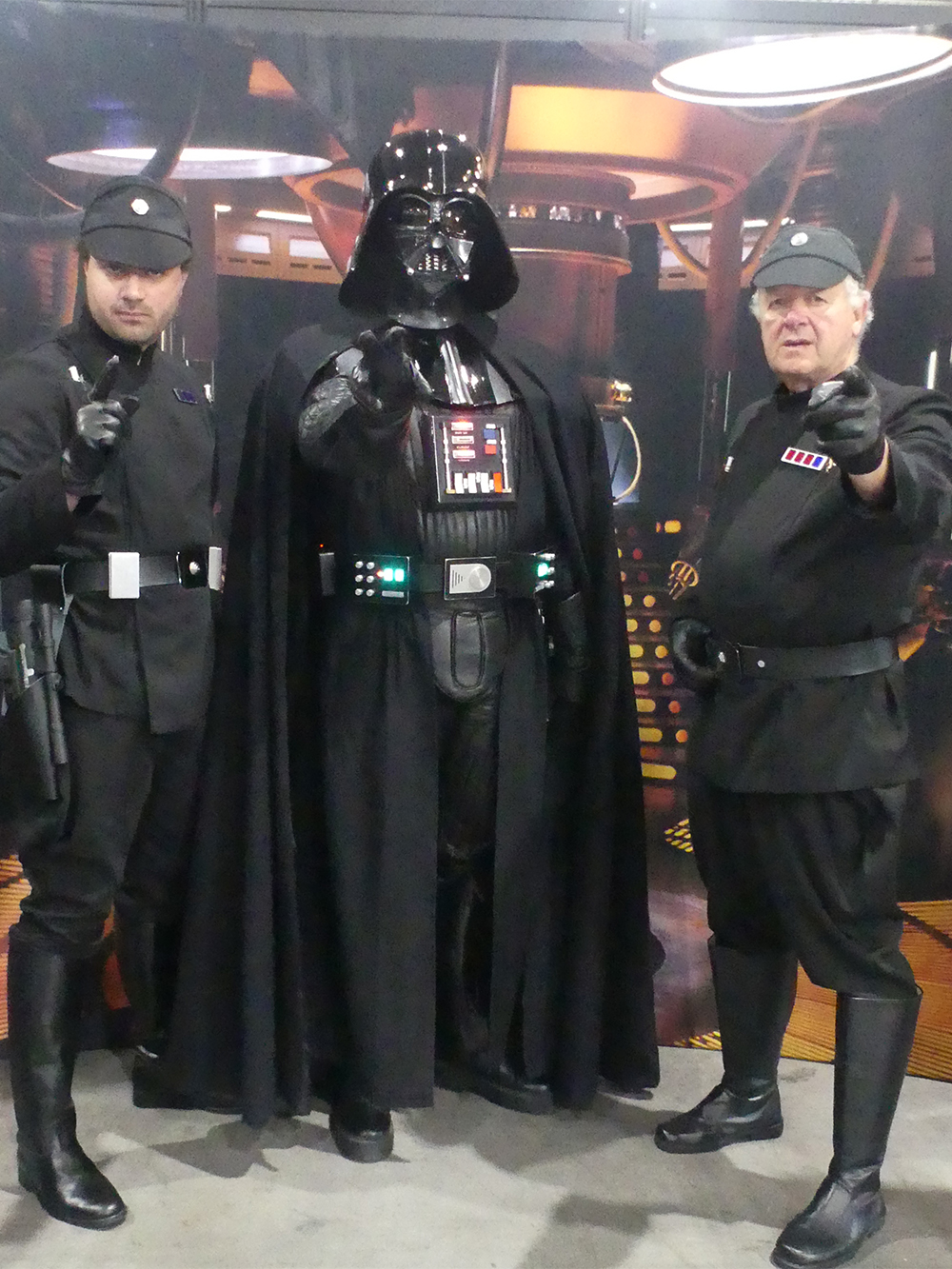
Cosplay occupied a central place in the programme of the 40th Paris Manga by TGS, held on October 3–4, 2026, at Paris Nord Villepinte. Alongside manga, Japanese culture, cinema, television, comics and video games, the event offered several ways to bring fictional characters into the real world. Its cosplay schedule combined a French international-championship qualifier, a solo and group contest, and non-competitive performances, reflecting a practice that encompasses both demanding craftsmanship and the pleasure of taking part.
A costume can be a technical project, a personal interpretation of a favourite character or a way to share an interest. Some participants seek the scrutiny of judges; others enjoy presenting a character without pursuing a prize. Paris Manga’s programme gave these different approaches a place within the same weekend.
The organiser advertised 35,500 square metres, 300 stands and four stages. Cosplay also contributes to what visitors encounter between scheduled activities: a recognisable outline, an unexpected character choice or a carefully considered pose can create a moment of interest away from a stage.
Cosplay craftsmanship turns fictional designs into wearable creations
The creative challenge begins with translating an image into something a person can wear. A drawing or digital model does not have to negotiate a crowded aisle, support its own weight or allow its wearer to sit down. A costume does. Proportions, movement and the relationship between separate components therefore matter alongside resemblance. The result involves interpretation: deciding which features carry a character’s identity and how to make those features work outside their original medium.
Depending on the project, that process can combine sewing, wig styling, make-up, painting, armour construction and prop work. Finishes change how an outfit is perceived: weathering suggests use, while a clean surface creates another impression. A shoulder piece, collar or colour choice can be as important to recognition as a large accessory.
Paris Manga’s French selection for the Cosplay Central Crown Championships made that emphasis explicit. Cospop announced a solo competition judged entirely on costume, with construction accounting for 70% of the score, character accuracy or design quality for 20%, and project ambition for 10%. The weighting placed the execution of the work at the heart of the assessment, rather than treating spectacle alone as the measure of achievement.
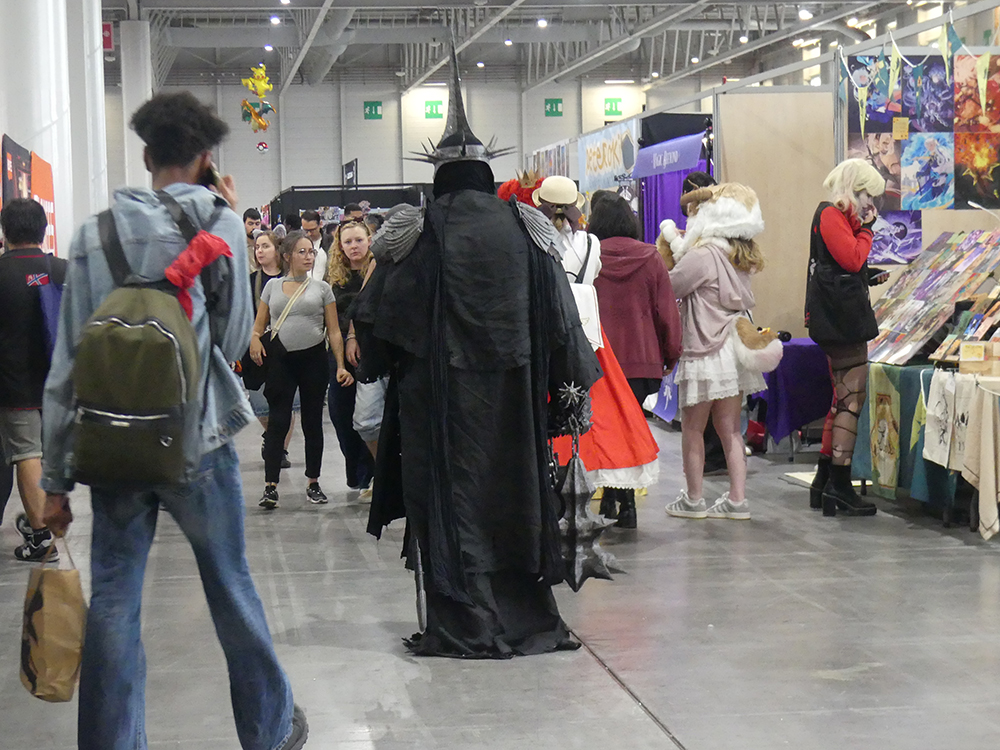
There is an instructive parallel in professional screen design. Wētā Workshop explains that an early helmet for the Witch-king of Angmar in The Return of the King was manufactured and filmed before being replaced: its resemblance to Sauron risked confusing the audience. The final film used the Morgul Lord War Mask. Even at that production level, complexity was only one consideration; the design also had to communicate clearly. Cosplay raises a comparable question whenever a character is recognised through a silhouette.
Competitions and performances offer different ways to participate
The Saturday qualifier was announced as a route to the international final in London in May 2027, a date also confirmed by MCM London Comic Con. It connected Paris Manga’s programme with a wider competition devoted to cosplay design and construction.
A separate solo and group cosplay contest was also scheduled for Saturday, while Sunday, October 4, was devoted to non-competitive performances by individuals or groups. These formats should not be confused: a championship selection, a general contest and an unranked performance offer different reasons to step in front of an audience. Together, they show why a cosplay programme benefits from providing more than one route to participation.
Performance adds another dimension to a completed costume. A stance, a hand movement or the way an accessory is held can suggest a character’s temperament without dialogue. For a group, the interaction between participants can establish a scene that no individual outfit communicates alone. This helps explain why costume construction and character presentation remain related but distinct aspects of the hobby: one creates the appearance, while the other puts it into action.
A shared enthusiasm beyond the cosplay stage
Competition represents only part of the wider cosplay culture. MCM London’s own programme, for example, separates its craftsmanship contests from a showcase that welcomes purchased costumes and outfits assembled from everyday clothing. That is a useful illustration of the hobby’s breadth, rather than a statement about Paris Manga’s contest eligibility: enjoying a character and entering a construction-based championship are different undertakings, each with its own expectations.
Costume becomes a visible point of connection between fandoms. Recognition offers an opening for conversation, while an unfamiliar design can prompt curiosity about a series, game or film. A modest outfit with a distinctive detail can communicate its reference effectively, just as an ambitious armoured creation invites attention to its construction.
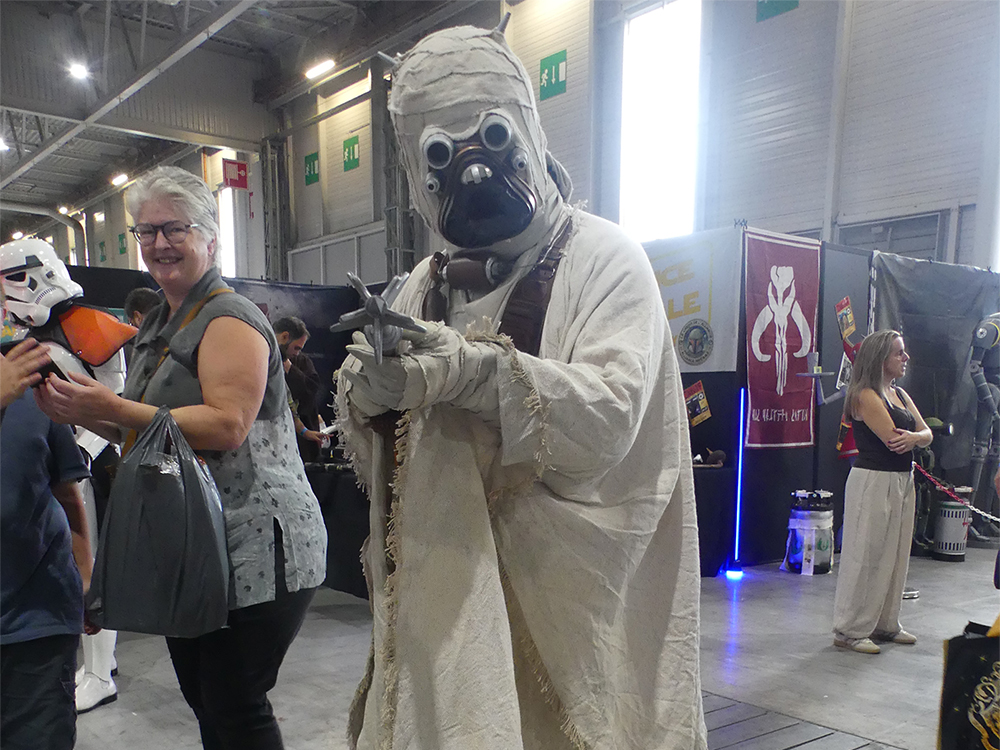
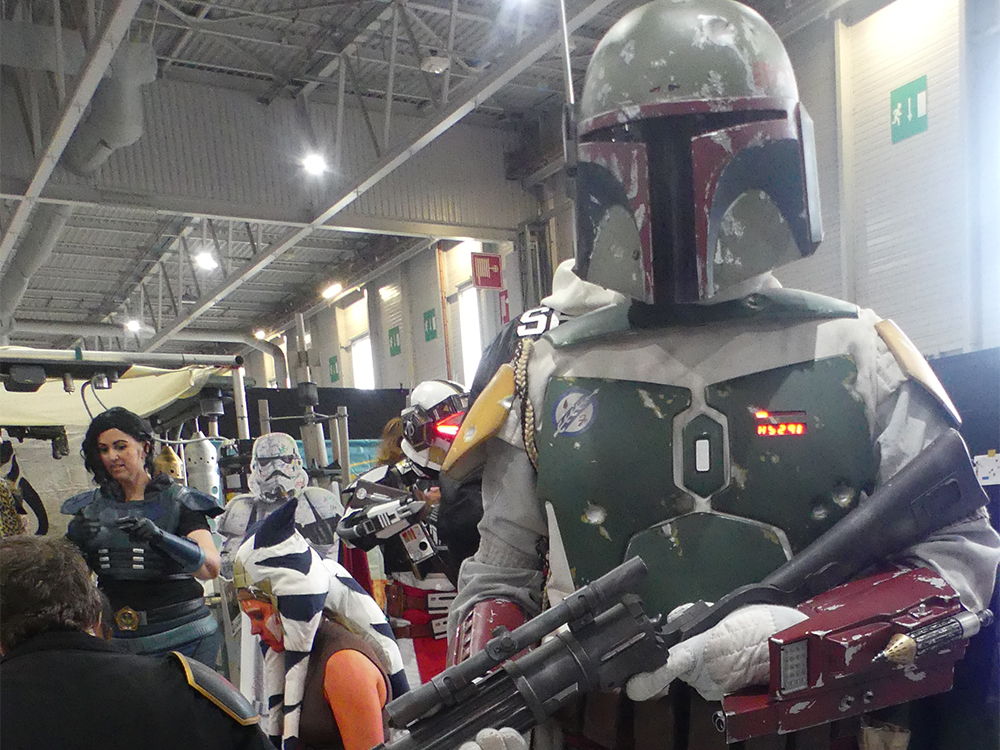
The photographs accompanying this article provide a few examples of that variety, rather than a catalogue of the weekend’s cosplay. They include Darth Vader with Imperial-style companions, Boba Fett, a Tusken Raider, a large red robot-style figure and an animal-like mask. Their different shapes and textures illustrate how many visual approaches can coexist at the same event. They also capture the social element: people posing together and a photographer framing a costumed participant.
These examples belong to the wider story of cosplay at Paris Manga: visitors contributing to the event through what they wear and how they present it. Whether pursuing a competition place or enjoying a performance, the shared creative act is taking an attachment to a fictional world and giving it a physical, personal expression.
You can discover our photos in our Flickr page
Paris Manga by TGS 2026 event recap
Where : Hall 7, Parc des Expositions Paris Nord Villepinte, France.
When : October 3–4, 2026.
What : A pop-culture convention bringing together manga, Japanese culture, cinema, television, comics, gaming and cosplay.
Photos : Boris Colletier / Mulderville