

Deauville 2026 : Les Planches and Its Cinema Heritage
Deauville 2026 : Les Planches, Where Film History Meets the Normandy Coast
Friday 4 September, 9:00 AM PT La Normandie, Deauville, Les Planches et le front de mer 2026-09-04 → 2026-09-13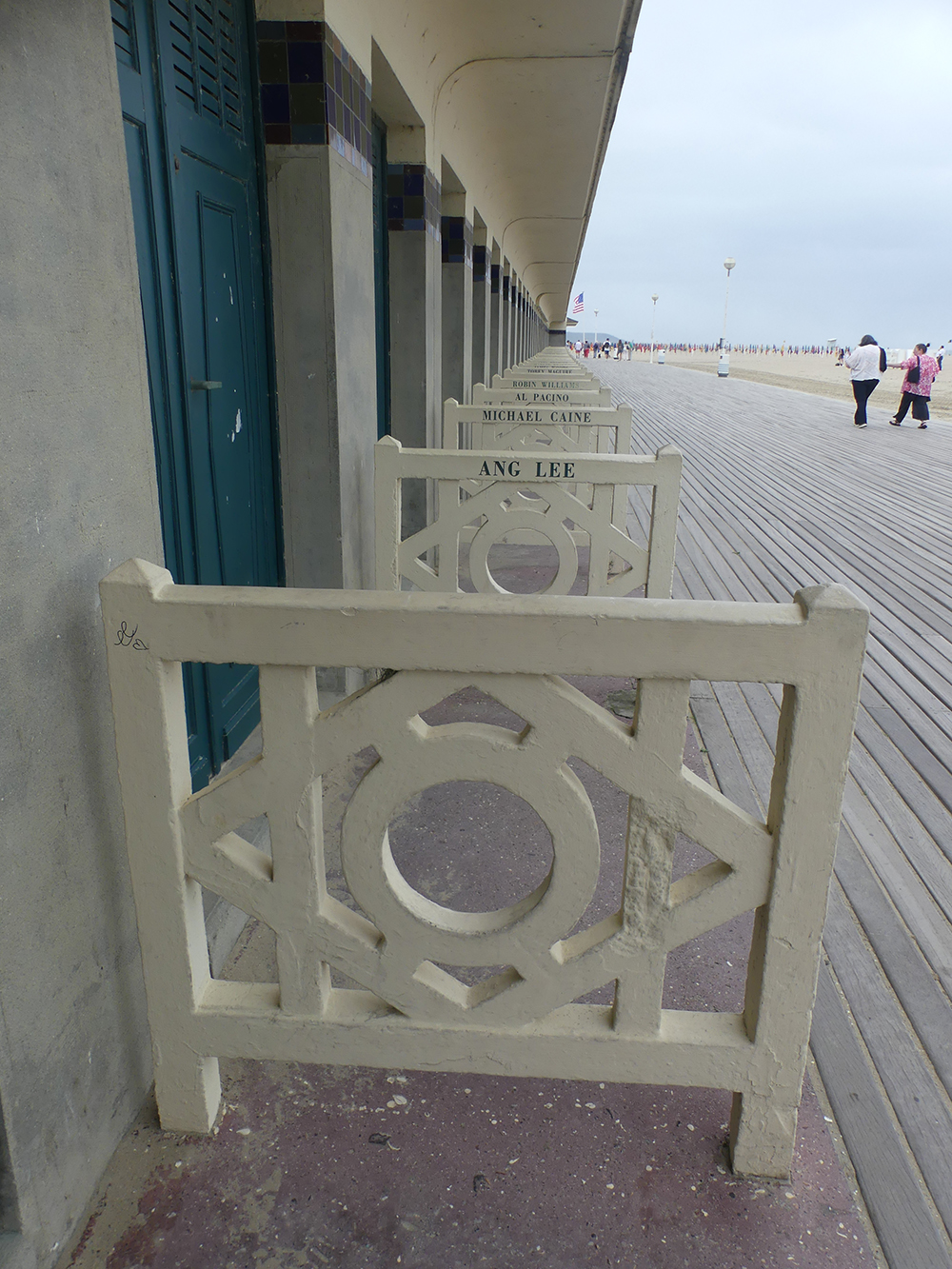
With the 52nd Deauville American Film Festival now concluded, Les Planches offers a lasting connection to the cinema celebrated in the town’s screening rooms. The 2026 edition ran from 4 to 13 September, with the official website listing 80 films across nine categories. Along the beachfront, the names painted on the bathing-cabin barriers place that annual gathering within a much longer history of seaside leisure, architecture and screen culture. Official festival website.
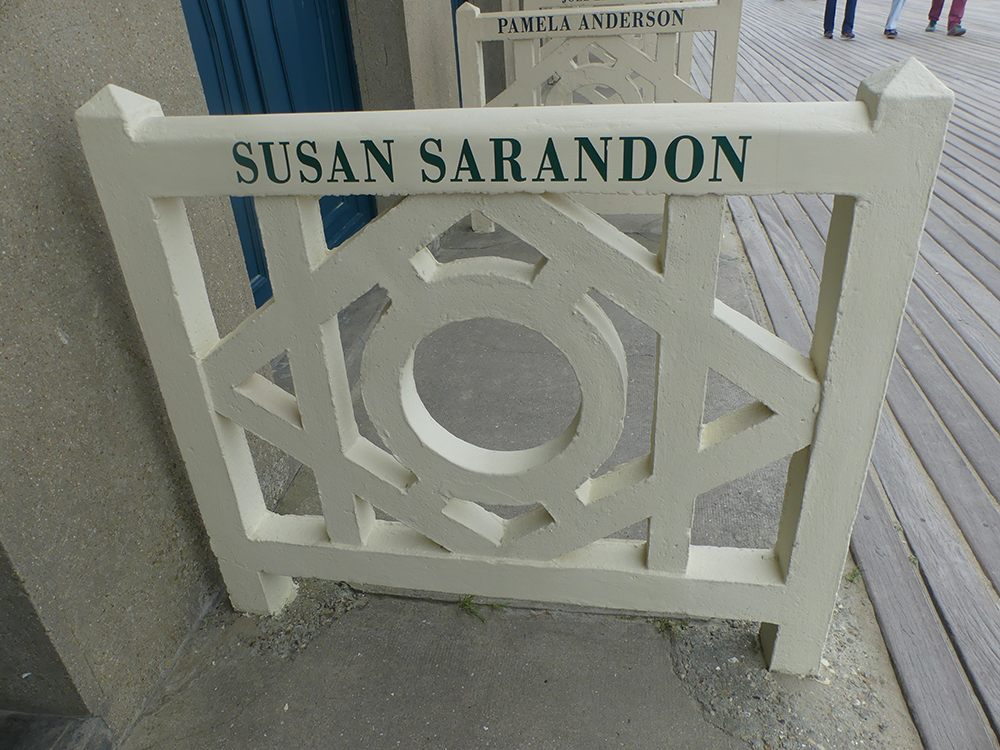
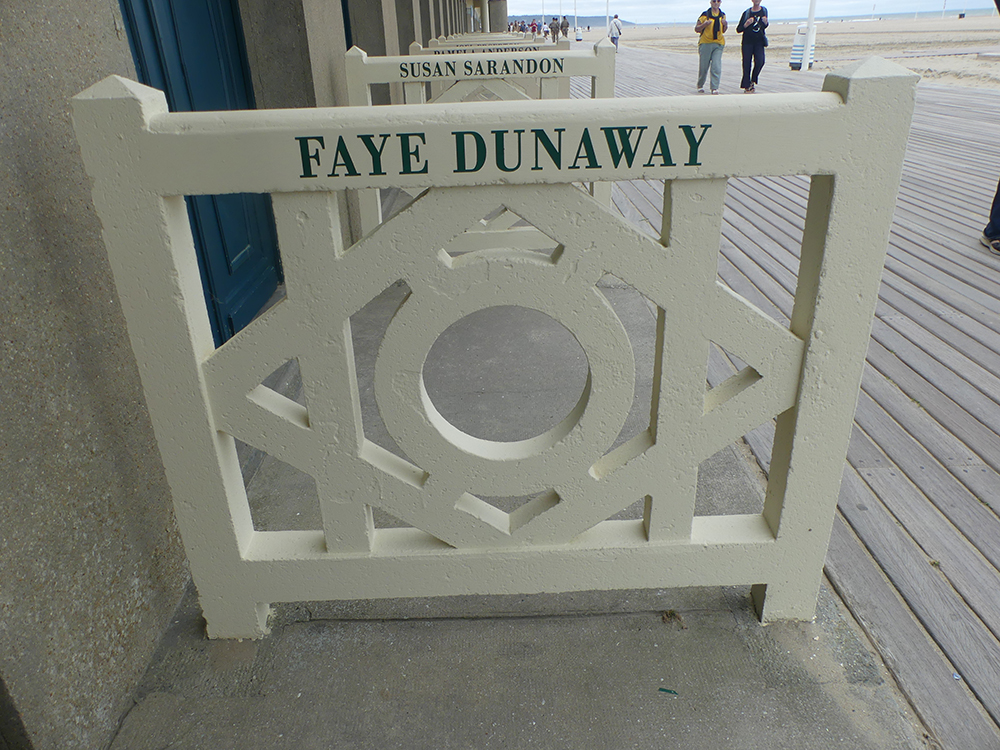
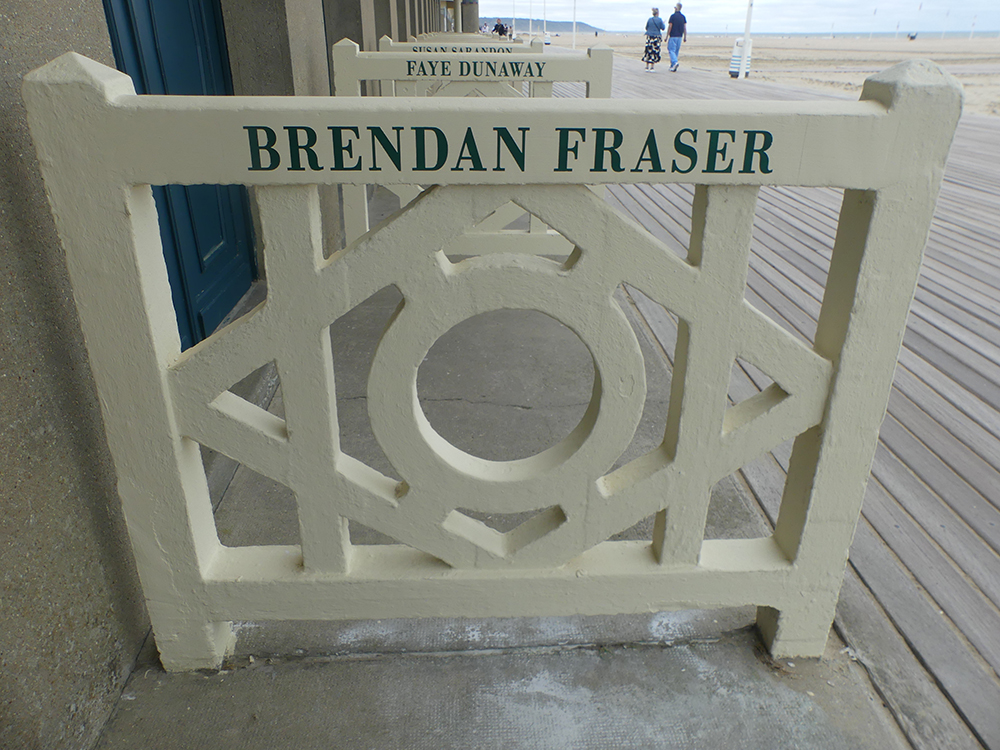
The photographs supplied for this feature bring the story down to the scale of a single name and a single cabin. They show tributes to Pamela Anderson, Forest Whitaker, Ridley Scott, Spike Lee and Ed Harris, framed by pale geometric barriers, columns and blue doors. These images document the promenade’s existing cinematic landscape; they do not, by themselves, establish appearances or new dedications during the 2026 festival.
From fashionable seaside resort to Art Deco landmark
Long before its association with American cinema, the beachfront was being reshaped around the needs of a fashionable resort. In 1921, the municipality launched a competition to replace ageing bathing facilities designed by Georges Wybo in 1912. Charles Adda won in September 1922. His Pompeian Baths combined 250 cabins with courtyards, porticoed galleries, shops, steam baths and a café-bar. The complex opened on 5 July 1924 and expanded in 1928. French Ministry of Culture heritage record.
The name “Pompeian Baths” points to the classical inspiration behind this seaside architecture. Courtyards and colonnades gave bathing an ordered, almost ceremonial setting, while white concrete and coloured mosaics expressed the modernity of the period. The celebrity inscriptions occupy an architectural setting conceived decades before the festival existed.
The wooden promenade also answered a practical concern: it allowed elegantly dressed visitors to enjoy the seafront without trailing long dresses through the sand. A surface designed for comfortable walking became a place associated with actors, filmmakers and film memories. Historical overview of Les Planches.
A boardwalk shaped by war and renewed heritage protection
The promenade’s history includes a less familiar wartime rupture. The Ministry of Culture records that the baths were requisitioned during the Second World War and that boards from the walkway were removed to shore up trenches. Reconstruction continued progressively until 1960. This account gives the apparently continuous seafront a different perspective: what visitors see also reflects decades of repair and rebuilding. Ministry of Culture.
The same record updates the protection history beyond the June 2019 listing cited in older accounts. Block A received classification on 15 January 2025; blocks B and C followed on 2 July 2025. Those later decisions concern specific parts of the bathing complex. They should not be presented as a blanket reclassification of the entire promenade.
A Man and a Woman and Deauville’s enduring screen identity
For cinema lovers, 2026 also marks 60 years since the 1966 release of A Man and a Woman. Directed by Claude Lelouch, the film brought together Anouk Aimée and Jean-Louis Trintignant in a romance inseparable from Deauville. The beach, the Normandy hotel and the racing-driver imagery helped turn the resort into an emotional landscape. That association predates the American Film Festival, which began in 1975, and gives the town’s cinema identity a distinctly French foundation.
The film’s international recognition is documented by the Academy: at the 1967 Oscars, it won Foreign Language Film and the award for an original story and screenplay, credited to Claude Lelouch and Pierre Uytterhoeven. Using the historical category name preserves the distinction between the award as presented then and today’s International Feature Film terminology. Academy Awards archive.
The relationship continued through A Man and a Woman: 20 Years Later in 1986 and The Best Years of a Life in 2019, both directed by Claude Lelouch. Viewed across those films, Deauville becomes a setting to which characters and audiences can return as time passes.
Famous names on the cabins and a new festival generation
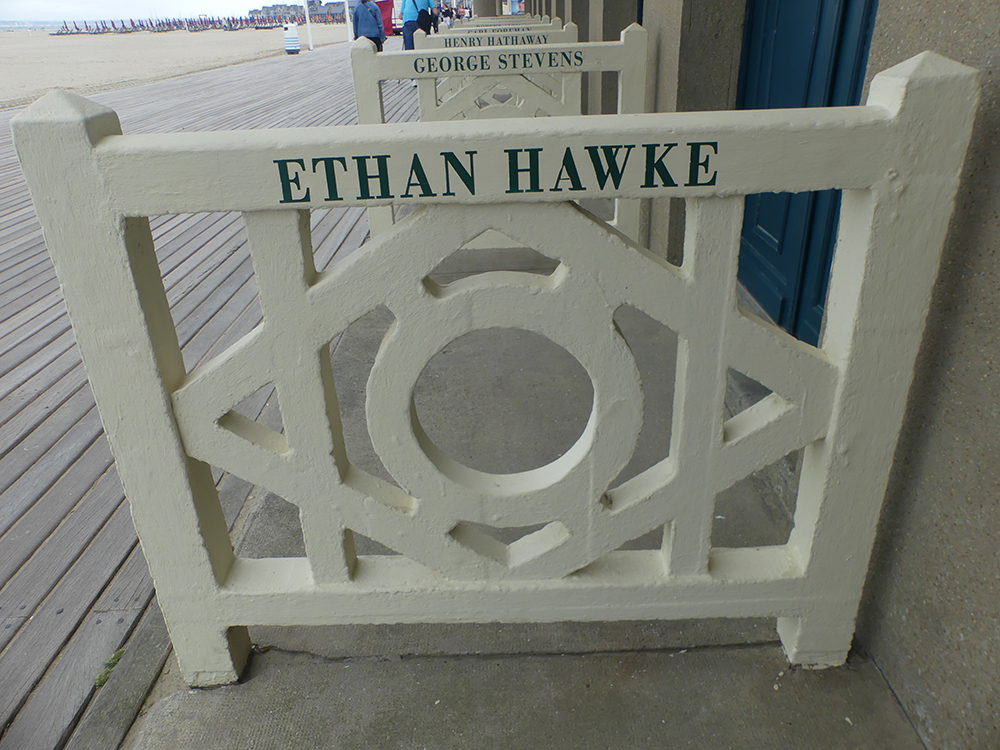
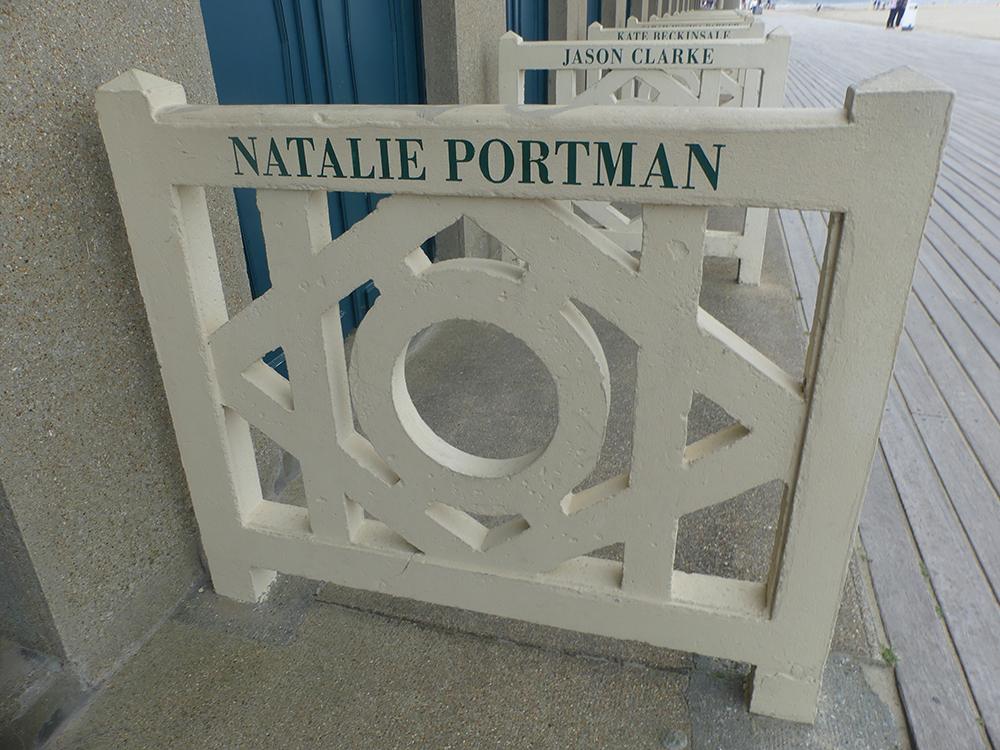
The practice of placing film personalities’ names on the cabin barriers developed from an idea associated with Anne d’Ornano in 1987. The inscriptions are on the “lices”, the barriers separating the cabin spaces, a detail particularly clear in the photographs. Their placement makes the tributes part of the promenade’s everyday fabric: a visitor encounters a name at walking pace, with the beach immediately beyond.
The photographs suggest another way of reading the site. Spike Lee, Forest Whitaker, Pamela Anderson, Ridley Scott and Ed Harris appear within the same repeated architectural framework, despite their different careers. The visual effect is that of a shared film memory assembled from individual names.
Meanwhile, the 2026 festival added its own chapter to the town’s celebration of screen talent. On 11 September, Patrick Schwarzenegger received a Deauville Rising-Star Award at the Centre International de Deauville. The official festival report places the ceremony at 7:30 p.m., before a preview of Bunker, directed by Florian Zeller, who attended. This documented event connects the historical setting with the festival’s interest in a newer generation, without suggesting a cabin dedication that the report does not establish. Official festival report.
You can discover our photos in our Flickr page
Photos : Boris Colletier / Mulderville