

Deauville 2026: Catherine Deneuve's American Cinema
Deauville 2026: Catherine Deneuve Reveals the American Films That Shaped Her
Saturday 12 September, 2:00 PM PT Normandy, Deauville, Les Franciscaines 2026-09-12
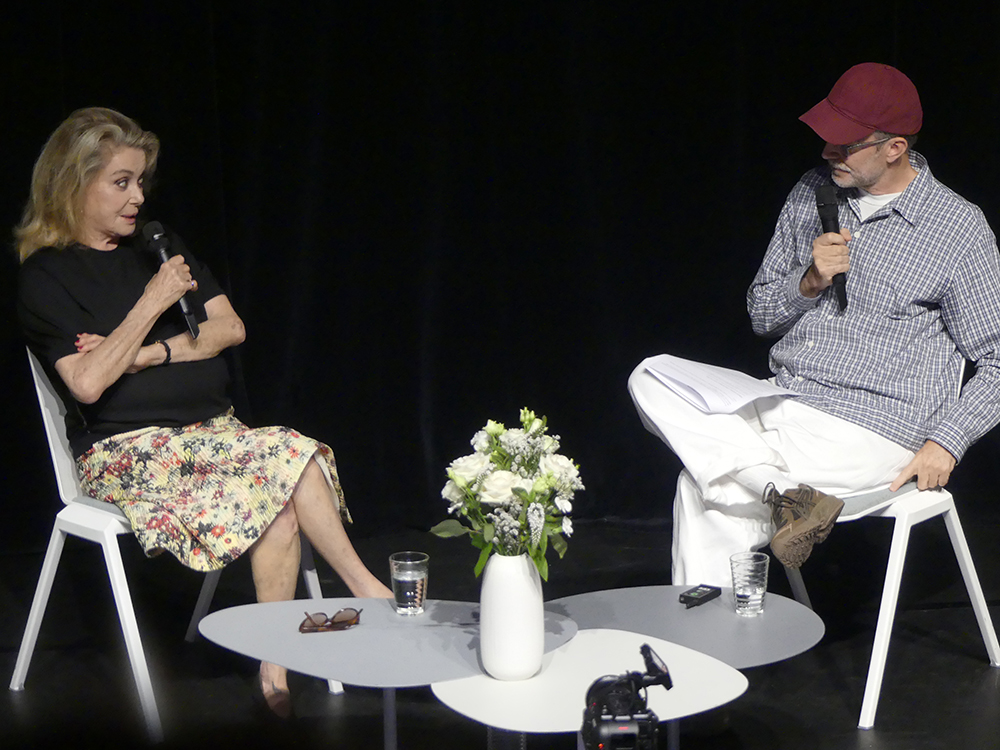
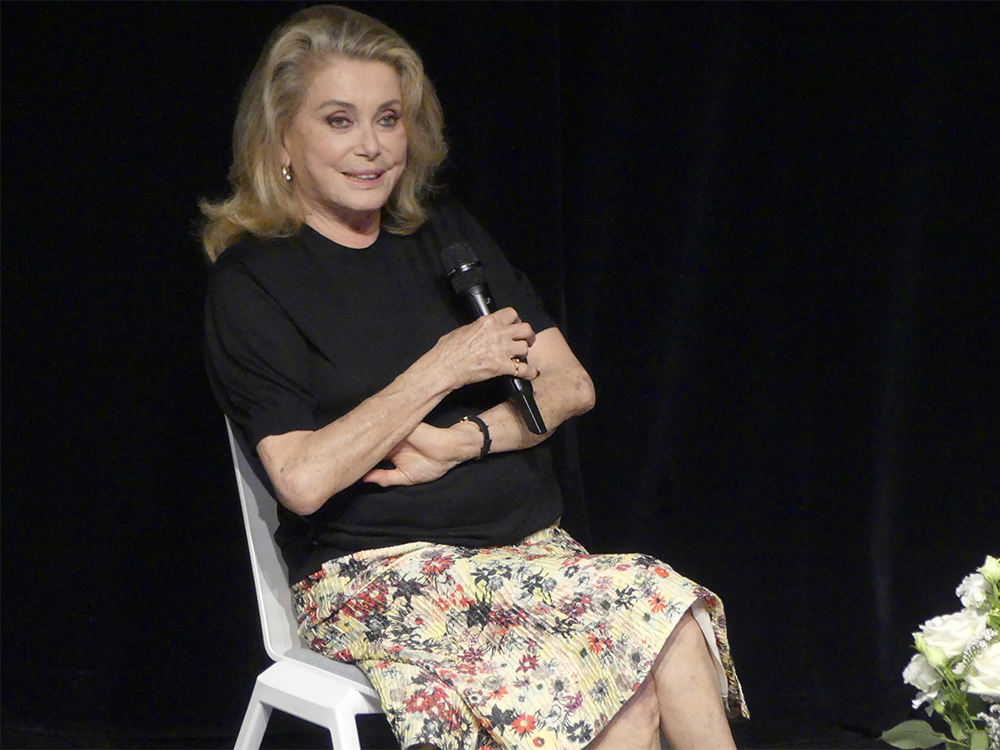
At the 52nd Deauville American Film Festival, Catherine Deneuve offered something more intimate than a conventional masterclass: a journey through the American cinema that has stayed with her. On September 12, the French screen icon appeared at Les Franciscaines for the carte blanche “My American Cinema,” moderated by Loïc Prigent and organized with the support of Chanel. The official programme scheduled the encounter for 2:30 p.m. and 90 minutes, during an edition running from September 4 to 13 with 80 films across nine categories. Rather than assemble an obvious canon, Catherine Deneuve chose four films for their directors and screenplays, deliberately reaching beyond the best-known titles.
Welcomed with an ovation, Catherine Deneuve noticed the camera in front of her and suggested that it be raised — a telling reflex from an actress with decades of experience before a lens. Her guiding idea was clear: the director and story matter most, even before the role. That principle linked The Magnificent Ambersons, Marnie, Bunny Lake Is Missing and Ulzana's Raid, works marked by obsession, psychological tension and precise mise-en-scène.
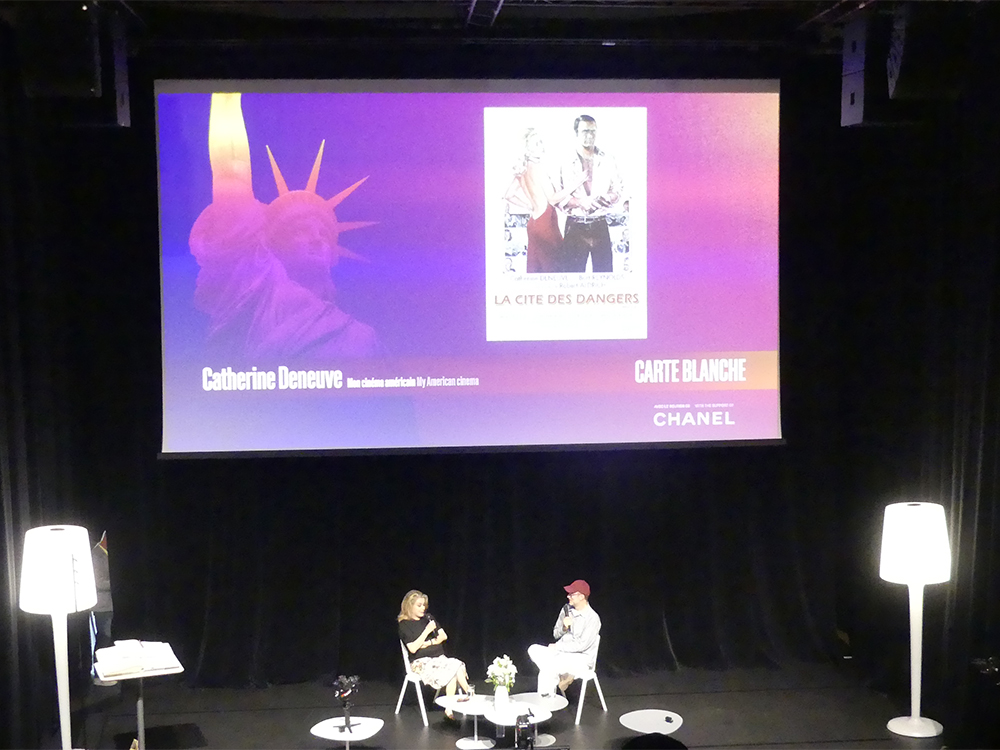
Orson Welles and an unforgettable breakfast encounter
The journey began with The Magnificent Ambersons, the 1942 drama directed by Orson Welles. Catherine Deneuve praised its staging, lighting and movement of characters. Adapted from Booth Tarkington's novel, it follows the decline of a wealthy family and the destructive possessiveness of a son toward his widowed mother. Its production history is famously troubled: RKO substantially shortened and reworked the film after preview screenings while Orson Welles was in Brazil, leaving the surviving release version as one of Hollywood's best-known cases of studio intervention.
Her memory of Orson Welles was more playful. Catherine Deneuve recalled meeting the imposing filmmaker when she was young and finding him eating an entire chicken early in the morning. The anecdote drew laughter, but her conclusion mattered more: meeting admired filmmakers was never her objective; their films were. It captured the spirit of an afternoon devoted to how images and directorial choices survive in a viewer's memory.
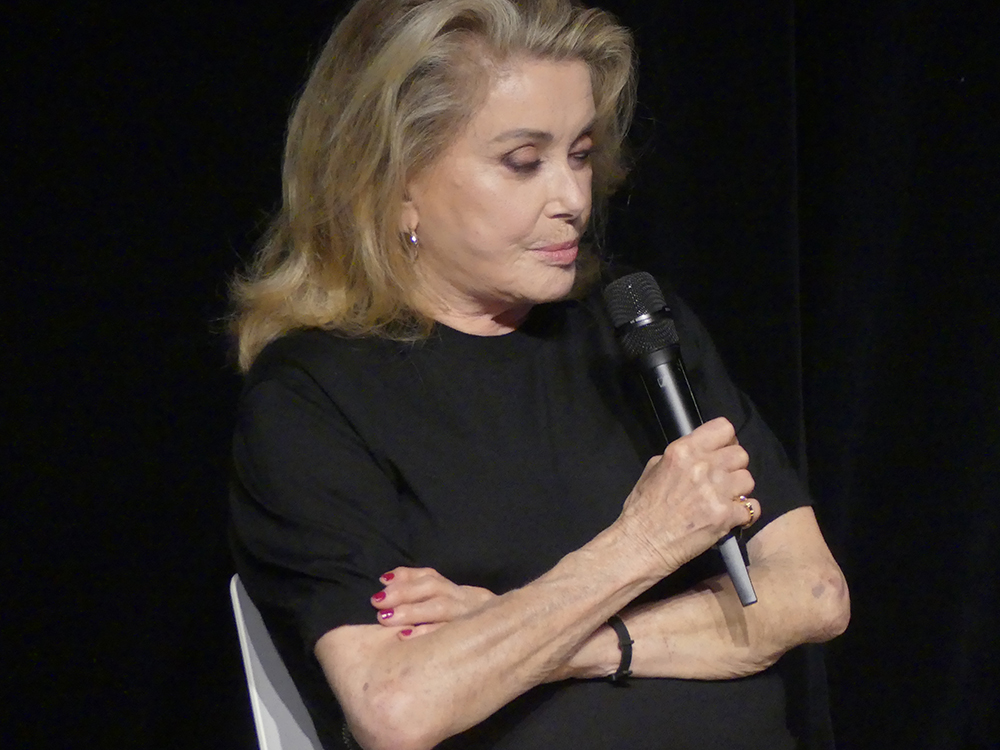
Alfred Hitchcock, Marnie and the role she wished she had played
Her second choice, Marnie, released in 1964 and directed by Alfred Hitchcock, carried a personal charge. Catherine Deneuve said it was one of the few films she genuinely wished she had acted in. She focused on its opening details — hands, documents, changing identities and the title character's transformation — visual information that establishes mystery before exposition. She also remembered meeting Alfred Hitchcock in Paris and discussing a possible project that never materialized.
The conversation turned to Tippi Hedren and the difficult history surrounding her collaborations with Alfred Hitchcock. Catherine Deneuve connected the subject to Dancer in the Dark, recalling Björk Guðmundsdóttir leaving the set amid severe tensions with director Lars von Trier before returning. The film won the Palme d'Or at Cannes in 2000, while Björk Guðmundsdóttir received Best Actress. The memory underlined a hard reality of filmmaking: once contracts, crews, financing and schedules are engaged, leaving a production can be extraordinarily complicated.
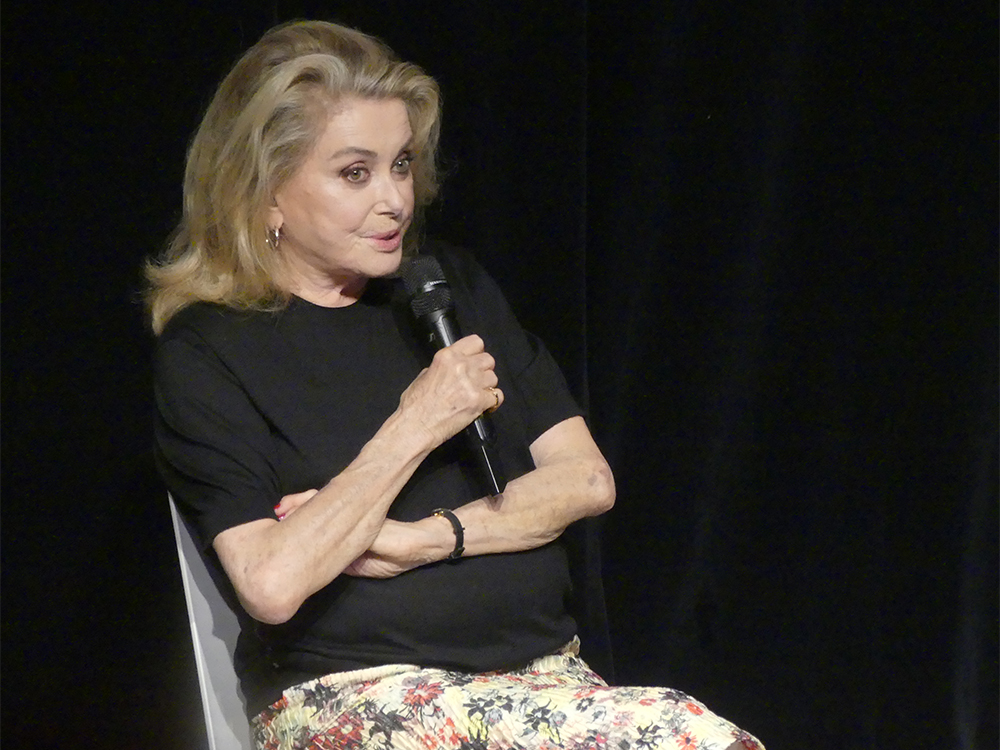
Otto Preminger and the disturbing mystery of Bunny Lake Is Missing
For her third selection, Catherine Deneuve chose Bunny Lake Is Missing, the 1965 psychological mystery directed by Otto Preminger. The story follows a mother in London whose daughter disappears from school, only for the people around her to question whether the child ever existed. The British Film Institute lists Carol Lynley, Keir Dullea and Laurence Olivier among its principal cast, and the film steadily destabilizes the viewer's confidence in what is real.
There was also a French connection: Catherine Deneuve said filmmaker André Téchiné had introduced her to the film. She was fascinated by the mother's determination and the disturbing role played by her brother. Asked whether she had met Otto Preminger, she joked that her goal was not to meet every director she admired — she went to see their films. It was perhaps the clearest summary of her cinephilia: admiration begins with the work.
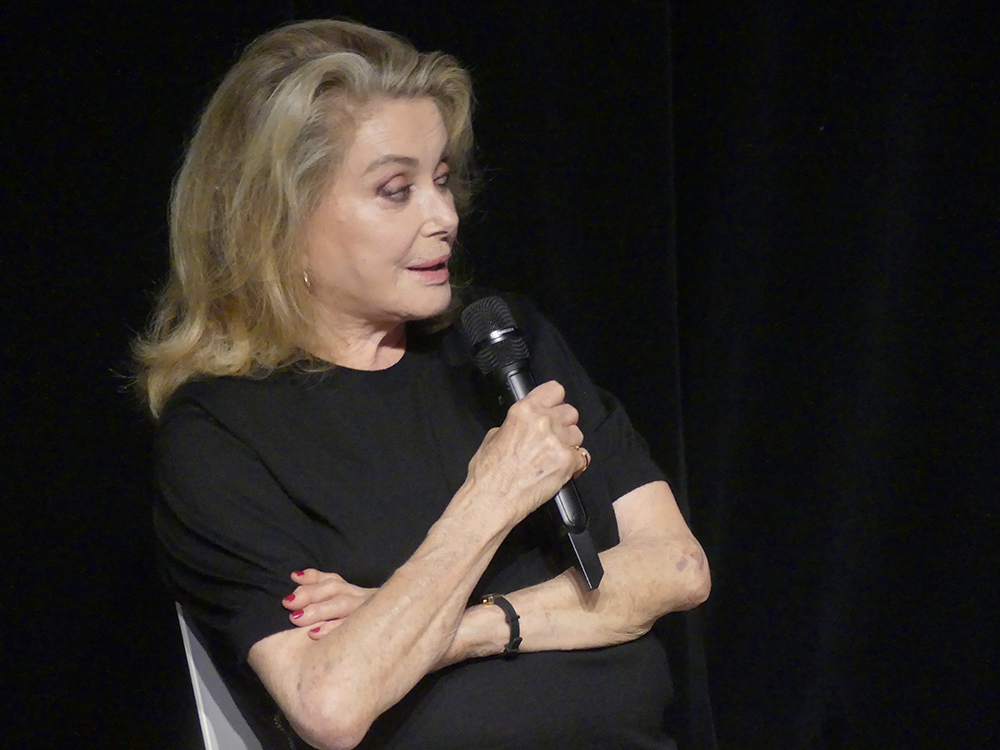
Robert Aldrich, Ulzana's Raid and a leather-envelope invitation
The final choice was Ulzana's Raid, the 1972 western directed by Robert Aldrich and starring Burt Lancaster. Catherine Deneuve emphasized its relentless tension, violence and modern rhythm. Her connection with Robert Aldrich was direct: she later worked with him on Hustle, released in 1975, opposite Burt Reynolds. This corrects an error in one account of the Deauville discussion that attributes Hustle to Robert Altman; the film was directed by Robert Aldrich.
One of the afternoon's best anecdotes concerned how the Hustle screenplay reached her. Catherine Deneuve remembered receiving it in a leather envelope engraved with the film's title and her name, as though her participation were already settled. She took the gesture as evidence of how strongly Robert Aldrich wanted her. She also recalled seeing him film with two cameras placed side by side, unusual for her at the time. Asked about her character, she described Nicole Britton with mischievous economy: a woman whose work involved sexual conversations by telephone.
Hollywood remains possible — for the right story
The programme ultimately became a reflection on Catherine Deneuve's relationship with America. Her career crossed the Atlantic in The April Fools, Hustle, The Hunger and The Musketeer, yet she explained that she had never strongly wanted to remain in the United States. Earlier, long shoots also meant time away from her children, Christian Vadim and Chiara Mastroianni, making the return home more important than extending a Hollywood adventure.
Would she work in America again? Her answer was skeptical but not absolute. The prospect does not particularly attract her today, yet a great screenplay and a great story could change everything. That caveat completed the circle opened at the start. For Catherine Deneuve, prestige, geography and even the size of a part remain secondary to writing and filmmaking. At a festival devoted to American cinema, she used four classics not simply to revisit the past, but to defend the lasting power of direction, storytelling and unforgettable images.
Event recap
What: My American Cinema — Carte Blanche with Catherine Deneuve, centered on The Magnificent Ambersons by Orson Welles, Marnie by Alfred Hitchcock, Bunny Lake Is Missing by Otto Preminger, and Ulzana's Raid by Robert Aldrich.
Where: Normandy, Deauville, Les Franciscaines,
When: Saturday, September 12, 2026, at 2:30 p.m.; scheduled duration: 45 minutes
What: Moderated by Loïc Prigent and organized with the support of Chanel during the 52nd Deauville American Film Festival, held September 4-13, 2026.
You can discover our photos in our Flickr page
Photos : Boris Colletier / Mulderville