

SDCC 2026: 10 Days Before the World's Biggest Cultural Event, the Streets Around Convention Center Are Already Transforming
Sunday 12 July, 2:00 PM PT San Diego, Marina 2026-07-12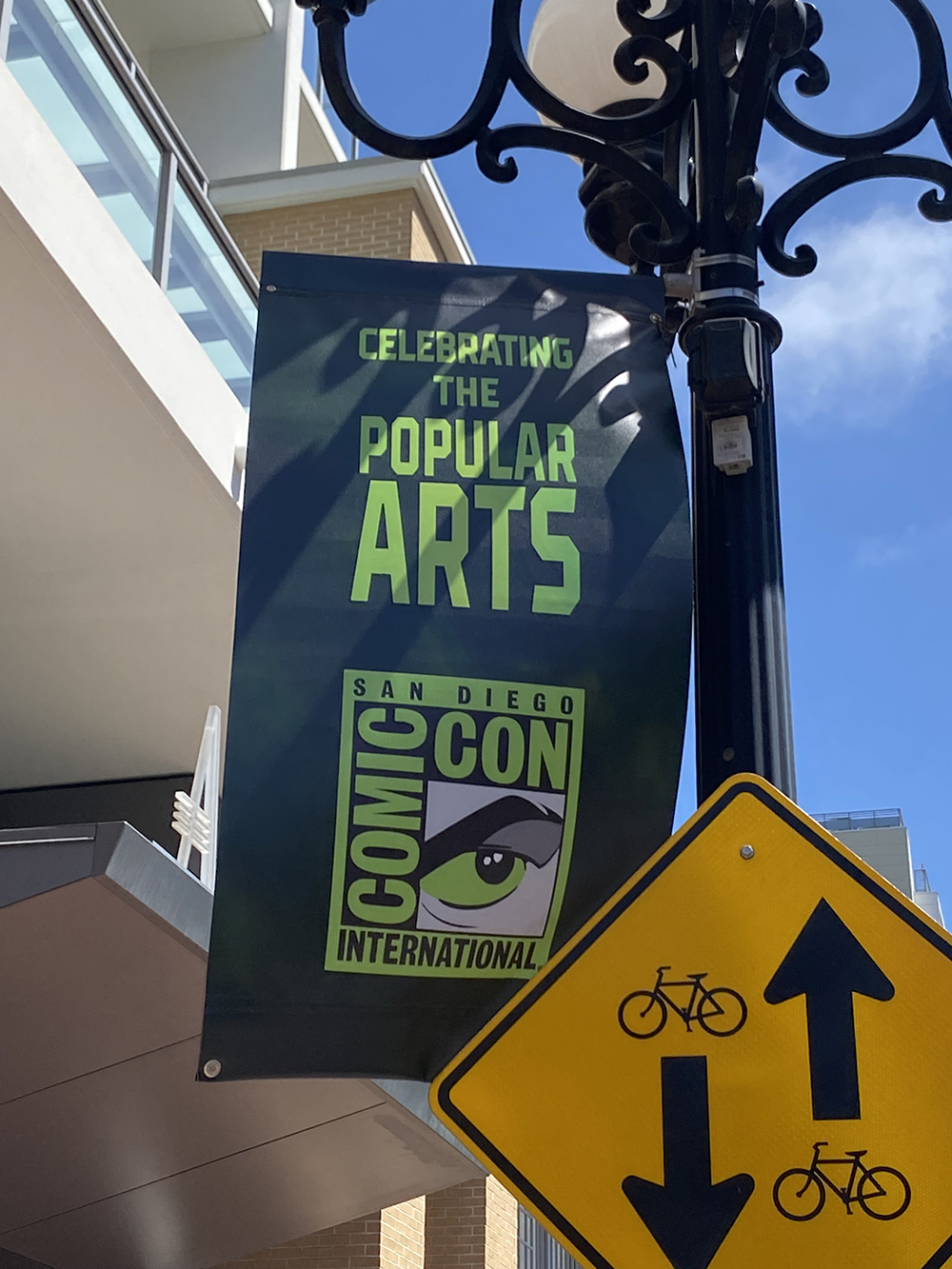
With exactly ten days remaining before the official opening of San Diego Comic-Con 2026, downtown San Diego is quietly undergoing one of the most remarkable annual transformations in the entertainment world. While the first fans have yet to flood the exhibit halls and the iconic Preview Night is still a week away, anyone walking through the Marina District today can already witness the early signs of what will soon become the largest celebration of popular culture on the planet. Construction crews, production teams, exhibitors, hotel staff and city workers are operating around the clock as the neighborhood surrounding the San Diego Convention Center gradually evolves into a massive immersive playground that, for a few extraordinary days each July, becomes the epicenter of the global entertainment industry. Founded in 1970, Comic-Con has grown from a small gathering of comic book enthusiasts into an international phenomenon welcoming more than 135,000 official attendees while attracting hundreds of thousands more visitors to downtown San Diego through countless free experiences and offsite activations.
The transformation begins in the Marina District, the waterfront neighborhood that has become inseparable from Comic-Con itself. Normally characterized by its luxury hotels, palm-lined promenades, the scenic Embarcadero and the distinctive white sails of the Convention Center, the district now takes on an entirely different identity. Temporary structures begin appearing on sidewalks, barricades are installed, oversized promotional banners cover nearby buildings and production vehicles line Harbor Drive as crews prepare experiences that will soon welcome thousands of eager fans. The San Diego Convention Center, whose unmistakable Sails Pavilion has become one of the city's architectural icons, once again prepares to host the world's largest gathering dedicated to comics, film, television, animation, gaming and popular arts. Over the years, the venue has become synonymous with Comic-Con, hosting the convention since 1991 while continually adapting to the growing scale of the event.

Just a few blocks away, the historic Gaslamp Quarter is preparing for its annual reinvention. Throughout most of the year, the Victorian-era district is renowned for its restaurants, rooftop bars, boutique hotels and vibrant nightlife. During Comic-Con week, however, it becomes something entirely different. Historic façades disappear beneath giant wraps promoting blockbuster films and television series, restaurants transform into themed venues, storefronts become interactive attractions and virtually every street corner offers a reminder that Comic-Con has long since expanded beyond the Convention Center itself. Walking through the Gaslamp during Comic-Con often feels like stepping directly into a movie set, where fans dressed as superheroes, science-fiction icons, anime characters and video game legends mingle with Hollywood executives, comic book creators and curious tourists. What began decades ago as a convention centered primarily on comic books has evolved into a citywide cultural celebration unlike any other.
This year's preparations suggest that 2026 will once again embrace the trend that has redefined the convention over the past decade: the explosion of immersive offsite experiences. Increasingly, major studios and streaming platforms choose to extend their presence far beyond traditional booths, constructing elaborate environments that blur the boundary between marketing and entertainment. These installations frequently become attractions in their own right, drawing enormous crowds regardless of whether visitors possess a Comic-Con badge. Early announcements already point toward another spectacular edition, with brands preparing interactive experiences celebrating franchises including Star Trek, SpongeBob SquarePants, Silo, and numerous upcoming film and television productions, further reinforcing the notion that Comic-Con now belongs as much to the streets of San Diego as it does to the Convention Center itself.

Preparing for an event of this magnitude also requires an extraordinary logistical effort. Harbor Drive, the city's principal waterfront artery bordering the Convention Center, is once again scheduled for partial closure during the convention to prioritize pedestrian movement and ensure visitor safety. Hotels throughout the Marina District have been preparing for months, restaurants are increasing staffing levels, transportation services are expanding operations and businesses throughout downtown eagerly anticipate one of the busiest weeks of the year. Although Comic-Con officially welcomes approximately 135,000 badge holders, the convention's footprint extends far beyond those fortunate enough to secure admission, with downtown San Diego regularly hosting hundreds of thousands of additional visitors drawn by public activations, cosplay gatherings, outdoor exhibitions and entertainment events.
The extraordinary evolution of Comic-Con over the last half-century explains why these ten days before opening have become almost as fascinating as the convention itself. The inaugural event in 1970 attracted only a few hundred attendees who gathered to celebrate comic books and science fiction. Today, Comic-Con represents the premier global showcase for Hollywood studios, television networks, streaming platforms, publishers, toy manufacturers and gaming companies, while remaining true to its comic book roots through Artist Alley, creator signings, scholarly conferences and the prestigious Eisner Awards. Every July, the world's entertainment industry converges on San Diego not simply to unveil new projects but to engage directly with one of the most passionate fan communities anywhere in the world.

Perhaps what makes the days leading up to Comic-Con so captivating is the sense of anticipation visible throughout downtown. Long before Hall H fills with fans awaiting exclusive presentations, before the Exhibit Hall opens its doors and before thousands of cosplayers parade through the streets, there is a unique moment when the city stands on the threshold of transformation. The cranes, scaffolding, wrapped buildings, temporary installations and bustling crews all hint at the spectacle that is about to unfold. For longtime Comic-Con veterans, these early preparations have become a tradition in themselves—a reminder that the event is far more than a convention. It is an annual reinvention of an entire neighborhood, where the Marina District and the Gaslamp Quarter become the stage for the world's largest cultural celebration dedicated to imagination, storytelling and pop culture. In ten days, those streets will no longer simply surround the San Diego Convention Center—they will become the beating heart of the entertainment world.
You can discover our photos in our Flickr page
Photos : Copyright Alvin Hernandez Revilas / Mulderville