

The Death of Robin Hood
Directed by Michael Sarnoski (2026)
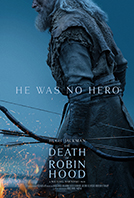
| With | Hugh Jackman, Jodie Comer, Bill Skarsgård, Murray Bartlett et Noah Jupe |
| Runtime | 122 minutes |
| Release | 2026-06-19 |
| Rating | 8/10 |
Hanté par son passé après une vie de crimes et de violence, Robin des Bois est laissé pour mort à l’issue d’un combat qu’il pensait être le dernier. Recueilli par une femme mystérieuse, il se voit offrir une ultime chance de rédemption…
The review
By Mulder 2026-06-22
Over the decades, Robin Hood has been the subject of countless film adaptations, ranging from Errol Flynn’s flamboyant charm to Sean Connery’s romantic melancholy, including Kevin Costner’s heroic exploits and even the animated fox beloved by generations of moviegoers. Yet Michael Sarnoski offers something entirely different with The Death of Robin Hood, a film that strips the legend of its centuries of history to replace it with something far more unsettling, intimate, and surprisingly moving. Rather than celebrating the famous outlaw, the film examines him. It explores what remains when the stories fade, when the songs are no longer sung, and when a man is finally forced to confront the truth behind his own myth. The result is one of the boldest reinterpretations of the Robin Hood legend ever brought to the screen, a film that seems less concerned with adventure than with mortality, regret, and the insurmountable burden of living with the consequences of violence.
From its very first minutes, the film offers a radically different take on its iconic protagonist. Hugh Jackman portrays Robin not as a heroic rebel, but as a weary and broken outlaw, haunted by decades of carnage. This Robin openly rejects the legends that have grown up around his name, asserting that he was never a noble defender of the poor, but rather a ruthless killer who left behind an endless trail of grief and vengeance. It’s a fascinating creative gamble, one that immediately evokes revisionist Westerns such as Unforgiven rather than traditional medieval adventures. The first act is shockingly brutal, presenting violence not as spectacle, but as something ugly, exhausting, and cyclical. Each death appears as another link in a chain that stretches across generations. Michael Sarnoski refuses to romanticize the struggle, and the effect is often unsettling. Yet beneath the blood and mud lies a deeper purpose: to demonstrate just how impossible it becomes to escape a life built on violence once the consequences begin to reverberate from all sides.
It is in the transition that follows that the film truly finds its identity. After suffering devastating injuries, Robin finds refuge in a secluded priory led by Sister Brigid, portrayed with extraordinary subtlety by Jodie Comer. Here, the narrative slows considerably, trading sword fights for contemplation. The priory seems almost detached from reality, suspended somewhere between a sanctuary, purgatory, and the Last Judgment. Bathed in natural light and surrounded by breathtaking landscapes, this environment offers a perfect contrast to the darkness Robin has carried throughout his life. Rather than offering an easy redemption, Michael Sarnoski explores the far more complex notion of responsibility. Can a man responsible for unimaginable suffering ever truly change? Can forgiveness exist if self-forgiveness remains impossible? These questions hang over every interaction and lend the film an emotional depth that elevates it far beyond a mere genre exercise.
Much of the film’s success rests on Hugh Jackman, who delivers one of the best performances of his career. Comparisons to Logan are inevitable, but this role allows him to explore even darker territory. There is very little heroism left in this Robin Hood. What makes this performance remarkable is the way Hugh Jackman strikes a balance between brutality and vulnerability. Robin remains capable of terrible violence, but beneath that hardened shell lies a man exhausted by his own existence. Every glance, every hesitation, every moment of silence suggests years of accumulated guilt and emotional decay. It’s a performance that relies not on grand speeches but on restraint, and one that becomes increasingly heart-wrenching as the film progresses. In the final act, Hugh Jackman transforms Robin into a tragic figure whose greatest battle is no longer against his enemies, but against himself.
Equally impressive, Jodie Comer portrays Sister Brigid, who emerges as the moral center of the story. In many ways, she becomes the film’s true heroine. While Robin embodies destruction, Brigid represents compassion, patience, and the possibility of healing. Their relationship avoids the clichés of romance and evolves into something richer and more meaningful. Jodie Comer brings warmth and understated intelligence to every scene, creating a character whose strength comes not from physical power but from unwavering empathy. The supporting cast is also excellent. Bill Skarsgård delivers a memorable performance as Little John, imbuing the character with an unstable nature and tragic humor, while Murray Bartlett is almost completely hidden beneath layers of bandages to create one of the film’s most moving characters. His leper serves as both a philosopher and a guide, offering some of the film’s most profound reflections on suffering, forgiveness, and acceptance. For their part, the young actors Faith Delaney and Noah Jupe provide emotional counterpoints that force Robin to confront the legacy he will leave behind.
Visually, The Death of Robin Hood is breathtaking. Cinematographer Pat Scola creates images with an almost painterly quality, capturing both the brutality and the beauty of the medieval world with remarkable precision. The opening sequences are dominated by cold grays, muddy battlefields, and oppressive shadows, creating an atmosphere that feels more like a nightmare than a historical adventure. Later, as Robin begins his slow transformation, the imagery softens. Sunlight breaks through the clouds, landscapes open up, and the film gradually adopts a visual language imbued with hope without ever relinquishing its melancholy. Changes in aspect ratio subtly reinforce this evolution, allowing the audience to both feel and witness Robin’s shift in perspective. Accompanied by Jim Ghedi’s spellbinding score, the film reaches a dreamlike dimension that lingers long after the end credits roll.
What impressed us most, however, was the film’s willingness to question the very purpose of creating myths. Most adaptations of Robin Hood invite us to celebrate the legend. Michael Sarnoski wonders whether the legend itself might not be dangerous. Throughout the film, the characters struggle to reconcile stories with reality, heroism with truth, and reputation with responsibility. The heaviest burden weighing on Robin is not the violence he has committed, but the fact that generations have transformed those acts into something noble. The film becomes a reflection on how societies create heroes, on how stories survive long after the facts have faded, and on how these stories can both inspire and mislead. It’s an ambitious subject, and while the deliberately slow pace may frustrate viewers expecting a traditional action film, I found this introspective approach refreshing. This isn’t a film that seeks to thrill the audience with archery contests or daring heists. Instead, it focuses on examining the hidden human cost behind the legend.
The Death of Robin Hood is a deeply moving film that succeeds because it dares to defy audience expectations. It transforms one of popular culture’s best-known heroes into a tragic antihero searching for meaning, on the brink of death. The film sometimes risks becoming too dark for its own good, and some viewers might find its measured pace difficult to follow, but its emotional honesty, remarkable performances, and thoughtful exploration of redemption make it a rewarding experience. Michael Sarnoski has directed a mature, intelligent, and surprisingly beautiful film that ranks among the best modern deconstructions of legendary figures. It may not be the Robin Hood audiences expect, but it is undoubtedly the most fascinating take on the character in decades.
The Death of Robin Hood
Written and directed by Michael Sarnoski
Based on The Death of Robin Hood by an anonymous author
Produced by Aaron Ryder, Andrew Swett, Alexander Black, Hugh Jackman
Starring Hugh Jackman, Jodie Comer, Bill Skarsgård, Murray Bartlett, Noah Jupe
Director of Photography: Pat Scola
Editing: Andrew Mondshein
Music: Jim Ghedi
Production companies: Lyrical Media, RPC
Distributed by A24
Release date: June 19, 2026 (United States), July 1, 2026 (France)
Runtime: 122 minutes
Viewed on June 16, 2026, at the Salle Metropolitan FilmExport