

The Punisher: One Last Kill
Directed by Reinaldo Marcus Green (2026)
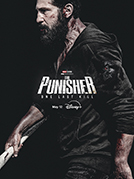
| With | Jon Bernthal, Chelsea Brea, Colton Hill, Jamal Lloyd Johnson, Tom Johnson, Nick Koumalatsos, Dominick Mancino, Jason R. Moore, Evelyn O. Vaccaro |
| Runtime | 51 minutes |
| Release | 2026-05-12 |
| Rating | 8/10 |
As Frank Castle searches for a purpose beyond revenge, an unexpected force draws him back into battle.
The review
By Mulder 2026-05-13
For years, the Marvel Cinematic Universe has struggled to figure out how to tackle its darker elements without toning down what made them so unsettling, violent, or emotionally unstable in the first place, and that’s precisely why The Punisher: One Last Kill makes such a smashing debut. Rather than attempting to transform Frank Castle into a more palatable Disney+ anti-hero, director Reinaldo Marcus Green and co-writer/lead actor Jon Bernthal draw directly on the character’s ugliness, grief, exhaustion, and terrifying addiction to violence itself. The result is by no means a conventional superhero special, but something far stranger and more intimate: a harrowing psychological action thriller that often feels closer to The Raid, John Wick, or even an urban war film, than to anything traditionally associated with the MCU. From its very first minutes, as Frank isolates himself in a filthy apartment, drowning in alcohol, hallucinations, and self-loathing, the special establishes a tone of emotional collapse that immediately sets it apart from most Marvel productions. Here, there are no triumphant speeches, no slick hero poses, and very little interest in spectacle for spectacle’s sake. On the contrary, this special presents Frank Castle as a man who has finally reached the end of the path of vengeance he has traveled for over a decade, only to discover that vengeance has not healed him in any meaningful way. This idea alone gives the project a surprisingly tragic backbone.
What elevates this film above mere brutal action entertainment is Jon Bernthal’s extraordinary commitment, proving once again that he no longer merely plays Frank Castle. He fully embodies the character. Since his first appearance in Daredevil in 2016, Bernthal has consistently delivered one of the most emotionally raw performances in comic-book-inspired television, but One Last Kill may be the occasion where he has most deeply explored the character’s psyche. This version of Frank isn’t driven solely by rage; he’s consumed by loneliness, survivor’s guilt, and the terrifying realization that violence has become the only thing that allows him to function. Bernthal’s performance shines just as brightly in silence as it does in chaos. Some of the most powerful scenes in this special show nothing more than Frank looking at himself in a mirror, visiting his family’s graves, or sitting alone while memories of his wife Maria and his children torment him. The actor never overdoes it in these moments, which is essential because the script itself sometimes risks becoming too repetitive by revisiting Frank’s trauma yet again. The Punisher has spent years circling back to the same emotional wounds across multiple series, and there are moments here where the narrative borders on redundancy. However, Bernthal’s nuanced performance prevents the story from collapsing under the weight of this familiarity. He makes Frank less a comic-book vigilante and more a veteran physically incapable of reconnecting with a normal human existence.
Visually, the film draws heavily on the grainy cinematic texture provided by cinematographer Robert Elswit, whose work lends New York an almost nightmarish urban decay rarely seen in the Marvel Cinematic Universe. The city seems sick, abandoned, and spiritually rotten, particularly in the setting of Little Sicily, where gangs openly terrorize civilians while Frank wanders through the chaos like a ghost. There is a deliberate ugliness to the atmosphere that fits the subject perfectly. Rather than stylized superhero action, the violence feels raw, desperate, and horribly physical. Hallways become slaughterhouses, stairwells turn into battle zones, and every punch, stab, or gunshot packs an unsettling punch. A particularly inspired sequence transforms Frank’s building into a vertical war zone where assassins invade the structure from all sides, creating an escalation of brutality that almost feels like a video game. Yet, unlike many modern action projects that fetishize violence as cool choreography, One Last Kill consistently portrays Frank’s brutality as exhausting and emotionally corrosive. Even when the action takes on an operatic quality, a certain sadness still hangs in the air, as if Frank himself barely understands why he keeps surviving.
That doesn’t mean this film lacks entertainment, far from it. Once the second half devolves into large-scale carnage, director Reinaldo Marcus Green stages some of the most vicious action sequences Marvel has ever attempted. Frank fights like a wounded animal rather than a refined superhero, roaring, limping, improvising weapons, and sweeping away waves of attackers with terrifying momentum. The influence of the classic Punisher comics by Garth Ennis and Steve Dillon is undeniable throughout these scenes, particularly in the balance between grotesque violence and sinister absurdity. At times, the film almost resembles a live-action comic book panel, drenched in grime and blood. The choreography avoids the overly polished precision common in many blockbuster fight scenes, favoring instead a chaotic realism where Frank seems constantly on the verge of collapse, even as he destroys everyone around him. The escalation of weapons—as Frank moves from knives to shotguns, then to axes, before returning to knives, transforming every object around him into a new tool for survival—follows a particularly memorable rhythm. It’s important to note that the action never seems disconnected from Frank’s emotional state. Each killing gives the impression that he is fighting his enemies while simultaneously punishing himself.
The supporting cast, though underutilized, nevertheless leaves a strong impression. Judith Light is excellent in the role of Ma Gnucci, transforming what could have been a generic, vengeance-driven mafia matriarch into a truly haunting reflection of Frank himself. Her grief over the destruction of her family gives this special one of its strongest thematic ideas: Frank Castle may see himself as punishing evil, but from another perspective, he is just another monster leaving devastation in his wake. The scenes between Light and Bernthal carry surprising emotional weight, as the special refuses to pretend that Frank is morally beyond reproach. Similarly, Jason R. Moore makes an effective return as Curtis Hoyle, once again serving as one of the few remaining emotional anchors in Frank’s life, while brief appearances by characters tied to the Netflix era reinforce the sense that this project truly respects the continuity that longtime fans have grown attached to over the years. Even the smaller roles of actors like Andre Royo help ground this special in a reality that feels more alive than that of many recent MCU productions.
Yet, *The Punisher: One Last Kill* is not without its flaws, and its greatest weakness is ironically tied to its greatest ambition. The film desperately seeks to function as both a character study and an ultraviolent action spectacle, but its short runtime sometimes prevents either from fully blossoming. Several emotional ideas are introduced only to be quickly set aside as soon as the large-scale fights begin, and certain narrative arcs—particularly those involving Ma Gnucci—give the impression that they would have needed an additional twenty or thirty minutes to fully develop. There are moments when the project feels more like a standalone comic book issue than a complete story. The abrupt pacing can make the transition between introspective psychological drama and relentless carnage feel somewhat jarring. In certain scenes, the film also pushes its dark and serious tone a bit too aggressively with its heavy musical choices and exaggerated brutality. Yet even when the narrative threatens to collapse under its own weight, Bernthal’s commitment keeps it grounded in emotion.
What ultimately makes *The Punisher: One Last Kill* so compelling is the way it quietly represents a turning point for Marvel itself. For years, the MCU has largely avoided morally unsettling narratives, preferring flawless heroism and mainstream spectacle. This TV movie almost entirely rejects that formula. Frank Castle isn’t portrayed as an inspiration, a noble character, or even a sane person—not by a long shot. He’s traumatized, unstable, frightening, and trapped in a cycle of violence from which he cannot escape. Yet this special also refuses to reduce him to pure nihilism. Beneath the rage lies a broken instinct to protect the vulnerable, and this fragile humanity becomes the emotional heart of the story. In the end, Frank has found neither peace nor redemption. He has simply rediscovered a purpose, which, for this character, is perhaps the closest equivalent possible.
More importantly, this special issue finally proves that Marvel is capable of producing more intimate, darker, and deeply character-driven stories without compromising their emotional authenticity. The Punisher: One Last Kill may not entirely reinvent Frank Castle and occasionally revisits familiar themes, but it succeeds because it fully embraces the character’s tragedy rather than watering it down to appeal to a broader audience. Violent, emotionally suffocating, and surprisingly intimate, it is undoubtedly one of Marvel’s boldest ventures in years and further confirmation that Jon Bernthal remains one of the best casting choices the MCU has ever made. Even after all this time, he still embodies the quintessential Punisher.
The Punisher: One Last Kill
Directed by Reinaldo Marcus Green
Written by Jon Bernthal, Reinaldo Marcus Green
Executive producers: Kevin Feige, Louis D'Esposito, Brad Winderbaum, Sana Amanat, Jon Bernthal, Reinaldo Marcus Green
Starring Jon Bernthal, Chelsea Brea, Colton Hill, Jamal Lloyd Johnson, Tom Johnson, Nick Koumalatsos, Dominick Mancino, Jason R. Moore, Evelyn O. Vaccaro
Cinematography: Robert Elswit
Edited by Melissa Lawson Cheung
Music by Kris Bowers
Production company: Marvel Television
Network: Disney+
Release dates: May 12, 2026 (United States), May 13, 2026 (France)
Running time: 51 minutes
Viewed on May 13, 2026 on Disney+