

The Better Me
Directed by Nicolas Charlet, Bruno Lavaine
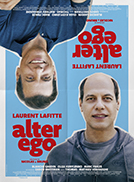
| With | Laurent Lafitte, Blanche Gardin, Olga Kurylenko, Marc Fraize, Zabou Breitman, Giovanni Pucci, Bertrand Goncalves, Léo Garcia, Olivier Brabant, Olivier Bayart, Emmanuel Plovier, Hervé Hague |
| Runtime | 104 minutes |
| Release | Release date unknown |
| Original title | Alter Ego |
| Rating | 8/10 |
Alex has a problem: his new neighbor is his perfect double. With hair. A better double, who will completely turn his life upside down.
The review
By Mulder 2026-03-03
With The Better Me, Nicolas Charlet and Bruno Lavaine return to a theme they have been exploring for nearly two decades: the fragile boundary between the absurd and existential unease, between the grotesque and the painfully recognizable. Premiered at the Alpe d'Huez Comedy Film Festival, where Laurent Lafitte deservedly won the award for best actor, the film appears to be both the culmination and reinvention of their longstanding obsession with duality, already explored in La Personne aux deux personnes and Le Grand Méchant Loup. Here, the concept is disarmingly simple: what if your neighbor was your exact double... but better? Not metaphorically better, but concretely, humiliatingly, offensively superior, with thick hair, natural charisma, professional talent, and a woman who seems sculpted by envy itself. It's the kind of ambitious concept that might recall the playful surrealism of Quentin Dupieux, but Nicolas Charlet and Bruno Lavaine stretch their premise over a generous running time, daring to maintain the unease rather than simply exploding it in punchlines.
The story follows Alex Floutard, a bald and quietly dissatisfied suburbanite, played with surprising elasticity by Laurent Lafitte, who seems to relish every spasm of insecurity. Alex leads a modestly comfortable life with his wife Nathalie, played by Blanche Gardin, until Axel, his doppelganger with hair, moves into the identical house next door. The film skillfully constructs its symmetry through anagrammatic names, mirrored offices, twin houses distinguished only by their decor, and even professional overlap at the same company. But what elevates the comedy is the exasperating fact that no one else sees the resemblance. Not his wife, not his colleagues, not his son, no one. When Alex cautiously suggests that his neighbor seems strangely familiar, Nathalie instead compares him to a television personality. In this devastating little moment, the film falls into place: this is not just a comedy of mistaken identity, but a study of invisible humiliation.
As Axel's superiority becomes increasingly unbearable (he is kinder, fitter, more talented professionally, married to a beautiful woman played by Olga Kurylenko, and even has a sauna), the film transforms into a portrait of paranoia that seems sadly very contemporary. Nicolas Charlet and Bruno Lavaine understand that jealousy is rarely explosive at first; it smolders, festers, and turns into something grotesque. Alex's descent into hell is not marked by grand gestures, but by petty fixations, obsessive comparisons, and playground-worthy conspiracy theories, which disturbingly reflect a broader social climate obsessed with self-image and performance. In this sense, the film is less about a literal double than about the tyranny of comparison in an era of carefully orchestrated perfection, a world where someone else always seems to be living your life better than you.
Formally, the directors make an intriguing choice: they resist digital trickery. The double performance relies mainly on classic shot-reverse shot framing, meticulous blocking, and the physical discipline of Laurent Lafitte, who modulates his posture, gaze, and rhythm to create two distinct presences. The image itself has a slightly overexposed and cottony look, with blurred contours, suggesting that we may be witnessing a subjective outcome rather than objective reality. Is Axel real? Is he a projection of Alex's midlife crisis? The film refuses to clarify things, and this ambiguity reinforces its final act, which veers toward a joyfully nightmarish crescendo. In a particularly striking scene that takes place at the corner of the twin houses, the spatial geometry itself seems to bow to Alex's mental disintegration—a moment achieved without spectacle, relying solely on the actors' performances and the framing.
The supporting roles add delightful texture to this offbeat universe. Marc Fraize steals the show with his absurdity as a perpetually confused colleague, embodying bureaucratic stupidity with impassive brilliance, while Zabou Breitman, as the company boss, injects a surreal satire of the corporate world that borders on caricature without ever losing its bite. Even the details in the background (the names of the companies in the industrial park, the absurdity of the closet-office used to sideline employees) contribute to creating a world that is both exaggerated and strangely familiar. The humor oscillates between discomfort and sharp social observation, and works particularly well when the script stops piling on the gags and instead lets Alex's bitterness blossom naturally.
That said, the film is not without its flaws. The middle section sometimes drifts into episodic repetition, with scenes that seem to be variations on the same theme of growing irritation. The generous, albeit ambitious, running time sometimes dilutes the subtlety of the concept, and one feels that a slightly tighter edit could have amplified the impact. Yet even in its weakest moments, the film remains animated by its characteristic fearless performance. Watching Laurent Lafitte argue with himself, sometimes literally face to face, is a true lesson in mastery of the absurd. There are fleeting echoes of Charlie Kaufman's fascination with fractured identity, but without the metaphysical despair; on the contrary, Nicolas Charlet and Bruno Lavaine direct their satire squarely at everyday mediocrity and wounded male ego.
What ultimately remains is the film's irreverent final move, which embraces its fantastical undertones without relinquishing its social bite. The Better Me is not only a rival, but a mirror that refuses to flatter. In this sense, the film transcends its comedic aspect and becomes a fable about self-loathing in a competitive society, about the silent violence of comparison, and about the fragile narratives we construct to preserve our dignity. It is absurd, sometimes uneven, sometimes indulgent, but undeniably daring.
The Better Me stands out as one of the most daring French comedies of recent years: imperfect but fascinating, abrasive but strangely empathetic. It confirms that Nicolas Charlet and Bruno Lavaine remain unique voices in the landscape of contemporary satire, and it consolidates Laurent Lafitte's reputation as one of the most versatile actors of his generation. For its inventive premise, its fearless performances, and its biting exploration of ordinary jealousy pushed to delirious extremes,
The Better Me
Written and directed by Nicolas and Bruno
Produced by Mathieu Verhaeghe and Thomas Verhaeghe
Starring Laurent Lafitte, Blanche Gardin, Olga Kurylenko, Marc Fraize, Zabou Breitman, Giovanni Pucci, Bertrand Goncalves, Léo Garcia, Olivier Brabant, Olivier Bayart, Emmanuel Plovier, Hervé Hague
Cinematography: David Chizallet
Edited by Zaïm Derraz
Music by Nicolas Errèra
Production companies: Atelier de production
Distributed by Tandem (France)
Release dates: March 4, 2026 (France)
Running time: 104 minutes
Seen on January 6, 2026 at Club Marbeuf