

Mockbuster : How Anthony Frith Turned Six Days of Chaos at The Asylum into One of the Year's Most Fascinating Documentary Experiences
Monday 22 June, 8:51 AM PT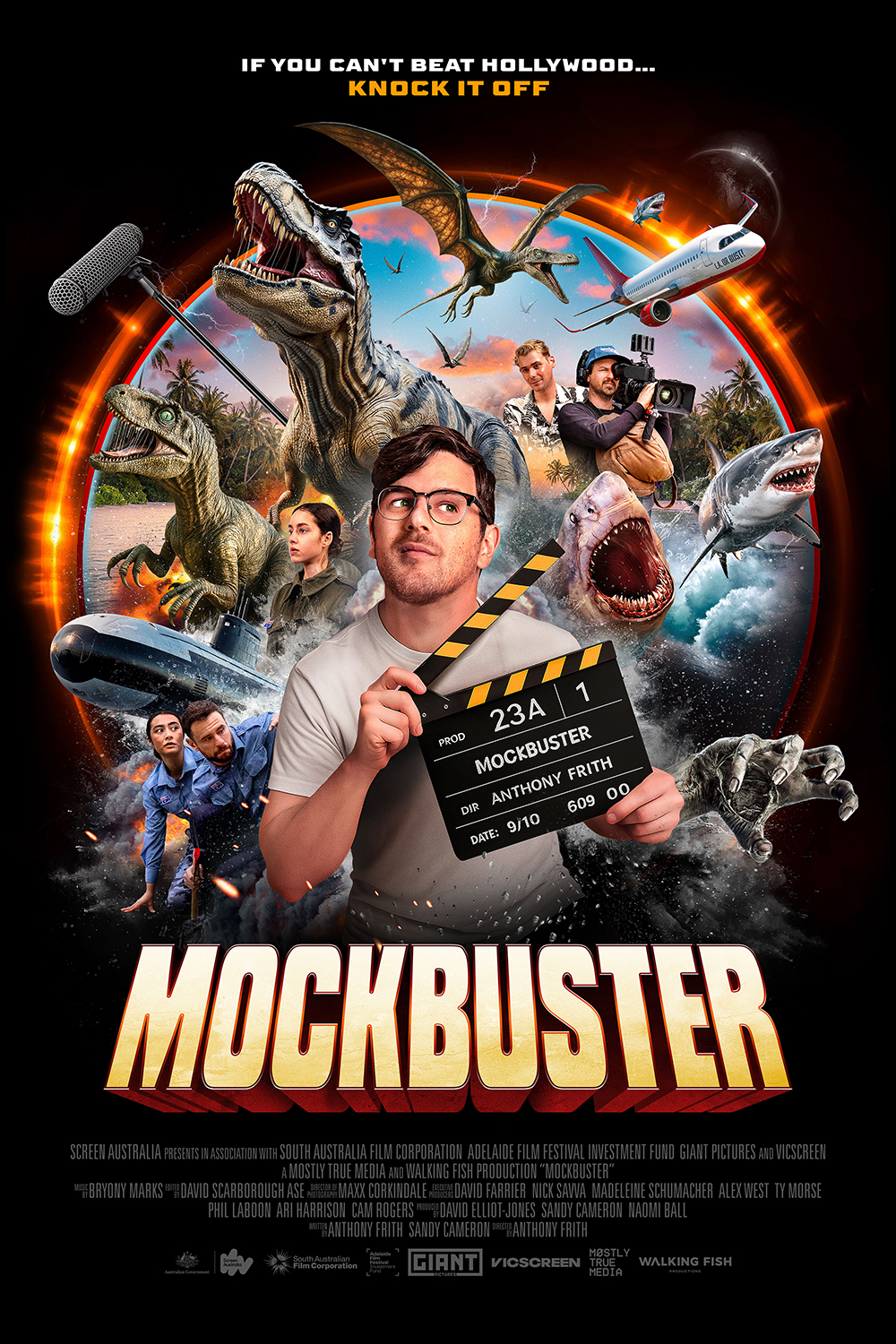
When people think of The Asylum, they immediately picture outrageous titles, giant creatures, impossible disasters, and of course the global cult phenomenon Sharknado. For more than two decades, the independent American studio founded by David Michael Latt, David Rimawi, and Paul Bales has built an entire business model around producing fast, affordable genre films that cleverly ride the wave of major Hollywood releases. Yet behind the jokes, memes, and internet fascination lies a genuine filmmaking machine operating at a pace few studios could sustain. That reality becomes the heart of Mockbuster, an entertaining, insightful, and surprisingly emotional documentary directed by Anthony Frith, arriving in select U.S. theaters and on digital platforms on July 10, 2026. Executive produced by acclaimed documentarian David Farrier, the film offers audiences an unprecedented look inside one of the most misunderstood corners of the entertainment industry while telling a deeply personal story about creative ambition, perseverance, and the often absurd realities of independent filmmaking.
The premise itself sounds like something straight out of a Hollywood comedy. After seeing his once-promising narrative filmmaking career gradually drift toward corporate video work, Australian filmmaker Anthony Frith decides to take an unlikely gamble. Instead of waiting for the perfect opportunity, he directly approaches The Asylum with a proposal to direct a dinosaur adventure inspired by classic lost-world stories. Against all expectations, the studio says yes. What follows is a whirlwind production of The Land That Time Forgot, filmed in suburban Adelaide under conditions that can only be described as extreme. Working with a micro-budget and a schedule of only six shooting days, Anthony Frith simultaneously directs the feature film while documenting the entire experience for what would become Mockbuster. The result is a unique dual-layered production where the filmmaker becomes both the creator and the subject, capturing every triumph, setback, panic attack, and moment of inspiration along the way.

One of the documentary's greatest strengths is its willingness to embrace the chaos rather than hide it. Viewers witness late-night video calls with executives in Los Angeles, frantic script revisions, practical dinosaur effects that often appear seconds away from failure, and production decisions being made in real time under enormous pressure. Yet what could easily have become a cynical exposé instead evolves into an affectionate portrait of people trying their absolute best under impossible circumstances. The documentary highlights how creativity often thrives not despite limitations but because of them. Watching Anthony Frith navigate the daily challenges of keeping a dinosaur epic alive with limited resources becomes unexpectedly inspiring, revealing a filmmaker who refuses to surrender his passion even when every obstacle suggests he should.
The documentary also offers perhaps the most nuanced portrait yet of the executives behind The Asylum. While popular culture often treats the company as a punchline, Mockbuster paints a much more complex picture. Producers Brendan Petrizzo, David Michael Latt, David Rimawi, and Paul Bales emerge as pragmatic filmmakers who have mastered a production system built around efficiency, instinct, and relentless determination. Rather than mocking their methods, the film explores how a studio once dismissed by many industry observers managed to survive while countless independent competitors disappeared. Through candid conversations and behind-the-scenes observations, audiences gain a new appreciation for the logistical challenges involved in creating commercial entertainment under intense time and financial constraints. The documentary demonstrates that while the films may embrace outrageous concepts, the business strategy behind them is remarkably disciplined.

Another fascinating aspect of Mockbuster is its exploration of Australia's filmmaking ecosystem. Co-written by Anthony Frith and Sandy Cameron, and produced by Naomi Ball, Sandy Cameron, David Elliot-Jones, and Cam Rogers, the documentary received support from organizations including Screen Australia, the South Australian Film Corporation, the Adelaide Film Festival Investment Fund, and VicScreen. Such backing is particularly notable because the project focuses on a subject that many funding bodies might have considered unconventional. By supporting a documentary about low-budget genre filmmaking and the culture surrounding mockbusters, these organizations helped create a film that broadens the conversation about what kinds of stories deserve attention within the documentary landscape.
The cast and contributors further reinforce the documentary's authenticity. Alongside Anthony Frith, viewers encounter a colorful collection of actors, filmmakers, and genre veterans including Bix Krieger, Courtney Palmer, David Margetts, Eliza Roberts, Eric Roberts, Lauren Koopowitz, Michelle Bauer, Michelle Ng Mini, Rachel Lee Goldenberg, and Sev Philippou. Their presence adds texture and humor to the production while illustrating the collaborative spirit that defines independent filmmaking. Rather than presenting these participants as caricatures, the documentary allows their personalities to emerge naturally, creating moments that are frequently hilarious but also surprisingly heartfelt.
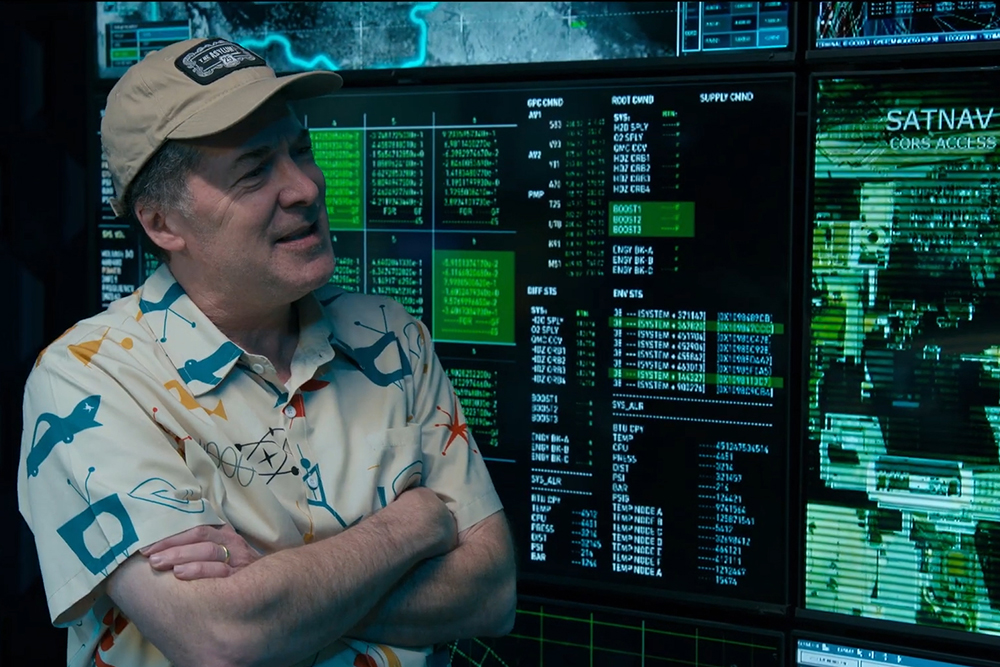
Visually, Mockbuster benefits from the cinematography of Maxx Corkindale, whose camera remains close to the action without ever becoming intrusive. Editor David Scarborough keeps the narrative moving at a brisk pace while ensuring that emotional moments have room to breathe. Meanwhile, composer Bryony Marks provides a score that delicately balances comedy and sincerity, enhancing the film's unique tonal blend. The technical craftsmanship consistently elevates the documentary beyond a simple making-of featurette, transforming it into a fully realized cinematic experience that stands on its own merits.
What ultimately makes Mockbuster resonate is its universal theme. Beneath the rubber dinosaurs, impossible deadlines, caffeine-fueled production meetings, and endless logistical headaches lies a story about creative persistence. Anthony Frith represents countless filmmakers, writers, artists, and dreamers who continue chasing ambitious goals despite setbacks and uncertainty. The documentary never suggests that success must look like a Hollywood blockbuster or an awards-season campaign. Instead, it argues that there is value in simply creating, experimenting, and refusing to abandon one's passion. In an era when the entertainment industry often seems obsessed with billion-dollar franchises and streaming metrics, Mockbuster serves as a refreshing reminder that filmmaking remains, at its core, an act of belief.

Opening in select theaters across Los Angeles, Philadelphia, Denver, Indianapolis, Toronto, and Portland before expanding digitally nationwide on July 10, 2026, Mockbuster arrives with strong festival buzz and the endorsement of genre-film enthusiasts who have already embraced its mix of humor, honesty, and behind-the-scenes insight. Running a concise 90 minutes, the film succeeds not only as a documentary about The Asylum, but also as a celebration of filmmaking itself. Whether audiences are lifelong fans of mockbusters, curious observers of independent cinema, or simply lovers of stories about underdogs chasing impossible dreams, Mockbuster proves that sometimes the most entertaining adventure isn't the dinosaur movie being made—it is the chaotic journey required to make it.
Synopsis:
A struggling filmmaker’s opportunity collides with chaos and compromise when Sharknado’s notorious studio, The Asylum, invites him to direct a "mockbuster." With six days, a micro budget, and mounting pressure, Mockbuster is a comedic, behind-the-scenes documentary exploring the balance between low-budget filmmaking and creative ambition.
Mockbuster
Directed by Anthony Frith
Written by Sandy Cameron, Anthony Frith
Produced by Naomi Ball, Sandy Cameron, David Elliot-Jones, Cam Rogers
Starring Anthony Frith, Bix Krieger, Brendan Petrizzo, Courtney Palmer, David Margetts, David Michael Latt, David Rimawi, Eliza Roberts, Eric Roberts, Lauren Koopowitz, Michelle Bauer, Michelle Ng Mini, Paul Bales, Rachel Lee Goldenberg, Sev Philippou
Cinematography : Maxx Corkindale
Edited by David Scarborough
Music by Bryony Marks
Production companies : Adelaide Film Festival Investment Fund, Green Marble Productions, Kojo Studios, Mostly True Media, Screen Australia, The South Australian Film Corporation, Time Horse Productions, VicScreen, Walking Fish Productions
Distributed by Giant Pictures (United States)
Release dates : July 10, 2026 (United States)
Running time : 90 minutes
(Source : press release)