

VivaTech Celebrates Its 10th Anniversary on the Champs-Élysées: The World’s Largest Open-Air Technology Showcase Takes Over Paris
Tuesday 19 May, 1:15 AM PT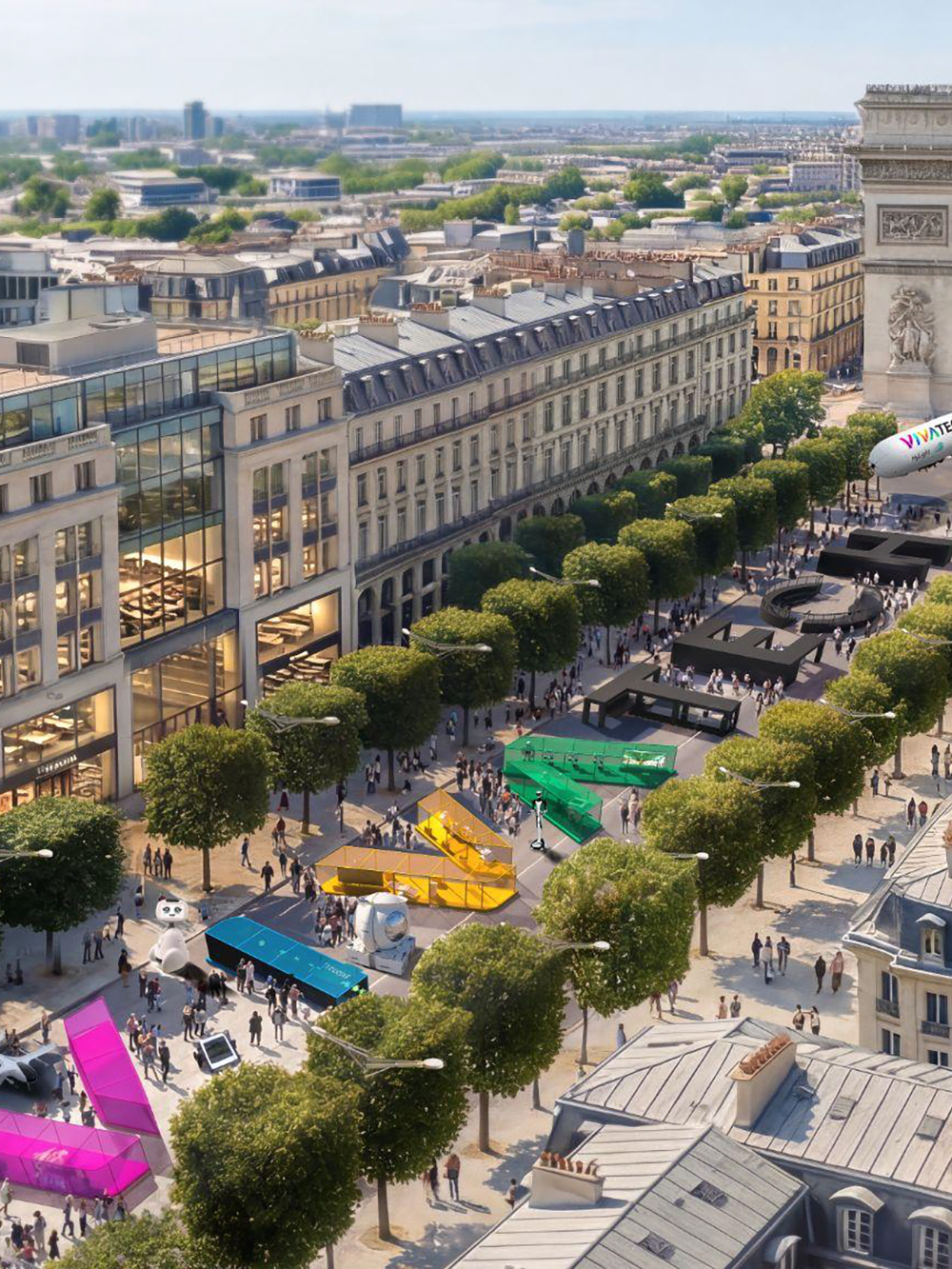
On June 14, 2026, the Champs-Élysées will no longer quite look like the Champs-Élysées. For a few hours, the world’s most famous avenue will set aside its usual role as a showcase for luxury, national celebrations, and large public gatherings to become a massive open-air technology lab, where humanoid robots, artificial intelligence, solar-powered vehicles, next-generation drones, and environmental innovations will engage directly with the general public. To celebrate its tenth anniversary, VivaTech will transform the Parisian avenue into a massive, free, immersive experience open to all, organized in partnership with the Champs-Élysées Committee as part of the avenue’s monthly pedestrianization. Behind this spectacular event lies a very clear goal: to take innovation out of closed trade shows and bring it back to the heart of the city, in direct contact with families, tourists, tech enthusiasts, and even those simply curious to discover what everyday life might look like in the future.
Created in 2016 at the initiative of Publicis Groupe and the Les Échos-Le Parisien Group, VivaTech has become, in just ten years, Europe’s leading event dedicated to startups and new technologies, bringing together thousands of entrepreneurs, investors, researchers, and major international corporations in Paris each year. This success has played a major role in repositioning France as a global hub for innovation, particularly in the fields of artificial intelligence, sustainable mobility, connected health, and robotics. The 2026 edition of the main event will take place from June 17 to 20 at Paris Expo Porte de Versailles, but this exceptional opening on the Champs-Élysées almost feels like a manifesto: one for a tech sector that is less elitist, more accessible, and more spectacular. This is an idea that recurs regularly in the statements of Maurice Lévy, co-chair of VivaTech, who notes that from the very beginning of the project, the goal was to make innovations accessible to as many people as possible, rather than reserving them for a minority of insiders.
The setup designed for this tenth anniversary is impressive in its scale. More than 150,000 visitors are expected on the avenue between Rue Arsène Houssaye and Rue de Berri, where eight monumental installations featuring the letters of the word “VivaTech” will serve as thematic hubs dedicated to the major technological transformations of the 21st century. Each letter will thus host a different experience centered on the smart city, mobility, environmental impact, health, well-being, robotics, space, artificial intelligence, education, culture, and entertainment. The idea is not simply to display futuristic objects behind glass cases, but to offer a concrete and interactive experience. For example, visitors will be able to explore a stratospheric capsule that allows them to observe Earth from the upper atmosphere, see vehicles capable of recharging their batteries directly via solar panels integrated into their bodywork, or watch demonstrations of drones capable of transporting cargo without emitting pollutants.
One of the most fascinating aspects of this event will likely be its commitment to showcasing innovation that is directly useful in everyday life. While some tech trade shows sometimes fall into the trap of showcasing gimmicks or inaccessible prototypes, this special edition of VivaTech seems intent on emphasizing practical applications. Organizers have announced demonstrations of technologies capable of producing drinking water from ambient air, devices related to sustainable cities and new forms of urban food supply developed in partnership with Vusion, as well as exoskeletons designed to enhance or restore certain human physical capabilities. This blend of technological spectacle and environmental or societal issues demonstrates how today’s innovation now seeks to address very tangible challenges related to climate, health, and urbanization.
Artificial intelligence will obviously play a central role in this immersive experience, with an approach that VivaTech intends to be both educational and reassuring. In partnership with Google, several immersive, creative, and artistic experiences will help the public better understand the uses of AI in everyday life. This focus is far from insignificant in a context where debates surrounding generative AI, automation, and technological ethics now occupy a major place in global public discourse. Instead of presenting artificial intelligence as a complex abstraction reserved for engineers, VivaTech aims to show how these technologies can be understood, experienced, and embraced by everyone. This is undoubtedly one of the most interesting aspects of this celebration: promoting technological education in a public space as iconic as the Champs-Élysées.
This initiative also takes on a particularly strong historical dimension when viewed within the history of the Champs-Élysées itself. As the Champs-Élysées Committee points out, the avenue has always been associated with the major innovations of its time. As early as 1855, it hosted the first World’s Fair held in Paris, an event that left a profound mark on the public imagination by showcasing the major industrial and technological advances of the 19th century. At the time, the nascent art of photography, industrial machinery, and new infrastructure fascinated visitors just as humanoid robots and artificial intelligence fascinate us today. This deliberate connection between the World’s Fairs of the 19th century and contemporary tech lends the event an unexpected cultural depth. VivaTech does not merely seek to organize a giant tech showcase; the event also aims to be part of a long-standing Parisian tradition where innovation, spectacle, and the transformation of the world go hand in hand.
The partnership between VivaTech and the Comité Champs-Élysées also represents an extremely interesting strategic alliance. On one side, a legendary avenue visited by nearly 73 million people each year and home to more than 200 iconic brands; on the other, an ecosystem bringing together 15,000 startups and 4,000 investors from around the world. This marriage of Parisian heritage and global innovation also reflects a profound shift in Paris’s image, as the city no longer wishes to be perceived solely as a cultural or tourist capital, but also as a major European tech hub. For several years now, France has been stepping up initiatives to strengthen its position in the international tech ecosystem, particularly in artificial intelligence, deep tech startups, and environmental technologies. This massive demonstration on the Champs-Élysées thus resembles a giant showcase aimed at both the general public and international observers.
The remarks by Marc-Antoine Jamet, president of the Champs-Élysées Committee, perfectly illustrate this almost historic ambition. According to him, the event on June 14, 2026, could become “the world’s largest open-air tech demonstration,” a phrase that alone sums up the spectacular and symbolic scope of the project. But behind the hype lies a desire to reconnect innovation with public spaces and with a certain vision of Parisian street festivals. The image evoked by Marc-Antoine Jamet of “onlookers and robots” sharing the capital’s cobblestones is particularly revealing of the spirit sought: visible, embodied, almost festive technology, far removed from closed laboratories or trade shows reserved for professionals.
It is also worth noting the role of the Ubi agency, tasked with producing this monumental immersive experience, in a context where event experiences are becoming increasingly hybrid, blending spectacle, education, and sensory immersion. The visuals unveiled also reveal an extremely ambitious scenography featuring monumental, colorful structures installed in the middle of the Champs-Élysées, literally transforming the avenue into a futuristic open-air exhibition. The event thus promises an aesthetic very different from the usual trade shows at the Porte de Versailles, with a much more organic, urban approach that opens up to the city itself.
Beyond a simple anniversary, this initiative could also mark a turning point in how major tech events are conceived in the future. For several years now, many tech events have sought to move beyond traditional convention centers to directly occupy urban spaces, much like the CES in Las Vegas, which now extends far beyond the exhibition halls. But transforming the entire Champs-Élysées into a giant tech showcase represents a whole new scale. Paris seems intent on demonstrating that it, too, can compete with the world’s major innovation capitals by blending heritage, culture, and new technologies into a single collective narrative. This ambition aligns perfectly with the broader strategy to reinvent the Champs-Élysées launched in recent years by the Champs-Élysées Committee, notably through the extensive “Re-enchanting the Champs-Élysées” project, designed to envision a more eco-friendly, sustainable, digital, and cultural avenue.
The event will take place on Sunday, June 14, 2026, from 12 p.m. to 6 p.m. on the pedestrianized Champs-Élysées and will be completely free. With more than 35 technology demonstrations spread along the entire route, this special anniversary edition could well become one of the most spectacular public events of the year in Paris, halfway between a modern world’s fair, a technology festival, and a massive futuristic promenade in the heart of the French capital.
(Source: press release)