

LEGO Fan Zone: LEGO Transforms the 2026 FIFA World Cup into a Huge Creative Playground in the Heart of Paris
Thursday 21 May, 1:30 AM PT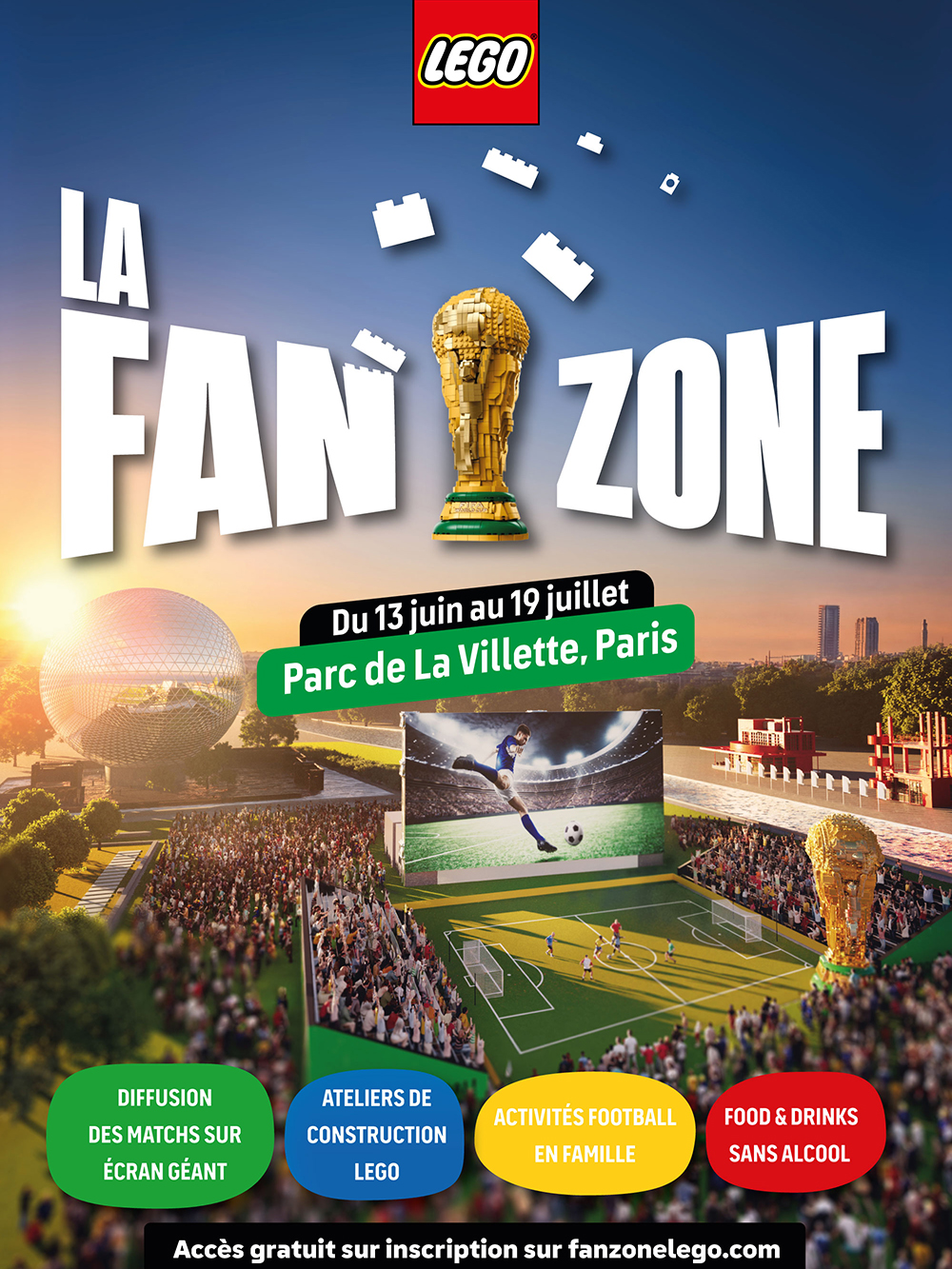
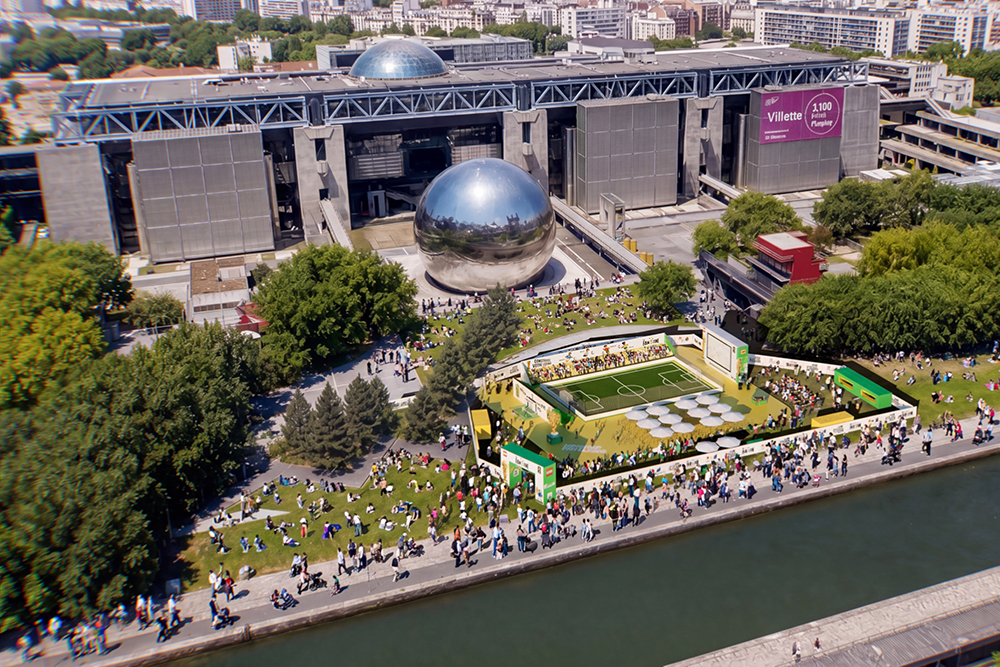
LEGO has never hidden its desire to move beyond the traditional boundaries of toys and venture into much broader cultural territories, but with the announcement of its very first LEGO Fan Zone dedicated to the 2026 FIFA World Cup, the Danish brand is clearly taking its experiential strategy in France to a new level. Set up at the Parc de la Villette in Paris from June 13 to July 19, 2026, this event space spanning over 1,800 m² aims to transform one of the world’s biggest sporting events into a participatory experience where soccer becomes as much a spectacle as a space for collective creation. Behind this initiative lies a particularly astute understanding of the evolution of modern fan zones: today, simply watching a match is no longer enough; the public wants to experience something, to share, interact, photograph, post, and above all, participate. It is precisely on this idea that the LEGO Group is building this unprecedented project in France, presented as a total immersion experience combining sports broadcasts, creative workshops, and monumental installations made of LEGO bricks.
The choice of Parc de la Villette is, of course, no accident. For several years now, this vast Parisian cultural space has established itself as a laboratory for popular experiences blending culture, leisure, education, and public events. Its longstanding partnership with the LEGO universe through the Little Studio—which already welcomes thousands of children each year—creates an almost natural continuity with this new XXL fan zone. The venue also allows LEGO to adopt a much more family-friendly approach than traditional sports fan zones, which are often associated with more adult-oriented festive drinking. Here, the brand explicitly promotes a 100% alcohol-free space—a decision far from insignificant in the context of major international sports competitions—which illustrates its commitment to creating an environment designed first and foremost for families, children, and intergenerational bonding. This approach also aligns with the findings of the LEGO Play Well 2026 study conducted by Edelman DXI, which found that 86% of French parents would like to spend more time playing with their children. Soccer thus becomes an opportunity to create shared memories rather than a mere passive sporting event.
Visually, the LEGO Fan Zone already promises to become one of the most photographed spots of the Parisian summer. Among the announced features is a giant replica of the official FIFA World Cup trophy, standing four meters tall and made entirely of LEGO bricks—a piece that is expected to immediately become the site’s visual symbol. The brand is also planning a massive three-by-three-meter diorama made up of over 400,000 LEGO bricks, further proof of the spectacular expertise developed by LEGO teams in large-scale event installations. Those who have long followed the LEGO Group’s international operations know that the brand possesses genuine expertise in this field, particularly thanks to its Master Builders, who are capable of designing monumental structures on display at international conventions, sporting events, and immersive exhibitions around the world. By combining these installations with building areas supervised by specialized facilitators, LEGO aims to blur the line between spectacle and active participation.
What makes this initiative particularly interesting is also its strategic timing. For several years now, major brands have been seeking to redefine their relationship with global sports by offering hybrid experiences that blend entertainment, social media, gaming, and physical immersion. The global partnership between LEGO and FIFA for the 2026 World Cup fits squarely into this new dynamic. Where some collaborations are limited to merchandising or spin-off products, LEGO is attempting something much more ambitious here: transforming soccer itself into a creative language. This approach echoes certain trends observed at major American events, where peripheral experiences sometimes end up becoming as important as the competition itself. The fact that this first LEGO Fan Zone is launching in France also demonstrates the strategic importance of the French market for the brand, particularly in the premium family experiences sector.
In the official press release, Sylvain Bouchès, Senior Marketing Director for France, Spain, and Portugal at the LEGO Group, emphasizes this desire to go beyond the simple sporting framework to offer a new way of experiencing the event: According to him, this fan zone represents the most concrete manifestation of the partnership between LEGO and FIFA. Behind this corporate statement lies a rather fascinating reality: LEGO no longer sells just building sets, but a vision of family entertainment based on shared creativity. This philosophy is evident throughout the event’s organization, from the collaborative spaces to the extended viewing hours for the French national team’s matches, the semifinals, and the final, which can be watched until 11 p.m. The site will welcome up to 2,000 visitors per day, which demonstrates the logistical scale of the project and the LEGO Group’s confidence in the initiative’s popular appeal.
Beyond the event itself, this LEGO Fan Zone symbolizes above all the brand’s spectacular evolution over the past fifteen years. Long perceived primarily as a manufacturer of building toys, LEGO has become a global cultural player capable of navigating the worlds of film, gaming, architecture, contemporary art, and now major international sporting events. This repositioning likely explains why this Parisian initiative is already attracting so much attention from experiential marketing observers. In an era where brands are constantly seeking to create authentic emotional connections with the public, LEGO seems to have grasped something essential: people no longer want to merely consume an event; they want to actively participate in it, build memories, and feel part of a collective experience. And ultimately, transforming the FIFA World Cup into a gigantic creative playground was perhaps the most logical evolution possible for a company whose entire identity has, since 1932, been rooted in the power of imagination and shared play.
(Source : press release)