
 English
Festivals - Cannes 2026: Top Gun will open the 2026 Beach Cinema to celebrate the film’s 40th anniversary
By Mulder, 07 may 2026
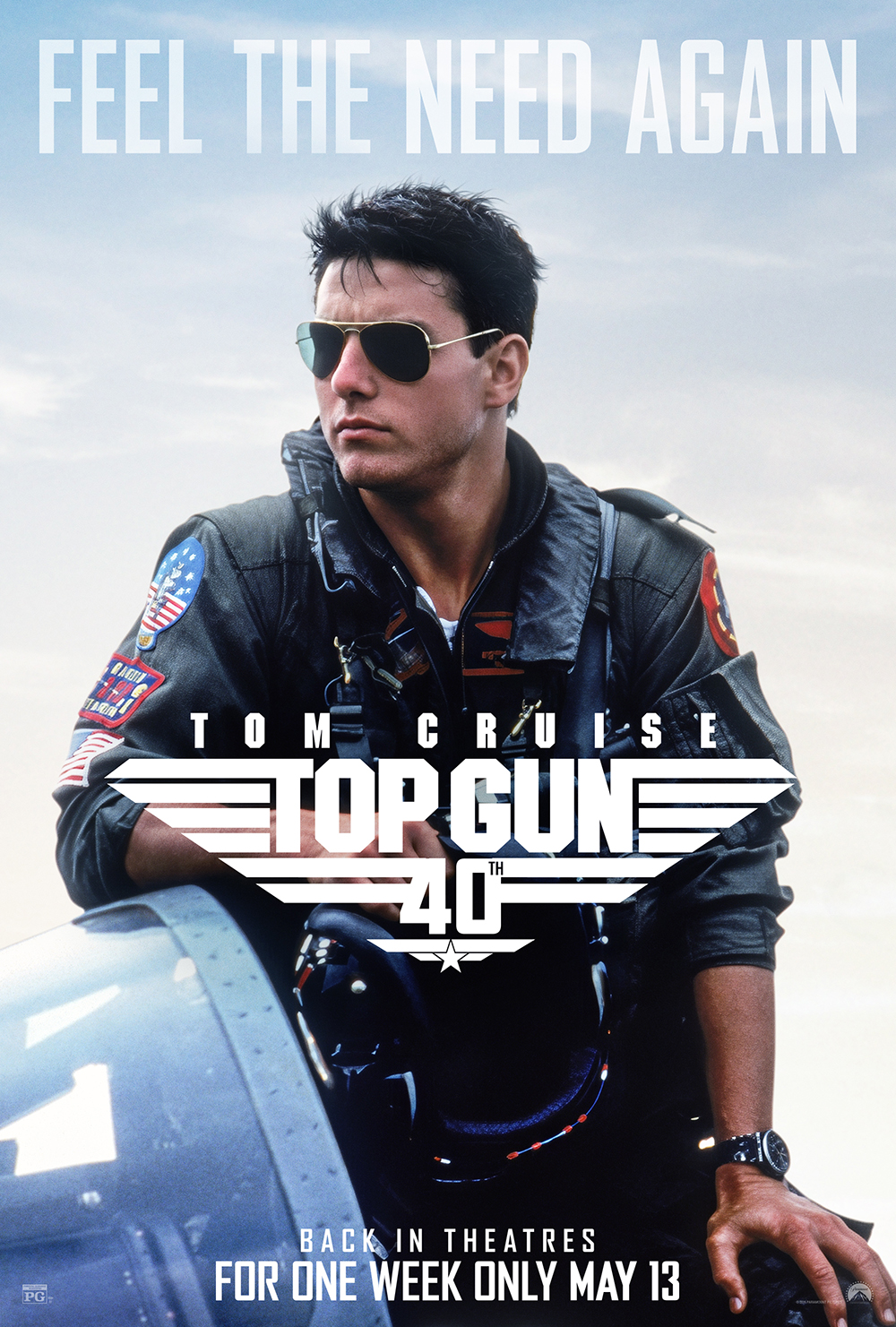
There are some announcements that instantly trigger a wave of nostalgia across generations of moviegoers, and the decision to have Top Gun open the prestigious Cinéma de la Plage at the 2026 edition of the Cannes Film Festival is unquestionably one of them. On May 13, 2026, beginning at 9:30 p.m. on Macé Beach opposite the iconic Majestic Hotel on the Croisette, festivalgoers and curious cinephiles alike will be able to rediscover Tony Scott’s legendary aerial classic under the stars in one of the most symbolic cinematic locations in the world. Paramount Pictures France has chosen to celebrate the film’s 40th anniversary in spectacular fashion, transforming the opening night of the beach screenings into a tribute not only to a blockbuster phenomenon, but also to a piece of American pop culture that continues to transcend decades, formats, and generations. The timing is particularly meaningful, as the screening coincides with a nationwide theatrical re-release in France of both Top Gun and Top Gun: Maverick from May 13 to 19, allowing audiences to revisit the entire Maverick saga in premium formats including IMAX, 4DX, and Ice Immersive.
When the film first exploded into theaters in 1986, few could have predicted the cultural earthquake it would become. Directed by Tony Scott and produced by the powerhouse duo of Don Simpson and Jerry Bruckheimer, the film emerged from an unlikely source: a 1983 California Magazine article titled “Top Guns” written by Ehud Yonay. The article fascinated the producers, who immediately sensed the cinematic potential hidden within the world of elite naval aviators. The screenplay by Jim Cash and Jack Epps Jr. eventually evolved into a high-octane mixture of action, romance, competition, and mythmaking that transformed fighter pilots into modern rock stars. The project nearly looked very different, however, as filmmakers including David Cronenberg and John Carpenter reportedly passed on directing duties before Tony Scott was hired after impressing producers with a stylish Saab commercial featuring fighter jets. Even the casting was far from guaranteed: Matthew Modine famously declined the role of Maverick because he disagreed with the film’s pro-military tone, while actors such as Patrick Swayze, Sean Penn, Charlie Sheen, Rob Lowe, and Michael J. Fox were all considered before Tom Cruise eventually accepted the role after encouragement from Ridley Scott.
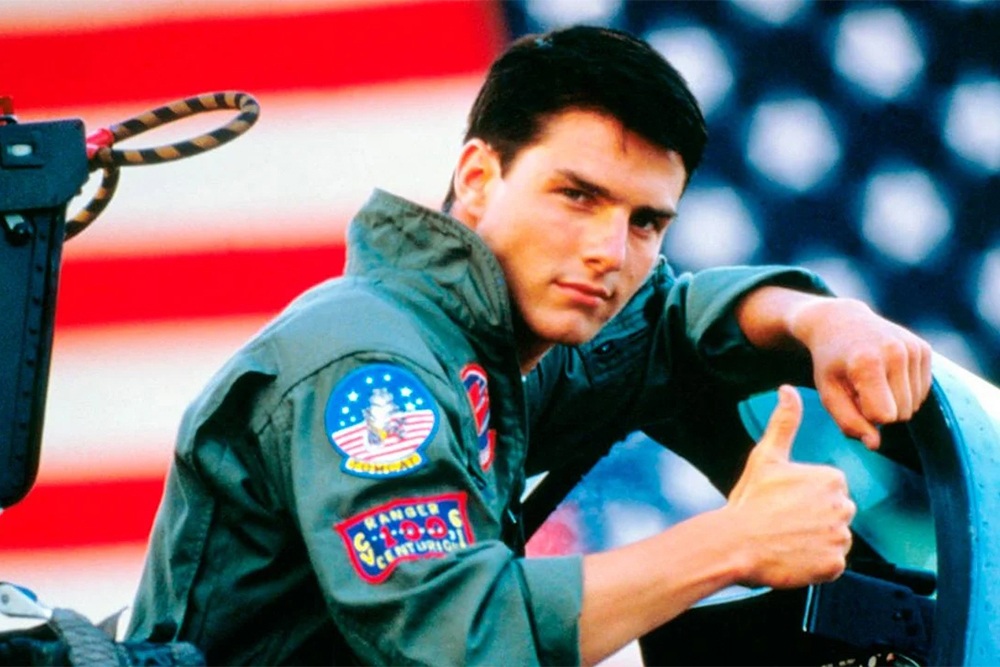
The Cannes beach screening also serves as a reminder of just how deeply Top Gun reshaped Hollywood itself. Released in the United States on May 16, 1986, the film initially received mixed critical reactions, with many reviewers praising the groundbreaking aerial cinematography while criticizing the thin screenplay and overt military romanticism. Yet audiences embraced it immediately, turning it into the highest-grossing film of 1986 worldwide with more than $350 million at the global box office against a modest $15 million budget. Its success permanently elevated Tom Cruise into global superstardom and cemented the slick visual grammar that would define much of late-1980s and 1990s blockbuster filmmaking. The imagery remains iconic even today: aviator sunglasses glinting in golden sunsets, fighter jets slicing through clouds in slow motion, motorcycles racing beside runways, and locker-room rivalries infused with swagger and tension. The film’s visual identity became so powerful that sales of Ray-Ban Aviators reportedly skyrocketed following the release, helping revive the brand in spectacular fashion.
One of the most fascinating aspects of the film’s legacy is how much authenticity was woven into the production despite its glossy Hollywood style. The U.S. Navy collaborated extensively with the filmmakers, granting access to real F-14 Tomcats, aircraft carriers, and military installations including Naval Air Station Miramar. The production reportedly paid thousands of dollars per hour whenever aircraft were flown specifically for filming. The resulting aerial footage still feels astonishingly visceral four decades later because much of it was captured practically, using onboard cameras mounted directly onto the jets and air-to-air photography filmed from specially equipped Learjets. Future NASA astronaut Scott Altman even participated in some of the aerial stunt flying. According to production stories that have become legendary among cinephiles, Tony Scott once personally wrote a $25,000 check to a carrier captain simply so the ship could turn back into the sunlight for a few additional minutes of perfect golden-hour photography. It is exactly this obsessive pursuit of cinematic spectacle that explains why the film still holds up visually in the era of digital blockbusters.
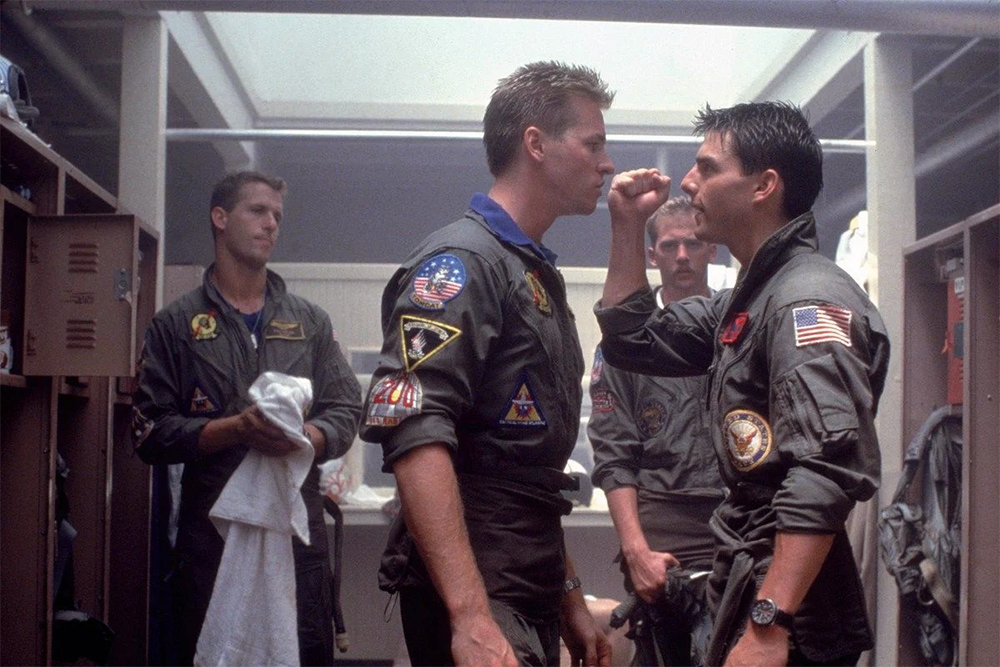
The mythology of Maverick himself also continues to resonate because the character embodies more than reckless coolness. Pete “Maverick” Mitchell is written as a gifted but emotionally fractured young pilot haunted by insecurity, grief, and the burden of legacy. His rivalry with Val Kilmer’s icy perfectionist Tom “Iceman” Kazansky became one of the defining competitive relationships in 1980s cinema, while the tragic death of Goose, played with warmth and humanity by Anthony Edwards, injected unexpected emotional weight into the film. Over time, retrospective criticism and reinterpretation have only deepened the movie’s cultural importance. Some critics viewed the film as military propaganda or a glorification of American exceptionalism, while others highlighted the homoerotic undertones present throughout its hyper-masculine world. Legendary critic Pauline Kael famously described the film as “a shiny homoerotic commercial,” a reading that later became central to many academic and cultural discussions surrounding the movie. Yet regardless of interpretation, the enduring fascination surrounding the film proves how deeply it embedded itself into the cultural imagination.
The soundtrack alone deserves recognition as one of the defining cinematic musical collections ever assembled. Composed in part by Harold Faltermeyer, with unforgettable songs by Kenny Loggins and Berlin, the music became inseparable from the identity of the film itself. “Danger Zone” remains one of the most instantly recognizable adrenaline-fueled movie themes ever recorded, while “Take My Breath Away” won both the Academy Award and Golden Globe for Best Original Song. Interestingly, artists such as Bryan Adams and the band Toto were approached during the soundtrack’s development but ultimately declined involvement or encountered contractual disputes. The soundtrack went on to achieve extraordinary commercial success, eventually earning 9× Platinum certification and becoming one of the best-selling film soundtracks in history. Even today, hearing the opening synthesizer notes of the “Top Gun Anthem” instantly transports audiences back into Maverick’s world.
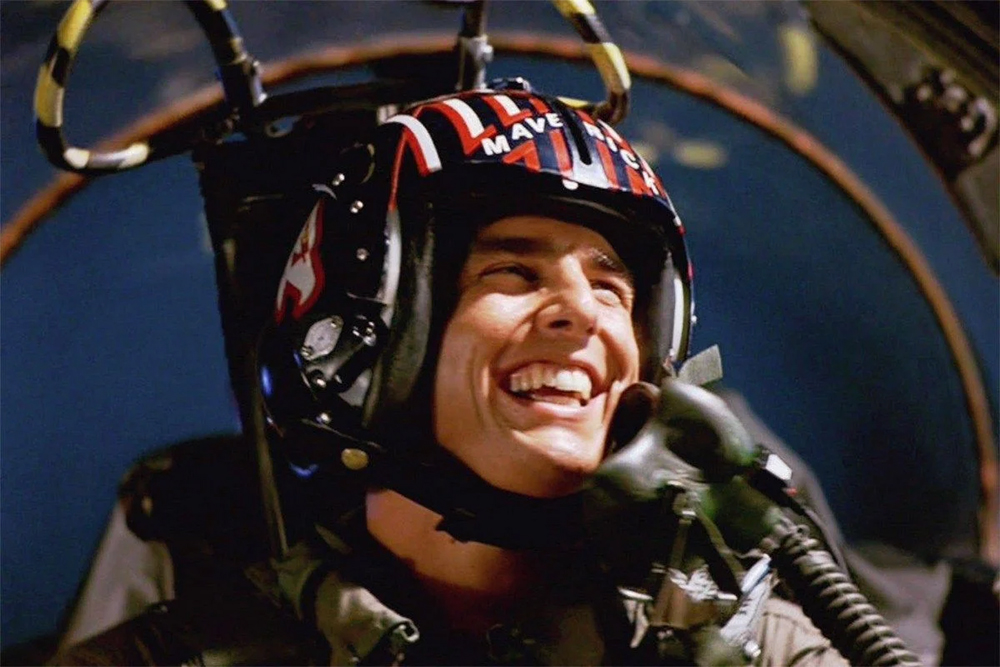
The film’s impact extended far beyond cinema. It influenced fashion, advertising, recruitment campaigns, television, video games, and even international military culture. The U.S. Navy famously established recruitment booths in theaters following the film’s release, capitalizing on the surge of interest generated by the movie’s glamorous depiction of naval aviation. Although later analyses disputed exaggerated claims about recruitment spikes, there is little doubt the film significantly boosted public fascination with fighter pilots. In Japan, future fighter pilot Misa Matsushima openly credited the movie with inspiring her dream of aviation as a child. The film also became a template for countless imitators and parodies, from Hot Shots! to episodes of Family Guy, while inspiring series such as JAG and eventually the entire NCIS universe.
The emotional weight surrounding the Cannes screening is also amplified by the retrospective lens through which audiences now view many of the film’s key figures. The death of Tony Scott in 2012 transformed the film into a bittersweet monument to his kinetic visual genius, while the passing of Val Kilmer turned Maverick and Iceman’s relationship into something even more poignant following the deeply emotional reunion featured in Top Gun: Maverick. The sequel itself became one of the defining cinematic success stories of the post-pandemic era, earning critical acclaim and massive box-office success while proving that the emotional DNA of the original still had extraordinary power nearly four decades later. Directed by Joseph Kosinski, the sequel balanced cutting-edge technology with practical aerial filmmaking and heartfelt nostalgia, becoming not just a sequel but a validation of the original film’s lasting emotional resonance.
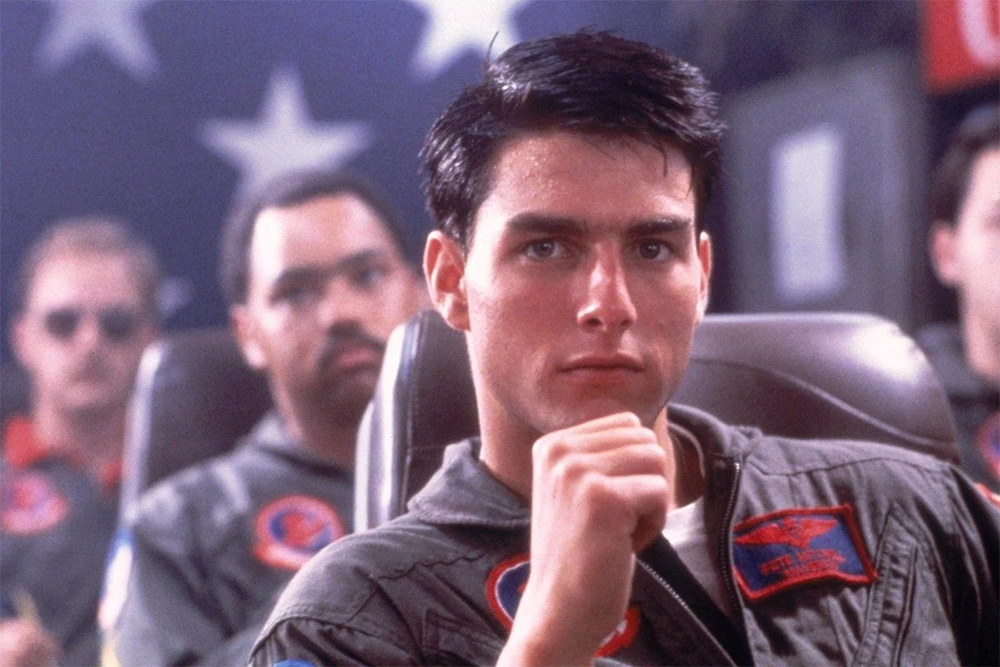
There is also something uniquely poetic about experiencing Top Gun at the Cannes beach screenings specifically. The Cinéma de la Plage has always represented the more accessible and communal side of the festival experience, where locals, tourists, journalists, and festival guests gather together barefoot in the sand for open-air cinematic celebrations. Unlike the formal tuxedo-and-evening-gown atmosphere of the Palais des Festivals, the beach screenings often create the most emotional memories of Cannes because they remind attendees why cinema is ultimately about shared collective emotion. Watching Maverick’s F-14 scream across the night sky while the Mediterranean waves crash nearby and “Danger Zone” echoes through the Croisette could easily become one of the defining festival moments of 2026.
Forty years after its original release, Top Gun remains far more than a nostalgic relic. It is simultaneously a time capsule of Reagan-era blockbuster cinema, a technical milestone in aerial filmmaking, a defining star vehicle for Tom Cruise, and an endlessly analyzed cultural phenomenon whose influence can still be felt across modern entertainment. Its induction into the United States National Film Registry in 2015 confirmed its artistic and historical importance, while the continuing development of Top Gun 3 proves that Maverick’s story is far from over. Few films manage to preserve their mythic aura across four decades of changing cinematic tastes, but Top Gun continues to soar with the same confidence and speed that first captivated audiences in 1986. At Cannes in 2026, beneath the stars and facing the Mediterranean Sea, that legend will once again take flight.
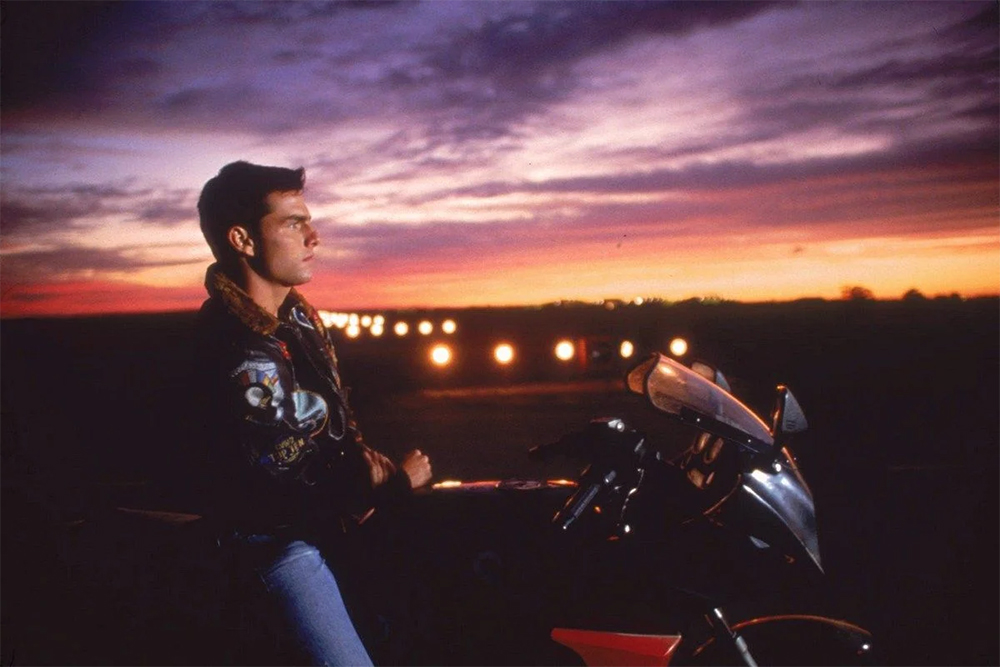
Synopsis :
A young flying ace and hothead at a school reserved for the elite of the U.S. Navy (Top Gun), Pete Mitchell—known as Maverick—falls for a female instructor while competing for the title of top pilot...
Top Gun
Directed by Tony Scott
Written by Jim Cash, Jack Epps Jr.
Based on Top Guns by Ehud Yonay
Produced by Don Simpson, Jerry Bruckheimer
Starring Tom Cruise, Kelly McGillis, Val Kilmer, Anthony Edwards, Tom Skerritt
Cinematography : Jeffrey L. Kimball
Edited by Chris Lebenzon, Billy Weber
Music by Harold Faltermeyer
Production company : Don Simpson/Jerry Bruckheimer Films
Distributed by Paramount Pictures
Release dates : May 12, 1986 (New York City), May 16, 1986 (United States), September 17 1986 (France)
Running time : 109 minutes
Photos : Copyright Paramount Pictures