
 English
Convention - SDCC 2026 : NECA Brings Back the Ben Cooper Mummy in Glow-in-the-Dark Form
By Mulder, 03 april 2026
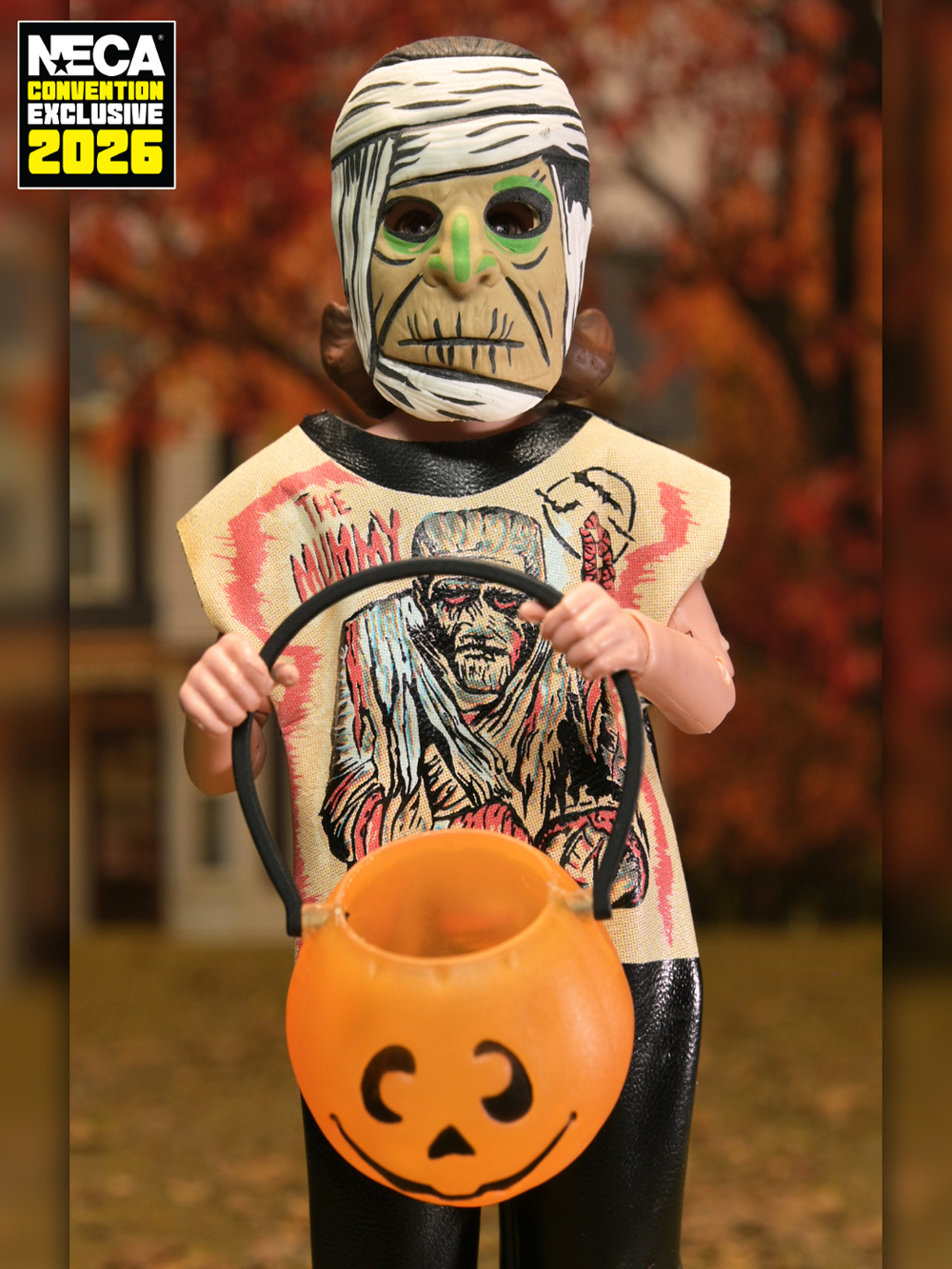
The announcement of the SDCC 2026 exclusive Ben Cooper Costume Kids Collection - Mummy 6” Glow-in-the-Dark by National Entertainment Collectibles Association instantly taps into a very specific vein of pop culture nostalgia, one that goes far beyond simple toy collecting and reaches deep into the collective memory of Halloween itself, particularly in the United States where generations of children once roamed suburban streets in thin vinyl costumes and slightly suffocating plastic masks. What makes this release especially fascinating is how it doesn’t merely replicate a character, but rather recreates an experience—that slightly eerie, slightly charming aesthetic of mid-20th-century Halloween, where imagination filled in the gaps left by rudimentary costume design.
At first glance, the figure itself is deceptively simple: a 6-inch articulated Mummy, complete with soft goods clothing and a stylized mask directly inspired by the original designs from Ben Cooper, Inc.. But that simplicity is precisely the point, because NECA isn’t trying to modernize or over-detail the concept; instead, it faithfully captures the essence of those original costumes from the 1950s through the 1980s, where accuracy was secondary to immediacy and affordability. The inclusion of glow-in-the-dark elements (mask, costume, pumpkin bucket, and even the packaging) adds a playful yet authentic twist, echoing the era’s fascination with phosphorescent gimmicks that made Halloween nights feel just a little more magical.
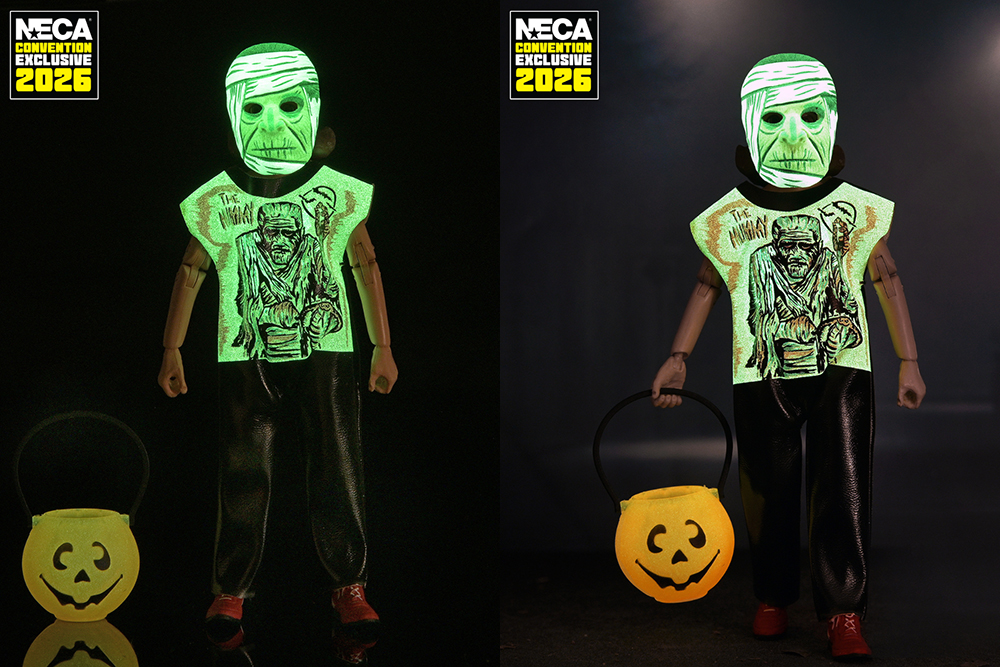
To understand why this figure resonates so strongly, you have to look at the legacy of Ben Cooper, Inc., a company founded in 1937 that became, by the post-war boom, one of the dominant forces in Halloween manufacturing. At its peak during the 1950s to the mid-1980s, it stood alongside competitors like Collegeville and Halco as part of the so-called “big three” costume makers, but its cultural footprint arguably went further. Its inexpensive costumes (often sold for just over a dollar in stores like Sears or Woolworth’s) made Halloween accessible to millions of families, embedding its aesthetic into the DNA of the holiday itself. Those thin smocks and elastic-strapped masks might feel primitive today, but they were instrumental in shaping the modern Halloween tradition.
There’s also a fascinating theatrical lineage behind the brand, often overlooked in discussions of Halloween history. Founder Ben Cooper himself began in the world of stage production, designing costumes and sets for venues like the Cotton Club and the Ziegfeld Follies, before pivoting during the Great Depression as live theater declined. That pivot proved visionary, as Halloween surged in popularity across America, allowing Cooper to transform what was once a niche celebration into a mass-market phenomenon driven by licensed characters and rapid production cycles. In many ways, the DNA of modern merchandising from blockbuster tie-ins to fast-turnaround collectibles can be traced back to these early innovations.
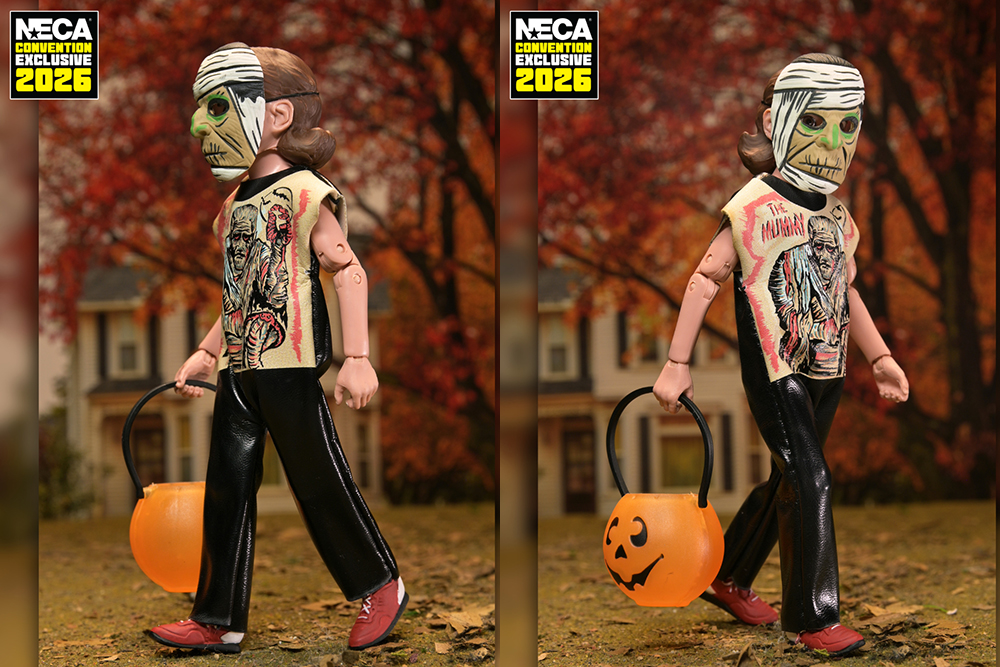
NECA’s reinterpretation also subtly acknowledges one of the quirkiest aspects of those original costumes: the fact that children often wore the masks pushed up on their heads because they were uncomfortable. This detail, documented in retrospective accounts and even highlighted in later analyses of the brand’s design choices, explains why many costumes featured printed character imagery directly on the chest—ensuring recognizability even when the mask wasn’t in place. By preserving that slightly awkward, almost naïve design philosophy, this Mummy figure becomes more than a collectible : it becomes a commentary on how kids actually experienced Halloween. From a collector’s standpoint, the packaging alone is likely to be a major draw. The retro-style window box, itself glow-in-the-dark and numbered, mirrors the original retail presentation that collectors today obsess over, especially when it comes to mint-condition boxed costumes. In fact, original Ben Cooper sets—particularly those featuring licensed characters like Spider-Man or Batman—have become highly sought-after artifacts in vintage toy markets. NECA clearly understands this, leaning into the packaging as an essential part of the collectible rather than a disposable afterthought.
There’s also an interesting historical irony in the timing of such nostalgia-driven releases. The original Ben Cooper empire faced significant challenges in the 1980s, including declining sales linked to broader cultural anxieties—most notably the 1982 Tylenol scare, which temporarily dampened Halloween participation nationwide. Despite attempts to revive interest through safety campaigns and industry collaborations, the company eventually filed for bankruptcy in 1988 and again in 1991 before being acquired by Rubie’s Costume Co. in 1992. And yet, decades later, its visual identity remains so powerful that it continues to inspire modern collectibles, documentaries, and books dedicated to its legacy.
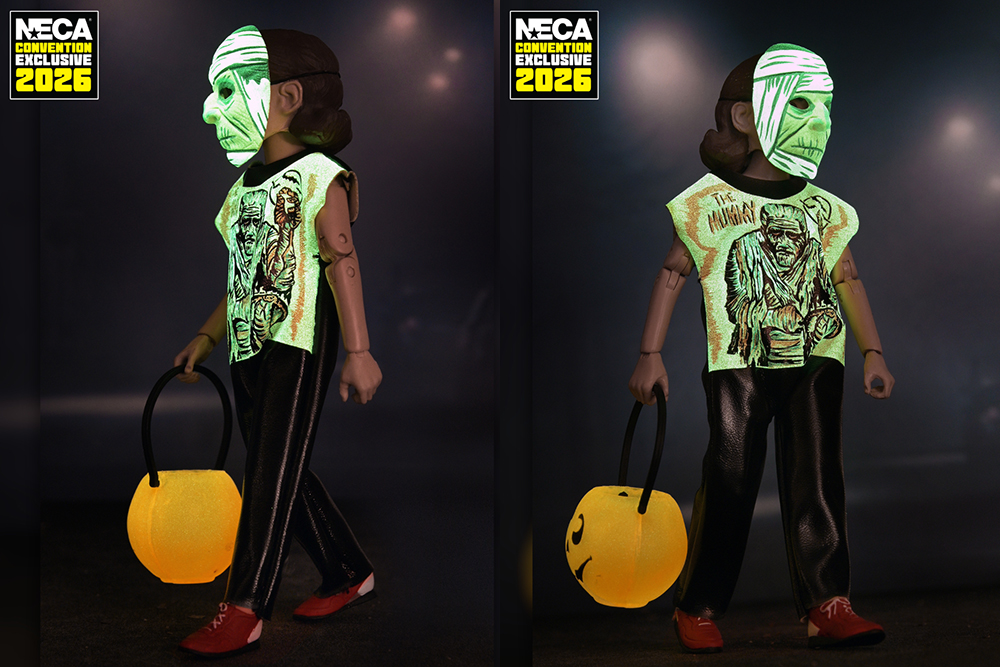
NECA, for its part, has built a reputation for precisely this kind of deep-cut nostalgia mining, often targeting adult collectors who grew up with these cultural artifacts. Since its founding in 1996, the company has developed an extensive catalog of licensed products spanning film, television, video games, and comics, frequently focusing on properties or aesthetics that larger toy manufacturers might overlook. The Ben Cooper line fits perfectly into that strategy, bridging the gap between toy collecting and cultural preservation in a way that feels both authentic and commercially savvy.
The Ben Cooper Mummy Glow-in-the-Dark figure stands as a small but remarkably dense piece of pop culture history, encapsulating nearly half a century of Halloween evolution in a single object. It’s the kind of release that might seem niche at first glance, but quickly reveals layers of meaning the more you dig into its origins—from theatrical roots and mass-market innovation to childhood memories and collector obsession. And perhaps that’s the real magic here: not just recreating a toy, but resurrecting a feeling, one faintly glowing under the dim porch lights of a Halloween night that never quite fades.