
 English
Convention - Cinemacon 2026 : Angel Studios Unveils an Ambitious, Values-Driven Slate Blending Prestige, History, and Crowd-Powered Storytelling
By Mulder, 13 april 2026
At this year’s CinemaCon in Las Vegas, Angel Studios made a confident and calculated statement about its future, stepping onto the stage not as an outsider experimenting with a disruptive model, but as a studio that has clearly found its identity and is now scaling it with precision and ambition. In a presentation that balanced emotional conviction with strategic clarity, executives Brandon Purdie and Neal Harmon outlined a 2026 theatrical slate that doesn’t just aim to entertain, but to reinforce Angel’s positioning as the leading “audience-driven” studio in Hollywood. What stood out immediately in the room, beyond the polished sizzle reels and carefully curated trailers, was the consistency of the message: this is a company betting big on stories that resonate emotionally, morally, and collectively, designed to bring audiences back into theaters for shared experiences.
There’s something undeniably fascinating about Angel’s trajectory over the past few years, especially when you consider how quickly it has transitioned from a niche player associated with faith-based content into a broader storytelling platform with genuine commercial traction. The studio highlighted impressive milestones, including the breakout success of DAVID, which became the highest-grossing faith-based animated opening of all time, and a remarkable average Rotten Tomatoes audience score of 93%, a statistic that quietly drew murmurs of approval from industry attendees. More interestingly, Angel’s business model—built around its 2.2 million-member Angel Guild, who actively vote on which projects get produced—feels less like a gimmick now and more like a viable alternative to traditional studio greenlighting processes. It’s participatory cinema in the truest sense, and judging by the confidence on stage, it’s working.
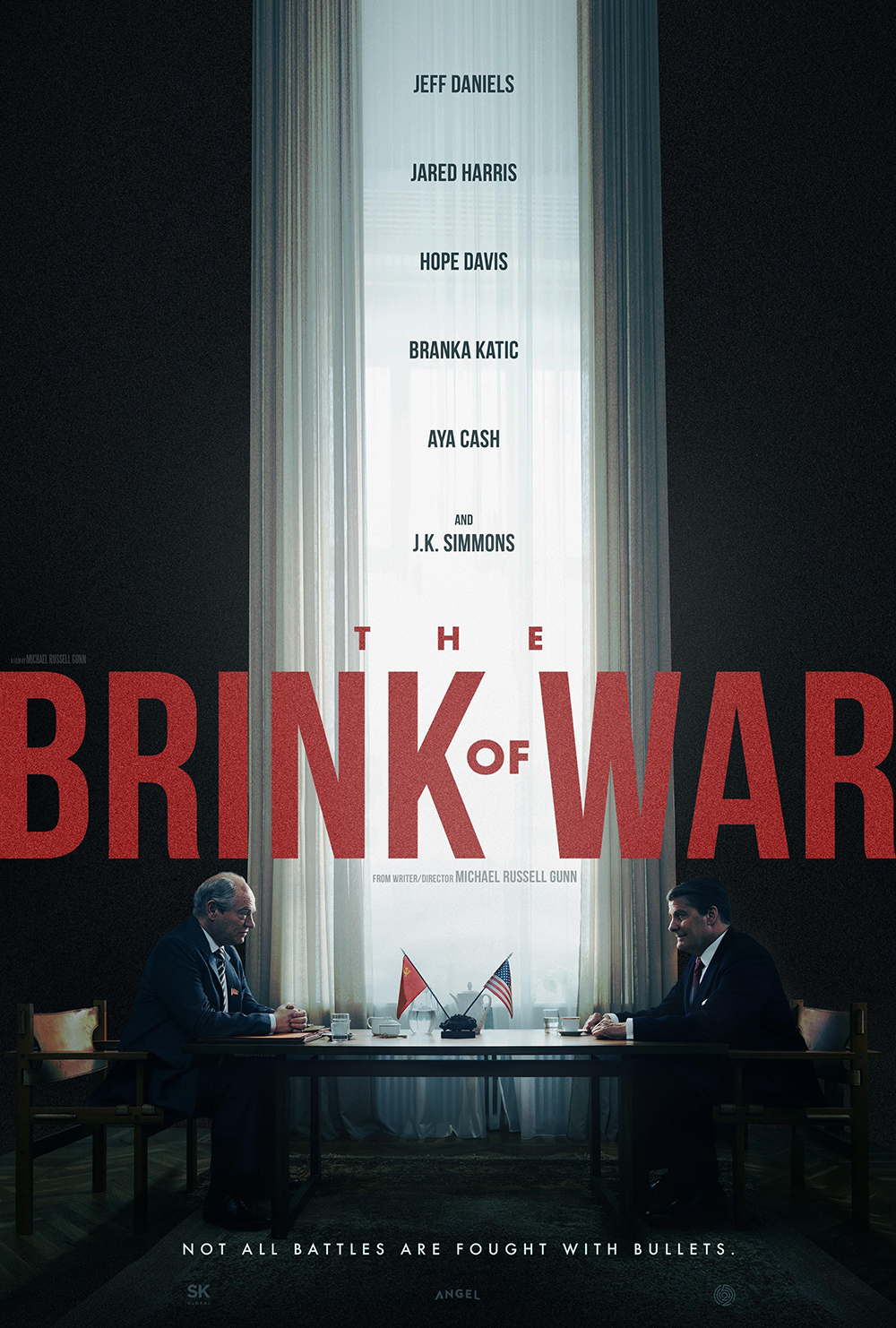
The 2026 slate itself reflects a deliberate attempt to broaden appeal while maintaining a clear thematic spine centered on hope, resilience, and moral complexity. One of the most talked-about projects is Runner, directed by Scott Waugh, which pairs Owen Wilson and Alan Ritchson in what looks like a high-octane thriller with surprising emotional weight. The footage shown hinted at a relentless pace, but also at a grounded human story, something Angel seems determined to integrate even into its most commercial offerings. Equally intriguing is The Brink of War, directed by Michael Russell Gunn, a Cold War drama centered on the Reykjavik Summit, with Jeff Daniels portraying Ronald Reagan and J.K. Simmons as George Shultz. The tone here is far more restrained and political, yet it fits perfectly within Angel’s broader narrative of individuals confronting pivotal historical moments with courage and conviction.
Another highlight of the presentation was Young Washington, directed by Jon Erwin, which positions itself as a sweeping origin story of George Washington, timed to coincide with the 250th anniversary of the United States. The trailer introduced with a sense of reverence leans heavily into epic historical drama, with Kelsey Grammer, Mary-Louise Parker, and Ben Kingsley anchoring the cast, while William Franklyn-Miller steps into the role of a young Washington. What’s particularly striking here is how the film attempts to humanize a near-mythical figure, focusing on his early struggles rather than his established legacy, a narrative approach that could resonate strongly with younger audiences discovering this chapter of history for the first time.
Angel also demonstrated a willingness to revisit and reinterpret classic material, most notably with Angel and the Badman, directed by Julio Quintana and starring Tommy Lee Jones alongside Zachary Levi. This reimagining of the John Wayne classic appears to lean into themes of redemption and personal transformation, while still delivering the expected Western spectacle. During the presentation, anecdotes from producer Jaime Hernandez and actor Neal McDonough added a layer of authenticity, emphasizing the passion behind the project and the collaborative spirit that seems to define Angel’s productions. It’s a film that feels both nostalgic and contemporary, bridging generational gaps in a way that aligns with the studio’s broader mission.
On a completely different tonal spectrum, Hershey, directed by Mark Waters, brings a biographical angle to the slate, chronicling the life of Milton Hershey and his enduring legacy. Starring Finn Wittrock and Alexandra Daddario, the film appears to focus as much on personal struggle and philanthropy as it does on business success, highlighting the creation of the Milton Hershey School as a central emotional pillar. This is exactly the kind of story Angel thrives on uplifting, grounded in real history, and driven by a strong moral core. Similarly, Drummer Boy, directed by Ben Smallbone and Joel David Smallbone, adds a musical and revolutionary war twist, blending historical drama with a Christmas narrative, a combination that feels risky on paper but surprisingly coherent within Angel’s storytelling philosophy.
Perhaps the most unexpected inclusion in the slate is Animal Farm, directed by Andy Serkis, which brings together an impressive voice cast including Seth Rogen, Woody Harrelson, Glenn Close, and Kieran Culkin. Adapting George Orwell’s iconic allegory is no small task, and the footage teased a visually ambitious and tonally darker film than one might expect from Angel. Yet, it also reinforces the studio’s willingness to tackle complex themes—power, corruption, and ideological manipulation—while still framing them within narratives that provoke reflection rather than cynicism.
Closing out the slate is Zero A.D., directed by Alejandro Monteverde, a biblical epic that revisits the story of Mary and the birth of Jesus with a cinematic scale that feels closer to classic Hollywood epics than modern faith-based productions. With Deva Cassel, Sam Worthington, Jim Caviezel, and Ben Mendelsohn in the cast, the film aims to deliver both spectacle and spiritual depth, positioning itself as a major holiday release.
What ultimately defines Angel’s CinemaCon 2026 presentation isn’t just the diversity of its projects, but the clarity of its identity. In an industry often driven by algorithms, franchises, and risk-averse decision-making, Angel is doubling down on a model that prioritizes audience engagement at every stage of production. Whether that approach will continue to scale at the level the studio hopes remains to be seen, but based on the energy in the room and the strength of this slate, there’s a growing sense that Angel is no longer just an alternative voice in Hollywood—it’s becoming a significant one.
(Source : press release)