
 English
Prime-Video - The Boys Ends in Blood and Fire: A Finale season That Reflects Our Darkest Reality
By Mulder, 07 april 2026
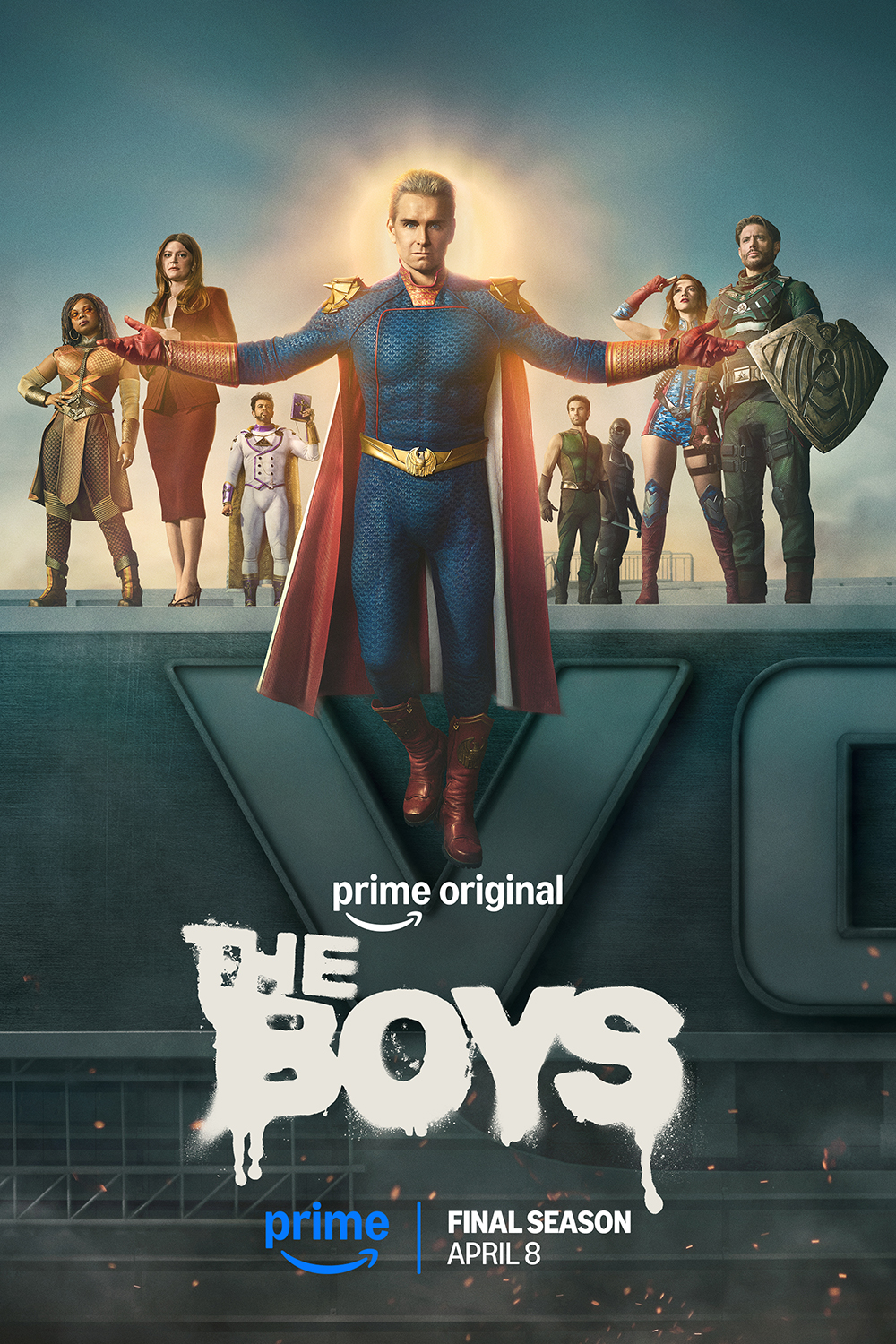
The final chapter of The Boys arrives with the kind of pressure few modern series finales can truly withstand, and under the stewardship of Eric Kripke, Season 5 doesn’t just aim to conclude a story, it attempts to define an era of television that has increasingly blurred the line between satire and reality. From its opening moments, the tone is unmistakably apocalyptic, less in spectacle than in atmosphere, as the world has fully bent under the weight of Homelander’s unchecked dominance. What once felt like exaggerated parody now lands with an almost uncomfortable familiarity, giving this final season a gravity that earlier installments, for all their brilliance, never quite carried in the same way. There is a sense here that the show is no longer simply mocking power—it is dissecting it, exposing its fragility, its absurdity, and ultimately its terrifying inevitability.
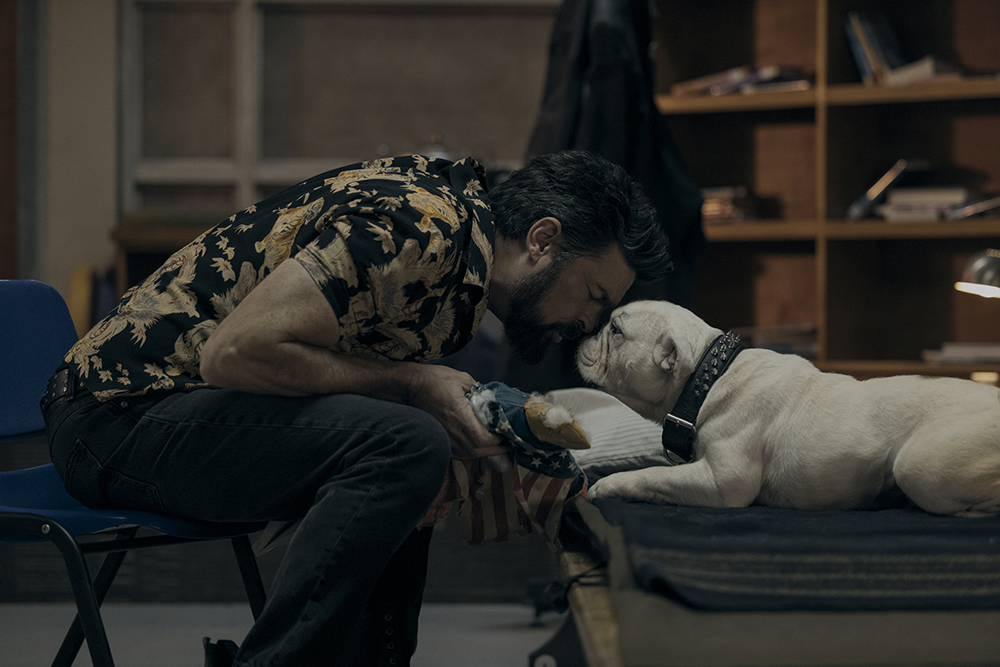
At the center of this descent into controlled chaos stands Antony Starr, delivering what may well be one of the most defining villain performances of the last decade. His Homelander is no longer just a sociopathic Superman analogue; he has evolved into something far more unsettling—a hollow figure intoxicated by power yet visibly consumed by it, oscillating between divine delusion and desperate insecurity. Starr plays these contradictions with surgical precision, making every glance, every twitch, feel like a potential breaking point. Opposite him, Karl Urban pushes Billy Butcher into darker, almost irredeemable territory, transforming what was once a revenge-driven anti-hero into a man willing to embrace annihilation itself. Their dynamic, long teased across the series, becomes less a battle of good versus evil than a collision between two ideologies spiraling toward mutual destruction.
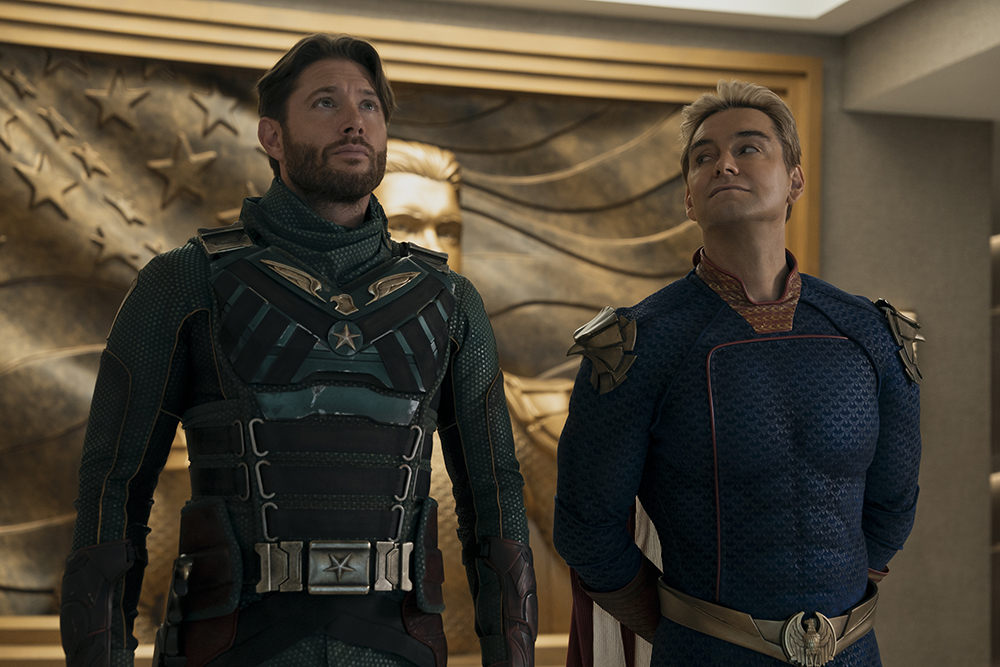
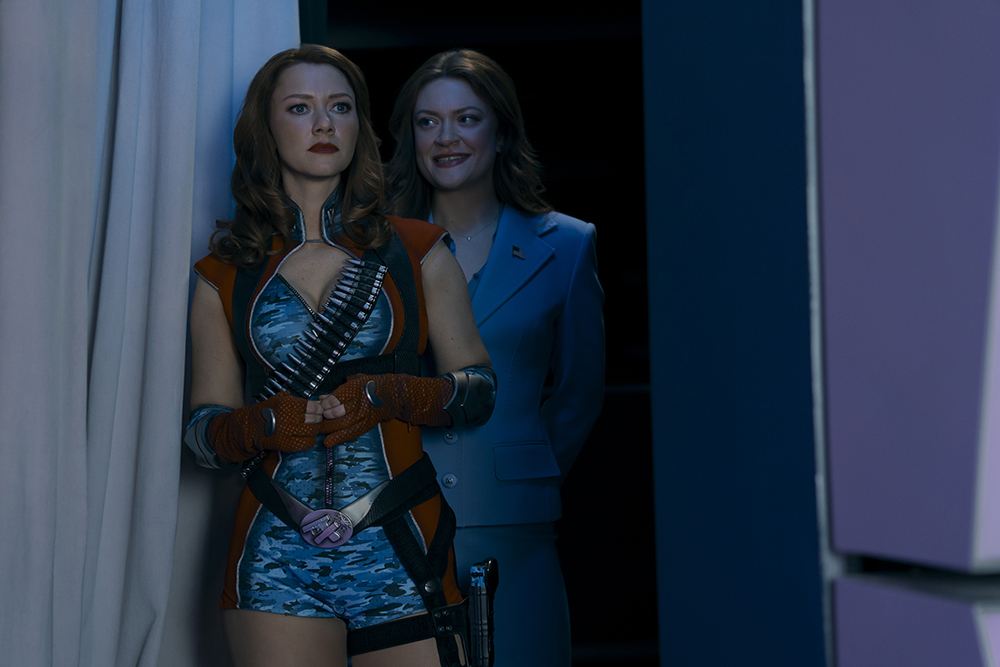
What elevates this final season beyond its shock value is its commitment to character resolution rather than mere spectacle, even if that journey occasionally stumbles under the weight of its own ambition. Jack Quaid continues to embody the moral compass of the series, though increasingly fractured, while Erin Moriarty brings a quiet intensity to Annie that reflects the burden of leading a resistance in a world that has already surrendered. Meanwhile, Karen Fukuhara emerges as one of the season’s emotional anchors, her newfound voice symbolizing not just personal evolution but the broader theme of reclaiming agency in a system designed to erase it. These arcs, while sometimes uneven in pacing, ensure that the finale never loses sight of what has always made The Boys compelling: its deeply human core beneath layers of gore and satire.
The season is not without its flaws, particularly in its structure. The narrative occasionally struggles with momentum, falling into familiar patterns that echo earlier seasons, and at times giving the impression that the story is circling its inevitable conclusion rather than charging toward it. Certain subplots, including the expansion of its universe through crossover elements and new characters, feel more like groundwork for future spin-offs than essential components of this final act. Even the introduction of figures like the televangelist Oh-Father, played with charismatic excess by Daveed Diggs, while thematically relevant, occasionally disrupts the narrative flow rather than enhancing it.
Yet, where the season truly distinguishes itself is in its thematic ambition. The show’s longstanding critique of corporate greed and media manipulation evolves here into a broader examination of authoritarianism, faith, and collective complicity. The merging of religion and political power is depicted with a bluntness that leaves little room for subtlety, but that very lack of restraint feels intentional, even necessary. The Boys has never been a series interested in nuance for its own sake; instead, it wields exaggeration as a weapon, and in this final season, that weapon cuts closer to reality than ever before. The satire no longer feels like a distortion—it feels like documentation.
Visually and tonally, the series remains as uncompromising as ever, delivering the grotesque, inventive violence that has become its signature while ensuring that these moments serve a narrative purpose rather than existing purely for shock. The brutality here carries weight, each death and each act of destruction reinforcing the idea that this world has reached a point of no return. Interestingly, the show exercises a newfound restraint in its excess, no longer trying to outdo itself with each episode but instead focusing on the consequences of its chaos, which gives the finale a surprising sense of maturity.
Perhaps the most striking aspect of this concluding chapter is its willingness to embrace discomfort over catharsis. Rather than offering a clean resolution, the series leans into ambiguity, forcing its characters to confront the cost of their choices. There is no easy victory here, no triumphant restoration of order, only the lingering question of whether such order was ever possible to begin with. It is a bold, arguably risky approach, but one that aligns perfectly with the show’s identity and its refusal to conform to traditional storytelling expectations.
Season 5 of The Boys is not a flawless finale, but it is a fitting one messy, provocative, and undeniably impactful. It captures both the strengths and the contradictions of the series, delivering a conclusion that feels earned even when it falters. For all its pacing issues and occasional narrative detours, it succeeds where it matters most: it leaves a lasting impression, cementing its place as one of the most daring and culturally resonant shows of its time.
Synopsis :
In a fictional world where superheroes have been corrupted by fame and glory and have gradually revealed the dark side of their personalities, a team of vigilantes calling themselves The Boys decide to take action and take down these superheroes who were once loved by all.
The Boys
Based on The Boys by Garth Ennis, Darick Robertson
Developed by Eric Kripke
Showrunner: Eric Kripke
Starring Karl Urban, Jack Quaid, Antony Starr, Erin Moriarty, Jessie T. Usher, Laz Alonso, Chace Crawford, Tomer Capone, Karen Fukuhara, Nathan Mitchell, Colby Minifie, Cameron Crovetti, Susan Heyward, Valorie Curry, Jeffrey, Dean Morgan, Jensen Ackles, Daveed Diggs
Composers : Christopher Lennertz, Matt Bowen
Executive producers : Eric Kripke, Seth Rogen, Evan Goldberg, James Weaver, Neal H. Moritz, Pavun Shetty, Ori Marmur, Dan Trachtenberg, Ken F. Levin, Jason Netter, Craig Rosenberg, Phil Sgriccia, Rebecca Sonnenshine, Paul Grellong, David Reed, Meredith Glynn, Garth Ennis, Darick Robertson, Michaela Starr, Judalina Neira
Producers : Hartley Gorenstein, Gabriel Garcia, Nick Barrucci, Jake Deuel, Karl Urban, Stefan Steen, Anslem Richardson, Antony Starr
Cinematography : Jeff Cutter, Evans Brown, Jeremy Benning, Dylan Macleod, Dan Stoloff, Mirosław Baszak, Jonathon Cliff
Editors : David Trachtenberg, Nona Khodai, David Kaldor, Cedric Nairn-Smith, William W. Rubenstein; Jonathan Chibnall, Ian Kezsbom, Tom Wilson, John Fitzpatrick, Scott Stolzar
Production companies : Kripke Enterprises, Point Grey Pictures, Original Film, Kickstart Entertainment, KFL Nightsky Productions, Amazon MGM Studios, Sony Pictures Television
Network : Amazon Prime Video
Release July 26, 2019 – present
Running time 55–70 minutes
Our review is based on the first six episodes of Season 5, which we received today for review
Photos : Copyright Amazon Content Services LLC