
 English
Mattel - Masters of the Universe: Mattel’s Global Power Play Signals a New Era for Eternia
By Mulder, 24 march 2026

As the countdown begins toward the June 5, 2026 theatrical release of Masters of the Universe in the United States, Mattel is rolling out an expansive and carefully orchestrated global strategy that signals far more than just the return of a beloved franchise it marks the full-scale reactivation of Eternia as a major cross-generational entertainment powerhouse. Starting April 25, 2026, an ambitious lineup of products will hit shelves worldwide, spanning action figures, premium collectibles, fashion collaborations, and gaming tie-ins, all designed to extend the cinematic experience far beyond the screen. This initiative reflects a broader shift in how major intellectual properties are now leveraged, where the film serves as the centerpiece of a much larger ecosystem, echoing the brand-driven strategies seen across today’s entertainment industry. For longtime fans, this rollout taps directly into nostalgia, while for younger audiences, it offers a fresh, multi-platform entry point into a universe that has quietly been rebuilt for modern consumption.
Behind this massive relaunch lies a film whose development history reads like one of Hollywood’s most persistent sagas, spanning nearly two decades of shifting creative visions, studio transitions, and aborted attempts. The project first surfaced in the late 2000s with John Woo loosely attached, before moving to Sony Pictures Entertainment in 2009, where it underwent multiple rewrites and directorial changes. It later transitioned to Netflix in 2022, only to be canceled after significant development investment, before finally landing at Amazon MGM Studios in 2024. The arrival of director Travis Knight marked a turning point, bringing a cohesive creative direction to a project that had long struggled to balance spectacle with identity. Earlier iterations reportedly faltered due to budget concerns and conflicting tonal approaches, including one version considered too ambitious in scale, drawing comparisons to The Lord of the Rings. This long and often turbulent journey ultimately underscores the complexity of adapting a property that is both deeply nostalgic and tonally unique, blending fantasy, science fiction, and mythological elements.

The final cast reflects a deliberate effort to modernize the franchise while preserving its iconic core, with Nicholas Galitzine stepping into the role of Prince Adam / He-Man, surrounded by a high-profile ensemble that includes Camila Mendes, Alison Brie, Idris Elba, Morena Baccarin, James Purefoy, and Jared Leto as Skeletor. The casting of Jared Leto in particular signals a bold approach to the film’s central antagonist, leaning into a more layered and theatrical interpretation of a character traditionally portrayed as a straightforward villain. Meanwhile, Idris Elba’s presence as Man-At-Arms and Alison Brie as Evil-Lyn suggests an effort to deepen the emotional and narrative stakes, giving greater dimension to characters who have historically been defined by archetype rather than nuance. This ensemble, combined with a script by Chris Butler, Aaron Nee, Adam Nee, and David Callaham, positions the film as both a reinvention and a respectful continuation of the original mythology.
Narratively, the film embraces a revised origin story that begins with a young Prince Adam exiled to Earth during a devastating civil war on Eternia, only to return decades later to reclaim his birthright and become He-Man, the universe’s most powerful defender against the forces of Skeletor. This structure aligns with contemporary blockbuster storytelling trends, grounding larger-than-life fantasy elements in a more personal and emotional journey, while still preserving the epic scope that defines the franchise. It also allows for a thematic exploration of identity, legacy, and destiny, offering a more character-driven entry point into a world traditionally defined by spectacle and action.

From a technical standpoint, the production brings together an impressive creative team, with cinematography by Fabian Wagner, editing by Paul Rubell, and visual effects handled by industry leaders including Industrial Light & Magic, DNEG, Cinesite, and Rodeo FX, ensuring a visually ambitious interpretation of Eternia. The musical score, composed by Daniel Pemberton with contributions from Brian May, adds another layer of anticipation, suggesting a blend of orchestral grandeur and distinctive musical identity that could help define the film’s tone and emotional impact. These elements collectively point toward a production that aims not only to meet modern blockbuster standards but to establish a new visual and tonal benchmark for the franchise.
What ultimately sets this project apart is the scale and cohesion of Mattel’s broader strategy, which extends far beyond the film itself through partnerships with major brands such as Barbie, Hot Wheels, Funko, and UNO, transforming Masters of the Universe into a fully integrated cultural and commercial platform. This approach reflects a growing industry trend in which intellectual properties are no longer confined to a single medium but instead operate as interconnected ecosystems designed to maximize engagement across multiple touchpoints. It is a model that prioritizes longevity and adaptability, ensuring that the brand remains relevant across different demographics and consumption habits.
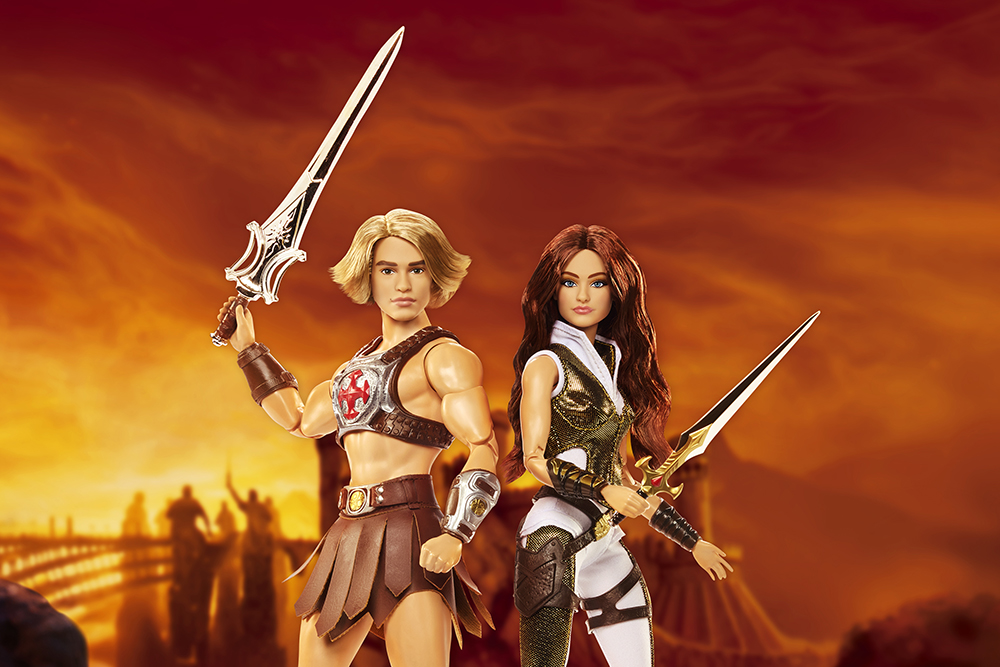
Looking back at the franchise’s previous live-action attempt in 1987, starring Dolph Lundgren, it becomes clear how dramatically the landscape has evolved, both technologically and strategically. Where that earlier adaptation struggled to fully capture the scope and tone of the source material, this new iteration benefits from decades of lessons learned, not only in filmmaking but in franchise management. Mattel’s current approach suggests a company that now fully understands the value of its intellectual property and the importance of aligning creative vision with long-term brand strategy. As anticipation continues to build, Masters of the Universe stands poised not just as a film release, but as a defining moment in the modern revival of a legendary universe—one that may finally give Eternia the cinematic legacy it has long deserved.
Yopu can discover the official photos in our Flickr page
Synopsis :
Prince Adam transforms into a warrior named He-Man and becomes the last hope for the magical land of Eternia, ravaged by technology and the evil Skeletor.
Masters of the Universe
Directed by Travis Knight
Written by Chris Butler, Aaron Nee, Adam Nee, David Callaham
Story by Aaron Nee, Adam Nee, Alex Litvak, Michael Finch
Based on Masters of the Universe by Mattel
Produced by Todd Black, Jason Blumenthal, Steve Tisch, Robbie Brenner
Starring Nicholas Galitzine, Camila Mendes, Alison Brie, James Purefoy, Morena Baccarin, Jóhannes Haukur Jóhannesson, Charlotte Riley, Kristen Wiig, Jared Leto, Idris Elba
Cinematography : Fabian Wagner
Edited by Paul Rubell
Music by Daniel Pemberton
Production companies : Amazon MGM Studios, Mattel Studios, Escape Artists
Distributed by Amazon MGM Studios (United States), Sony Pictures Releasing International (International)
Release date : June 5, 2026 (United States)