
 English
Convention - CinemaCon 2026 : Barco joins The Coca-Cola Company as historic co-presenting sponsor of the global cinema industry’s biggest convention
By Mulder, 05 march 2026

When the global film exhibition community gathers every spring in Las Vegas, it is not simply for another industry trade show, it is for CinemaCon, the annual crossroads where technology, studios, exhibitors, and filmmakers converge to celebrate and shape the future of theatrical cinema. In a significant announcement ahead of this year’s edition, Barco has officially joined The Coca-Cola Company as a co-presenting sponsor of CinemaCon 2026, marking the first time in the convention’s fifteen-year history under the CinemaCon name that two companies will share the prestigious presenting sponsor role. The partnership signals not only the growing scale of the convention itself but also the increasingly central role of advanced projection technology in shaping the modern theatrical experience.
Hosted by Cinema United, the world’s largest trade organization dedicated to theatrical exhibition, CinemaCon will once again take over Caesars Palace in Las Vegas from April 13 to April 16, bringing together more than six thousand industry professionals from across the cinema ecosystem. Executives from major studios, theatre chains, technology providers, and distribution companies gather there each year for an event that combines high-profile studio presentations, trade show exhibitions, and networking events that often determine the direction of the theatrical business for the coming year. For many insiders, CinemaCon remains one of the few moments where the entire industry often fragmented across continents and corporate strategies briefly occupies the same space to reaffirm the importance of the big-screen experience.

The decision for Barco, the Belgian technology company headquartered in Kortrijk, to step into the role of official presenting sponsor alongside The Coca-Cola Company reflects the company’s deep and growing integration into the theatrical ecosystem. Known globally for its laser-powered cinema projection systems, Barco has been a familiar presence at CinemaCon for years, regularly demonstrating new innovations in projection brightness, contrast, and high dynamic range. In 2026, the company is not only expanding its sponsorship footprint but also reinforcing its role as one of the technological pillars supporting modern cinema presentation. During the convention, Barco will once again deploy its award-winning laser projection systems inside the legendary Colosseum theater at Caesars Palace, the venue where Hollywood studios traditionally unveil exclusive footage and major announcements to theater owners.
Beyond its presenting sponsorship role, Barco will also sponsor the new Trade Show Networking Reception scheduled for the opening day of the convention on Monday, April 13. The event is expected to become one of the early gathering points of the week, offering attendees an opportunity to reconnect before the whirlwind of studio presentations and industry panels begins. As in previous years, Barco will host an elaborate exhibition suite within the CinemaCon trade show area, along with a dedicated HDR by Barco laser demonstration theatre located in Roman Ballrooms 3 and 4 at Caesars Palace, where attendees will be able to experience the company’s latest advancements in high dynamic range projection designed specifically for premium large format auditoriums.
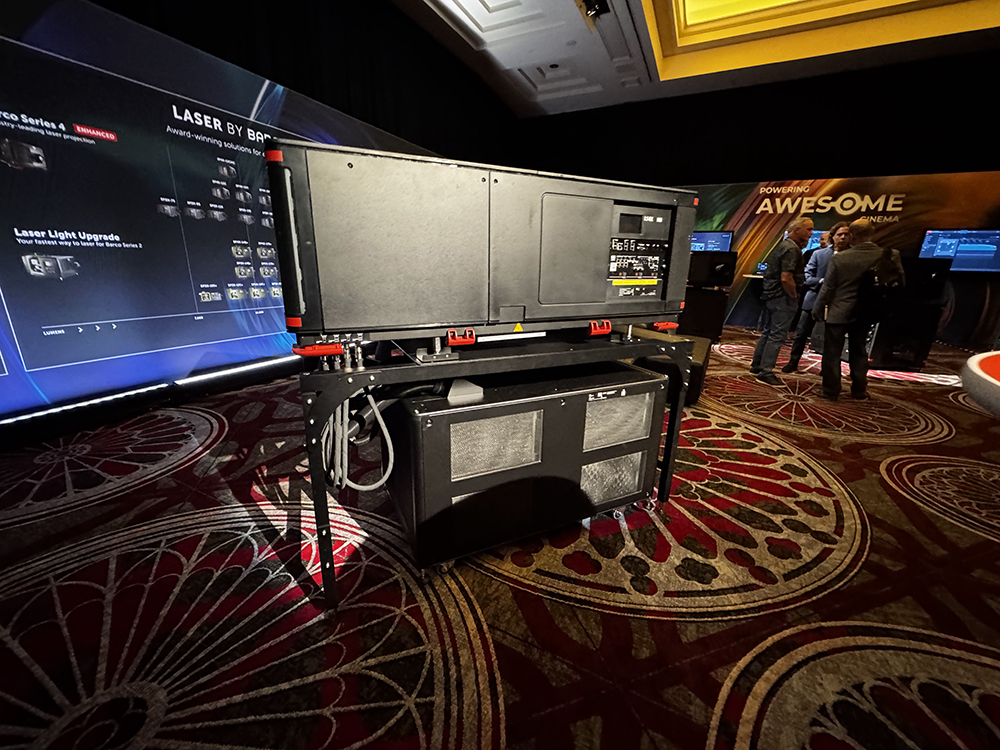
For Michael O’Leary, President and Chief Executive Officer of Cinema United, the new partnership reflects the expanding ambitions of CinemaCon itself, which has grown considerably since the convention replaced the long-running ShoWest event in 2011. According to Michael O’Leary, the decision by Barco to elevate its role within the event represents a natural evolution for a company that has become deeply embedded in the technical backbone of the theatrical exhibition industry. He noted that the partnership demonstrates how technology providers are increasingly aligning themselves with exhibitors and studios in order to ensure that the theatrical experience remains competitive in a rapidly evolving entertainment landscape.
From the perspective of Gerwin Damberg, Executive Vice President of Barco Cinema, the sponsorship is also a reflection of the enduring cultural power of cinema itself. While new distribution models and home entertainment technologies continue to reshape the broader media ecosystem, Gerwin Damberg emphasized that the communal theatrical experience remains the most powerful way for audiences to discover stories. He highlighted that innovations such as laser projection and the company’s HDR by Barco format are not merely technical upgrades but tools designed to allow filmmakers to present their work with greater visual fidelity and emotional impact on the big screen. In his view, CinemaCon is the ideal setting to showcase those advancements because it gathers the filmmakers, exhibitors, and technology partners whose collaboration ultimately brings cinematic storytelling to audiences around the world.
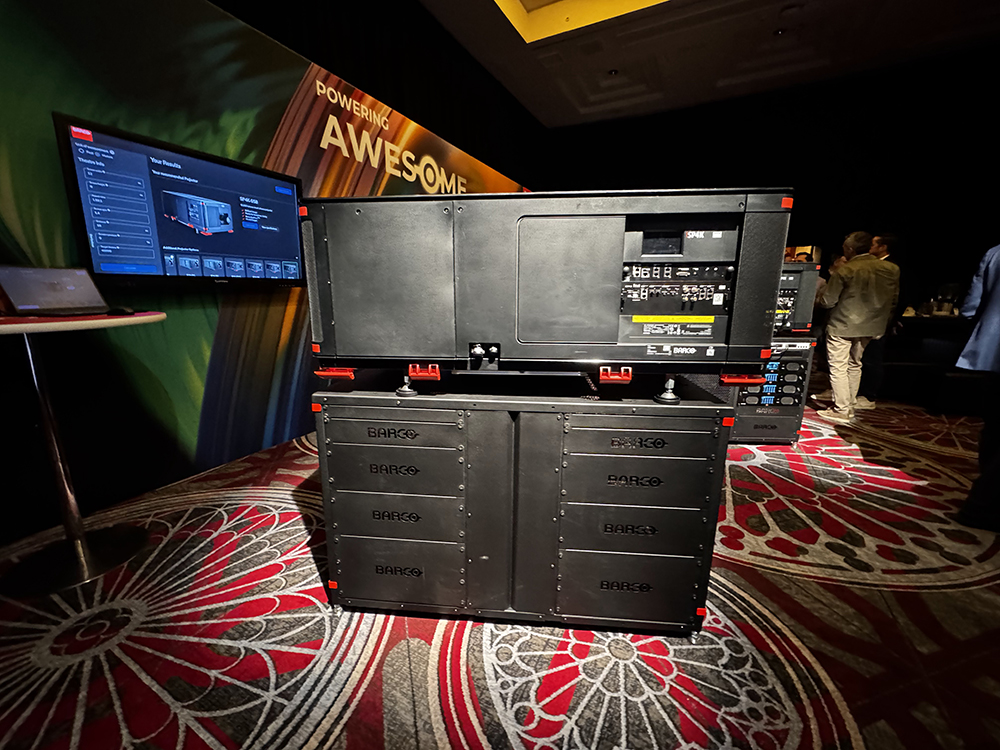
Founded in 1948, Cinema United today represents more than 31,000 movie screens across the United States and over 30,000 additional screens in 80 countries worldwide, ranging from major multiplex chains to single-screen independent theaters. The organization plays a central role in advocating for theatrical exhibition at a time when the industry continues to navigate major shifts in distribution strategies and audience habits. CinemaCon itself has become one of its most visible platforms, not only for unveiling upcoming film slates from major studios but also for addressing the technological innovations and business models shaping the next generation of moviegoing.
For Barco, whose workforce of more than 3,000 employees develops visualization and collaboration technologies across multiple industries, the cinema sector remains one of its most high-profile arenas. The company reported sales of €964 million in 2025 and continues to invest heavily in technologies designed to enhance premium theatrical presentation. Its laser projection systems have become a cornerstone of many modern multiplex upgrades, particularly as exhibitors seek to differentiate the theatrical experience through brighter images, wider color ranges, and immersive large-format environments.

Within the broader culture of CinemaCon, sponsorships have historically carried symbolic weight. The Coca-Cola Company, which has long maintained a deep relationship with the movie industry through theater partnerships and promotional campaigns, has served as the convention’s presenting sponsor for years, reinforcing the brand’s long association with the moviegoing ritual itself—from concession stands to cross-studio marketing initiatives. The arrival of Barco as a co-presenting sponsor therefore represents more than a simple branding agreement; it reflects the growing recognition that technology and presentation quality are now as central to the theatrical experience as concessions or marketing.
For attendees, the announcement also hints at a CinemaCon 2026 that will likely place even greater emphasis on technological innovation. In recent years, the convention floor has increasingly become a showcase not just for seating and concession equipment but for next-generation projection, immersive audio systems, and premium large format concepts designed to compete with the convenience of streaming platforms. As exhibitors look for ways to attract audiences back into theaters after a turbulent decade for the industry, the technological leap promised by companies like Barco has become a crucial part of the conversation.
Ultimately, the partnership between Barco and The Coca-Cola Company at CinemaCon 2026 underscores a simple but powerful reality: the theatrical experience is the result of an ecosystem. Filmmakers craft the stories, studios finance and distribute them, exhibitors create the spaces where audiences gather, and technology companies ensure that those stories are presented with the highest possible impact. Each April in Las Vegas, CinemaCon becomes the stage where those elements briefly align—and with Barco stepping into a historic co-presenting role alongside The Coca-Cola Company, the 2026 edition promises to celebrate not only the enduring magic of movies but also the evolving technology that continues to bring them to life on the world’s biggest screens.
Photos: Boris Colletier / Mulderville
(Source: press release)