
 English
Movies - Scream 7 : Huge Hit with a Record-Breaking $97.2 Million Global Opening in Just a Few Days
By Mulder, 02 march 2026
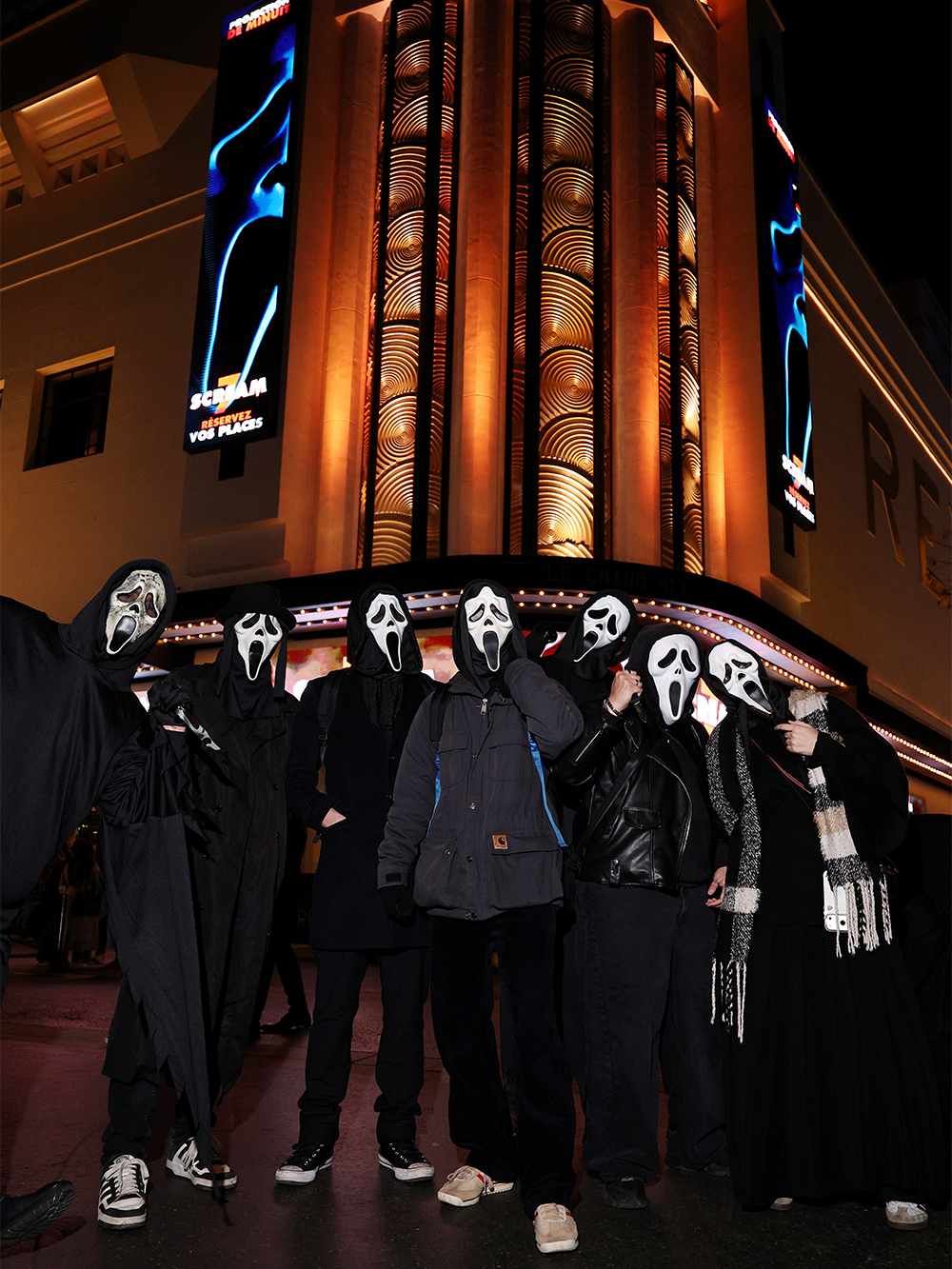
Thirty years after the masked silhouette of Ghostface first redefined modern horror, Scream 7 has done something few legacy franchises manage: it has not only survived the weight of its own mythology, it has shattered its own records. In just a few days of release, the film has amassed an extraordinary $97.2 million worldwide, including $64.1 million in North America and $33.1 million internationally, marking the best global opening in the franchise’s history. With an estimated production budget of around $45 million, the film has effectively recouped its costs in a single weekend, a testament to the enduring commercial power of a saga born in 1996 under the creative vision of Kevin Williamson and Wes Craven. What makes this opening particularly striking is that early box office tracking reported by Deadline Hollywood had initially projected a debut in the mid-$30 million range, later revised toward $40 million; the final figures comfortably surpassed those expectations, underscoring the magnitude of audience anticipation.
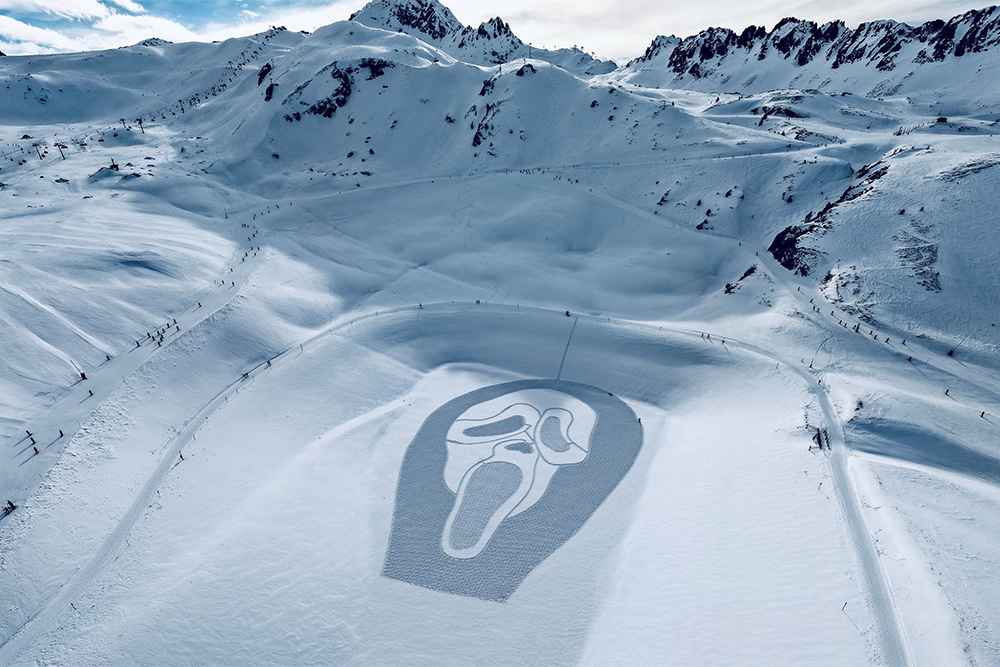
In France, the phenomenon has been equally impressive. The film recorded the best opening for the franchise since Scream 3, selling 94,345 tickets on its first day, including 15,231 admissions during midnight screenings. More than 60 cinemas across 46 cities participated in a coordinated series of global midnight previews on February 25, transforming the launch into a nationwide event. Within five days (Wednesday to Sunday), the film reached 407,540 admissions, establishing France as the third-largest market worldwide behind the United States and the United Kingdom, ahead of territories such as Germany, Australia, and Mexico. This momentum follows the robust performance of Scream VI, which drew nearly 1.2 million admissions in France, confirming that three decades after its inception, the franchise remains deeply embedded in the cultural landscape. The French campaign leaned heavily into spectacle and collective experience, culminating in a preview at the Grand Rex in Paris attended by more than 1,200 spectators and the presence of Neve Campbell, whose appearance during a special 30th anniversary screening reinforced the emotional connection between Sidney Prescott and French audiences. Adding a striking visual flourish, renowned snow artist Simon Beck created a monumental snow artwork inspired by the film in Les Arcs, an ephemeral installation widely shared across social media and press outlets, further amplifying the sense that this release was not merely a sequel but a cinematic event.
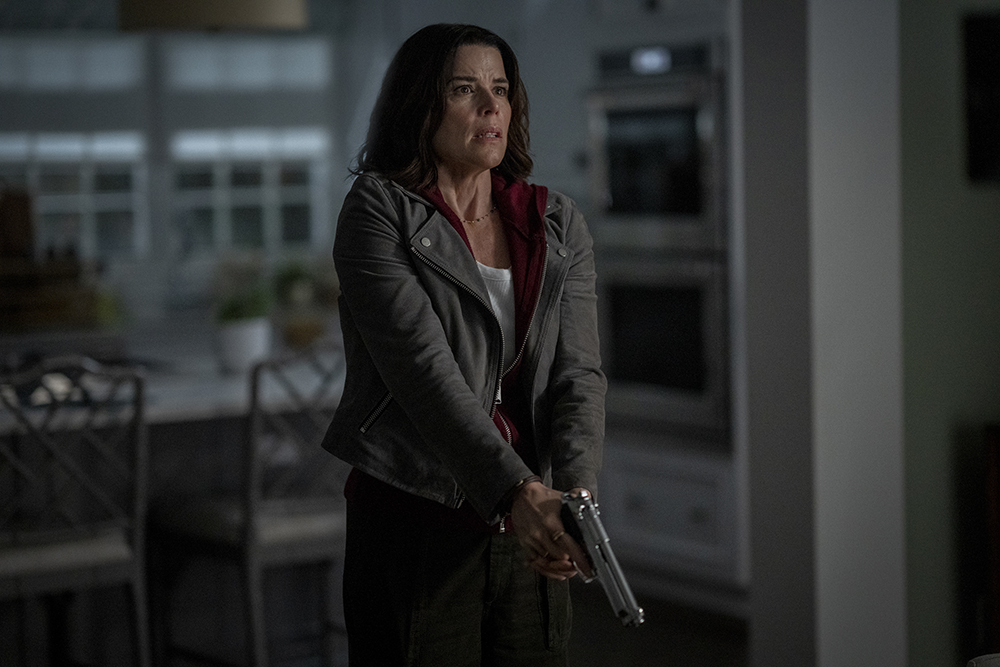
Creatively, Scream 7 represents both a homecoming and a recalibration. For the first time in the franchise’s history, Kevin Williamson steps behind the camera as director, after having written the original screenplay that reshaped the slasher genre in 1996. Serving as a direct sequel to Scream VI (2023), the film re-centers the narrative on Sidney Prescott, portrayed once again by Neve Campbell, following a development period marked by notable departures and creative restructuring. The exits of Matt Bettinelli-Olpin and Tyler Gillett due to scheduling conflicts, followed by the brief involvement of Christopher Landon, and the widely reported departures of Melissa Barrera and Jenna Ortega, reshaped the trajectory of the project. The decision to bring Williamson back into a central creative role ultimately reframed the installment as a return to emotional fundamentals, echoing Wes Craven’s long-held belief that horror only resonates when grounded in character.
On screen, Sidney Prescott (now Sidney Evans) is portrayed not merely as a survivor, but as a mother and wife attempting to construct stability in Pine Grove. Opposite Neve Campbell, Joel McHale plays Mark Evans, Pine Grove’s Chief of Police, whose warmth and humor introduce domestic normalcy while preserving the undercurrent of suspicion that defines the franchise’s DNA. Courteney Cox returns as Gale Weathers, maintaining the sharp intelligence and fearless edge that have evolved alongside the saga itself. The emotional axis of the film centers on Sidney’s daughter, Tatum Evans, portrayed by Isabel May, whose casting followed Kevin Williamson’s admiration for her work in 1883. Named after Sidney’s best friend from the original film, Tatum embodies the saga’s ongoing meditation on legacy and generational trauma. Costume designer Leigh Leverett recreated Sidney’s iconic Scream 2 leather jacket as a “vintage inheritance” for Tatum, producing multiple versions for the demands of filming, while makeup department head Amber Crowe subtly contrasted Sidney’s timeless aesthetic with Tatum’s nuanced 1990s-inspired details, including the distinctive Rouge Noir nail color — visual storytelling that reinforces the film’s thematic continuity.
Continuing the bridge between legacy and reboot eras, Jasmin Savoy Brown and Mason Gooding reprise their roles as Mindy and Chad Meeks-Martin, now working as interns under Gale Weathers, integrating seamlessly into the investigative core of the narrative. Their evolution reflects the franchise’s ability to adapt its meta-commentary for contemporary audiences while honoring its structural roots. Expanding the suspect pool in classic Scream fashion are Anna Camp, Asa Germann, Celeste O’Connor, Sam Rechner, Michelle Randolph, Jimmy Tatro, Ethan Embry, Mark Consuelos, and Tim Simons, each woven into a carefully constructed narrative in which, as Kevin Williamson emphasizes, “everyone is a suspect.” Above them all looms Ghostface, once again voiced by Roger L. Jackson, whose instantly recognizable vocal performance remains one of horror cinema’s most enduring signatures.
Technically, the production reflects both reverence and innovation. Stunt coordinator Jennifer Badger, a veteran of the earliest films, collaborated closely with Kevin Williamson, who reportedly rehearsed sequences personally before bringing actors onto set, underscoring his hands-on approach. Special effects makeup designer Matt Silva combined practical gore effects with modern digital enhancements, resulting in chase sequences and confrontations that honor the franchise’s visceral roots while embracing contemporary cinematic scale. At 1 hour and 54 minutes and rated R for strong bloody violence, gore, and language, Scream 7 premiered on February 25, 2026, at the Paramount Pictures studio lot in Los Angeles before its wide theatrical rollout, becoming the first entry in the series to receive an IMAX release, a clear signal of Paramount Pictures’ confidence in its event stature.
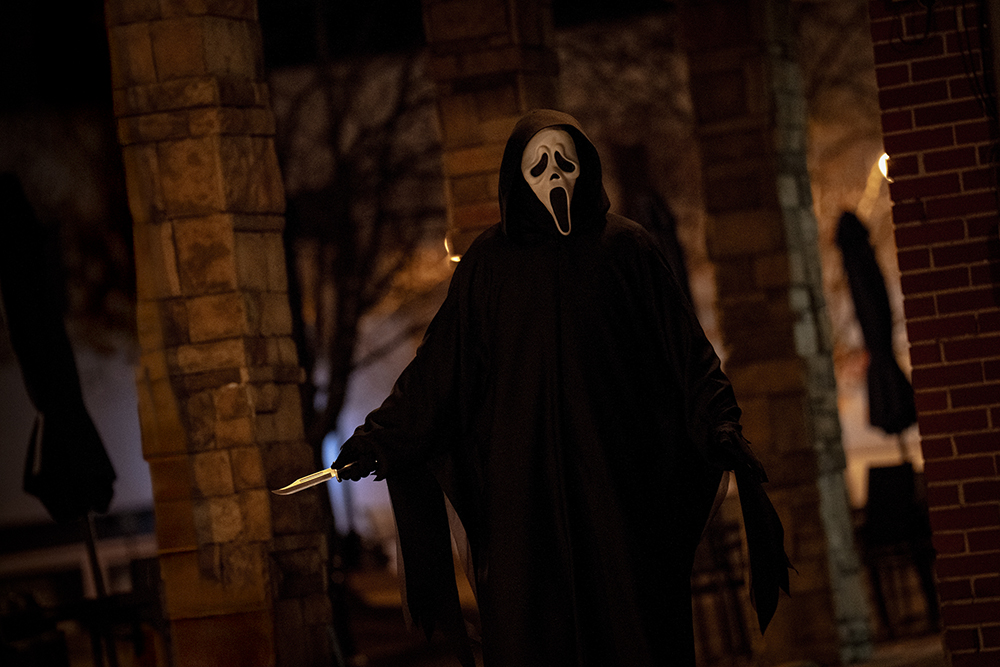
Beyond its commercial triumph, what resonates most strongly about Scream 7 is its thematic reflection on endurance. The film consciously revisits the emotional core that first made Sidney Prescott an icon, exploring not just survival but protection, inheritance, and the cyclical nature of trauma. In doing so, Kevin Williamson positions this installment as both homage and renewal, honoring the philosophy of Wes Craven while asserting his own directorial voice. Three decades after the first masked phone call terrorized audiences, Scream 7 demonstrates that nostalgia and terror remain inseparable forces, and that the saga’s beating heart continues to pulse with surprising vitality in the modern horror landscape.
Synopsis:
When a new Ghostface killer appears in the quiet town where Sidney Prescott (Neve Campbell) has built a new life, her worst fears come true when her daughter (Isabel May) becomes the next target. Determined to protect her family, Sidney must confront the horrors of her past to end the carnage once and for all.
Scream 7
Directed by Kevin Williamson
Screenplay by Guy Busick and Kevin Williamson
Story by James Vanderbilt and Guy Busick
Based on characters by Kevin Williamson
Produced by William Sherak, James Vanderbilt, Paul Neinstein
Starring Neve Campbell, Courteney Cox, Isabel May, Jasmin Savoy Brown, Mason Gooding, Anna Camp, Joel McHale, Mckenna Grace, Michelle Randolph, Jimmy Tatro, Asa Germann, Celeste O'Connor, Sam Rechner, Ethan Embry, Tim Simons, Mark Consuelos
Music by Marco Beltrami
Production companies: Spyglass Media Group, Project X Entertainment, Outerbanks Entertainment
Distributed by Paramount Pictures
Release date: February 25, 2026 (France), February 27, 2026 (United States)
Photos: Copyright Paramount Pictures