

Cesar 2026: A masterful ceremony, bold winners, and a dazzling Benjamin Lavernhe
Thursday 26 February, 3:01 PM PT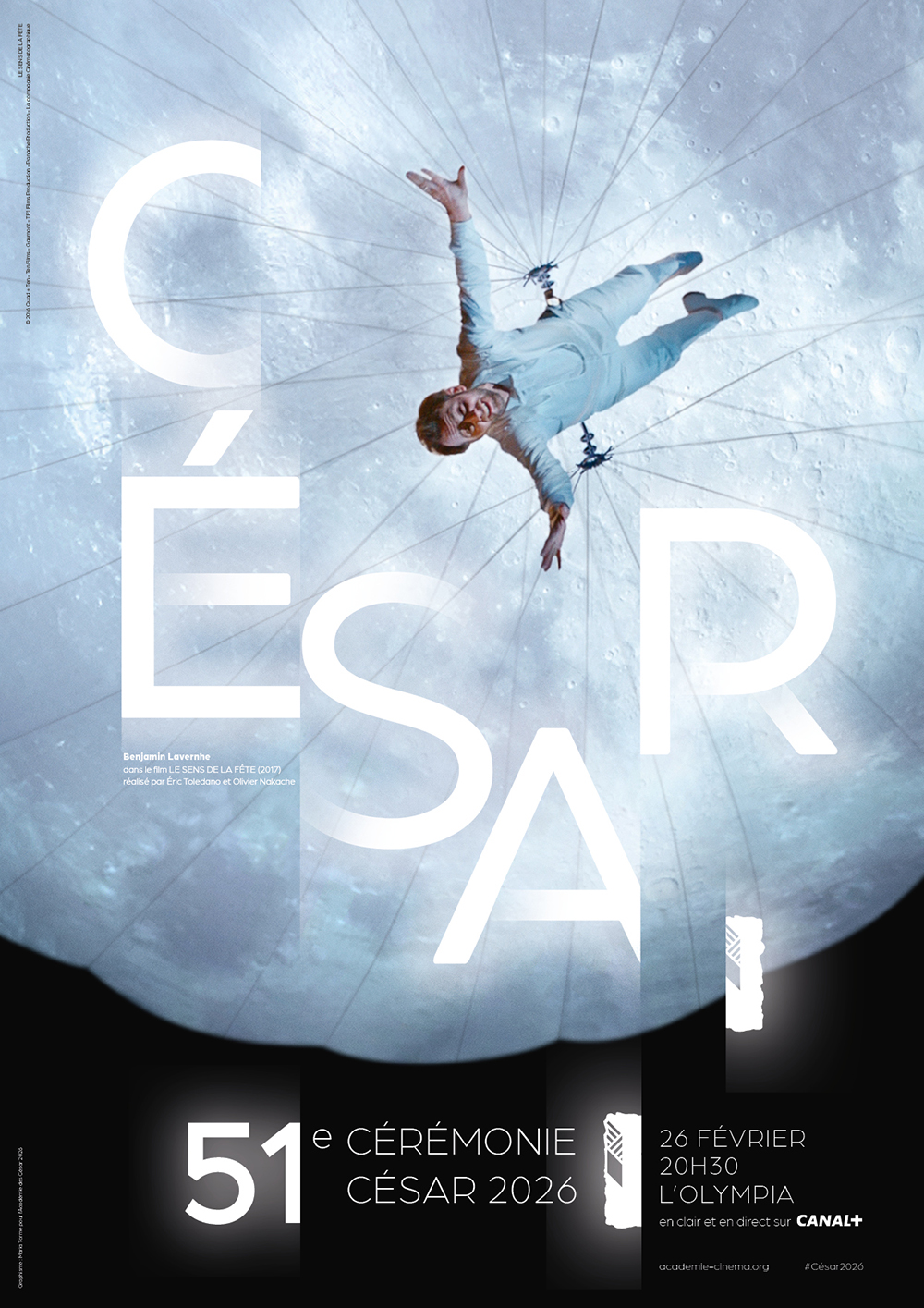
The 51st César Awards ceremony was held on February 26, 2026, at the Olympia in Paris, organized by the Académie des Arts et Techniques du Cinéma, and honored films released in France in 2025 in an atmosphere that was elegant, at times political, and resolutely focused on demanding and popular auteur cinema. Presided over by Camille Cottin, whose presence combined subtle irony and assumed gravity, and orchestrated with remarkable timing by Benjamin Lavernhe, a master of ceremonies as precise as he was mischievous, this edition confirmed certain strong trends in French cinema while creating some notable surprises. The nominations were announced on January 28, 2026, by the Academy, already setting up an implicit duel between intimate works and more ambitious epics, a duel that crystallized throughout the evening in a ultimately quite harmonious balance.
The César for Best Film went to Carine Tardieu's L'Attachement, produced by Fabrice Goldstein and Antoine Rein, a victory that crowns a film of rare delicacy, adapted from Alice Ferney's novel L'Intimité, and confirms Carine Tardieu's ability to film invisible bonds, restrained impulses, and silent fractures with poignant modesty. Already acclaimed by critics upon its release in 2025, the film established itself as one of the most coherent of the year, also winning the César Award for Best Adaptation for Carine Tardieu, Agnès Feuvre, and Raphaële Moussafir, as well as Best Supporting Actress for Vimala Pons, remarkable as Emillia Demetriu, whose fragile and luminous performance drew a sincere ovation from the audience.
The César Award for Best Director went to Richard Linklater for Nouvelle Vague, a choice that confirms the international reach of the ceremony and the Academy's openness to foreign filmmakers working on subjects related to the history of French cinema. The film also dominated several major technical categories, with César Awards for Best Costume Design for Pascaline Chavanne, Best Cinematography for David Chambille, and Best Editing for Catherine Schwartz, painting a picture of a technically masterful, elegant work, thought out down to the smallest detail. This multiple recognition underscores how much the reconstruction of an era and a spirit requires overall artistic coherence, beyond a simple aesthetic tribute.
In terms of acting, the César for Best Actor went to Laurent Lafitte for his role as Pierre-Alain Fantin in La Femme la plus riche du monde (The Richest Woman in the World), a nuanced and ambiguous performance that marked the year with its intelligence and precision, while the César for Best Actress went to Léa Drucker for her role as Stéphanie Bertrand in Dossier 137, confirming her status as a major actress on the contemporary French scene. In supporting roles, Pierre Lottin was rewarded for his portrayal of Raymond Sintès in L'Étranger, bringing a disturbing intensity to this adaptation, and Vimala Pons, already mentioned, confirmed the emotional power of L'Attachement.
The revelations of the year were also honored with the César for Most Promising Actor for Théodore Pellerin in Nino, and Most Promising Actress for Nadia Melliti in La Petite Dernière, two performances that testify to a tangible and promising generational renewal. Nino, directed by Pauline Loquès, also won the César Award for Best First Film, a sign that the Academy continues to encourage bold and personal proposals from first feature films.
In the screenwriting and technical categories, the César for Best Original Screenplay went to Franck Dubosc and Sarah Kaminsky for Un ours dans le Jura, rewarding their unique writing style, while Best Visual Effects went to Lise Fischer for L'Inconnu de la Grande Arche, a film that also won an award for its set design thanks to the work of Catherine Cosme. The César for Best Sound went to Romain Cadilhac, Marc Namblard, Olivier Touche, and Olivier Goinard for Le Chant des forêts, which also won the César for Best Documentary Film for Vincent Munier, produced by Pierre-Emmanuel Fleurantin, Laurent Baujard, and Vincent Munier, confirming the immersive power of this work dedicated to the natural world.
The César for Best Original Music went to Arnaud Toulon for Arco, which was also crowned Best Animated Film under the direction of Ugo Bienvenu, demonstrating the enduring vitality of French animation. Internationally, the César Award for Best Foreign Film went to Paul Thomas Anderson's The Battle at Lake Trumkin (United States), highlighting the enduring influence of American auteur cinema on French audiences and critics. Short films were not forgotten, with Ambroise Rateau's Mort d'un acteur, Sandra Desmazières' Fille de l'eau, and Margaux Fournier's Au bain des dames each winning awards in their respective categories.
In an emotional highlight of the ceremony, the Honorary César Award was presented to Jim Carrey, an iconic figure in international cinema whose career spans popular comedy and existential drama, reminding us how cinema can be a place of constant metamorphosis. His tribute, applauded by the audience, embodied the bridge between generations and continents that the César Awards seek to build.
Despite an overall successful ceremony, carried by the precise and elegant energy of Benjamin Lavernhe, it is difficult not to point out that, for the third consecutive year, our media outlet—like other independent online publications—was not invited to cover the event. At a time when the Academy seems to favor certain figures from social media, such as Léna Mahfouf, known as Léna Situation, this orientation raises questions about the place given to the specialized cultural press, which for years has analyzed, criticized, and supported French cinema with consistency and high standards. This situation contrasts with the undeniable quality of the ceremony itself and with the commitment of the artists celebrated that evening, reminding us that beyond the glitz and glamour, recognition of independent journalism remains essential to the vitality of cultural debate.
Best Film
L'Attachement by Carine Tardieu, produced by Fabrice Goldstein and Antoine Rein
Best Director
Richard Linklater for Nouvelle Vague (The New Wave)
Best Actor
Laurent Lafitte for the role of Pierre-Alain Fantin in La Femme la plus riche du monde (The Richest Woman in the World)
Best Actress
Léa Drucker for the role of Stéphanie Bertrand in Dossier 137
Best Supporting Actor
Pierre Lottin for the role of Raymond Sintès in L'Étranger (The Stranger)
Best Supporting Actress
Vimala Pons for her role as Emillia Demetriu in L'Attachement
Most Promising Actor
Théodore Pellerin for his role as Nino in Nino
Most Promising Actress
Nadia Melliti for her role as Fatima in La Petite Dernière
Best Original Screenplay
Franck Dubosc and Sarah Kaminsky for Un ours dans le Jura
Best Adaptation
Carine Tardieu, Agnès Feuvre, and Raphaële Moussafir for L'Attachement, based on the novel L'Intimité by Alice Ferney
Best Visual Effects
Lise Fischer for L'Inconnu de la Grande Arche
Best Costume Design
Pascaline Chavanne for Nouvelle Vague
Best Production Design
Catherine Cosme for L'Inconnu de la Grande Arche
Best Cinematography
David Chambille for Nouvelle Vague
Best Editing
Catherine Schwartz for Nouvelle Vague
Best Sound
Romain Cadilhac, Marc Namblard, Olivier Touche, and Olivier Goinard for Le Chant des forêts
Best Original Music
Arnaud Toulon for Arco
Best First Film
Nino by Pauline Loquès
Best Animated Film
Arco by Ugo Bienvenu
Best Documentary Film
Le Chant des forêts by Vincent Munier, produced by Pierre-Emmanuel Fleurantin, Laurent Baujard, and Vincent Munier
Best Foreign Film
There Will Be Blood by Paul Thomas Anderson (United States)
Best Short Fiction Film
Mort d'un acteur by Ambroise Rateau
Best Short Animated Film
Fille de l'eau by Sandra Desmazières
Best Short Documentary Film
Au bain des dames by Margaux Fournier
Honorary César
Jim Carrey