
 English
Toys - KPop Demon Hunters: Ravensburger brings the Netflix phenomenon to life in three official puzzles, available in March.
By Mulder, 16 february 2026
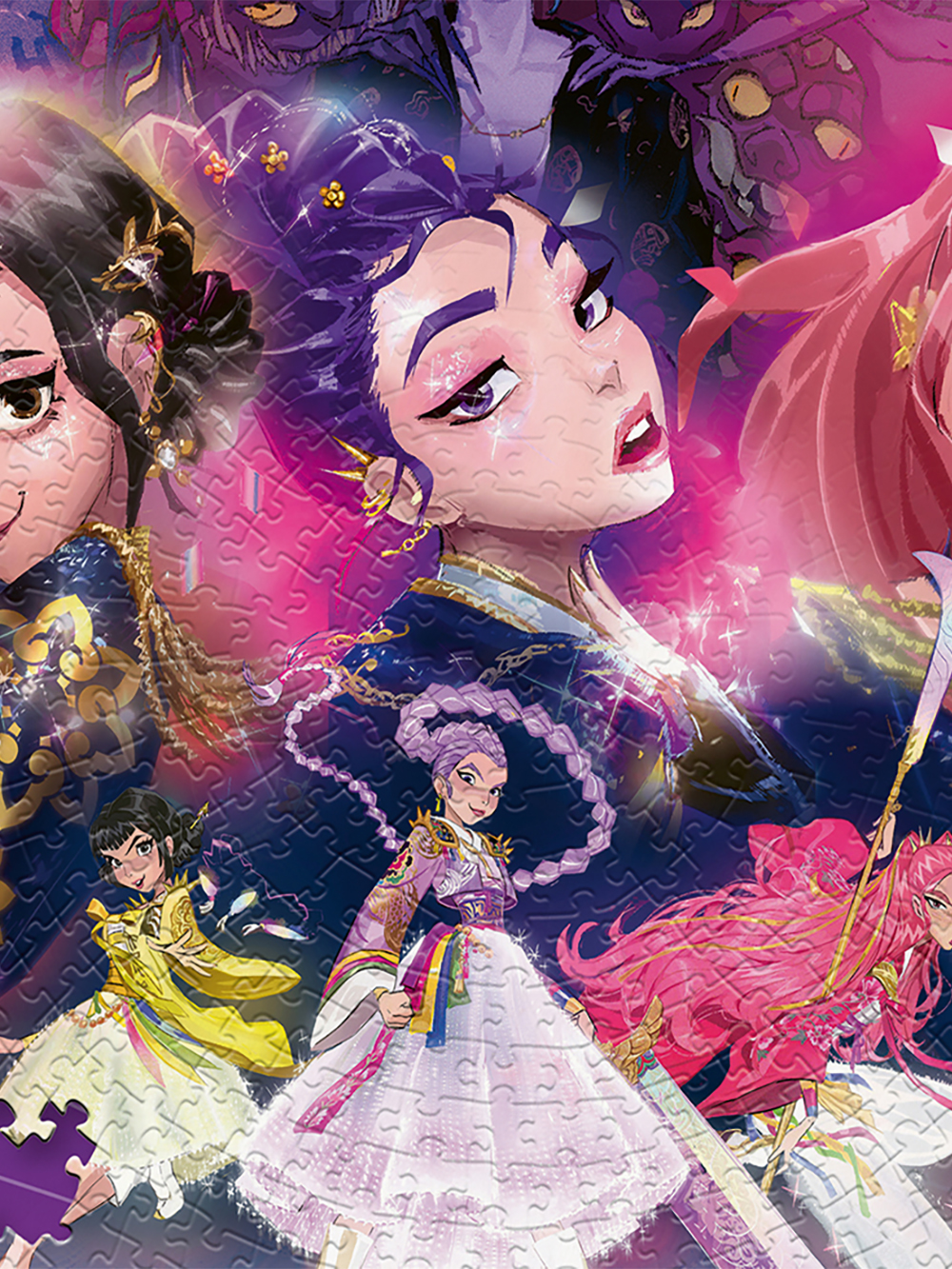
When a Netflix license shifts from “I'll watch an episode” to “I want a piece of this universe in my home,” it's easy to spot on the shelves. And that's exactly the shift KPop Demon Hunters is taking with the announced arrival, in March, of three official Ravensburger puzzles: a 100-piece, a 300-piece, and, most notably, a 500-piece... in a round format. On paper, this is a classic derivative product; in reality, it's a rather clever way of transforming a fast-paced work (concerts, choreography, confrontations, striking colors) into a moment of calm. And there's a really nice contrast: the pop energy and spectacular scenes on one side, and on the other, the very tactile ritual of the puzzle, piece by piece, as if you were rewinding the adrenaline to quietly rebuild it on your table.
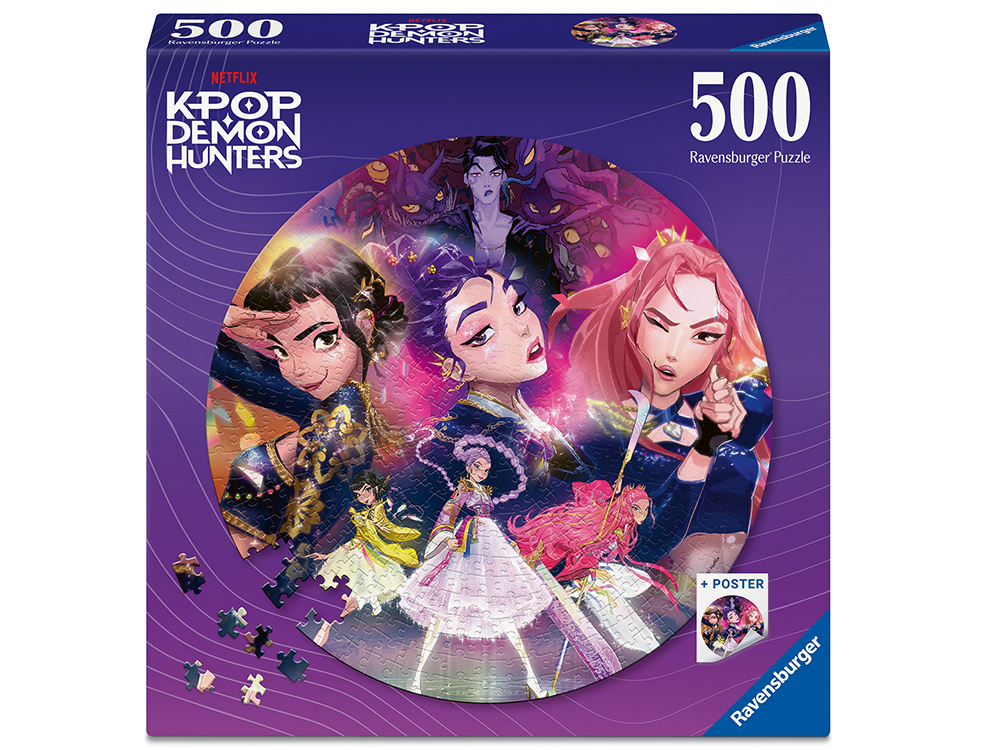
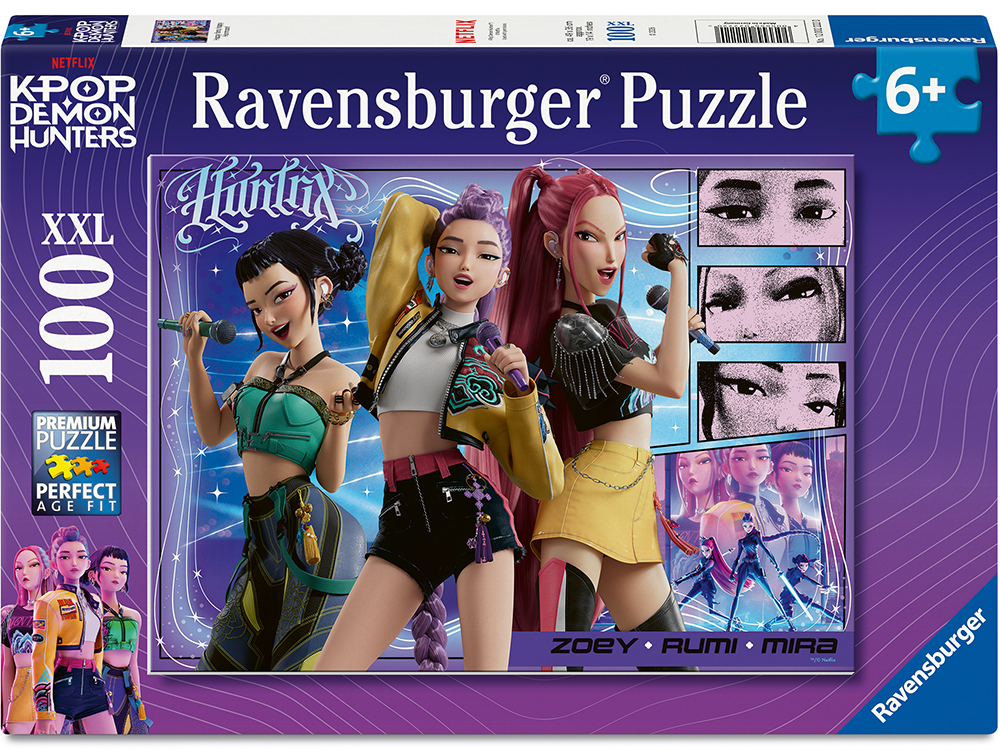
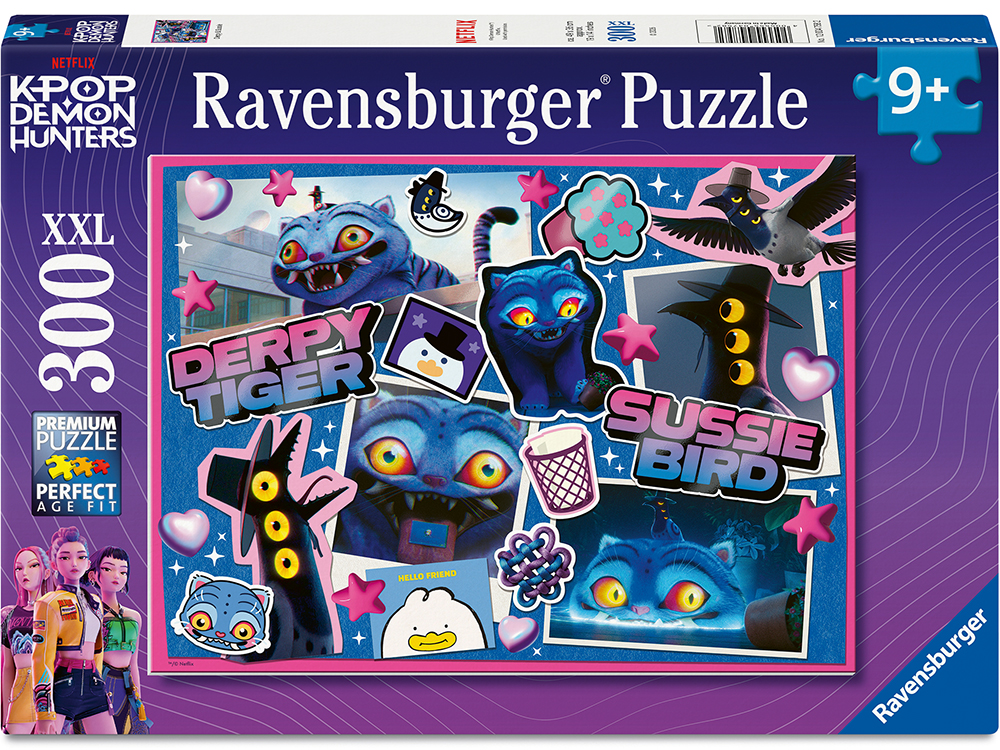
In terms of products, the range is clearly structured and decidedly family-oriented: a 100-piece XXL puzzle for children (reference 12002222, EAN 4005555022220, recommended for ages 6 and up, suggested retail price €12.90), a 300-piece XXL puzzle (reference 12004758, EAN 4005555047582, recommended age 9+, advertised price €12.90), and the signature piece of the collection, a 500-piece round puzzle (reference 12002052, EAN 4005555020523, recommended for ages 12 and up, recommended retail price €16.90). All three highlight Ravensburger's usual positioning: premium finishes, precise fit, high-definition visuals, and European manufacturing, with communication focused on the use of FSC-certified materials (within the framework specified by the brand). With highly visual licenses, this kind of detail matters more than you might think: if the illustration loses its sharpness, or if the saturated flat colors bleed, the “wow” effect disappears. Here, the aim is clearly to ensure a positive experience for all audiences (starting with the 100-piece puzzle, moving up to the 300-piece puzzle, then the 500-piece round puzzle as a gift or relaxing challenge).
Ravensburger is now banking on KPop Demon Hunters because the license ticks all the boxes of the recent cultural phenomenon: the film was released on Netflix on June 20, 2025, co-written and co-directed by Maggie Kang and Chris Appelhans, and produced by Sony Pictures Animation for Netflix. But above all, Netflix made the scale of the wave official: at the end of August 2025, the platform announced that the film had become its most popular film (more than 236 million views to date, according to Netflix metrics). And the effect was not just a spike: in terms of time spent, Variety reports that the title was the most streamed film of 2025 in the United States with 20.5 billion minutes viewed, according to Nielsen's year-end data. Finally, the other very concrete driver of the license is the music: the soundtrack has been certified by the RIAA (dated October 8, 2025). Translation into retail language: this is not an isolated success story, but a brand that is establishing itself and has already proven that it can get people to buy, collect, and replay the experience on a daily basis—exactly the playground where the puzzle becomes a natural, almost obvious extension product.
What's interesting is that this puzzle release comes at just the right time: after binge-watching, after playlists, and right when fans want something that lasts, that they can put down, give as a gift, or even display. The choice of a 500-piece round puzzle, in particular, suggests a desire to broaden the target audience: this isn't just another puzzle, it's a less common format, more decorative and more gift-like, which fits well with the highly stylized graphic identity of KPop Demon Hunters. And since Ravensburger is already teasing other new products around the license throughout the year, we can expect a gradual strategy: first simple, accessible items, then potentially more event-driven visuals, larger formats, or more collectible editions if demand follows. In the meantime, March will see a very clear first salvo: three entry points, three levels, and a fairly successful way of converting a streaming phenomenon into an offline experience that can be shared... without a screen, but with exactly the same attention to detail.
(Source: press release)