
 English
Movies - In the Blink of an Eye : A Film About Mortality, Memory, and the Fragility of Connection
By Mulder, 05 february 2026
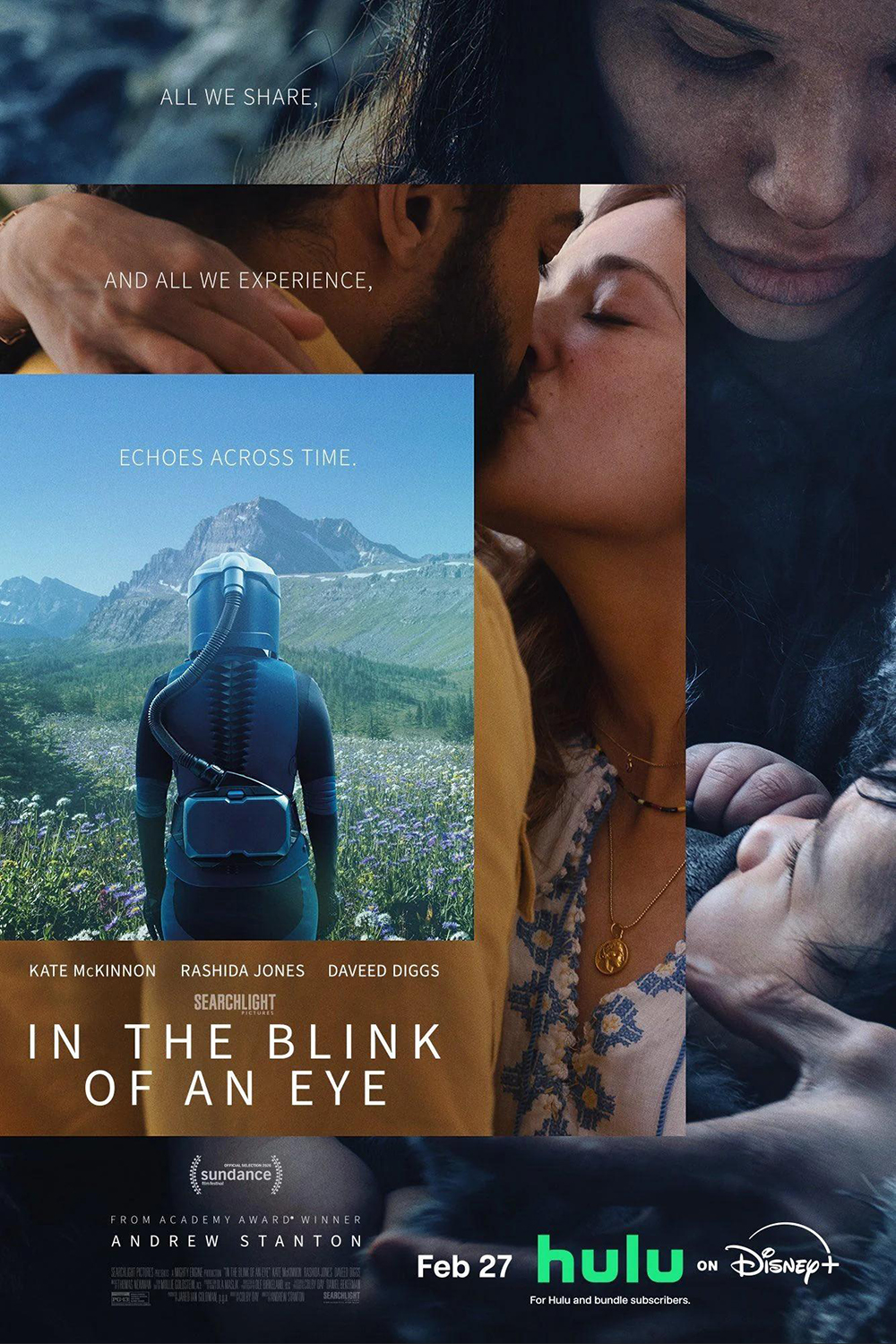
Premiering at the Sundance Film Festival on January 26, 2026, In the Blink of an Eye immediately positioned itself as one of the year’s most talked-about science fiction dramas, earning the prestigious Alfred P. Sloan Prize, an award recognizing outstanding depictions of science, technology, engineering, and mathematics in cinema. Directed by Andrew Stanton and written by Colby Day, the film marks a fascinating evolution for Stanton, whose name is inseparable from modern animation landmarks like Finding Nemo and WALL·E, yet who continues to carve out a distinctive live-action voice. Scheduled for worldwide streaming on Hulu beginning February 27, 2026, with distribution via Disney+ in France, the 94-minute Searchlight Pictures production blends speculative storytelling with deeply human concerns, sidestepping genre bombast in favor of emotional continuity across millennia.
What makes In the Blink of an Eye feel instantly singular is its structure: three interwoven narratives unfolding across radically different eras — 45,000 years in the past, the present day, and the far future. Rather than presenting these timelines as separate vignettes, Colby Day’s screenplay treats them as echoes of one another, exploring how connection, loss, curiosity, and resilience persist regardless of technological or evolutionary context. In the distant past, Thorn and Hera played by Jorge Vargas and Tanaya Beatty struggle for survival as isolated Neanderthals navigating a hostile environment, a portrayal informed by contemporary paleoanthropological understanding that Neanderthals possessed culture, tools, and emotional depth. In the present, Claire and Greg embodied by Rashida Jones and Daveed Diggs engage in a quietly awkward, intellectually charged relationship shaped by ambition and vulnerability. Two centuries ahead, Coakley travels aboard the Phoenix Five with Rosco, a sentient AI, confronting mortality, purpose, and the limits of engineered longevity. The thematic throughline is unmistakable: humanity’s tools evolve, but its emotional architecture remains startlingly constant.
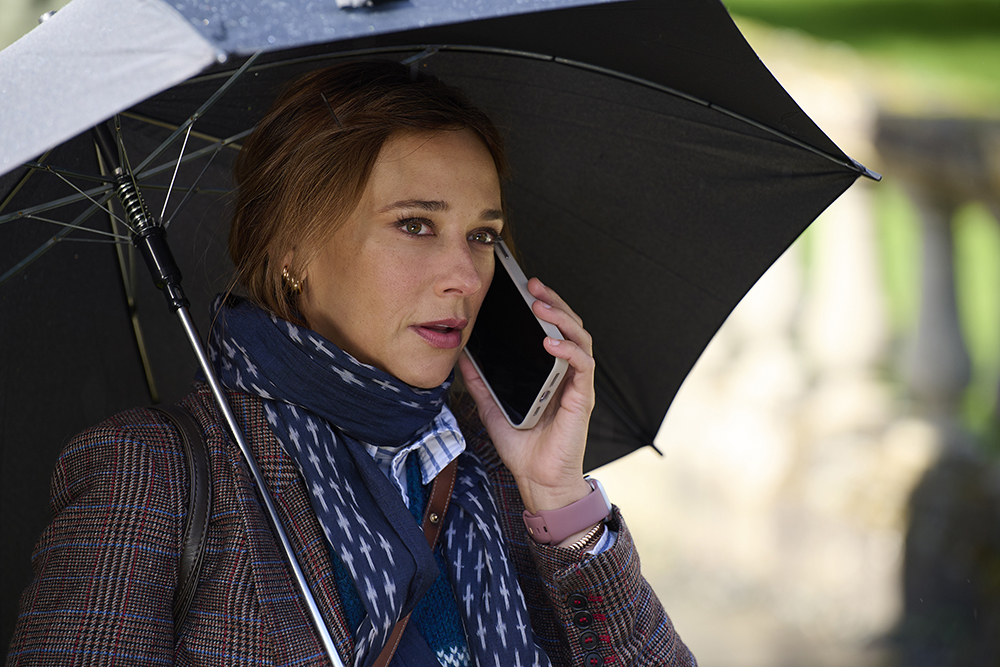
Behind the camera, Stanton assembled a creative team whose résumés signal both prestige and stylistic precision. Cinematographer Ole Birkeland delivers a visual language that subtly differentiates eras through texture and palette rather than overt visual effects spectacle, grounding prehistoric sequences in tactile naturalism while allowing the future timeline to breathe with color and clarity. Production designer Ola Maslik constructs environments that mirror the film’s philosophical arc, culminating in Kepler-16B envisioned not as the cold, metallic cliché of dystopian sci-fi, but as a vivid, hopeful settlement brimming with chromatic life. Editor Mollie Goldstein shapes the temporal transitions with a rhythm that feels less like montage and more like memory, letting emotional beats rather than plot mechanics guide the audience between centuries. Meanwhile, composer Thomas Newman, reuniting with Stanton after their celebrated collaborations at Pixar, provides a score that leans into introspection and lyrical melancholy, reinforcing the film’s meditative tone instead of overwhelming it.
The casting itself carries an intriguing layer of creative serendipity. Kate McKinnon, initially approached for the contemporary role of Claire, gravitated toward Coakley, drawn by the character’s confrontation with time and existential isolation. The choice proves inspired, revealing a restrained, contemplative register from McKinnon that contrasts sharply with her widely recognized comedic persona. Rashida Jones brings grounded emotional intelligence to Claire, crafting a protagonist whose initial emotional reserve gradually fractures under the pressures of love, illness, and uncertainty. Daveed Diggs, often associated with dynamic, high-energy performances, surprises with an understated stillness that Stanton himself has described as unexpectedly arresting, anchoring Greg with quiet conviction. For Tanaya Beatty and Jorge Vargas, the Neanderthal storyline becomes an opportunity to challenge long-standing cinematic stereotypes, presenting prehistoric humans not as primitive caricatures but as emotionally legible, culturally aware individuals.
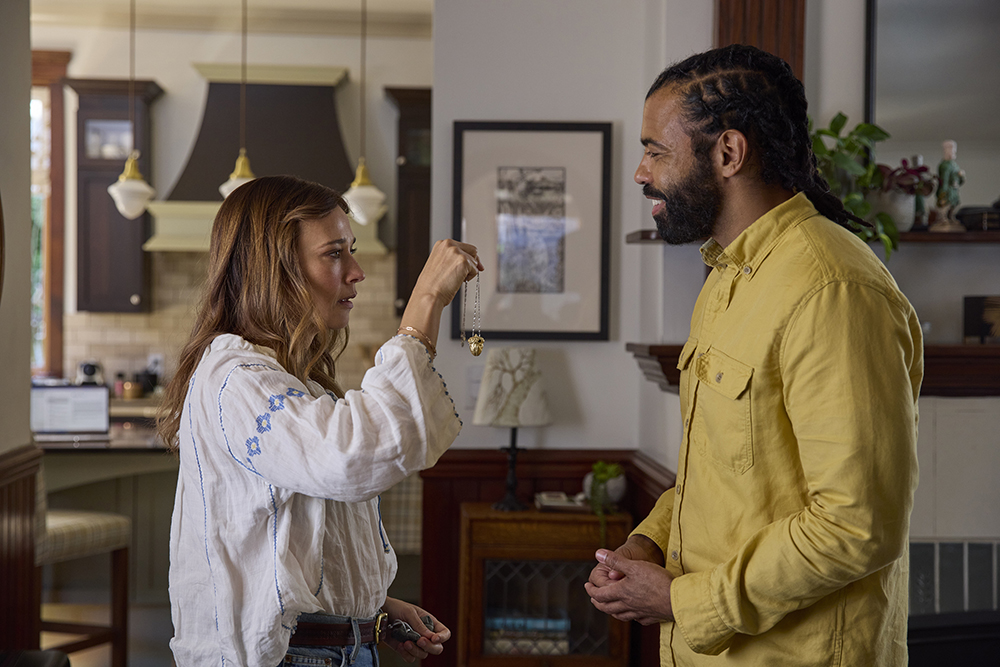
Industry observers have noted how the film’s Alfred P. Sloan Prize win underscores a broader shift within science fiction cinema: a renewed appetite for stories where scientific ideas serve as philosophical catalysts rather than narrative gimmicks. The film’s exploration of longevity, genetic modification, and artificial intelligence resists easy techno-utopianism or dystopian alarmism. Instead, Stanton and Day frame science as an amplifier of timeless dilemmas if mortality were optional, would meaning erode or intensify? If AI became emotionally reciprocal, would attachment deepen or destabilize identity? Such questions resonate strongly in a cultural landscape increasingly shaped by real-world advances in AI and biotechnology, lending the film a contemporary relevance that feels organic rather than opportunistic.
Perhaps the most striking takeaway from Sundance reactions is how frequently viewers described the film as unexpectedly moving. Despite spanning thousands of years and multiple conceptual frameworks, In the Blink of an Eye consistently returns to intimate human moments: a family gathering around firelight, a painfully awkward first meeting between future partners, a solitary traveler redefining the value of “forever.” Stanton’s direction, often compared to a jazz-like approach that prioritizes collaboration and tonal balance, allows these scenes to breathe without sentimental excess. The result is a science fiction drama that feels contemplative yet accessible, ambitious yet emotionally immediate, a rare tonal equilibrium in contemporary genre filmmaking.
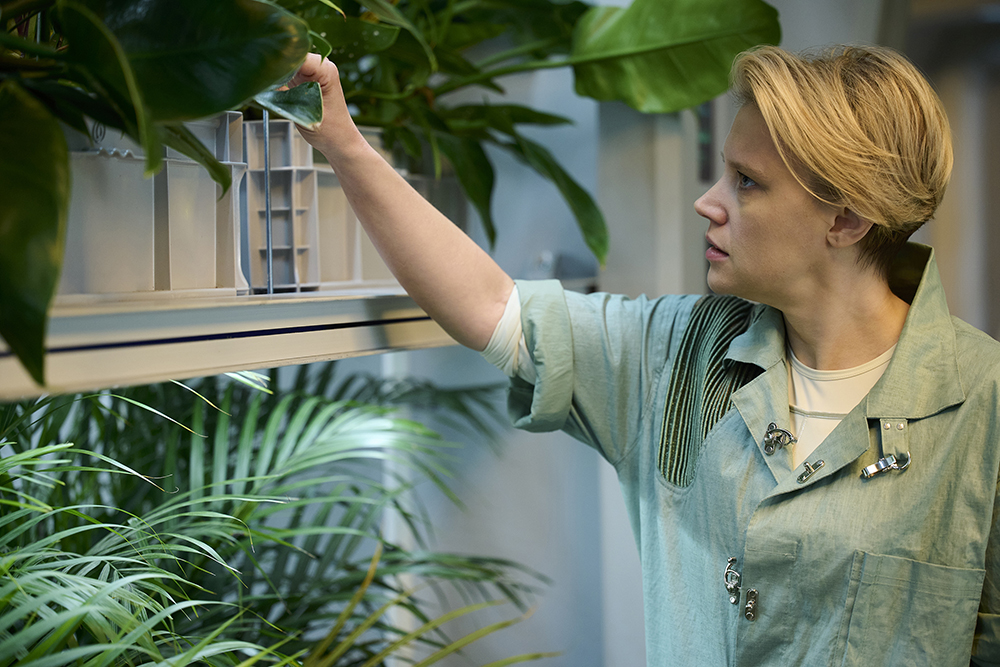
With its Hulu release imminent and Disney+ rollout set for France, In the Blink of an Eye arrives carrying both festival prestige and a quietly growing reputation as one of Searchlight Pictures’ most distinctive recent projects. In an era saturated with franchise-driven spectacle, Stanton’s latest work stands out by daring to ask not how humanity conquers time, but how it endures within it a reflection that lingers, appropriately, long after the final frame.
Synopsis :
Three storylines, spanning thousands of years, intertwine and reflect on the cycle of life.
In the Blink of an Eye
Directed by Andrew Stanton
Written by Colby Day
Produced by Jared Ian Goldman
Starring Kate McKinnon, Rashida Jones, Daveed Diggs
Cinematography : Ole Brett Birkeland
Edited by Mollie Goldstein
Music by Thomas Newman
Production companies : Searchlight Pictures, Mighty Engine
Distributed by Hulu (United States), Disney+ (France)
Release dates : January 26, 2026 (Sundance), February 27, 2026 (Worldwide)
Running time : 94 minutes
Photos : Copyright 2025 Searchlight Pictures All Rights Reserved.