

New York Toy Fair 2026 : Hasbro’s triumphant return blends bold inclusivity, retro firepower, and franchise-fueled innovation
Saturday 14 February, 10:28 AM PT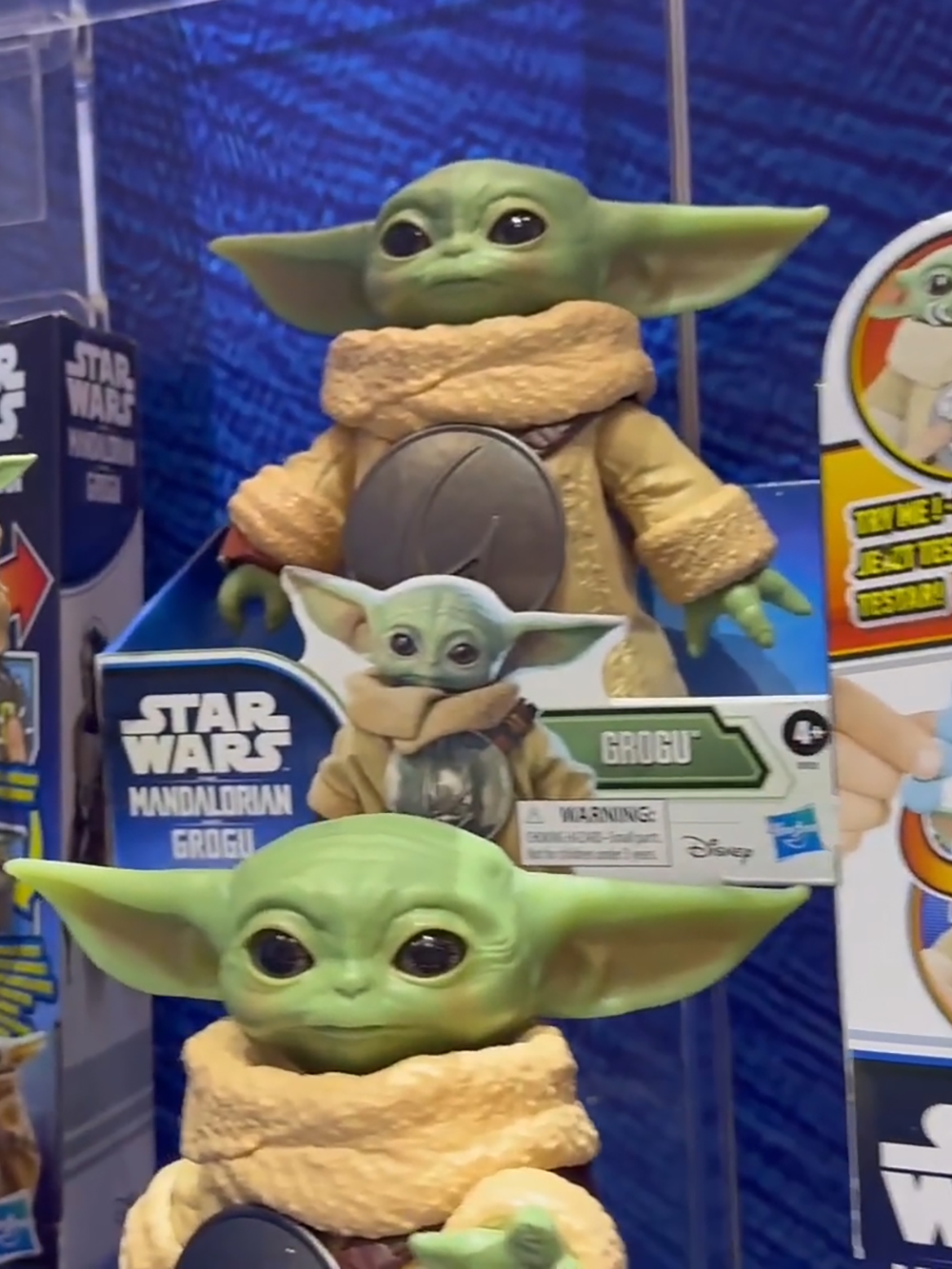
Hasbro’s presence at the Javits Convention Center for New York Toy Fair 2026 immediately felt like more than a routine trade show appearance; it carried the unmistakable energy of a statement. From the opening hours, Booth #403 became one of the exhibition’s gravitational centers, drawing retailers, licensors, media, and influencers into a tightly choreographed showcase of nostalgia, technological upgrades, and narrative-driven play. The Rhode Island-based company leaned heavily into its now-familiar mission, “Inspiring a Lifetime of Play,” yet what stood out was how concretely that philosophy translated into product strategy. Rather than chasing a single tentpole reveal, Hasbro deployed a diversified slate: heritage brand revivals, emotionally intelligent toys, gaming expansions, and a wave of entertainment-powered lines tied to Marvel, Star Wars, and beyond. The buzz around the stand echoed a wider Toy Fair trend in 2026: legacy brands reclaiming space by reengineering classic play patterns for hybrid audiences made up of children, adult collectors, and nostalgia-fueled parents.
The most talked-about reveal was not the loudest or most technologically complex, but arguably the most meaningful. Hasbro introduced the first-ever Peppa Pig toy featuring George with his hearing aid, the PEPPA PIG Joke & Sing George Figure, aligning with a major storyline unfolding in Season 11 of the series in which George is revealed to be moderately deaf. Developed with guidance from the National Deaf Children’s Society, the Hearing Loss Association of America (HLAA), and Camilla Arnold, a deaf executive producer and script consultant, this initiative resonated far beyond the preschool aisle. On the show floor, conversations repeatedly circled back to the significance of representation moving from screen narrative to physical play object. Buyers and educators alike emphasized that inclusive design is increasingly viewed not as a niche gesture but as a baseline expectation. In that context, Hasbro’s decision positioned Peppa Pig at the intersection of storytelling responsibility and toy innovation, reinforcing the brand’s long-standing emphasis on empathy, family dynamics, and social awareness.
Hasbro’s licensing momentum further amplified the impact of its Toy Fair return. The company highlighted recently announced agreements with Warner Bros. Discovery Global Consumer Products for Harry Potter (a multi-year partnership beginning in 2027), Legendary Entertainment for Street Fighter tied to the upcoming live-action film scheduled for theatrical release on October 16, 2026, Netflix for KPop Demon Hunters, and Amazon MGM Studios for Voltron. These partnerships underscore Hasbro’s franchise-first strategy, where toys are no longer secondary extensions of media properties but integrated pillars within transmedia ecosystems. Industry analysts attending the show noted how Hasbro continues to refine a scalable partner model, leveraging global IP recognition while retaining creative control over play mechanics, product tiers, and collector segmentation. The Harry Potter and Street Fighter announcements, in particular, sparked speculation regarding premium collectibles, roleplay lines, and cross-category expansions into board games and interactive formats.
On the product front, several lines defined the tonal diversity of Hasbro’s 2026 portfolio. FURBY Vibes pushes self-expression to the forefront through interactive, swappable glasses unlocking three distinct personalities — Star Diva, Chill Spa, and Punk Rocker — each with unique sounds, music, phrases, and gameplay interactions. The design philosophy reflects a broader industry pivot toward toys as identity companions rather than passive electronic novelties. BABY ALIVE, meanwhile, expands its nurturing play dimension through a co-brand with Burt’s Bees Baby, emphasizing tactile softness, bedtime rituals, and comfort-centric accessories aimed at strengthening emotional connection and early caregiving roleplay. In sharp contrast, NERF Rebel Ops reframes dart battles into role-driven missions inspired by video game mechanics, assigning each blaster a tactical archetype and “ultimate ability,” a clear nod to how digital gaming language increasingly shapes physical toy engagement.
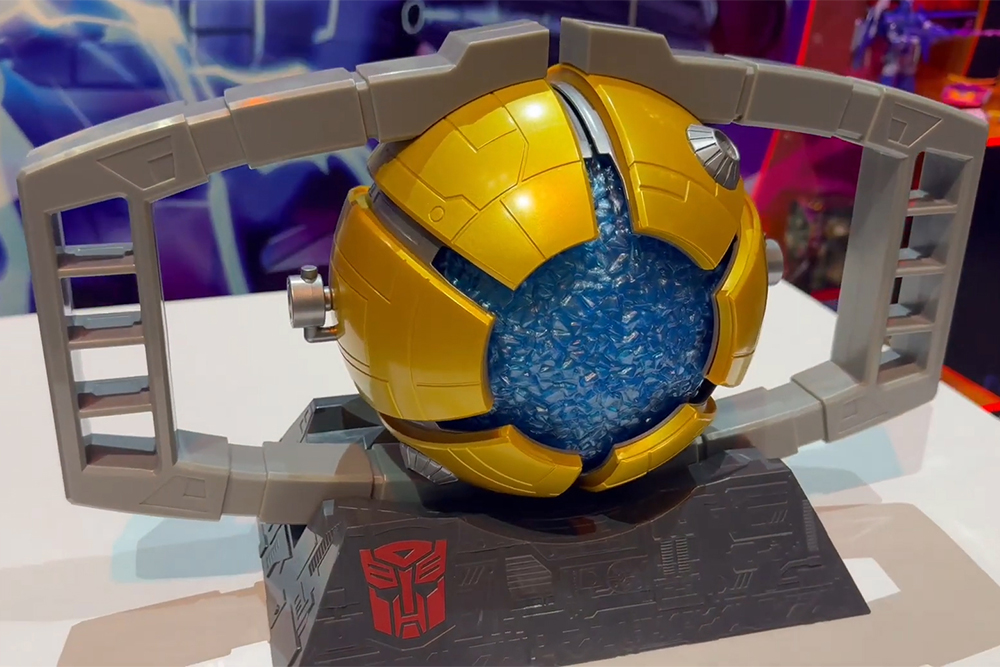
Nostalgia re-emerged as a powerful emotional driver with the return of Crossfire, celebrating its 55-year legacy. Hasbro’s modernized version introduces a redesigned arena, integrated score tracking, and streamlined storage, preserving the frantic marble-blasting chaos that defined the original while adapting it for portability and contemporary safety standards. The reveal triggered spontaneous reactions among veteran attendees, many recalling the game’s iconic advertising campaigns and kinetic tabletop intensity. This revival aligns with Hasbro’s broader retro strategy, which simultaneously targets Gen X and millennial parents eager to share formative play experiences with their children. The same heritage logic applies to TRANSFORMERS, where Hasbro unveiled a dedicated wave honoring the 40th anniversary of The Transformers: The Movie, headlined by a premium electronic Matrix of Leadership replica and new Studio Series additions including Shockwave, Skywarp, Wheeljack, Kranix, Sunstreaker, Astrotrain, and Snarl, reinforcing the brand’s enduring pull among collectors.
High-impact action innovation remained a cornerstone with BEYBLADE X, particularly the Sneak Attack Battle Set featuring an all-new stadium incorporating a pop-up rail and X-Celerator Rail designed to dramatically alter battle trajectories. Live demonstrations on the stand delivered some of the most visually kinetic moments of Hasbro’s presentation, with high-speed Xtreme Dash collisions underscoring the brand’s emphasis on spectacle and mechanical unpredictability. Complementing this was the BEYBLADE X Clip & Rip Launcher Set, engineered for mobile, on-the-go play with integrated ripcord storage and wearable clip functionality. Both products, launching in July 2026, reflect Hasbro’s ongoing effort to merge portability, modularity, and performance-driven design within competitive play categories.
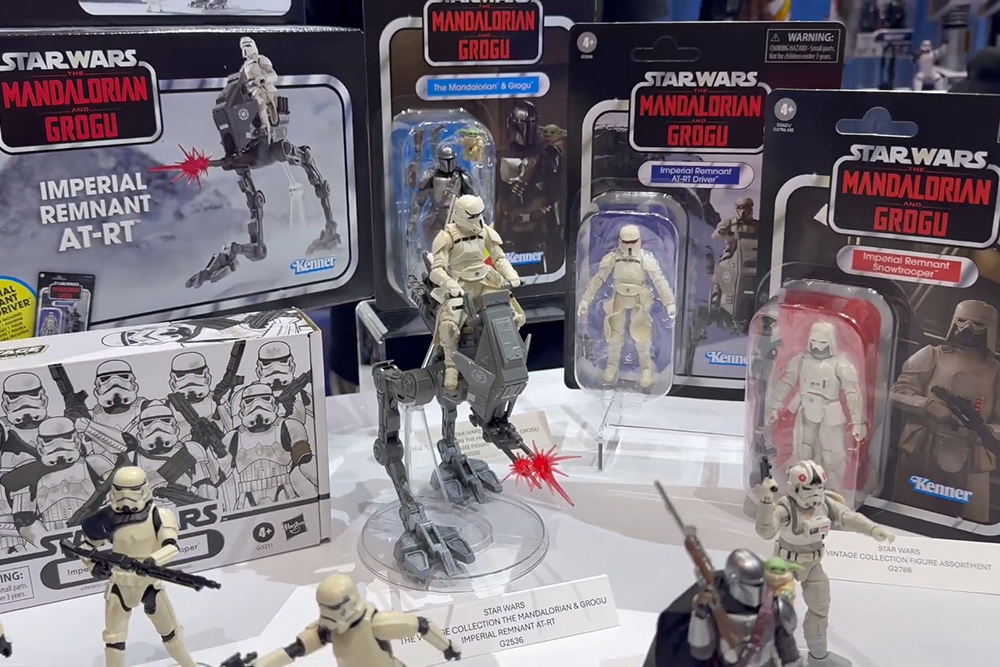
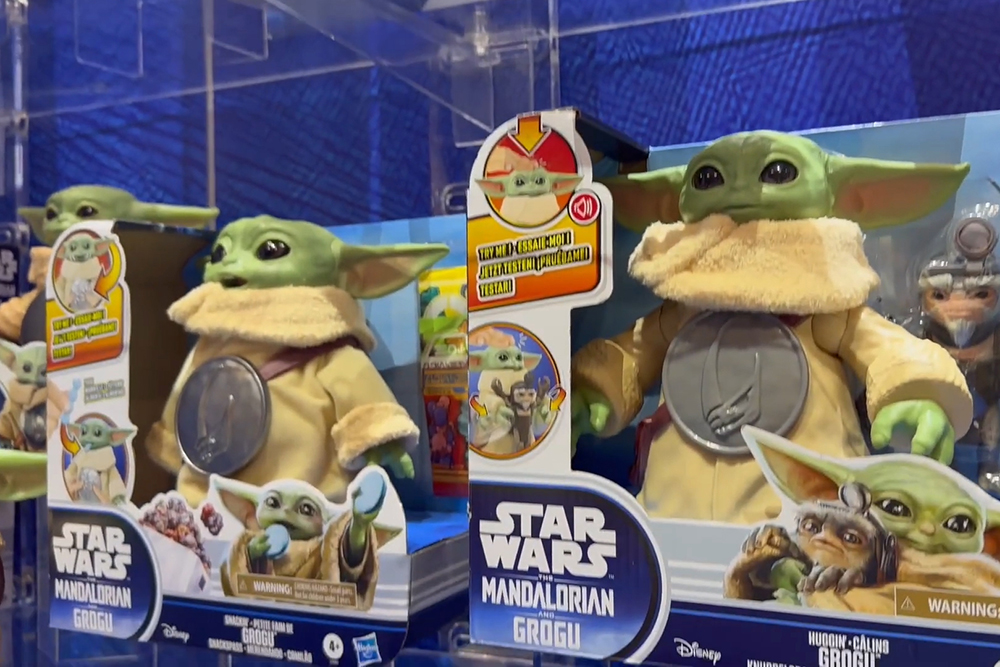
Entertainment-driven expansions continued across multiple franchises. Wizards of the Coast generated strong crossover excitement with the first look at Magic: The Gathering | Teenage Mutant Ninja Turtles, part of the Universes Beyond initiative, scheduled for global release on March 6. Marvel Preschool lines tied to Marvel’s Spidey and his Amazing Friends and Marvel’s Iron Man and his Awesome Friends reinforced Hasbro’s dominance in early-age action play, while Star Wars offerings built anticipation for The Mandalorian and Grogu film through new additions to The Black Series, The Vintage Collection, Action Buddy Grogu, and Actionverse figures. Collectively, these reveals illustrated Hasbro’s increasingly seamless dialogue between content pipelines, toy development cycles, and fandom engagement strategies.
Beyond the products themselves, Hasbro’s Toy Fair presence carried a clear meta-message about the evolving nature of play. Executives including Tim Kilpin emphasized that play is becoming more immersive, connected, and narrative-driven, shaped by fandom culture and cross-platform experiences. The company’s programming extended to Toy Fair University, where Kim Boyd participated in the panel “Your Guide to Licensing and Collaborations with the Key Players in the Toy Industry,” offering further insight into Hasbro’s licensing vision. In New York this year, Hasbro did not simply exhibit toys; it presented a cohesive ecosystem where inclusivity, nostalgia, innovation, and storytelling functioned as mutually reinforcing pillars, signaling a confident and strategically calibrated trajectory for 2026 and beyond.
(Source : press release)