
 English
Movies - Project Hail Mary : The Final Trailer Reveals an Intimate, High-Stakes Sci-Fi Odyssey Beyond Earth
By Mulder, 08 february 2026
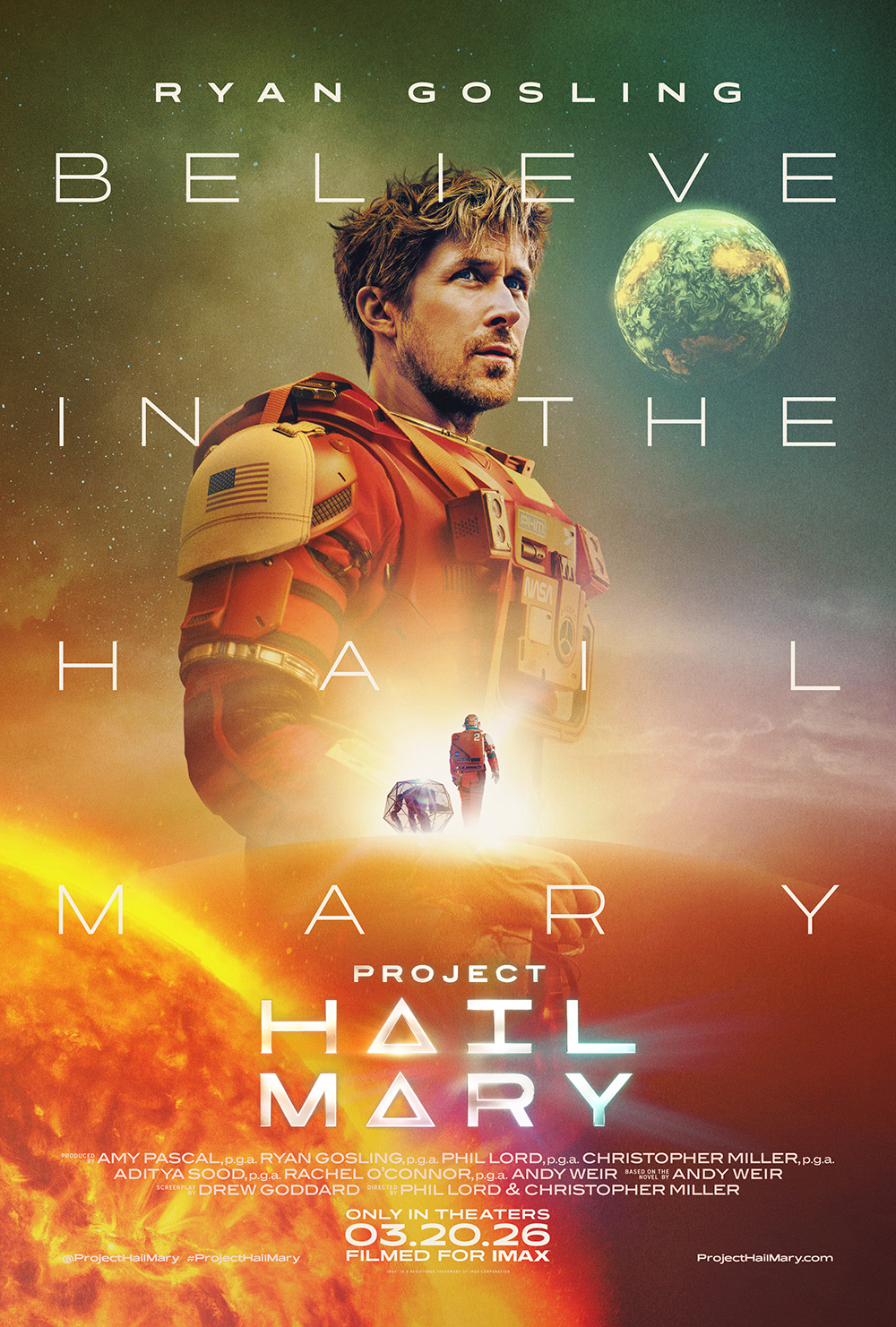
With the release of its final trailer on February 8, 2026, unveiled simultaneously online and through a high-profile Super Bowl spot, Project Hail Mary firmly establishes itself as one of the most ambitious and closely watched science-fiction events of the year, and not just because of its scale, but because of the rare creative alignment behind it. Directed and produced by Phil Lord and Christopher Miller, written by Drew Goddard and adapted from the 2021 novel by Andy Weir, the film immediately invites comparisons to The Martian, yet the footage revealed here makes it clear that this is not a retread but an evolution, both thematically and emotionally. The trailer leans heavily into isolation, fragmented memory, and the quiet terror of scientific responsibility, opening with Ryan Gosling’s Ryland Grace awakening alone aboard the Hail Mary spacecraft, surrounded by unfamiliar instruments, his own identity erased, and the fate of Earth hanging on calculations he can barely remember how to perform. What’s striking is how restrained the trailer is for a blockbuster of this size, privileging silence, scientific deduction, and human vulnerability over spectacle, a choice that feels very much in line with Phil Lord and Christopher Miller’s growing maturity as live-action filmmakers after years of producing kinetic, stylized hits.
From a production standpoint, Project Hail Mary has had a journey almost as methodical as its protagonist’s mission, beginning in March 2020 when Metro-Goldwyn-Mayer secured the adaptation rights for Andy Weir’s novel for a reported $3 million, with Ryan Gosling already attached not only as star but as producer, signaling early confidence in the material. The involvement of Drew Goddard, who previously cracked the code of translating Andy Weir’s dense scientific prose into compelling cinema with The Martian, reassured fans of the book that the balance between hard science and character-driven storytelling would be preserved. When Amazon MGM Studios officially announced a 2026 release window following its acquisition of Metro-Goldwyn-Mayer, the project quietly shifted from promising adaptation to flagship release, a status reinforced by the recruitment of Greig Fraser as cinematographer, whose work here, glimpsed in the trailer’s stark lighting and vast cosmic compositions, suggests a tactile, almost documentary approach to space that contrasts beautifully with the film’s existential themes.
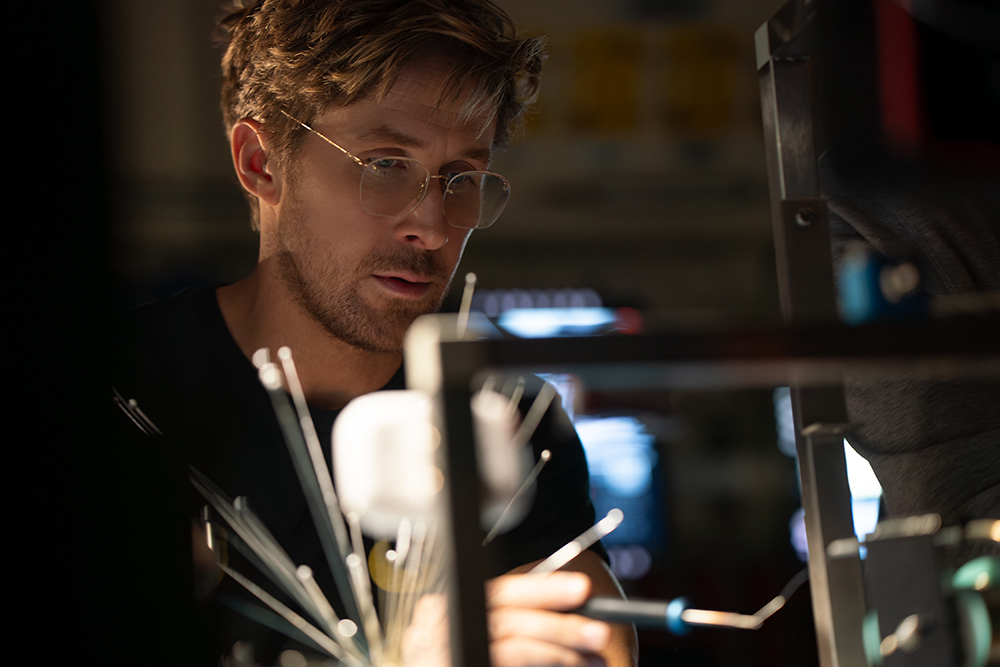
The cast assembled around Ryan Gosling adds layers of intrigue that go beyond simple star power, particularly with the inclusion of Sandra Hüller, whose recent performances have redefined understated intensity in contemporary cinema, and whose presence here hints at morally complex, intellectually formidable characters rather than traditional supporting roles. Ken Leung, Milana Vayntrub, and Lionel Boyce round out a crew whose brief appearances in the trailer suggest that even memories, flashbacks, and fragments of past interactions will carry emotional weight, reinforcing the idea that this is a survival story rooted as much in human connection as in astrophysics. Principal photography, which ran from June 3 to October 26, 2024 in the United Kingdom, benefited from a meticulous visual effects pipeline involving Framestore, Industrial Light & Magic, Sony Pictures Imageworks, BUF, and Wylie Co. VFX, supervised by Paul Lambert and Mags Sarnowska, a collaboration that promises seamless integration of practical sets and digital environments rather than overwhelming CGI excess.
Music also plays a quietly crucial role in shaping the tone of Project Hail Mary, and the decision to bring in Daniel Pemberton marks a significant departure for Phil Lord and Christopher Miller, as this is their first live-action directorial effort not scored by Mark Mothersbaugh. Daniel Pemberton’s previous collaborations with the duo on Spider-Man: Into the Spider-Verse and its sequel suggest a composer capable of blending emotional intimacy with experimental textures, and the trailer’s use of pulsing, almost organic sound design hints at a score that mirrors Ryland Grace’s internal struggle between logic and instinct. Edited by Chris Dickens, the final cut reportedly runs 156 minutes, a length that signals confidence in the audience’s appetite for deliberate pacing, scientific explanation, and character immersion rather than a rush from set piece to set piece.
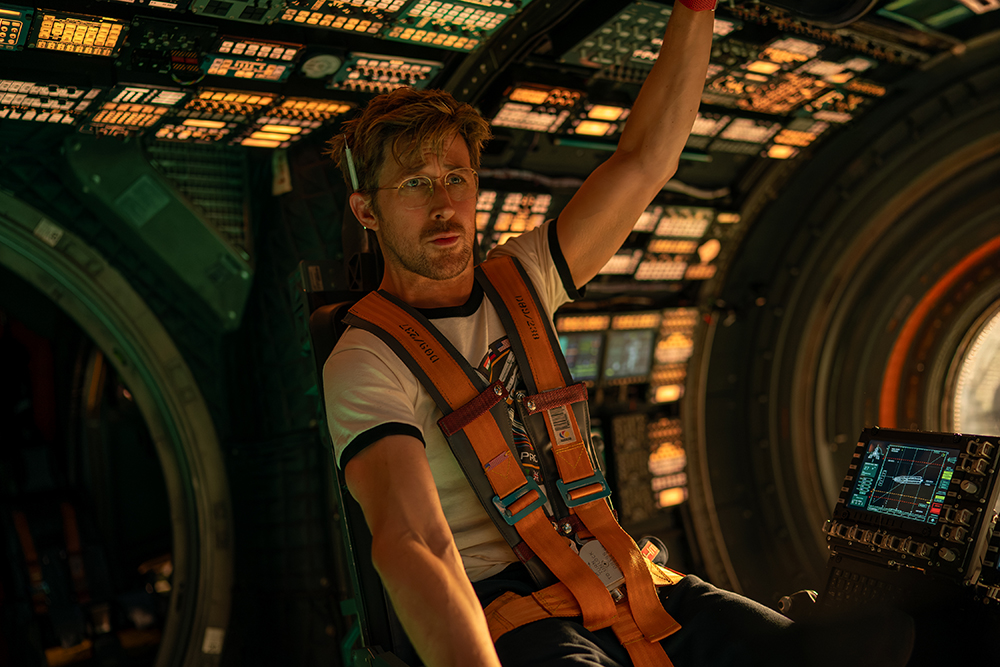
The film’s marketing strategy has been as carefully calibrated as its narrative, with the first trailer released on June 30, 2025 reportedly becoming the most viewed non-sequel, non-remake trailer of all time in its first week, amassing an astonishing 400 million views globally, a statistic that speaks not only to the popularity of Ryan Gosling, but to the lingering cultural affection for intelligent, optimistic science fiction. The second trailer in November 2025 expanded the scope, while this final trailer, teased days earlier on February 4, 2026, feels deliberately intimate, saving its biggest revelations and emotional beats for the theatrical experience. Even the ancillary elements reflect the film’s crossover appeal, with a detailed LEGO Icons model of the Hail Mary spacecraft scheduled for release on March 1, 2026, a nod to the film’s meticulous engineering aesthetic and its potential to inspire future generations of science enthusiasts.
Scheduled for release on March 20, 2026 in the United States and Canada by Amazon MGM Studios, and internationally by Sony Pictures Releasing International, with a March 18, 2026 release date in France, Project Hail Mary will also be presented in IMAX, a format that seems tailor-made for Greig Fraser’s expansive visuals and the story’s overwhelming sense of cosmic scale. Yet what ultimately lingers after watching the final trailer is not the size of space, but the fragility of one man trying to remember who he is while carrying the weight of humanity’s survival, a reminder that at its core, this is not just a science-fiction adventure, but a deeply human story about knowledge, sacrifice, and the stubborn refusal to give up, even when you wake up alone in the dark, millions of miles from home.
Synopsis :
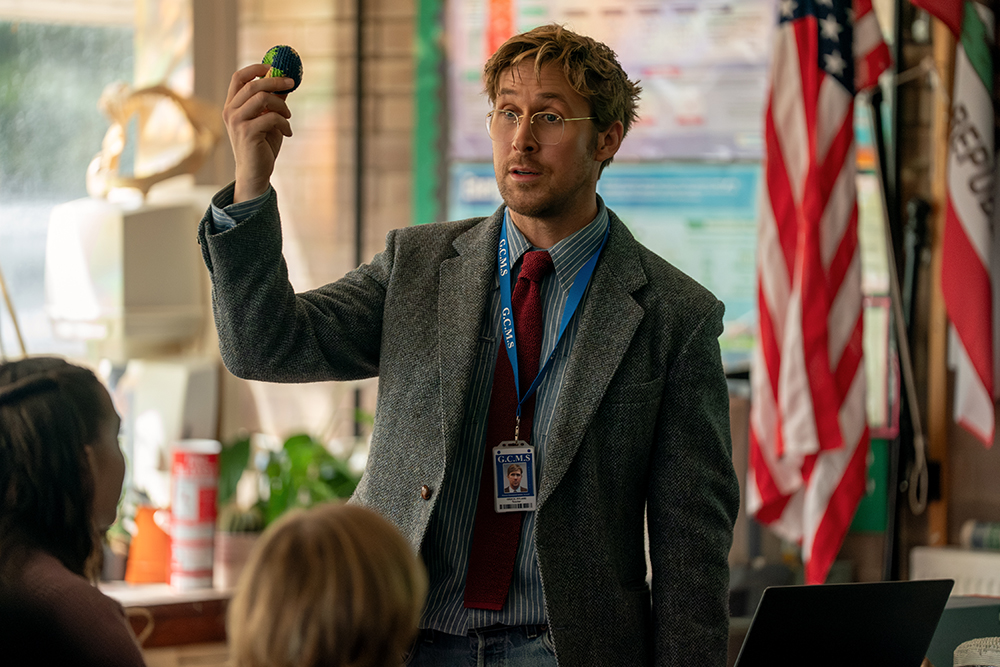
Ryland Grace, a science teacher, wakes up alone aboard a spaceship, light years away from Earth, with no memory of his identity or why he is on board. Gradually, his memory returns, and he understands the stakes of his mission: to solve the mystery of the mysterious substance that is causing the Sun to die. To try to save humanity, he will have to draw on his scientific knowledge and unconventional ideas... But an unexpected friendship may help him not to face this mission alone.
Project Hail Mary
Directed by Phil Lord, Christopher Miller
Written by Drew Goddard
Based on Project Hail Mary by Andy Weir
Produced by Amy Pascal, Ryan Gosling, Phil Lord, Christopher Miller, Aditya Sood, Rachel O'Connor, Andy Weir
Starring Ryan Gosling, Sandra Hüller, Lionel Boyce, Ken Leung, Milana Vayntrub
Cinematography : Greig Fraser
Edited by Chris Dickens
Music by Daniel Pemberton
Production companies : Metro-Goldwyn-Mayer, Pascal Pictures, General Admission, Lord Miller Productions, Waypoint Entertainment
Distributed by Amazon MGM Studios (United States), Sony Pictures Releasing France (France)
Release date : March 18, 2026 (France), March 20, 2026 (United States)
Running time : 156 minutes
Photos : Copyright Amazon MGM