 English
Movies - Wuthering Heights : Emerald Fennell’s Feverish, Sensual Reimagining of a Literary Myth Heads to Cinemas in February 2026
By Mulder, 20 january 2026
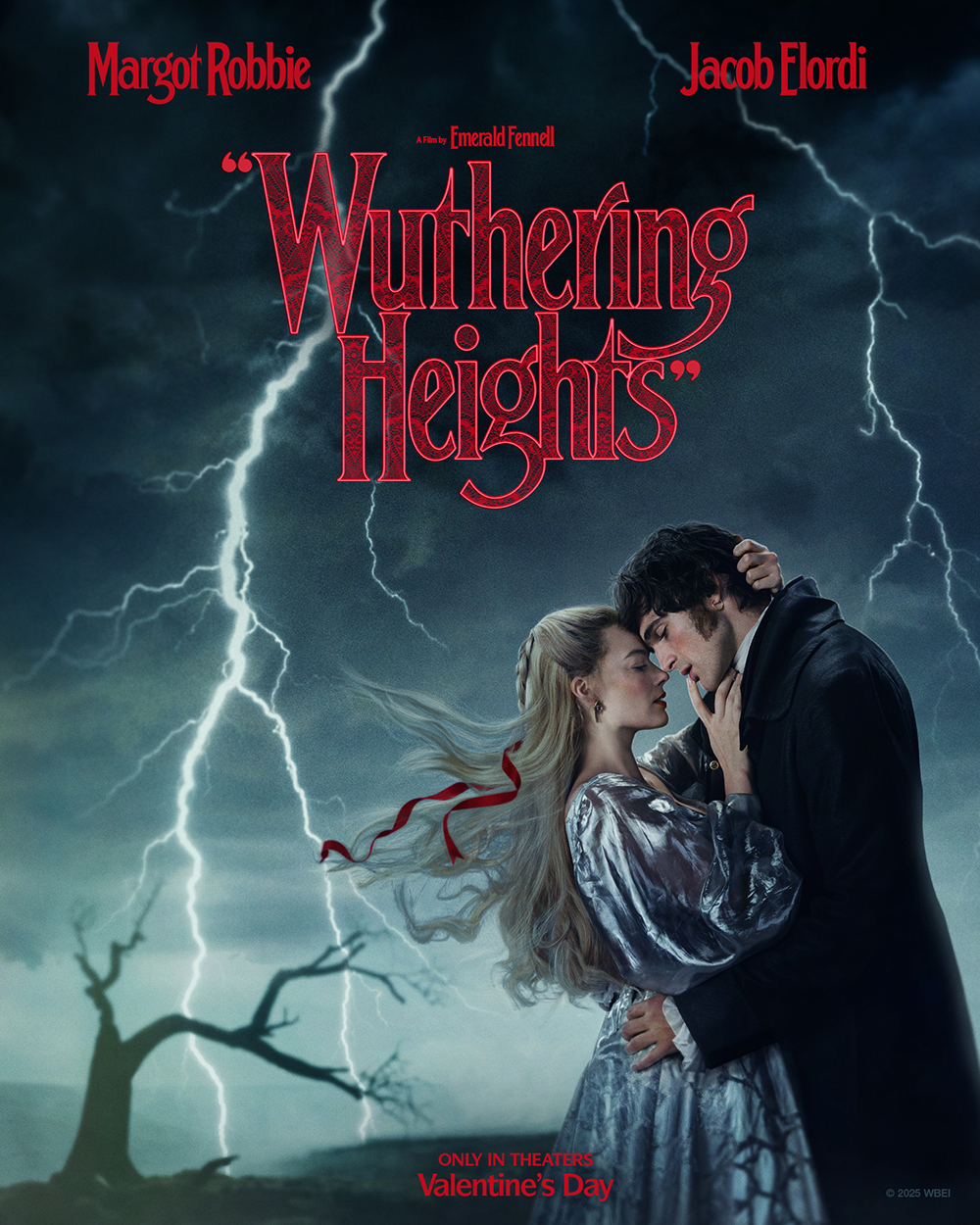
With Wuthering Heights, Emerald Fennell delivers one of the most audacious literary adaptations of the decade, a film that fully embraces the impossibility of faithfully translating Wuthering Heights by Emily Brontë while transforming that very limitation into a creative manifesto. Premiered on January 28, 2026, at the TCL Chinese Theatre, and set for theatrical release on February 13, 2026 in the United States and United Kingdom (February 11 in France), the film positions itself deliberately as an emotional, physical experience designed for the big screen, including IMAX engagements. From the outset, Emerald Fennell has insisted on the quotation marks framing the title, a symbolic gesture underscoring her belief that this is not the novel, but a version of it—one filtered through obsession, memory, sensuality, and cinema itself
At the heart of this vision is the incendiary pairing of Margot Robbie and Jacob Elordi, cast as Catherine Earnshaw and Heathcliff, two figures whose destructive love has haunted literature for nearly two centuries. Reuniting after Saltburn, also written and directed by Emerald Fennell, the duo brings a volatile chemistry that the filmmaker describes as deliberately dangerous, walking a constant line between seduction and repulsion. Margot Robbie, who also produces the film alongside Josey McNamara under the banners of LuckyChap Entertainment and MRC, embodies a Catherine who is older, more self-aware, and therefore more culpable in her own downfall. This aging-up of the characters, subtly shifting Catherine into her early twenties, lends the film a contemporary moral weight, stripping away youthful excuses and forcing the audience to confront the consequences of her choices with brutal clarity
The production history of Wuthering Heights is itself emblematic of Hollywood’s current tensions between streaming platforms and theatrical ambition. In October 2024, a high-profile bidding war saw Netflix reportedly offer $150 million for distribution rights, only to be outbid creatively—if not financially—by Warner Bros. Pictures, whose $80 million deal prevailed after agreeing to Emerald Fennell and Margot Robbie’s insistence on a full theatrical rollout and a robust marketing campaign. That insistence now feels vindicated, as the film’s promotional strategy—billboards across New York, London, and Los Angeles, a poster homage to Gone with the Wind, and a high-fashion media push culminating in Margot Robbie and Jacob Elordi gracing the cover of Vogue Australia—has framed the film as both prestige cinema and cultural event.
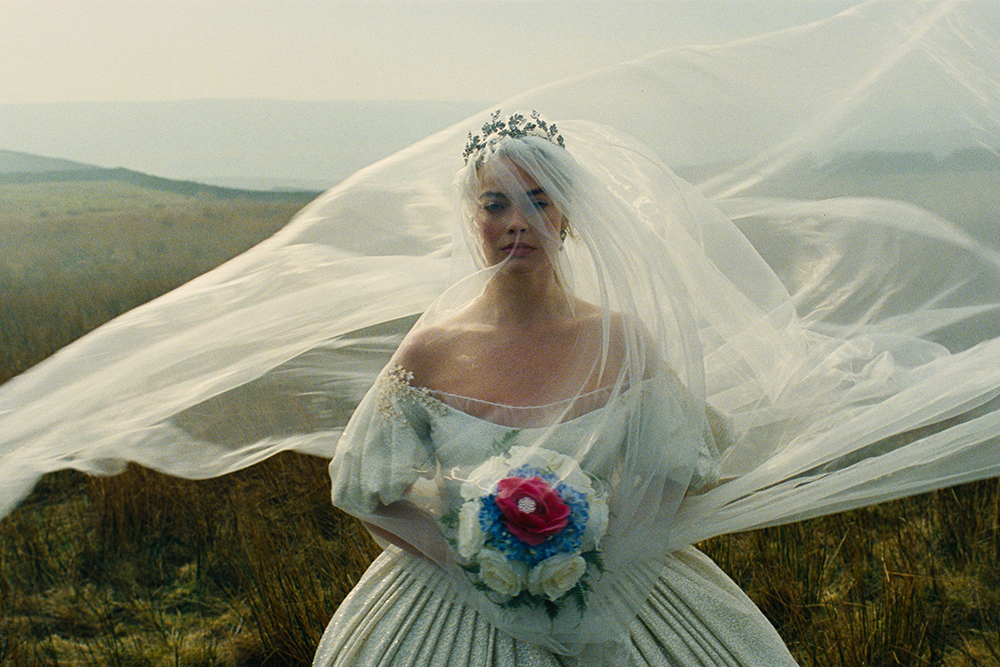
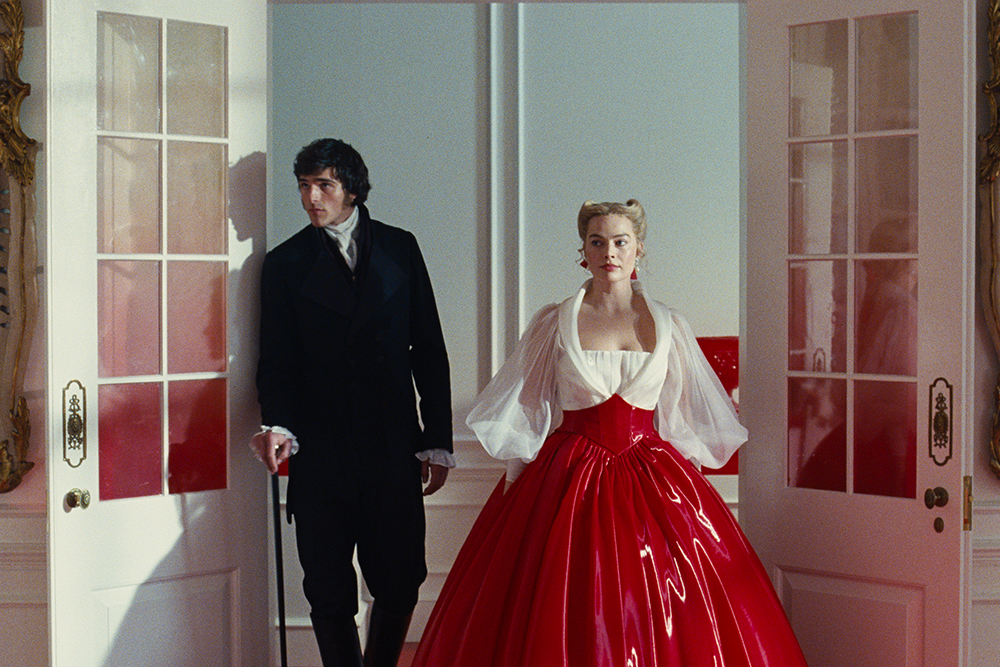
Visually, Wuthering Heights is an exercise in tactile excess. Shot on 35mm VistaVision by Oscar-winning cinematographer Linus Sandgren, the film was photographed entirely on physical sets and real locations, rejecting digital artifice in favor of an almost aggressive materiality. Principal photography took place in the Yorkshire Dales—specifically Arkengarthdale, Swaledale, Low Row, and the Yorkshire Dales National Park—as well as at Sky Studios Elstree, where production designer Suzie Davies constructed monumental interiors that seem to rot and breathe alongside the characters. Fennell’s conception of Wuthering Heights as a structure being slowly reclaimed by nature—split by slate rock, seeping moisture, and organic decay—stands in stark opposition to Thrushcross Grange, envisioned as an obsessive attempt to dominate and curate the natural world, a Victorian impulse rendered grotesque through taxidermy, pressed flowers, and jewel-like interiors
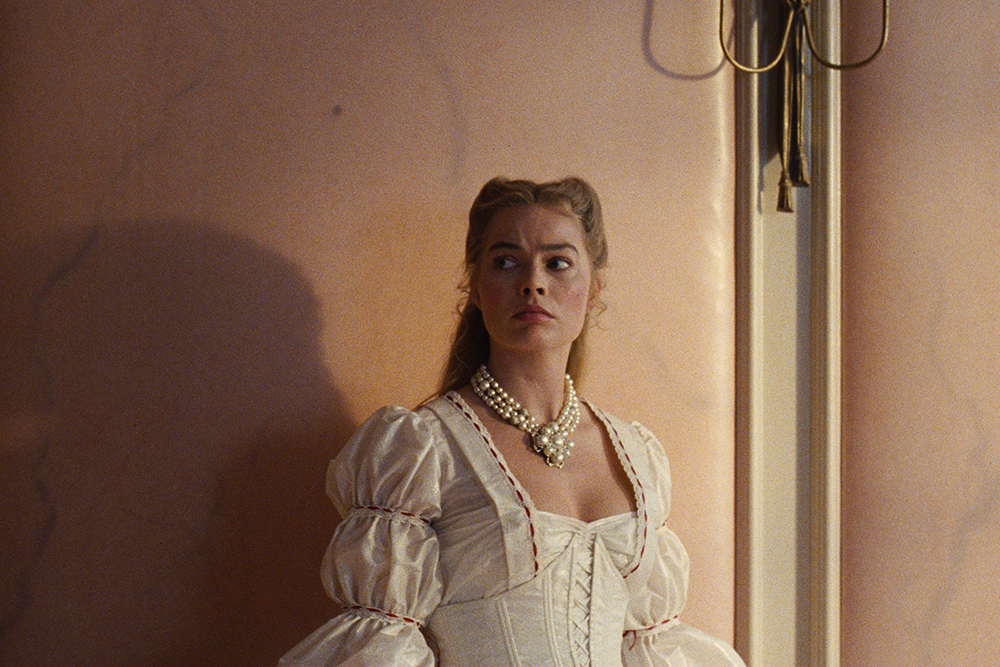
Costume design by Jacqueline Durran becomes an extension of character psychology, particularly in Catherine’s wardrobe, which blends femme fatale silhouettes with tactile aggression. Drawing references from Vivien Leigh, Alexander McQueen, and classic melodrama, Durran’s costumes make Catherine impossible to ignore, visually reinforcing her emotional tyranny over those around her. In contrast, Isabella—played with unsettling vulnerability by Alison Oliver—is dressed in infantilizing pastels and ornamental textures that subtly encode her sexual repression and eventual psychological fracture, a design choice repeatedly highlighted by Emerald Fennell as central to the film’s subtext
The supporting cast further deepens this reinterpretation, with Hong Chau delivering a morally ambiguous Nelly whose quiet presence masks narrative power, Shazad Latif redefining Edgar Linton as a genuinely seductive alternative rather than a narrative obstacle, and Martin Clunes and Ewan Mitchell grounding the story in generational cruelty and inherited violence. Notably, the casting of Jacob Elordi as Heathcliff sparked debate due to the character’s racial ambiguity in the novel, a controversy Emerald Fennell addressed directly by citing her adolescent memory of Heathcliff’s original book illustration, a personal rationale that underscores how deeply subjective—and unapologetically so—this adaptation is.
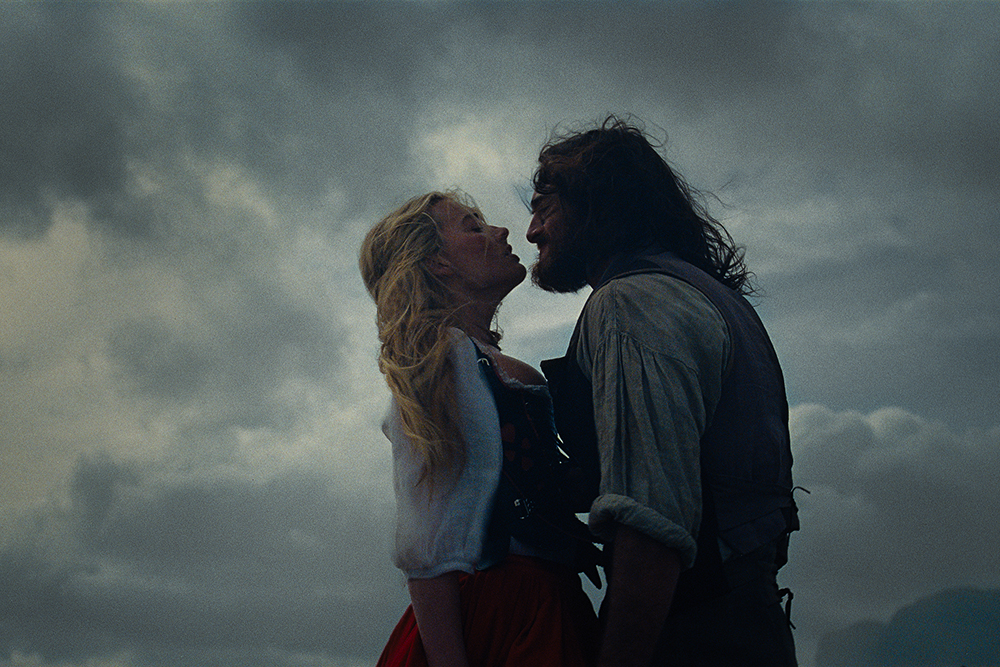
Music plays an equally provocative role in shaping the film’s emotional assault. Composer Anthony Willis, continuing his collaboration with Emerald Fennell, provides a brooding orchestral score that collides deliberately with an album of original songs by Charli XCX, whose involvement grew from a single track into a full musical companion piece. Singles such as House, featuring John Cale, Chains of Love, and Wall of Sound blur temporal boundaries, reinforcing Emerald Fennell’s belief that period cinema should provoke modern, visceral reactions rather than polite reverence. This philosophy—rooted in the idea that cinema should elicit sweat, desire, discomfort, and argument—permeates every frame of Wuthering Heights, positioning it less as an adaptation than as an act of emotional provocation
Ultimately, Wuthering Heights arrives not as a safe Valentine’s Day romance but as a confrontational spectacle, a gothic melodrama that dares its audience to feel too much. By embracing excess, sensuality, and moral ambiguity, Emerald Fennell has crafted a film that invites debate rather than consensus, echoing the very legacy of Emily Brontë’s novel. Whether revered or rejected, this version is designed to linger—under the skin, in the memory, and in conversation—long after the lights come up.
Synopsis :
A passionate and tumultuous love story set against the backdrop of the Yorkshire moors, exploring the intense and destructive relationship between Heathcliff and Catherine Earnshaw.
Wuthering Heights
Written and directed by Emerald Fennell
Based on Wuthering Heights by Emily Brontë
Produced by Emerald Fennell, Josey McNamara, Margot Robbie
Starring Margot Robbie, Jacob Elordi, Hong Chau, Shazad Latif, Alison Oliver, Martin Clunes, Ewan Mitchell
Cinematography : Linus Sandgren
Edited by Victoria Boydell
Music by Anthony Willis (score), Charli XCX (songs)
Production companies : MRC, Lie Still, LuckyChap Entertainment
Distributed by Warner Bros. Pictures
Release dates : January 28, 2026 (TCL Chinese Theatre), February 11, 2026 (France), February 13, 2026 (United States)
Running time : 136 minutes
Photos : Copyright 2025 Warner Bros. Entertainment Inc.