
 English
Movies - Marsupilami: Philippe Lacheau transforms the cult hero into a generational comedy blockbuster
By Mulder, 03 january 2026
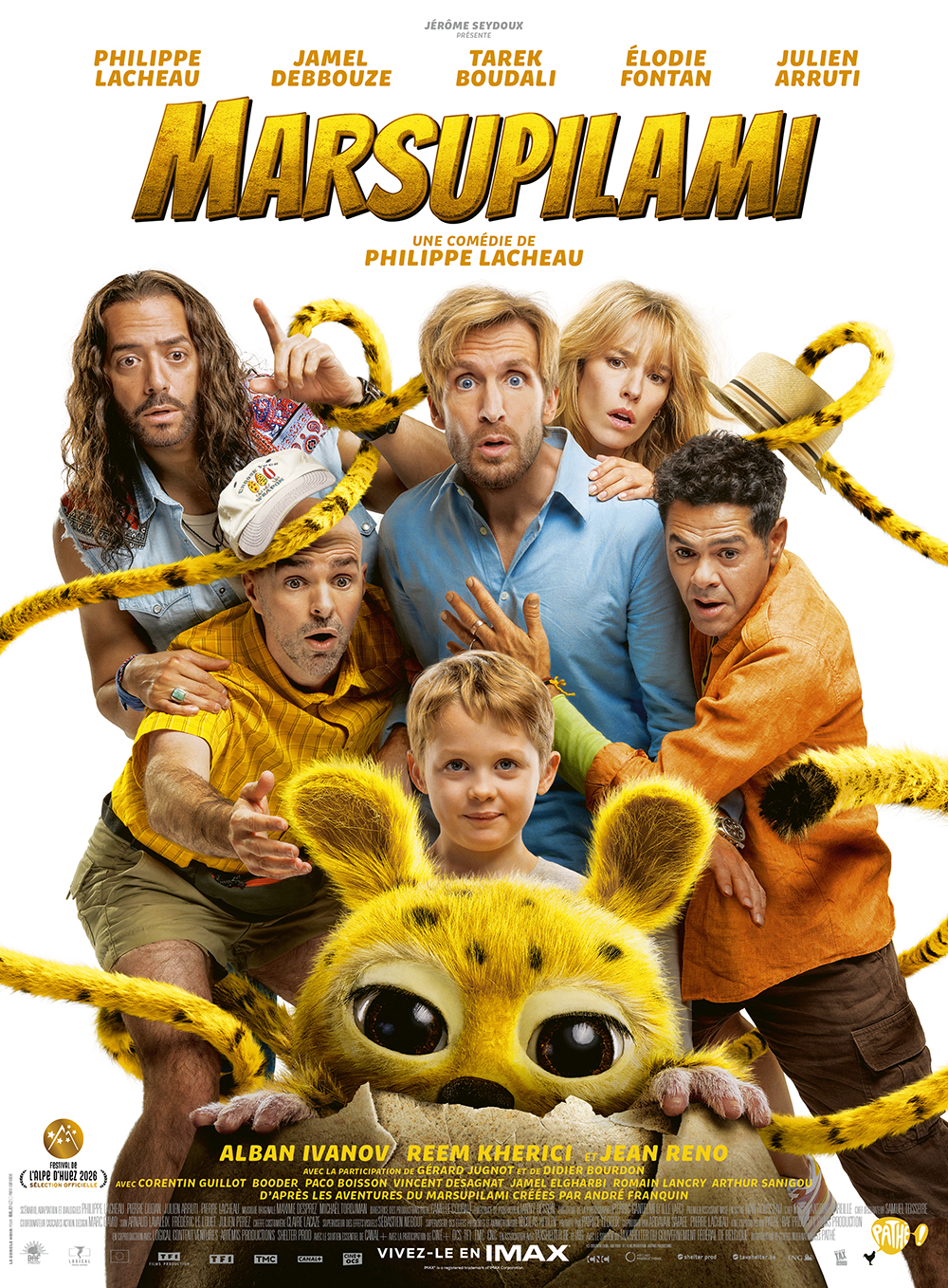
Scheduled for release in France on February 4, 2026, Marsupilami marks the return to the big screen of one of the most iconic characters in Franco-Belgian comics, created in 1952 by André Franquin and previously adapted for film in 2012 in Sur la piste du Marsupilami, directed by Alain Chabat. This new adaptation, directed by Philippe Lacheau, is both respectful of the legacy and firmly rooted in the world of Fifi's gang, with a clear ambition: to offer a great family adventure comedy capable of bringing together several generations around laughter, emotion, and unapologetic pop culture. The project was born directly from a proposal by the Pathé group, already the producer and distributor of the 2012 film, which saw Philippe Lacheau as the ideal candidate to reinvent Marsupilami without betraying it, relying on the energy of the cast, an almost mathematical sense of rhythm, and a sincere affection for the cinematic references of the 1980s and 1990s.
Narratively, the film takes a deliberately accessible angle: David, a man on the verge of losing his job, agrees to a dubious plan to bring a mysterious package back from South America. On board a cruise ship, accompanied by his ex-partner Tess, his son Leo, and his colleague Stéphane, a character as clumsy as he is bewildering, the situation degenerates when the package is opened by mistake, revealing an adorable Marsupilami baby. From there, the story descends into joyfully orchestrated chaos, mixing chases, visual gags, misunderstandings, and emotional issues surrounding the family unit and separation, a theme that runs through the film more deeply than it appears. This idea of the baby Marsupilami, developed at length during the writing process by Philippe Lacheau, Pierre Lacheau, Julien Arruti, and Pierre Dudan, introduces a strong emotional dimension, deliberately reminiscent of the relationship between Elliott and E.T., while maintaining a highly scripted comedy mechanism, fueled by doubts, rewrites, and numerous external inputs.
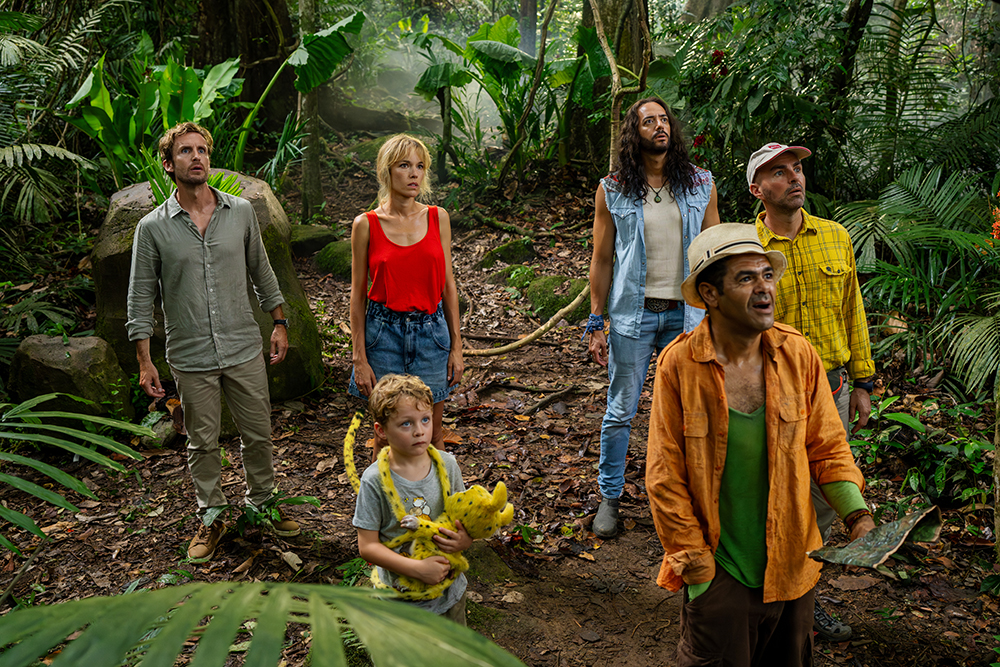
The particularly large cast reflects this desire to create a grand popular epic: Philippe Lacheau, Tarek Boudali, Élodie Fontan, Julien Arruti, Alban Ivanov, Corentin Guillot, Reem Kherici, Gérard Jugnot, Didier Bourdon, and Jean Reno make up a gallery of characters designed to be useful to both the plot and the gags. The return of Jamel Debbouze in the role of Pablito Camaron, which he already played in 2012, is one of the most talked-about elements of the project: while it is officially neither a direct sequel nor a strict reboot, the presence of this character creates an obvious link with the previous film, while allowing Philippe Lacheau to play on ambiguity and leave the viewer free to interpret. According to comments gathered in the press kit, the collaboration with Jamel Debbouze was marked by a great deal of freedom to improvise, with the famous “Jamel take” systematically shot at the end of each sequence, sometimes adding extra energy or an unexpected comic break.
On a technical level, Marsupilami stands out for its deliberate choice of animatronics to bring the baby Marsupilami to life, supervised by Nicolas Herlin, in order to preserve a physical and emotional presence on screen that was considered difficult to replace with simple digital effects. Visual effects take over in the most dynamic scenes, but Philippe Lacheau insists on the importance of being able to “hold” the animal, make it interact with the actors, and in particular with Corentin Guillot, whose casting—from among more than 5,000 children—was decisive for the emotional credibility of the film. Filming took place over 62 days between July and November 2024 in Thailand, Greece, and France, with spectacular natural settings, particularly in the Krabi region, sometimes shared with major international productions, reinforcing the visual scale of this adventure comedy.
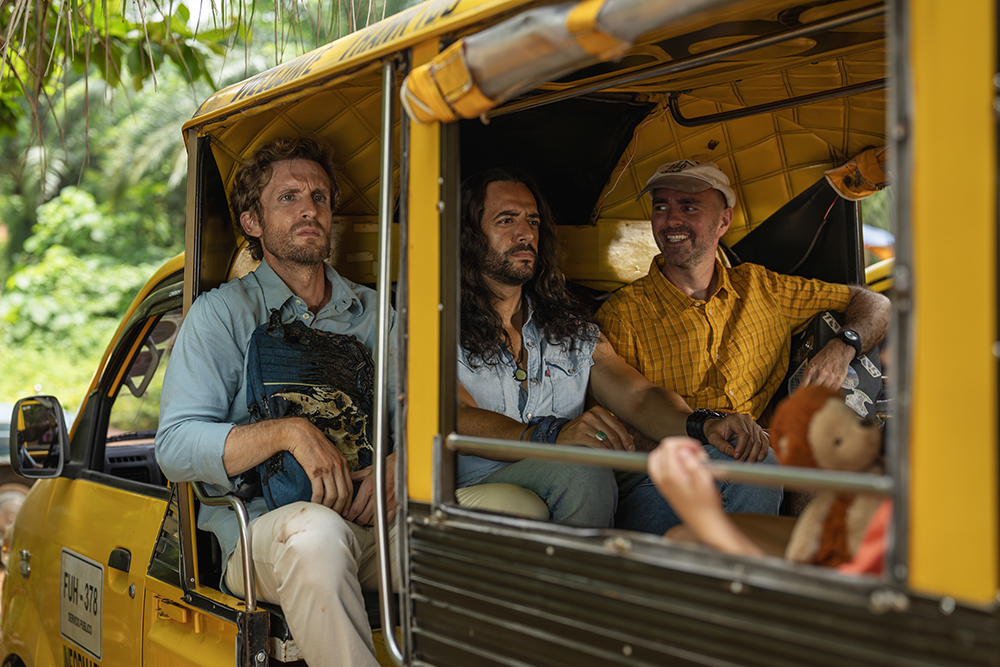
Finally, Marsupilami makes constant use of references: from Jurassic Park to Gremlins, Titanic to E.T. the Extra-Terrestrial, Les Goonies, The Big Blue and Ice Age, the film pays tribute to many films without ever turning them into a simple gratuitous catalog, but rather as a common language with the viewer. Supported by the music of Michaël Tordjman and Maxime Desprez, and by meticulous sound work led by Frédéric Le Louët, this comedy aims to be both entertaining and a declaration of love for a shared popular culture. With a running time of 99 minutes, distribution by Pathé Films, and a clear ambition to “do good” for the audience, Marsupilami promises to be one of the major family events in French cinema in 2026, carried by a team that is aware of the legacy it is handling and eager to pass it on with sincerity and humor.
Synopsis:
To save his job, David agrees to a risky plan: to bring back a mysterious package from South America. He finds himself on a cruise with his ex Tess, his son Léo, and his colleague Stéphane, who is as simple-minded as he is clumsy, and whom David uses to transport the package for him. Everything goes awry when Stéphane accidentally opens it: an adorable baby Marsupilami appears and the trip descends into chaos! Fifi's gang is back and they've made a new friend...
Marsupilami
Directed by Philippe Lacheau
Written by Philippe Lacheau, Pierre Lacheau, Julien Arruti, and Pierre Dudan
Based on the character created by André Franquin
Produced by Patrice Ledoux and Jérôme Seydoux
Starring Philippe Lacheau, Jamel Debbouze, Tarek Boudali, Élodie Fontan, Julien Arruti, Jean Reno, Corentin Guillot, Gérard Jugnot, Didier Bourdon, Alban Ivanov, and Reem Khouri
Starring Philippe Lacheau, Jamel Debbouze, Tarek Boudali, Élodie Fontan, Julien Arruti, Jean Reno, Corentin Guillot, Gérard Jugnot, Didier Bourdon, Alban Ivanov, Reem Kherici, Booder, Vincent Desagnat, Romain Lancry, Paco Boisson, Laurent Spielvogel, Claudette Walker, Arthur Sanigou
Director of photography: Pierric Gantelmi d'Ille
Editing: Antoine Vareille
Music: Michaël Tordjman, Maxime Desprez
Production companies: Pathé Films, BAF Prod
Distribution: Pathé Films (France)
Release date: February 4, 2026 (France)
Running time: 99 minutes
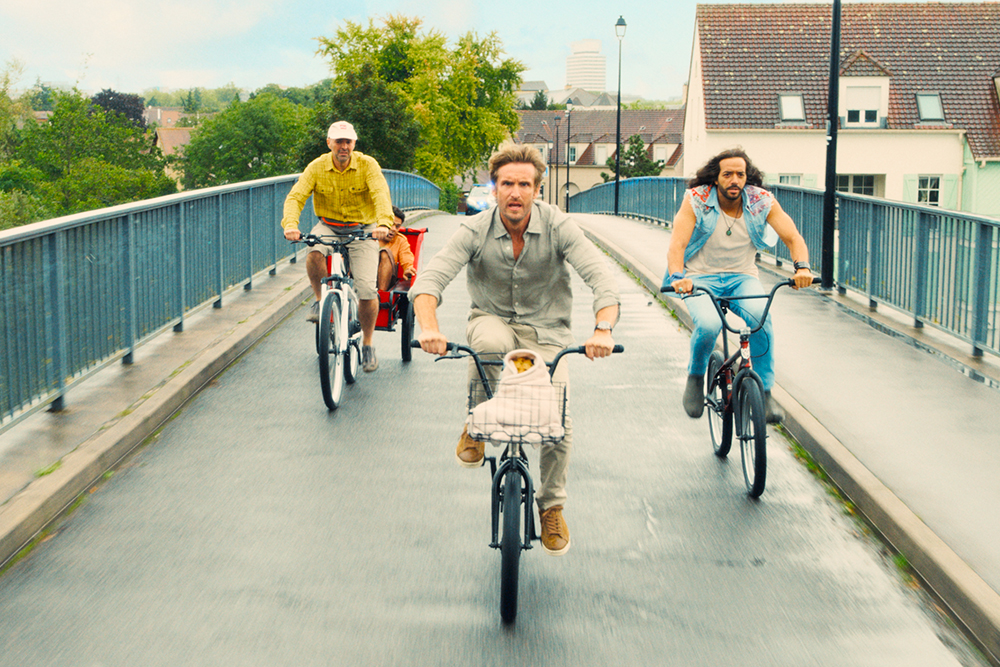
Photos: Copyright 2026 PATHÉ FILMS - BAF PROD - TF1 FILMS PRODUCTION - ARTEMIS PRODUCTIONS