
 English
Netflix - Stranger Things – An ambitious, moving, and almost perfect conclusion
By Mulder, 01 january 2026
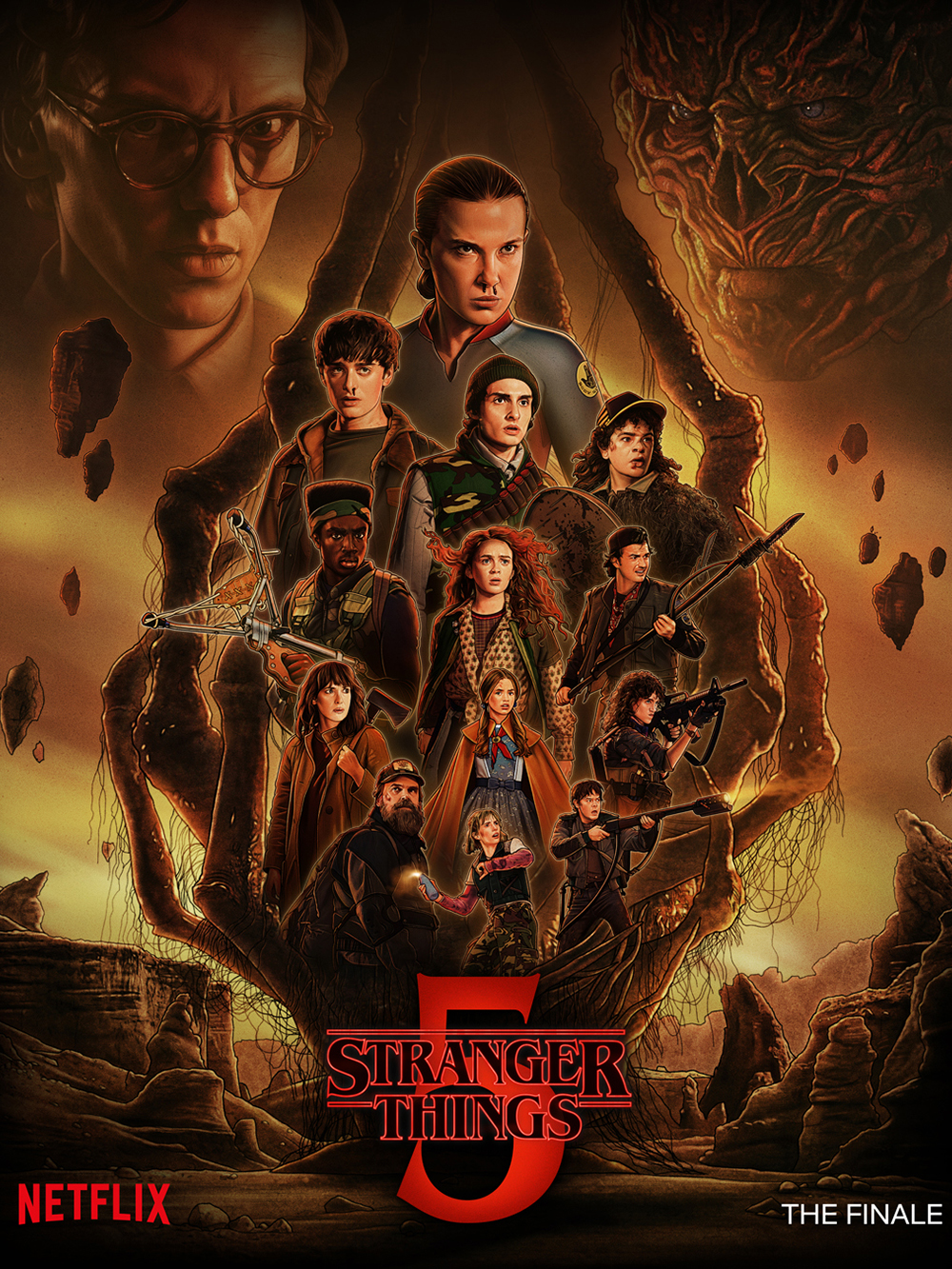
The final chapter of Stranger Things, entitled Chapter Eight: The Rightside Up, offers a grand and mythical conclusion to a saga that has dominated pop culture for nearly a decade. Over the course of its two hours, the episode ties up nearly every major narrative thread woven throughout five seasons of supernatural mysteries and character development, culminating in a decisive showdown between the Hawkins crew and the twin forces of Vecna (Henry Creel) and the Mind Flayer that threaten to engulf their world. After years of escalating stakes, from demogorgons in the woods to dimensional worms and psychic horrors, this final episode doesn't shy away from spectacle, placing the fate of Hawkins and the Upside Down itself on the brink of the precipice, while carving out moments of genuine emotional resonance for every central character involved.
At the heart of this episode is the irrepressible Eleven (Millie Bobby Brown), whose journey from frightened and isolated child to Hawkins' most powerful psychic warrior finds its ultimate test here. In a narrative arc that covers psychic duels with Vecna and physical dangers in the ruined Upside Down, Eleven's story is both heroic and deeply personal, underscored by her longstanding relationships with her friends and her instinctive desire to protect those she loves. With allies like Mike Wheeler (Finn Wolfhard) providing emotional support and fighters like Will Byers (Noah Schnapp) confronting their inner demons and turning them into fierce determination, the combined efforts of the group reflect how far they've come since playing Dungeons & Dragons in a basement. The fact that the episode deliberately leaves Eleven's final fate ambiguous, offering both a heroic sacrifice and the tantalizing possibility of survival, as Mike surmises, is testament to the series' theme of embracing hope through uncertainty, a characteristic that has been present since the beginning.
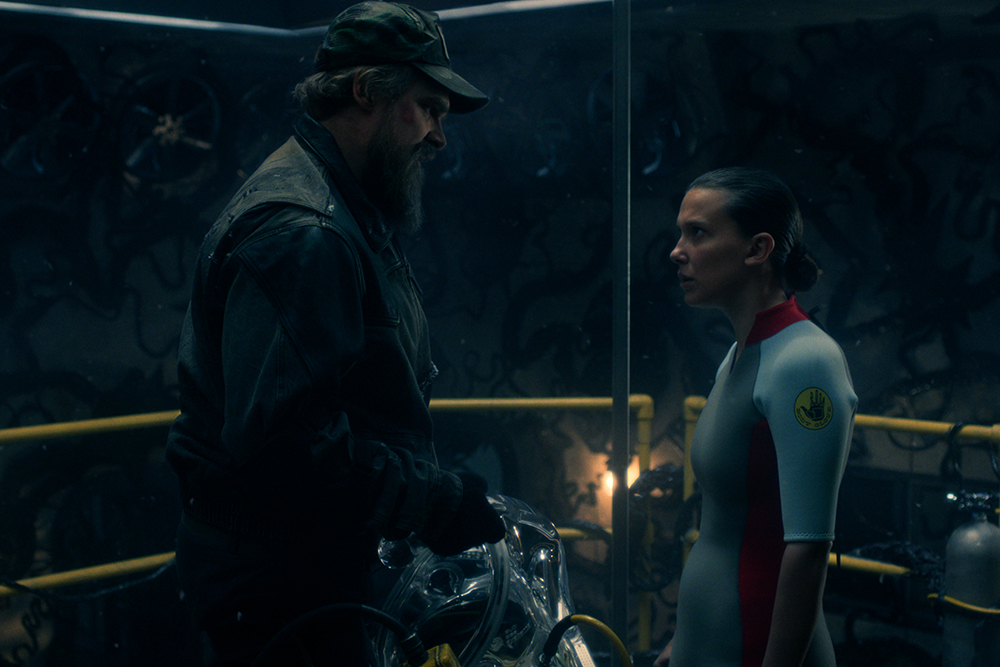
Narratively, this episode, which rivals any American blockbuster, excels in its structural ambition. The episode resolves the imminent existential threat posed by Vecna and the Mind Flayer through a combination of personal confrontation and collective strategy, integrating the strengths of each character into a unified assault. It should be noted that the final blow to Vecna comes not only from the protagonist's psychic power, but from the synergy of the entire group's efforts, highlighting the series' central message about community and friendship. The destruction of the Upside Down, achieved through sacrifice, narrow escapes, and the detonation of a makeshift bomb triggered by a classic record, offers fans a long-awaited catharsis, putting an end to the interdimensional horror that has been the central driving force of the franchise.
This final episode also pays close attention to the fates of all the characters, offering satisfying epilogues to those whose lives have been shaped by the ever-present supernatural threat. Steve Harrington (Joe Keery) no longer appears as the childish protector he once was, but as a well-adjusted adult, happy to coach young athletes and build a life for himself in Hawkins. Robin Buckley (Maya Hawke) and Nancy Wheeler (Natalia Dyer) pursue their respective passions at college and in journalism; and friendships such as the one between Steve and Dustin Henderson (Gaten Matarazzo) remain enduring pillars of continuity, even as the group disperses geographically. This jump forward in time, set approximately 18 months after the decisive battle, gives the finale a reflective tone, acknowledging that while the supernatural threat may have been defeated, life goes on and the bonds forged in adversity continue to shape the characters' futures.
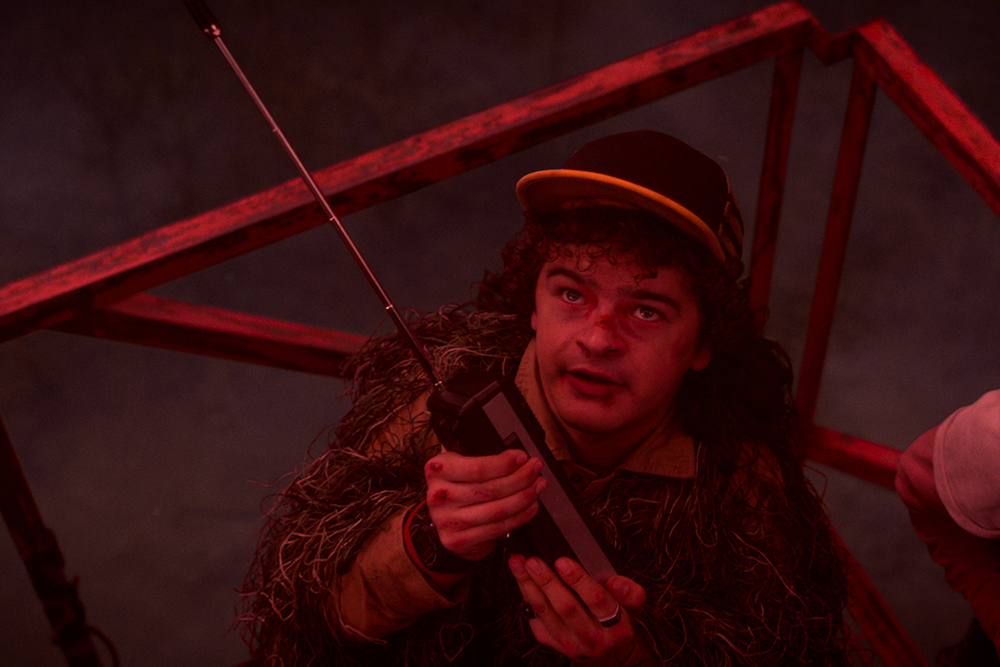
However, this episode is at times overly ambitious, juggling a huge cast and multiple storylines in a two-hour crescendo. With so many narrative arcs to honor, from personal reconciliations to the global battle for reality itself, certain moments and conflicts between characters feel compressed or borderline underdeveloped, forcing viewers to fill in the emotional subtext between scenes rather than fully experiencing it on screen. Yet this compression also speaks to how much the Stranger Things universe has grown over the course of five seasons: what began as a modest supernatural mystery has morphed into a sprawling epic with considerable stakes, testing the limits of its own mythos while demanding a narrative conclusion for nearly a dozen main characters.
From a technical standpoint, the episode is polished and cinematic, incorporating effects, production design, and a soundtrack that elevate its conclusion beyond the usual limits of television series. The interdimensional landscapes feel threatening and strange, the fight sequences have weight, and the quieter moments (a farewell conversation, a thoughtful glance between old friends) resonate deeply precisely because they are rare amid the chaos. These choices underscore the showrunners' confidence in their ability to balance adrenaline and introspection, ensuring that the finale is both blockbuster-scale and intimately human.
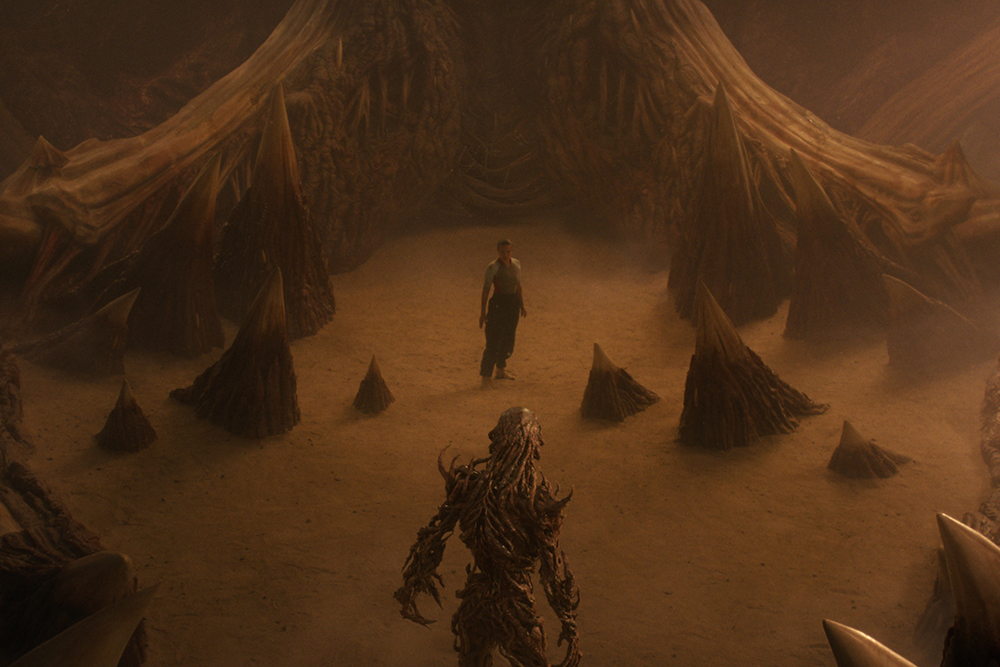
It's essential to note that the episode isn't afraid to leave room for interpretation, particularly when it comes to Eleven's future. By presenting several plausible interpretations of her final act and its consequences, the creators allow the audience to engage with the story beyond the credits, turning speculation and hope into an integral part of the experience itself. This ambiguity, whether embraced or criticized by viewers, is in keeping with the spirit of adventure, fear, loss, and connection that Stranger Things has explored since its inception, leaving audiences with a sense of closure tinged with possibility.
Ultimately, the final episode of Stranger Things provides a fitting conclusion to one of the most influential genre series of the streaming era. It pays tribute to its characters, delivers on its long-standing narrative promises, and carefully reflects the emotional evolution of its ensemble. While its ambition sometimes exhausts its resources, the narrative heart of the work, rooted in friendship, courage, and the transcendent power of shared stories, remains unshakeable. For fans who have invested in Hawkins and its defenders from day one, Chapter Eight: The Rightside Up offers a powerful and memorable farewell that balances spectacle and sentiment, earning its place among television finales that aim high and make an impact.

Synopsis:
The final battle against Vecna and the Mind Flayer reaches its climax as Eleven and her friends join forces to save Hawkins and close the breach to the Upside Down once and for all.
Stranger Things
Created by The Duffer Brothers
Showrunners : Karl Gajdusek, Matt Duffer, Ross Duffer
Starring Winona Ryder, David Harbour, Finn Wolfhard, Millie Bobby Brown, Gaten Matarazzo, Caleb McLaughlin, Natalia Dyer, Charlie Heaton, Cara Buono, Matthew Modine, Noah Schnapp, Sadie Sink, Joe Keery, Dacre Montgomery, Sean Astin, Paul Reiser, Maya Hawke, Priah Ferguson, Brett Gelman, Linda Hamilton, Jamie Campbell Bower, Nell Fisher
Composers : Michael Stein, Kyle Dixon
Executive producers : Karl Gajdusek, Brian Wright, Cindy Holland, Matt Thunell, Shawn Levy, Dan Cohen, The Duffer Brothers, Iain Paterson, Curtis Gwinn
Cinematography : Tim Ives, Tod Campbell, Lachlan Milne, David Franco, Ricardo Diaz, Caleb Heymann, Brett Jutkiewicz
Editors : Dean Zimmerman, Kevin D. Ross, Nat Fuller, Katheryn Naranjo, Casey Cichocki
Running time : 42–142 minutes
Production companies : 21 Laps Entertainment, Monkey Massacre Productions (seasons 1–4), Upside Down Pictures (season 5)
Network : Netflix
Release : July 15, 2016 – December 31, 2025
Score : 5/5