

The Odyssey : Christopher Nolan’s Foundational Epic, Shot Like No Other, and Already a Cinematic Event
Monday 22 December, 6:03 AM PT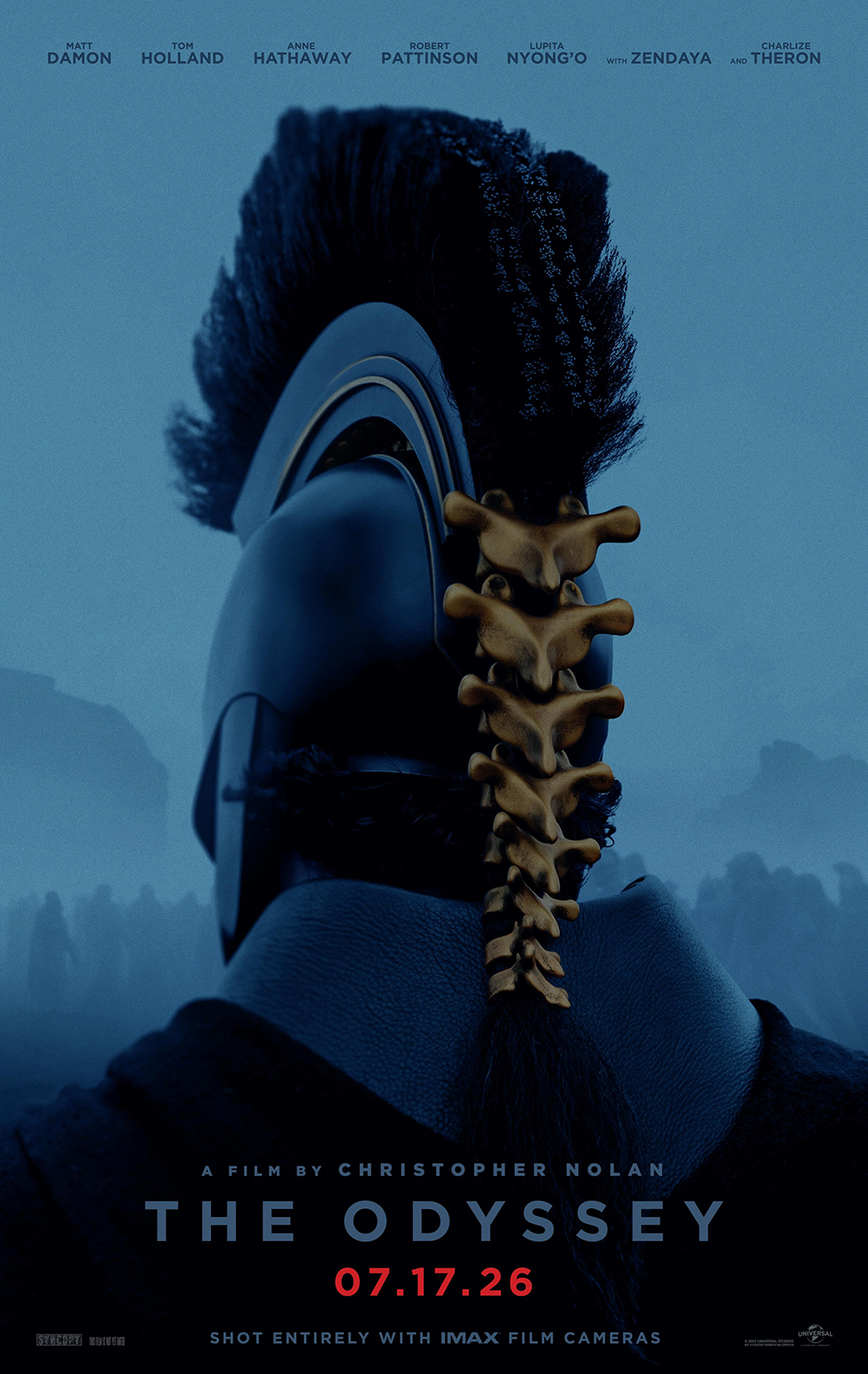
From the moment the project was officially unveiled, The Odyssey has felt less like a new film announcement than the culmination of a decades-long artistic obsession, and having followed Christopher Nolan’s career closely over the years, it is hard not to see this adaptation of Homer’s epic as the most personal, ambitious, and revealing project of his entire filmography. Written and directed by Christopher Nolan, and produced alongside Emma Thomas through their company Syncopy, the film adapts one of the oldest narrative pillars of Western storytelling while simultaneously serving as a prism through which Nolan refracts everything he has explored before: time, endurance, identity, faith, obsession, survival, and the cost of returning home. Starring Matt Damon as Odysseus and Anne Hathaway as Penelope, the film also brings together an extraordinary ensemble including Tom Holland, Robert Pattinson, Lupita Nyong'o, Zendaya, and Charlize Theron, forming a cast that feels deliberately mythic in scale rather than simply star-driven. Officially set for release on July 17, 2026 by Universal Pictures, the film already carries the weight of an event long before audiences have seen a single full scene.
What makes The Odyssey particularly fascinating is the context of its creation. Fresh off the historic awards run of Oppenheimer, which earned him Academy Awards for Best Picture and Best Director, Christopher Nolan began writing this script in March 2024 with a level of secrecy that fueled months of wild speculation. As someone who has watched Nolan repeatedly weaponize mystery as part of his creative process, the rumors—ranging from vampire myths to spy reboots—felt almost like a deliberate misdirection, a way to clear the ground before revealing something both simpler and more profound. When Universal Pictures finally confirmed in December 2024 that the project was an adaptation of The Odyssey, the announcement landed not as a surprise but as a revelation: suddenly, Nolan’s entire body of work snapped into focus, echoing his own admission that the Homeric epic is “foundational,” not just to cinema, but to his personal understanding of storytelling itself.
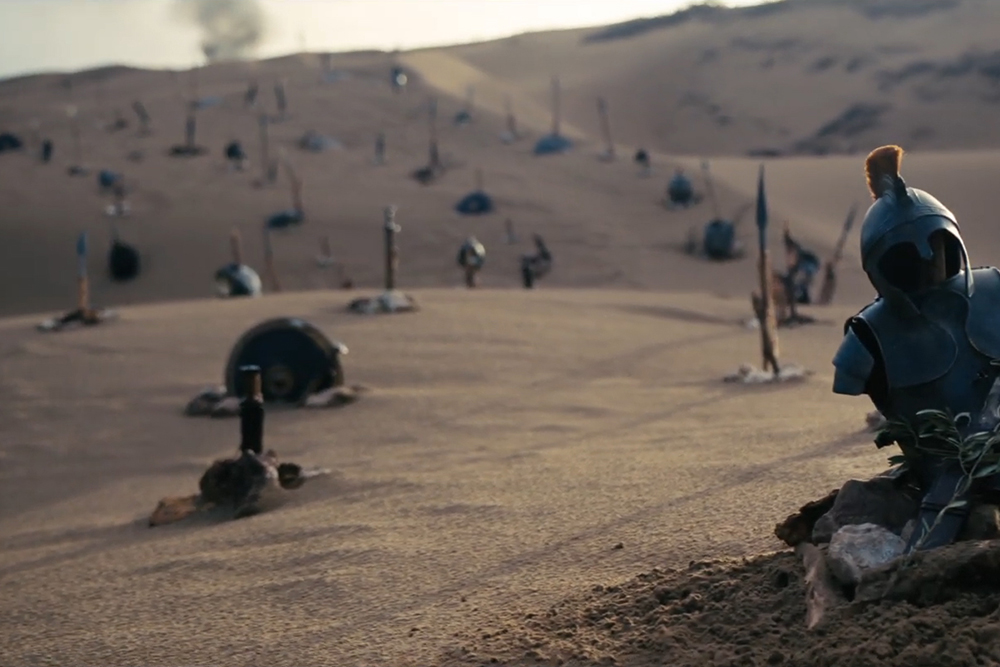
The scale of the production is staggering even by Nolan’s standards. With an estimated budget of $250 million—the largest of his career—The Odyssey is also his first film shot entirely using IMAX 70mm cameras, a technical gamble that speaks volumes about his priorities as a filmmaker. Reuniting with cinematographer Hoyte van Hoytema, editor Jennifer Lame, and composer Ludwig Göransson, Nolan once again surrounded himself with collaborators who understand how to balance intimacy and spectacle. Over two million feet of IMAX film were exposed across a 91-day shoot that spanned Morocco, Greece, Italy, Iceland, Scotland, Western Sahara, Malta, and Los Angeles, with locations chosen not just for their visual power but for their mythological resonance. From the ancient ruins of the Peloponnese to the volcanic landscapes of Iceland used to depict Hades itself, the geography of the film feels inseparable from its narrative soul.
Having covered large-scale productions for years, what stands out here is Nolan’s refusal to default to digital shortcuts. The use of the massive Viking longship Draken Harald Hårfagre for maritime sequences, the construction of a single practical studio set in Los Angeles, and the reliance on real-world environments underline a philosophy that cinema should be felt physically, not just observed. That philosophy also shaped the film’s controversial decision to shoot scenes in Western Sahara, a choice that sparked international criticism and political backlash. The objections raised by the Polisario Front and numerous cultural figures were serious, justified, and impossible to ignore, and they now form an unavoidable part of the film’s production history. It is a reminder that when cinema reaches this scale, it inevitably intersects with geopolitical realities, whether filmmakers intend it to or not.
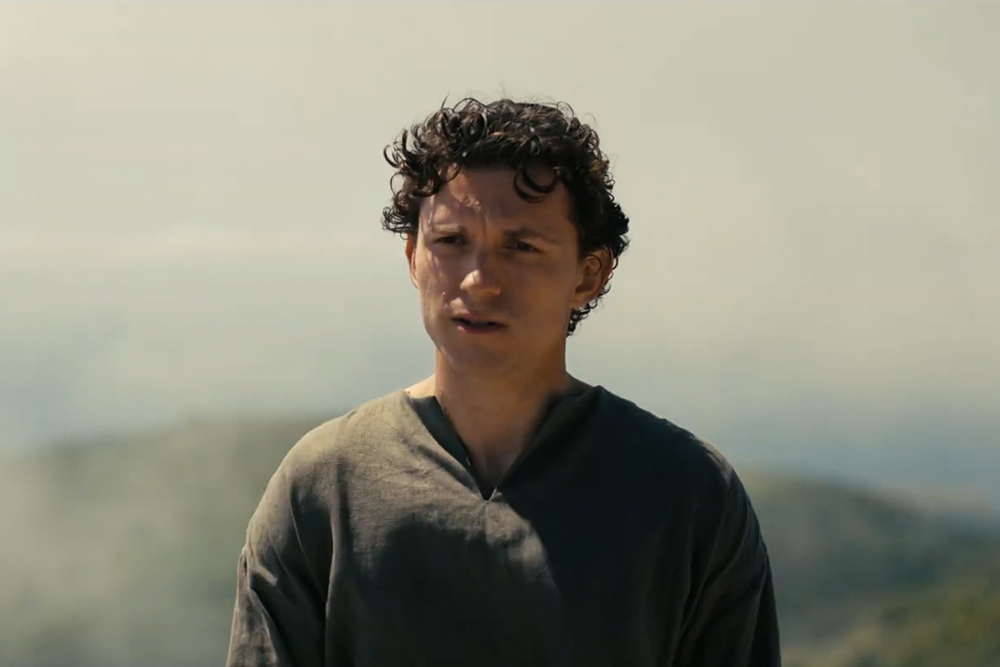
Narratively, The Odyssey follows Odysseus’ perilous return from the Trojan War, confronting mythical forces such as Polyphemus, the Sirens, and Circe, while striving to reunite with his family. Yet what Nolan seems most interested in judging from early footage and his own comments is not mythology as spectacle, but mythology as psychology. Casting Tom Holland as Telemachus, Zendaya as Athena, Robert Pattinson as Antinous, and Charlize Theron as Circe suggests a focus on fractured loyalties, divine manipulation, and moral ambiguity rather than heroic pageantry. Even early reactions to the teaser trailer, which debuted exclusively in theaters in 2025, emphasized atmosphere over exposition, a choice entirely consistent with Nolan’s long-standing belief that mood is often more truthful than plot.
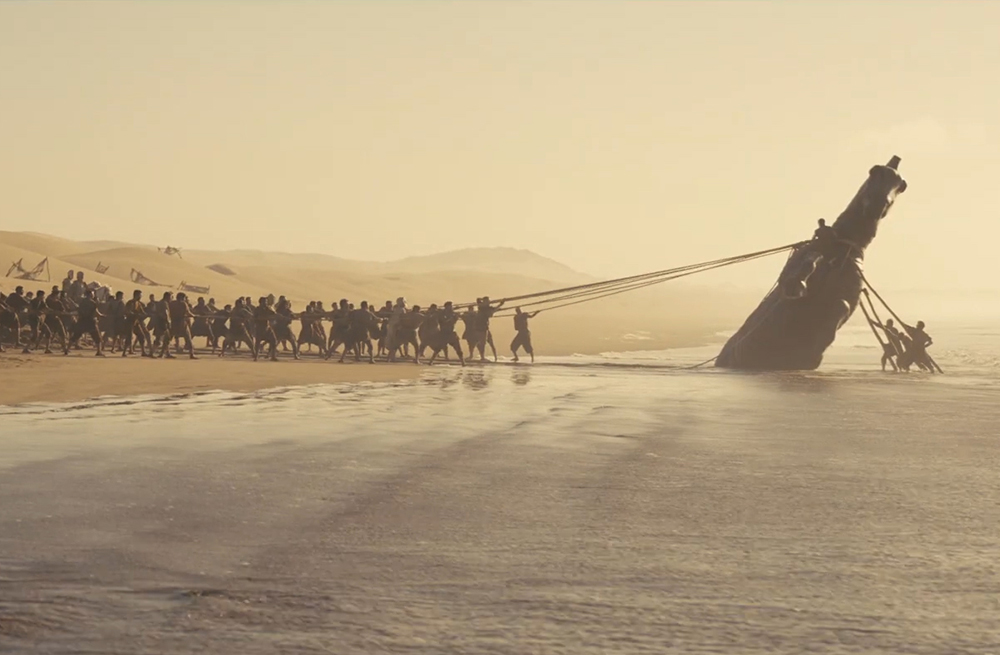
The extended IMAX prologue released later only reinforced that impression. Critics noted how the Trojan Horse sequence played less like traditional historical reenactment and more like a suspense thriller, with Ludwig Göransson’s score escalating tension rather than celebrating victory. Watching audiences react to that footage in IMAX screenings felt oddly familiar, reminiscent of the collective gasp that greeted the opening of The Dark Knight or Dunkirk. There is a tactile immediacy here, a sense that Nolan is once again inviting viewers to experience cinema as an event rather than content.
Perhaps the clearest indicator of The Odyssey’s cultural impact arrived when Universal Pictures opened ticket sales for select IMAX 70mm screenings a full year in advance. Seeing half of those screenings sell out within hours was unprecedented, and as someone who has tracked audience behavior for years, it felt like a quiet declaration of faith—not just in Nolan, but in theatrical cinema itself. In an era where patience is rare and anticipation even rarer, The Odyssey has managed to rekindle both, positioning itself as more than a film release, but as a shared cinematic pilgrimage.
Synopsis :
After the Trojan War, Odysseus faces a dangerous voyage back to Ithaca, meeting creatures like the Cyclops Polyphemus, Sirens, and Circe along the way.
The Odyssey
Written and directed by Christopher Nolan
Based on Homer's Odyssey
Produced by Emma Thomas, Christopher Nolan
Starring Matt Damon, Tom Holland, Anne Hathaway, Robert Pattinson, Lupita Nyong'o, Zendaya, Charlize Theron
Cinematography : Hoyte van Hoytema
Edited by Jennifer Lame
Music by Ludwig Göransson
Production companies : Universal Pictures, Syncopy
Distributed by Universal Pictures
Release date : July 17, 2026 (United States)
Photos : Copyright Universal Studios. All Rights Reserved.