

Fallout season 2 : New Vegas, new rules, same deliciously twisted chaos
Tuesday 16 December, 9:00 AM PT
Season 2 of Fallout arrives like a jackpot of bottle caps left too long under the sun: still shiny, still addictive, but now slightly warped in a fascinating way. Airing from December 16, 2025, on Prime Video and weekly until February 4, 2026, the series expands the universe imagined by Tim Cain and Leonard Boyarsky while retaining the same sardonic smile as in Season 1: a retro-futuristic glee stained with blood, corporate cynicism served with a touch of vaudeville. Under the leadership of showrunners Graham Wagner and Geneva Robertson-Dworet, the season's big promise is scale: New Vegas, new factions, new horrors, more flashbacks. You can sense that the production is striving (in a good way) to deliver an inhabited desert rather than a theme park of references. The funny thing is that the logic of the open world isn't just a service to fans, it's a structure. The series constantly obeys the commandment of the desert: always allowing itself to be distracted, so that you go from flea market soup vendors to attacks by nightmarish creatures, via sudden bursts of ultra-violent slapstick, as if it were all just one long, deranged road trip where the GPS is screaming and everyone stops anyway because the side quest seems interesting.
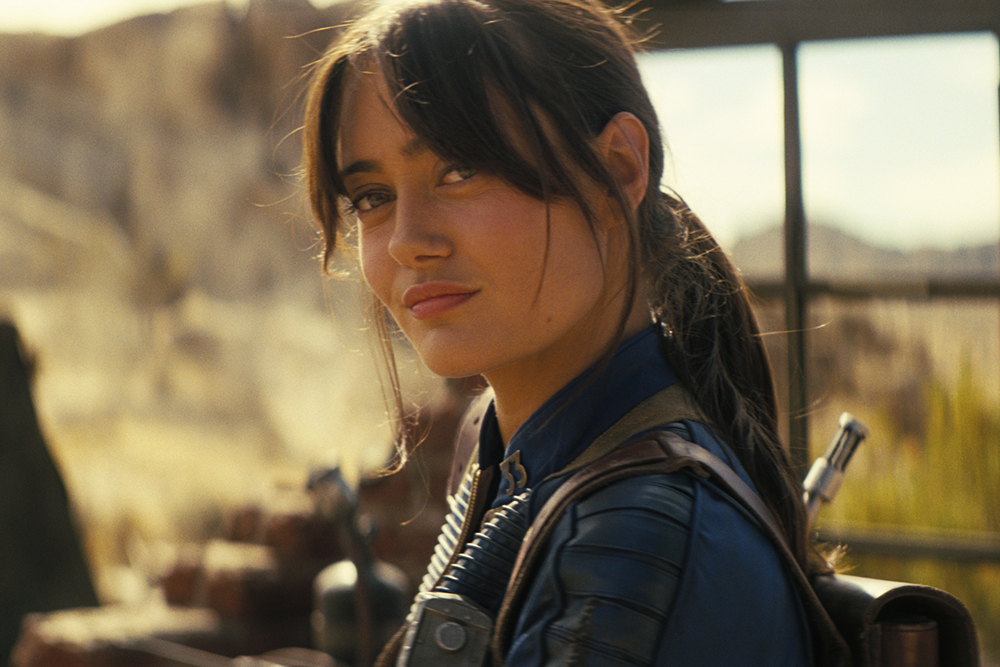
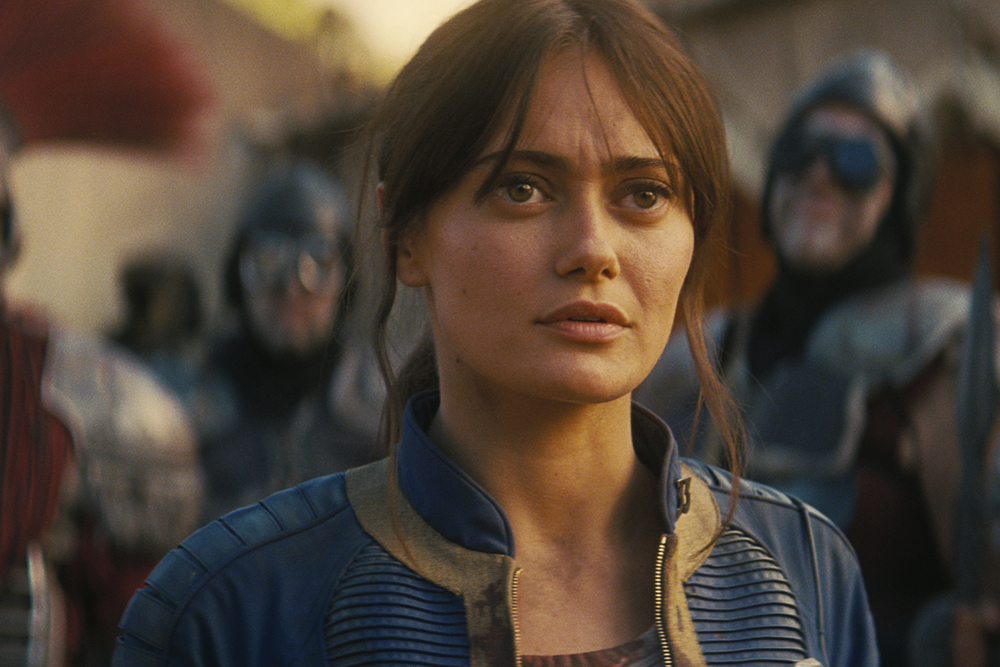
This road trip is carried, once again, by the incredible chemistry between Ella Purnell as Lucy MacLean and Walton Goggins as Cooper Howard, aka The Ghoul. What changes is the temperature: Lucy's okey-dokey optimism doesn't disappear, but it does alter on the surface, and Ella Purnell plays this change with a clever, almost imperceptible readjustment: her politeness turns into a weapon, her idealism into defiance. For his part, Walton Goggins dominates the season with a performance that is both meaner and sadder, and in a way funnier because he is so weary of everything. The series relies more on his inner duality: the gunslinger of today who sees empathy as a trap, and the man of the pre-war era who still believed in something before the world taught him otherwise. There are moments, especially when the camera lingers on his face in the midst of a threat, a joke, or a regret, when you can almost see the character's remaining humanity struggling against the “immortal” urge to give up. Their quarrels remain delightfully rhythmic, but what stands out is how they begin to borrow each other's philosophy of survival: Lucy learns when to point her gun and when to be serious; the Ghoul learns, against his will, that loyalty is not always a handicap.
The season's flagship expansion, New Vegas, also comes with its best new destabilizer: Justin Theroux as Robert House. He is presented with an oily confidence that screams classic villain of the genre, but Justin Theroux never fails to reveal a vulnerability and mythical fragility beneath his upturned mustache, as if the character were constantly seeking to be adored. His scenes bring a rare rhythm to the season; the series suddenly seems less aimless and more shark-centric. And when Walton Goggins and Justin Theroux finally share significant screen time, the series reaches one of its most electrifying and tense moments to date: two men representing two different types of apocalypse, the corporate architect and the human survivor, size each other up with a contempt that borders on admiration. Around them, Kyle MacLachlan revels in the role of Hank MacLean, now completely unmasked and reveling in the joyful villainy that the first season hinted at; he plays Hank's smugness as if it were armor, then lets small cracks appear at just the right moments. Frances Turner deepens the character of Barb Howard beyond the “cold executive,” making her less surprising and more ideological, with a beating heart, while the pre-war sequences use Ramin Djawadi's insistent musical punctuation to maintain a playful atmosphere even when the implications are monstrous.
Season 2 gives Moisés Arias a much larger and more prominent role as Norm MacLean, and honestly, it's one of the most satisfying developments of the season. His confrontation with Michael Esper as Bud Askins, the gloriously stupid and perfectly executed nightmare of a brain on a robot vacuum cleaner, becomes a dark little parable about corporate control and human refusal. Moisés Arias plays Norm as a quiet intellectual who becomes dangerous when he stops asking for permission, and the best moments of the season in the vaults are when he realizes that the plans are just another trap set by those who think they are the masters of the future. Back in Vault 33, Leslie Uggams as Betty Pearson holds the community together with a leadership style that is both warm and unyielding, while supporting characters (notably Dave Register as Chet MacLean and Annabel O'Hagan as Stephanie Harper) add paranoia and pressure without ever letting the Vault plot devolve into mere schoolwork. Even when the season drags, these underground scenes keep the moral decay tangible: the apocalypse isn't just the wasteland outside, it's also the corporate logic that continues to function as a program.
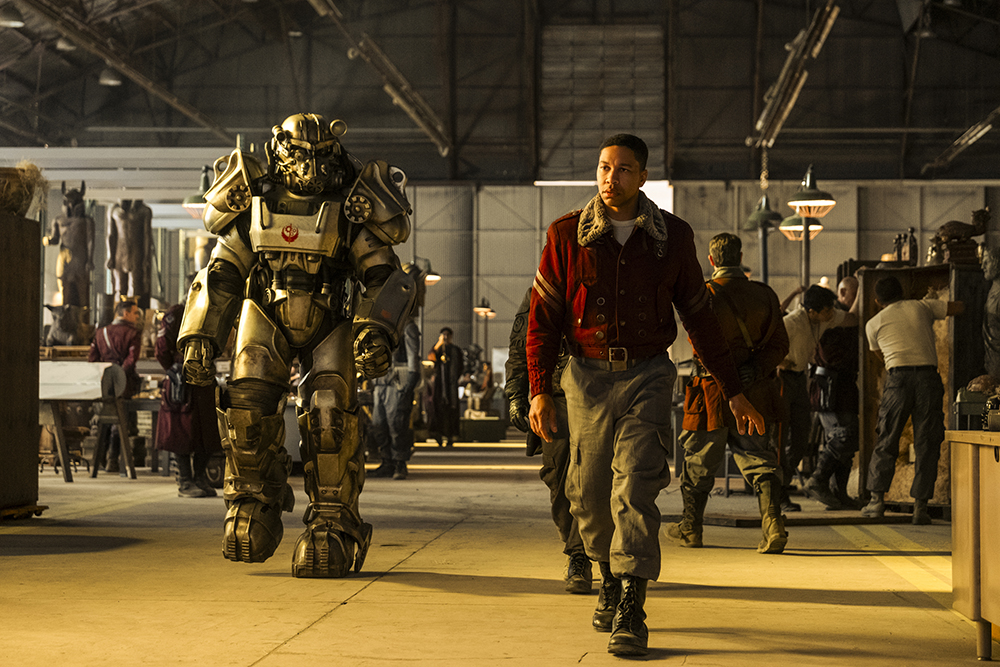
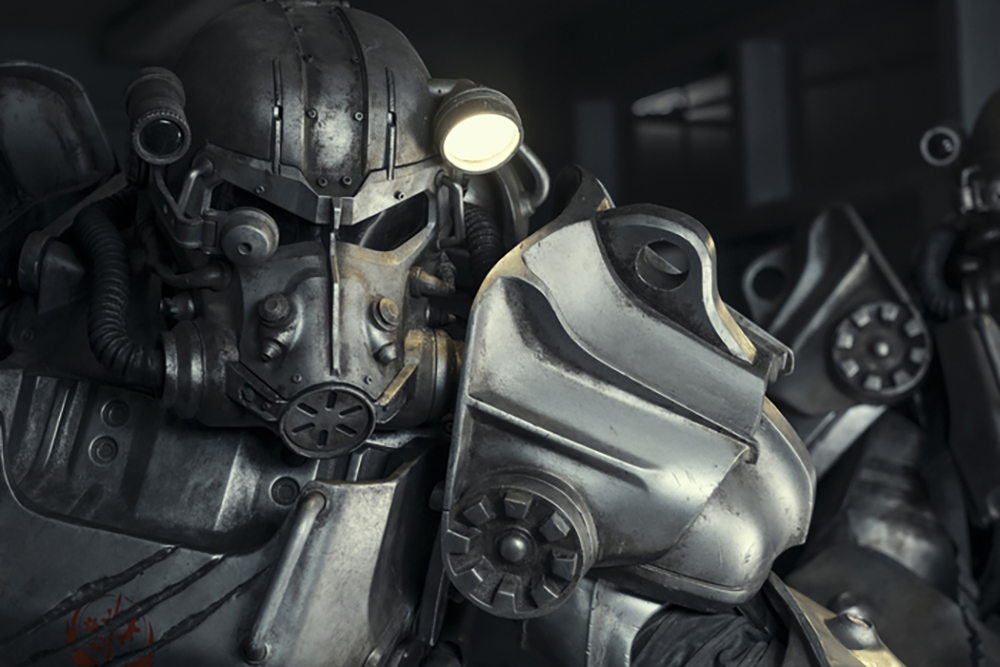
This breadth is the season's most obvious gamble, however, and it's where Season 2 sometimes stumbles in its own ambition. The series loves to jump from the chaos between Lucy and Ghoul to the intrigues in the vault, the politics of the Brotherhood, and the pre-war conspiracies, and sometimes it stops just as the plot finally takes off. Aaron Moten remains convincing as Maximus, particularly when the Brotherhood storyline veers into ritual, hypocrisy, and sectarian bureaucracy. His physical performance lends credibility to a man trying to pass himself off as a hero while feeling like an impostor. But his narrative arc may seem thinner compared to the emotional density given to Lucy, Norm, and Cooper; even when the season offers him a remarkable spectacle (yes, the energy of the jet hammer episode is very real), we feel that the writers are saving a more complete convergence for later. The guest stars help bring the universe to life: Kumail Nanjiani brings his arrogance and instability, Macaulay Culkin intrudes into the universe with a threat that steals the show, and the return of characters like Dallas Goldtooth and Sarita Choudhury keeps the series' social ecosystem strangely alive rather than purely functional. There are still moments when the show flirts with a mythology so heavy that it risks stifling the simplest pleasure it offers better than almost anyone else: the feeling of being thrown into a grotesque carnival and being told, Good luck. Try not to blow up.
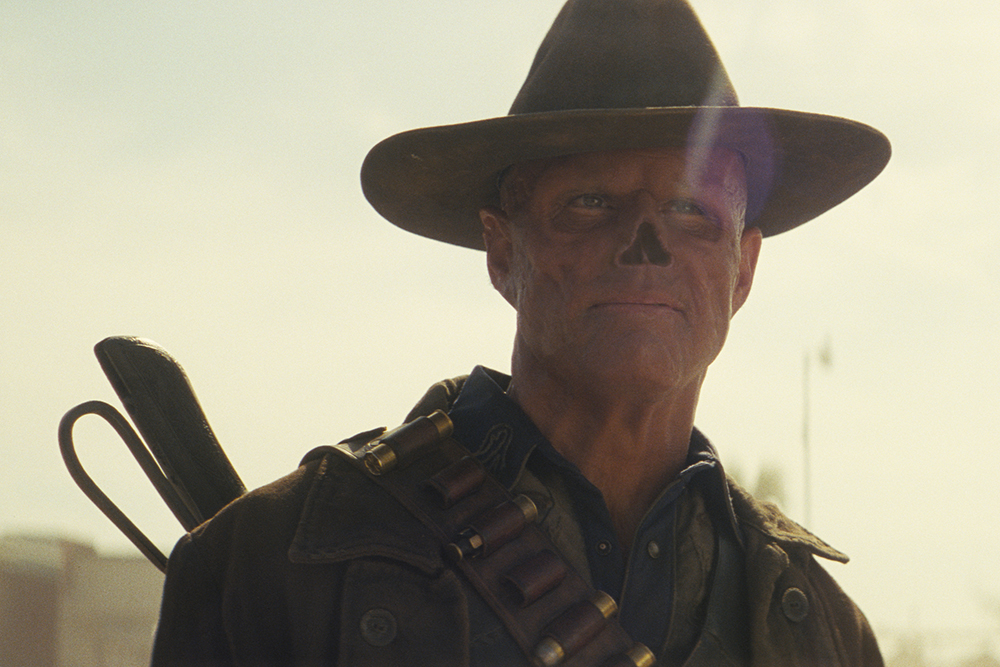
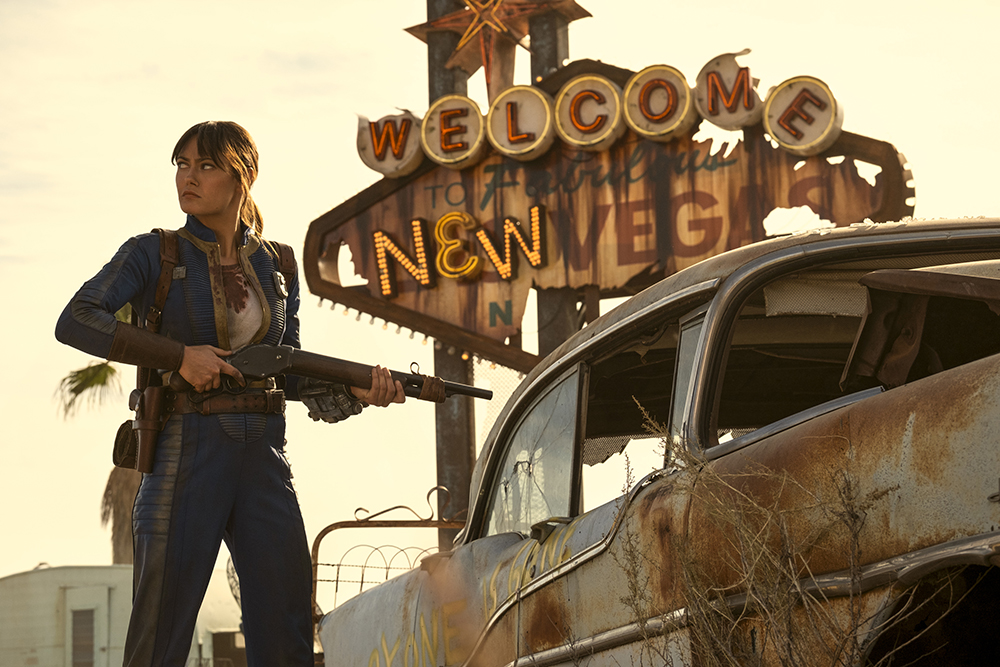
But when Season 2 is at its best, it is spectacularly at its best: Howard Cummings' art design remains absurdly rich, the construction of New Vegas has the tactile, sun-scorched grime of a place that has been ruined by history, and the series' tonal mastery remains its secret weapon. It can stage Scanners-worthy head explosions one minute, then switch to sincere emotion the next without feeling like two different shows stitched together, because this world is fundamentally built on contradiction: upbeat music over bodily horror, cheerful slogans over genocide, utopian marketing over apocalyptic calculations. The season isn't as structured as the first—some of its digressions feel set up, and weekly broadcasts highlight this unevenness more than binge-watching—but it also feels bolder, stranger, and more confident in what it wants to say: corporate power doesn't just survive the end of the world, it plans it, brands it, and sells you the commemorative lunch box. Season 2 deserves its place among the best television adaptations of video games, while feeling like a transitional chapter toward an even bigger showdown.
Synopsis Season 2 :
Fallout tells the story of the haves and have-nots in a world where there is almost nothing left to possess. Two hundred years after the apocalypse, the peaceful inhabitants of luxurious fallout shelters are forced to return to the irradiated hellscape their ancestors left behind. They are shocked to discover an incredibly complex, joyously strange, and extremely violent world awaiting them.
Fallout
Directed byJonathan Nolan, Daniel Gray Longino, Clare Kilner, Frederick E. O. Toye, Clare Kilner, Wayne Yip
Written by Geneva Robertson-Dworet, Graham Wagner, Kieran Fitzgerald, Carson Mell, Karey Dornetto, Chaz Hawkins, Gursimran Sandhu, Chris Brady-Denton, Jane Espenson, Owen Ellickson, Dave Hill
Created by Graham Wagner, Geneva Robertson-Dworet
Based on Fallout by Bethesda Softworks
Showrunners : Graham Wagner, Geneva Robertson-Dworet
Executive producers : Jonathan Nolan, Lisa Joy, Geneva Robertson-Dworet, Graham Wagner, Athena Wickham, Todd Howard, James Altman, Margot Lulick, James W. Skotchdopole, Frederick E. O. Toye
Producers : Crystal Whelan, Halle Phillips, Gursimran Sandhu, Jake Bender, Zach Dunn
Starring Ella Purnell, Aaron Moten, Kyle MacLachlan, Moisés Arias, Xelia Mendes-Jones, Walton Goggins, Frances Turner
Cinematography : Stuart Dryburgh, Teodoro Maniaci, Jonathan Freeman
Edited by Ali Comperchio
Music by Ramin Djawadi
Production companies : Kilter Films, Big Indie Pictures, Bethesda Game Studios, Amazon MGM Studios Network, Amazon Prime Video
Release April 10, 2024 – Present
Running time : 45–74 minutes
Copyright Amazon Content Services LLC
Score : 4/5