
 English
HBO max - It: Welcome to Derry – Bill Skarsgård On returning to Pennywise
By Mulder, 08 december 2025
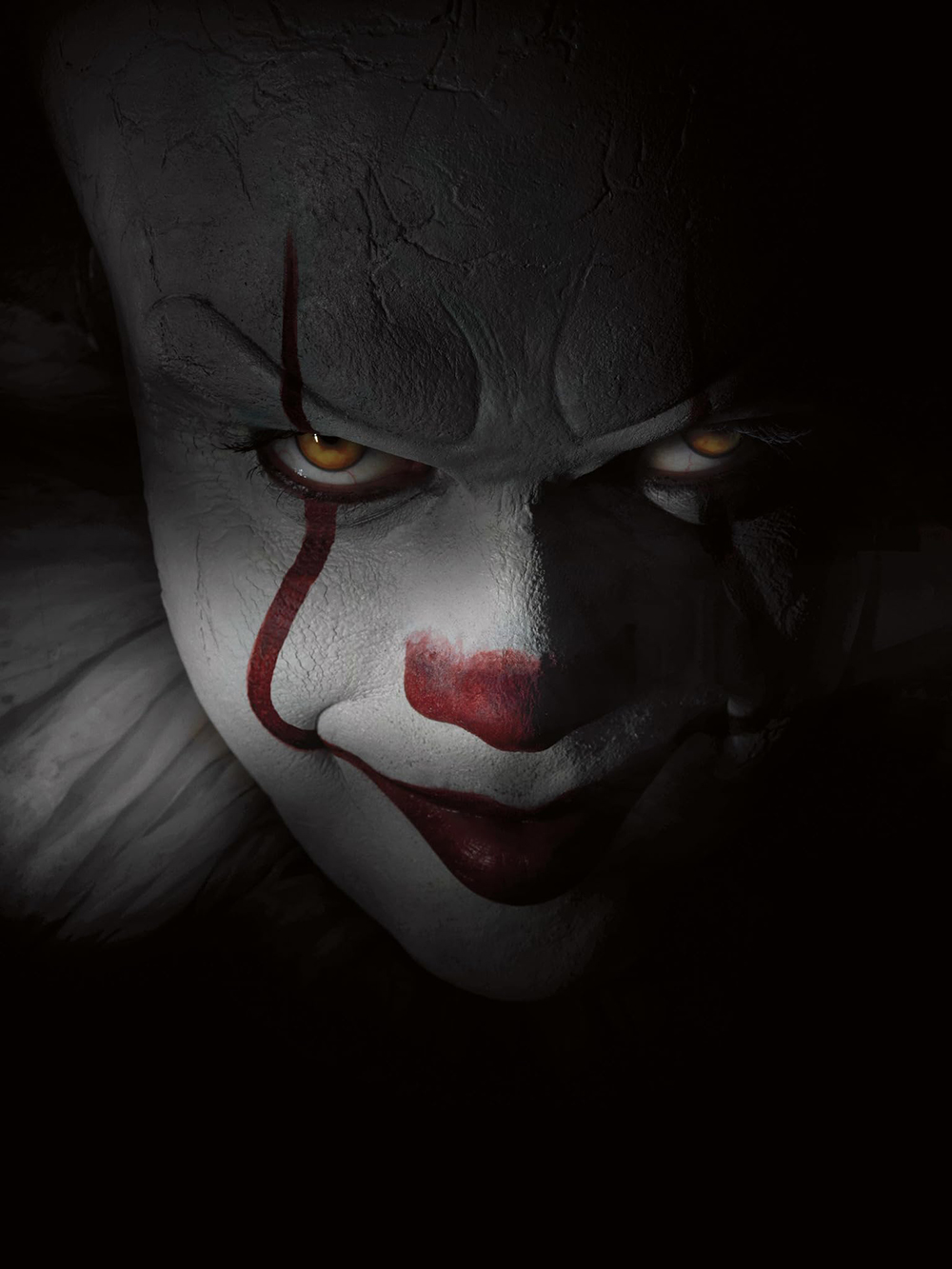
Set decades before the events of It and It Chapter Two, It: Welcome to Derry dives back into the cursed town that first haunted Stephen King’s pages, expanding the mythology through a chilling new story set in 1962. Developed by Andy Muschietti, Barbara Muschietti, and Jason Fuchs, the HBO series explores the early rumblings of the evil that will one day become legend, while also teasing the deeper origins of Pennywise across three planned seasons. With production spanning several hurdles—including the 2023 strikes—and a cast led by Taylour Paige, Jovan Adepo, and Chris Chalk, the show has already struck a nerve with fans and critics alike. And at the center of this return to Derry is, of course, Bill Skarsgård, reprising his iconic role as Pennywise and stepping behind the camera as an executive producer. We sit down with him to explore how he approached revisiting one of horror’s most unforgettable characters.
Q : You’ve talked about the intensity of playing Pennywise the Dancing Clown. What is it like having come back to him a few years later for It: Chapter Two and now a few more years further for Welcome to Derry ?
Bill Skarsgård : I had the experience when I went in to do the second film where I was worried the character wouldn't be that accessible to me—but he was immediately. And the same thing was true for the show. I know the character very well, so everything just came back. He is the way he is! When I enter the state of Pennywise, I feel free to sort of improvise and do things that are in line with that character. It's quite easy to slip into him and out of him. It's quite rare. I've never been a part of a character that you get to revisit so many times. God, it's been what… Nine years since we did the first movie?
Q : Do you feel a mix of apprehension and dread, or is it exciting and even fun to cut loose as Pennywise ? Or is it a mix of both ?
Bill Skarsgård : That’s a hard one to answer. Going into doing the show, there was nothing that worried me about the character. There's not much apprehension. The big deep-dive into the psychology of Pennywise happened in the formation of him, and that I've already done. So this was just kind of jumping back in. I loved seeing Andy and Barbara Muschietti again. I just kind of showed up to … clown around. [Laughs.]
Q : IT: Welcome to Derry showed It in many other forms for the first few episodes, but held back on the return of the Pennywise form until Episode 5, “29 Neibolt Street.” That’s when the lost boy Matty (Miles Ekhardt) metamorphoses into the clown after leading his young friends into the creature’s lair. Was that your first scene on the series, or did you shoot other parts first ?
Bill Skarsgård : No, it actually was the first thing that I shot on the show, spinning around—the pole dancing scene. [Laughs.] That was the first time he appeared on the show, and that was the first thing that we did. As soon as the camera was rolling, it was fun.
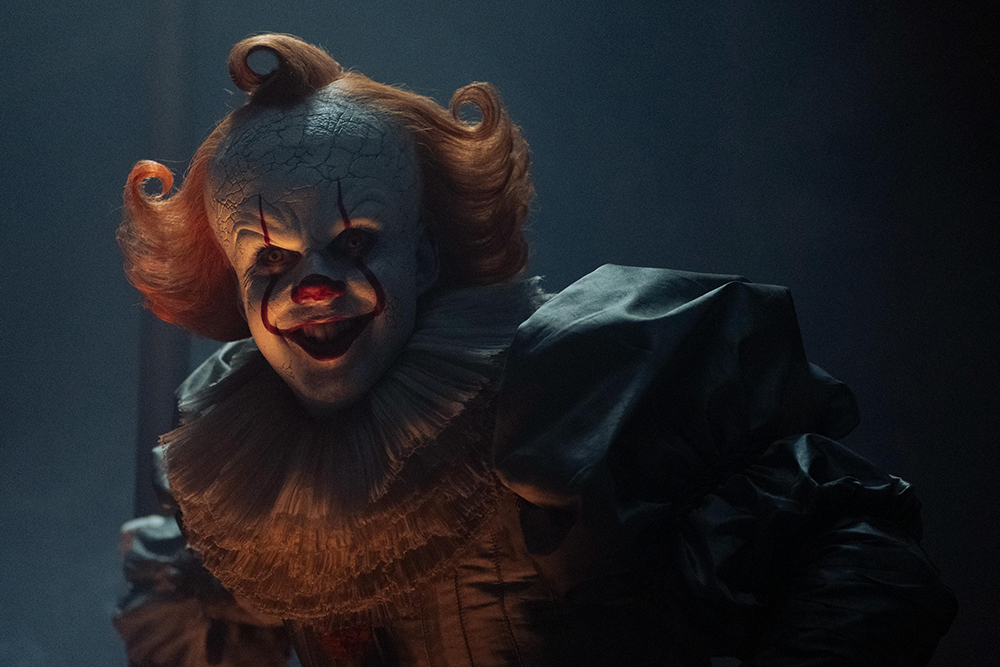
Q : Are you working with many of the same behind the scenes people as you did on the movies ?
Bill Skarsgård : It is the same guys, like Sean Sansom and Shane Zander, who do the prosthetics back in Toronto. A lot of the same crew. It was kind of sweet to see everybody after the success of the first two movies, but also after everything that's happened in one's life. It's been quite a few years, maybe six or seven since we wrapped the second film. I didn't have this kind of big feeling of like, “Oh my God, I'm back as Pennywise.” It was more everything around it that felt surreal at times. You're like, has any time gone by? Am I still stuck here in the sewers?
Q : Andy Muschietti directed the episodes that have most of the major sequences with Pennywise, but did you end up working with other series directors on the parts you did in their episodes ?
Bill Skarsgård : In other episodes that he didn't direct, he would come in and direct me. And that was good. I'm not sure how comfortable I would've been doing it with someone else. Pennywise feels a bit like me and Andy's
baby, so I'm not so sure how I want to share that with someone else.
Q : Andy says you two discussed the possibility of continuing the story while making It: Chapter Two, and that you were very interested in Bob Gray, the human identity Pennywise sometimes claims he has in Stephen King’s novel.
Bill Skarsgård : I remember we had a lot of conversations when we were doing the second film about, okay, how would you do a third installment? And a lot of what came up is not exactly what the show is, but there's remnants of it. I had the idea to do a third feature that would be very different tonally to the two movies. It was this interesting kind of prequel origin story, about the man behind the mask. The man who Pennywise takes—and eats—and takes the shape of, which is Bob Gray. That was something we had flirted with in the second movie. That was a completely different guy that we sort of got to do in the show.
Q : In Episode 6, “Daddy’s Little Girl,” we see Mrs. Kersh encounter the It entity by using a little girl from the Juniper Hill mental hospital as bait. She recognizes this clown as her missing father, but we don’t yet know who Bob Gray really was. Tell us about playing Pennywise in this scene. He has a moment of what looks like confusion when she isn’t immediately afraid of him.
Bill Skarsgård : The flashback scene was fun because that was a thing that happened in the moment. He realizes who she is and the fact that she could be useful to him, that's like, “Huh …? Oooooh!” And then he started to laugh. I think it’s important that he wasn't wanting to be sweet to her. It is just a calculating creature that goes, “Ooh, now I know who she is. And she can be useful to me!” That's that little moment you’re referring to in that episode.
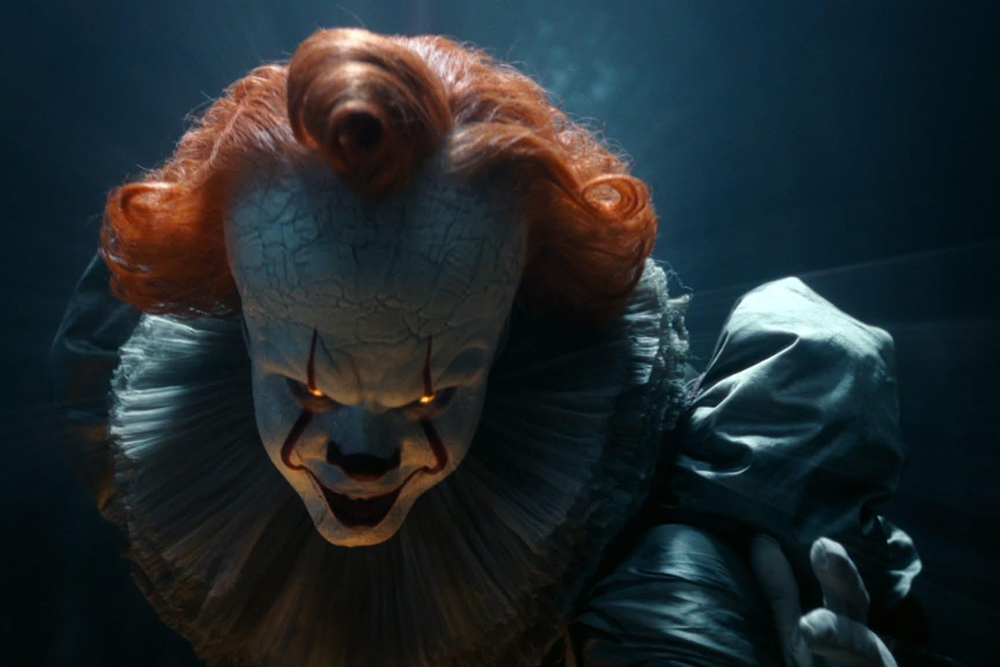
Q : We get to see the real Bob Gray in Episode 7, “The Black Spot,” working as a performer in the traveling carnival that visits Derry in 1908. How much leeway did you have in how you depicted him? Obviously he's going to have your face because It is copying this person, but the hair, the voice, the physicality, is all very different.
Bill Skarsgård : I don't think he looks a lot like me! There's a photo of Bob Gray in the movies, so we did the prosthetic piece with this kind of giant bald head and fake eyebrows for that photo. In the show, we kept the same look for the Bob Gray flashbacks. In the second movie, there's a scene where Pennywise is kind of painting the makeup with blood as Bob Gray. So we'd peeked at him, but you'd never seen the real guy. You've always seen either a picture, or It being Bob Gray to scare someone.
Q: IT: Welcome to Derry reveals that Bob Gray isn’t malevolent. He’s a sad-sack. He has a young daughter, who later becomes Mrs. Kersh, and he has some genuinely caring moments with her as she prepares her own clown costume, as Periwinkle, the role her late mother used to play.
Bill Skarsgård : It was written in this scene like, “Oh, he's such a sweet father.” He was this innocent, sweet man who lost his wife. I'm sure he loves his daughter, but I just didn't want it to be this kind of simplified, reduced version of a human being. He's this alcoholic, and I think he's really miserable because at one point in his life, he was at the big circus, the big tent, and now he's just reduced to this traveling carnival. So he's not very happy where he is. He has his daughter, but he lost his wife and he drinks way too much. There's just something funny about how sardonic and bitter he could be, even though we only had a few scenes to do it. It's something different. It's not Pennywise.
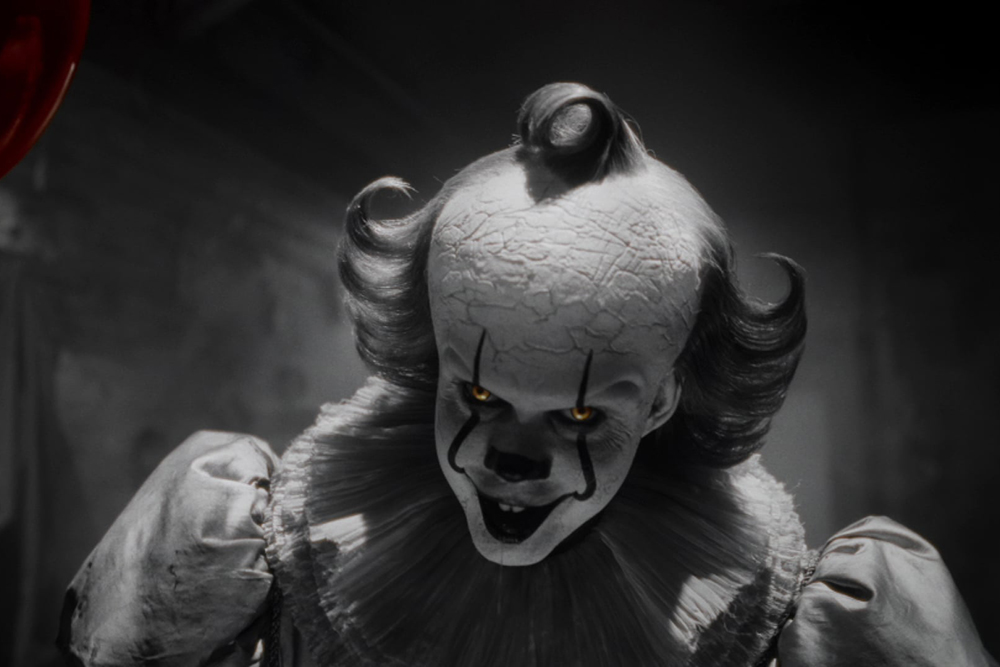
Q : In Episode 7’s 1908 flashback, we even see the stage act that captures the attention of It, who is watching from a nearby barn in the form of an ominous little boy.
Bill Skarsgård : It was really quite interesting to perform Bob Gray performing Pennywise. I was like, “How do you do the human version of the clown?” It’s not the demonic thing, but what the demonic thing emulates.
Q : It's a surprise when you open the stage door and this new face pops out that has the familiar makeup, but you can see the line of the bald cap. It's almost like a “Spirit Halloween” version of Pennywise.
Bill Skarsgård : It's the early 1900s, so it's like this kind of Vaudeville mimicry. I had fun with that. I just didn't feel like I'd entirely figured out the Bob Gray character. Then I was like, “Okay, now I'm playing Bob Gray.” But Bob Gray is playing Pennywise, which is his clown performance. So there were layers to it. The more layers you add to a performance, the further away from yourself you're going to get.
Q : He actually was a pretty funny clown. There’s not much sinister about his act. It’s a real show for kids.
Bill Skarsgård : That whole thing was choreographed and written into sequence. Yeah, there's something kind of sweet there. I think Bob Gray is an artist who uses his life as entertainment. So there's the sadness of him losing his wife in this quite bizarre little clown performance. But the kids seem to like it, and that was the point. The whole point is that the entity of It is seeing kids being drawn to this clown, and the entity finds that useful.
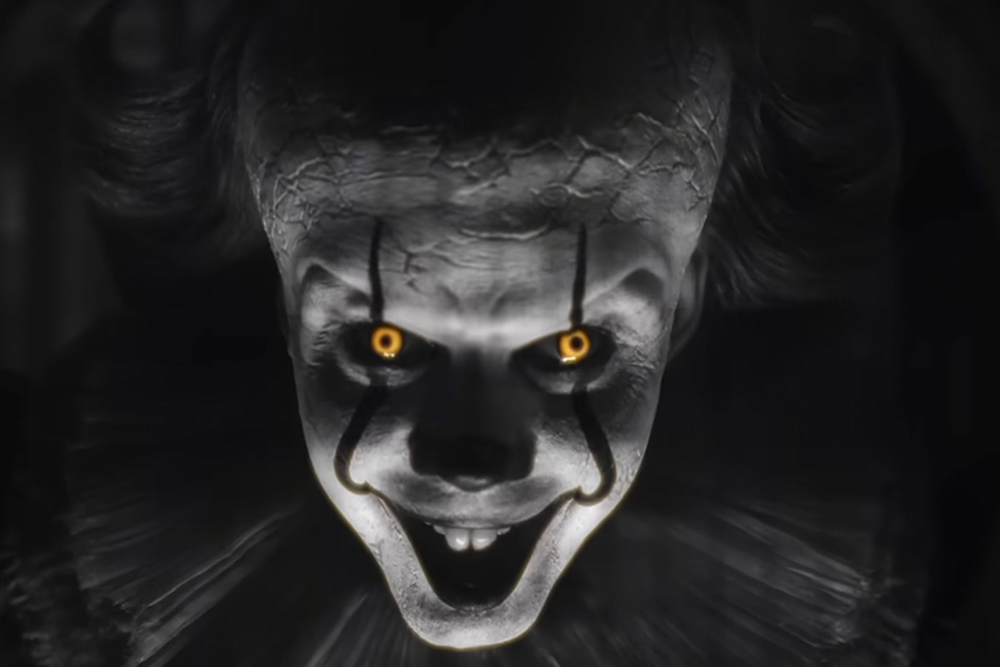
Q : At the end of his show, Bob Gray turns and smiles at the audience, and it’s just a regular smile. But the little woodland creature puppet beside him also turns … and it has the two extra large teeth of It’s version of Pennywise.
Bill Skarsgård : That is intentional! It's intentional that the gopher has yellow eyes and buck teeth. The entity of It is incorporating the gopher and the man. That's right.
Q : Can you tell me about the voice of Bob Gray? Because he has a very distinctive way of speaking. a very musical rise and fall. He calls to mind W.C. Fields.
Bill Skarsgård : There was something about the period that I thought, “Okay, you can go somewhere with this.” When I had the look of that guy, I knew I needed to fill out this face with a voice, and that's kind of what came out. It's my attempt at being old-timey. Who knows what his background really is, but he's from a bygone era and he's very dry, and he smokes a lot of cigarettes. That just bubbled up into how he sounded.
Q : It approaches him that night in the form of the creepy little boy, trying to lure him away into the woods. Bob Gray is having a smoke and a drink and in his irascible way, tells the kid: “Can't you see how busy I am?” It's a great brush off.
Bill Skarsgård : I did have fun with the Bob Gray character, especially in that scene with the little boy. It was written more like: Bob Gray's very concerned about this child that appears, and he goes into the woods. “Oh, I'll help you …” But I'm like, there's no way. This guy does not particularly like kids at all. He's on his break, he's drinking whiskey, he's smoking, and at the time of the early 1900s, I don't think adults were known to be very nice to strange homeless looking children. Of all the scenes that are in the show, that one is the one that made me laugh the most in terms of the performance. I found Bob Gray fairly amusing.
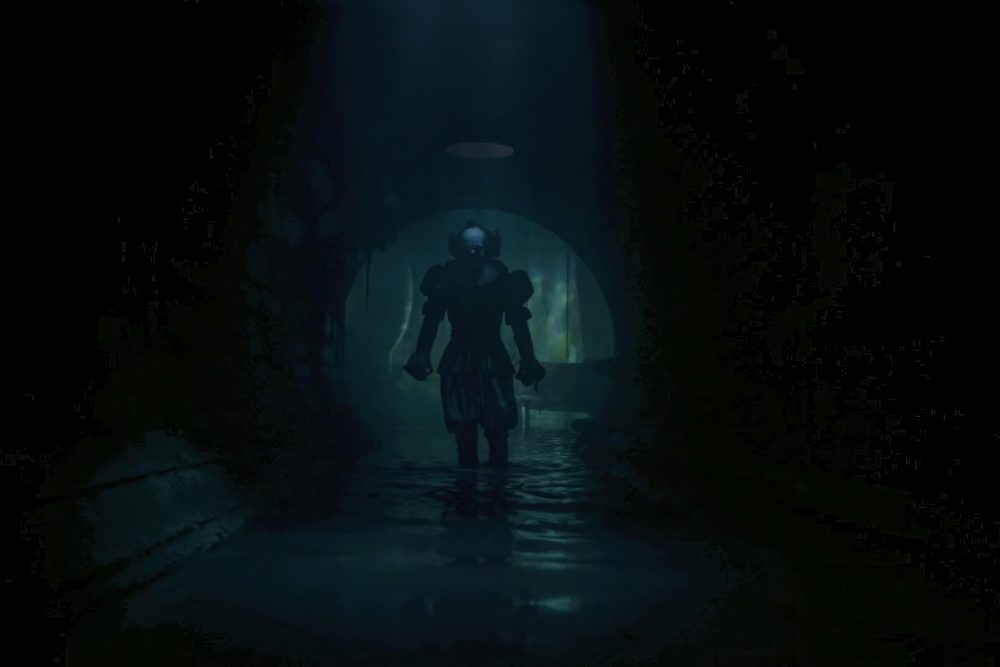
Q : After the burning of The Black Spot, It has another encounter with Madeleine Stowe as Mrs. Kersh, this time decades after she saw him in the hospital. She’s dressed in her full-on Periwinkle clown costume and still thinks he is her lost father. But this time It doesn’t lead her on.
Bill Skarsgård : It is at a point where Pennywise feels like she's been useful to him, but now he doesn't care anymore, and he becomes very vicious to her in revealing the fact that … [laughs] he ate her father. That was really fun.
Q : At the end of Episode 7, Pennywise goes dormant for another 27 years, but he is awakened prematurely when the metaphysical gate that binds him within Derry is unlocked. He rises from his pool, and everything below his nose is dyed crimson red from the blood he was soaking in. Was there a reason to give him this bifurcated new look ?
Bill Skarsgård : Andy wanted to create a visual of Pennywise that is different and unique from the movies. And that was it. There's other subtle differences. He looks a little bit more period. The wig is different. The wardrobe is essentially the same, but when he is forced awake again from going back into hibernation, he comes back completely red. So if you want to dress up for Halloween as the show's Pennywise, you're going to be colored down from here [points at upper lip] in red. “Okay, so I see you're from Welcome to Derry and not It: Chapter One or Two.
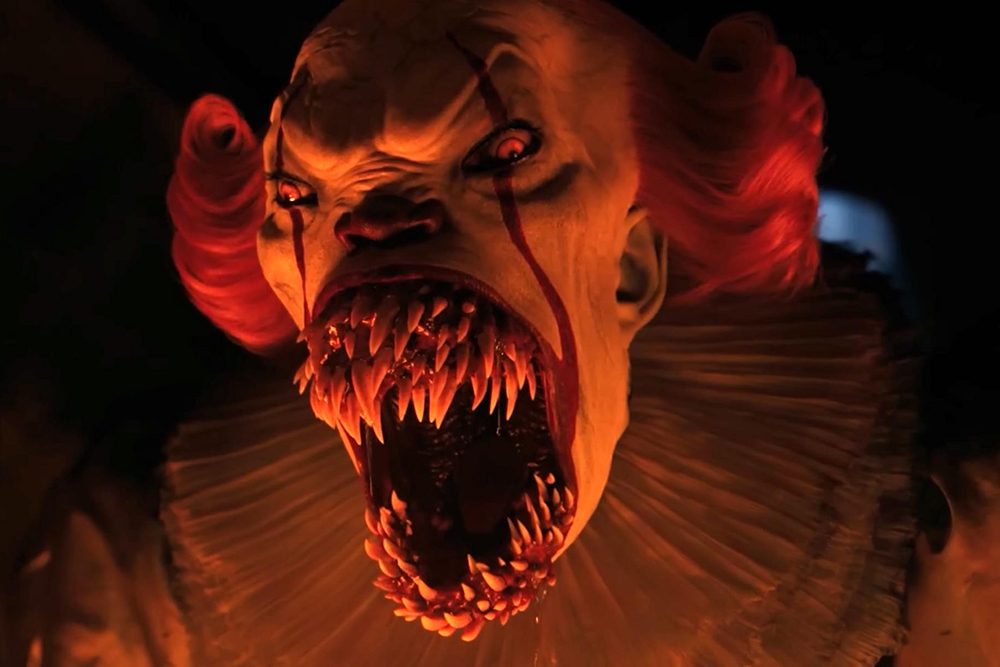
Q : Some people seem to forget that It is not actually the clown, but a formless, shape-shifting presence. Why do you think It favors the Pennywise identity so much ?
Bill Skarsgård : In the book, Stephen King writes that Pennywise was his “favorite” form. It's not his true form. I'm not so sure that the spider thing is his true form either. Pennywise is, for sure, something that he really enjoys. It's just the most evil kind of bully. That’s what he thinks is the most fun. I always wanted to have an animalistic thing about him, this thing that just needs to feed. But there's also this kind of really twisted prankster. You could see some of that in the show as well. And those things are fun to play.
Q : It is infinite, eternal, and kind of alone. It's not a human, so it doesn’t have a psychology that we would necessarily be able to wrap our own minds around. But is that part of what makes this strange monster tick—a desire to stir things up and cause havoc because … It is bored and wants to be entertained ?
Bill Skarsgård : That is true as well. I think that It is very childlike. There is a chapter in the book where it's told through the perspective of It in first person, and it just reads like an angry child who just wants to eat and sleep. The heart and the soul of the book, and the films, and the show is: it's about kids. It's about growing up, and it's about changing into adulthood. And Pennywise is in line with them in that regard, because he's also a child. He uses children because they have the most imagination and they're easily scared and the fear aspect of it, but he's kind of a child as well. It is just the worst bully imaginable. That is something that I use a lot in the performance. It's just like … he laughs. He laughs at you. He’s a sick bastard.
Swedish actor Bill Istvan Günther Skarsgård has built one of the most fascinating careers in contemporary genre cinema, moving with ease between intimate character work and some of the most unforgettable screen monsters of the last decade. Revealed to international audiences with Simple Simon and the Netflix series Hemlock Grove, he truly exploded into popular culture as Pennywise the Dancing Clown in It (2017) and It Chapter Two (2019), a role he now revisits in the television prequel It: Welcome to Derry, while also embodying another iconic nightmare figure as Count Orlok in Robert Eggers’ Nosferatu (2024). Often described as a “creature actor” for the intensity and physicality he brings to non-human and villainous roles, Bill Skarsgård has also left his mark in projects such as Castle Rock, Deadpool 2, Eternals, John Wick: Chapter 4, Boy Kills World and The Crow, helping the films he appears in accumulate more than $1.8 billion at the worldwide box office. Winner of several prizes including a Satellite Award and a Berlinale Award, he continues to push himself into darker, more complex territories, approaching each character with a mix of playfulness and deep psychological commitment that makes his performances impossible to ignore.
Synopsis:
Strange events unfold in the town of Derry in the 1960s, involving Pennywise the clown, a mysterious character who haunts Derry.
It: Welcome to Derry
Directed by Andy Muschietti
Showrunners: Jason Fuchs, Brad Caleb Kane
Executive producers: Jason Fuchs, Brad Caleb Kane, Andy Muschietti, Barbara Muschietti, Shelley Meals, Roy Lee, Dan Lin, Bill Skarsgård
Producers: Lyn Lucibellon Sarah Rath
Written by Jason Fuchs, Austin Guzman, Guadalis Del Carmen, Gabe Hobson, Helen Shang, Brad Caleb Kane, Cord Jefferson, Brad Caleb Kane
Based on characters created by Stephen King
Developed by Andy Muschietti, Barbara Muschietti, Jason Fuchs
Starring Taylour Paige, Jovan Adepo, Blake Cameron James, Chris Chalk, James Remar, Stephen Rider, Madeleine Stowe, Rudy Mancuso, Clara Stack, Amanda Christine, Mikkal Karim-Fidler, Bill Skarsgård
Director of photography: Rasmus Heise
Editing: Esther Sokolow, Glenn Garland, Matthew V. Colonna
Editing: (under the name Matthew V. Ace Colonna) / (under the name Matthew Colonn
Music: Benjamin Wallfisch
Production companies: HBO, Warner Bros. Television, Double Dream, FiveTen Productions
Release dates: October 2, 2025 (United States),
Running time: 8 episodes
Photos : Copyright Warner Bros