
 English
Movies - Avatar: Fire and Ash – How Simon Franglen Crafted the Most Emotionally Charged Score of the Avatar Series
By Mulder, 30 november 2025
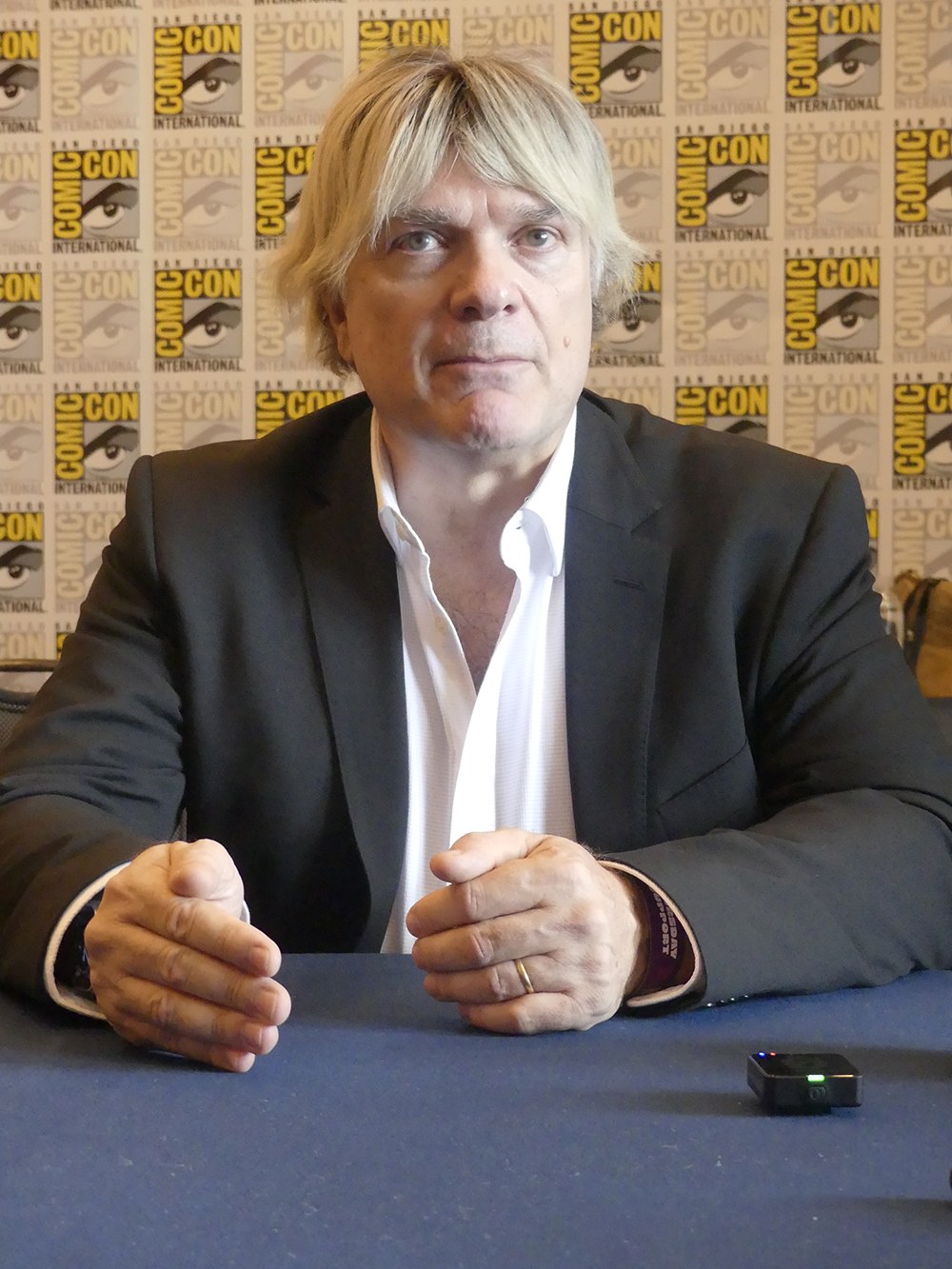
Long before James Cameron unveiled the official footage of Avatar: Fire and Ash, or before the franchise’s third chapter even became a daily obsession for science-fiction fans, composer Simon Franglen was quietly shaping the emotional backbone of one of the most ambitious cinematic universes ever conceived. Our encounter with him on July 24 at San Diego Comic-Con just after the 11th edition of the Musical Anatomy of a Superhero panel remains one of those rare moments where you feel the room shift. Not because the press room was buzzing (it always is at SDCC), but because Simon Franglen, with his calm precision and generous storytelling, radiates a sense of someone who has lived several musical lives. He spoke to us about his long-term partnership with James Cameron, the legacy of James Horner, and his evolving relationship with Pandora. There was something beautifully grounded in how he described scoring such a colossal film, as if navigating floating mountains and bioluminescent jungles were just another day at the studio.
Born in England and forged in recording studios that defined entire eras of pop and film music, Simon Franglen earned his stripes under the guidance of giants. From his early work with Trevor Horn, programming the legendary Synclavier, to shaping soundscapes for artists like Whitney Houston, Celine Dion, Michael Jackson, Madonna, and Barbra Streisand, his fingerprints are all over the soundtrack of our collective memory. His engineering and production portfolio alone would be enough for most lifetimes—four top-grossing films, six of the best-selling albums ever, and hundreds of album credits—but what truly stands out is the emotional intelligence of his craft. Whether producing “My Heart Will Go On” for Titanic (which earned him a Grammy), arranging for David Fincher’s Seven, or handling electronic textures for Alan Silvestri, John Barry, and Howard Shore, his versatility is astonishing. During our SDCC conversation, he reminisced about his early days in Los Angeles when Humberto Gatica nudged him into the American studio scene—one of those career detours that ends up shaping the industry for decades.
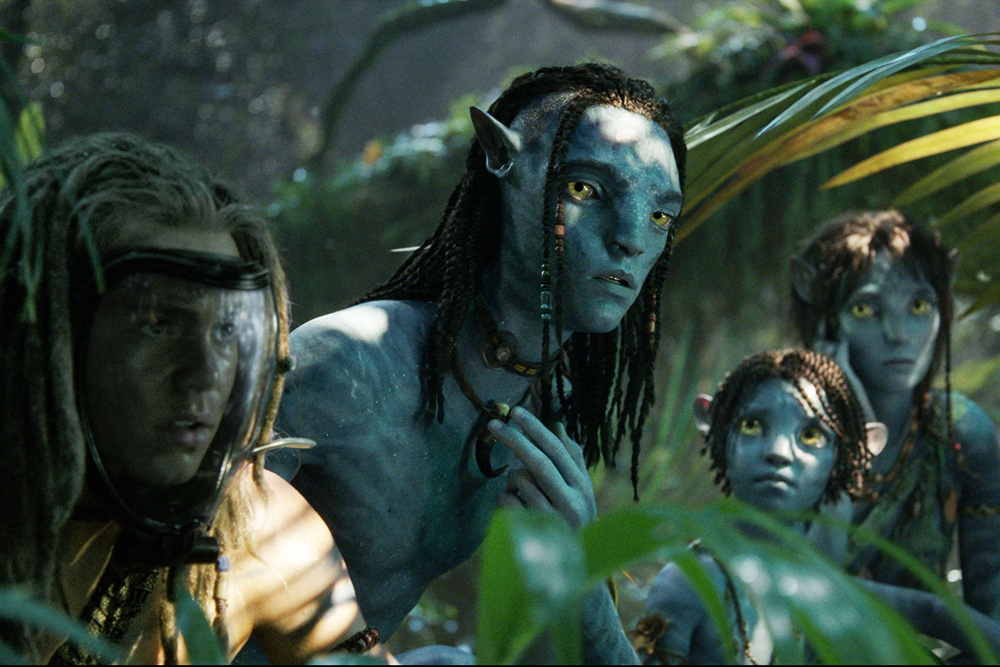
His deep bond with James Horner, which began on Titanic and flourished during the years leading up to the first Avatar, continues to permeate his work. When James Horner passed away in 2015, Simon Franglen became not only the custodian of the Avatar musical identity but also the torchbearer of a friendship built through shared artistic devotion. Completing The Magnificent Seven with Horner’s material, composing immersive orchestral works in Shanghai, collaborating with Pink Floyd, and shaping the musical world of Pandora’s theme park attractions—each milestone is marked by the quiet determination of someone who sees music not as a job, but as a responsibility. By the time he stepped fully into the role of composer for Avatar: The Way of Water and later Avatar: Fire and Ash, his artistic DNA was already interwoven with the saga’s emotional center.
As Avatar: Fire and Ash prepares to ignite the Dolby Theatre on December 1, 2025, James Cameron’s epic returns with even greater narrative ambition. The film, co-written by James Cameron, Rick Jaffa, and Amanda Silver, and based on a story crafted alongside Josh Friedman and Shane Salerno, stands as the franchise’s most emotionally charged chapter yet. Continuing from the grief left after Neteyam’s death, the Sully family now confronts the Ash People—a volatile Na’vi tribe led by the fierce and enigmatic Varang. This story’s foundations were set years ago, when Cameron realized the material was too expansive for The Way of Water alone. In pure Cameron fashion, the decision wasn’t to cut—never that—but to expand, splitting the narrative to give characters, cultures, and emotional arcs room to breathe. As he told the press more than once, the third film marks a “hard left turn,” one of those narrative choices that surprises even the cast.

And no surprise indeed: Avatar: Fire and Ash took shape over years of writing, multiple technological breakthroughs, and one of the longest continuous productions in Hollywood history. Filming began as early as 2017 in New Zealand, with motion-capture work interwoven between The Way of Water and this new chapter. Live-action sequences followed in 2019 until the pandemic forced one of the most high-profile shutdowns of the decade. It remains almost mythical that James Cameron and producer Jon Landau were among the first major creative teams allowed back into New Zealand under special exemptions. James Cameron’s reflection on those days 95% of the film is done felt at once confident and exhausted, a testament to the sheer willpower required to shepherd such an enormous project through global chaos. Even as late as early 2024, pick-up shoots were still happening, with James Cameron fine-tuning scenes involving Toruk and integrating new visual layers now made possible by more advanced technology.
The film’s cast returns in full force: Sam Worthington, Zoe Saldaña, Sigourney Weaver, Stephen Lang, Kate Winslet, and a long list of franchise icons. The introduction of new tribes, new Na’vi cultures, and the Wind Traders—those nomadic, sky-roaming caravans that evoke Silk Road mystique—signals James Cameron’s desire to push Pandora’s world-building far beyond the idyllic forests and ocean reefs we’ve seen before. James Cameron himself has insisted that this film’s biggest evolution lies not in its technology but in its emotional depth. The Ash People, neither villains nor heroes, challenge the simplistic paradigm that defined earlier films. Even the returning human antagonist Stephen Lang’s Colonel Quaritch finds himself navigating new layers of conflict as he confronts fiery Na’vi warriors like Varang.
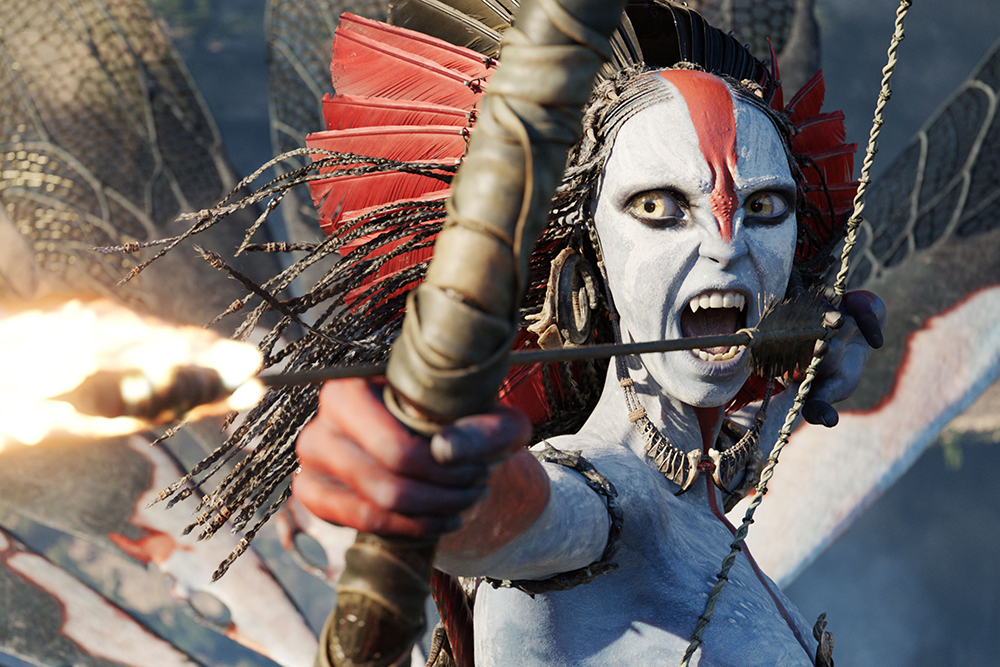
As for its music, Avatar: Fire and Ash represents a new pinnacle for Simon Franglen, whose score reportedly harnesses both the mournful weight of loss and the blistering energy of tribal conflict. The film’s musical tapestry extends from soaring orchestral lines reminiscent of his work with James Horner to more experimental textures inspired by Na’vi culture. At SDCC, he described how the Ash People’s sonic identity demanded something radically different—something rooted in fire, rhythm, and ritual. The previews hint at layered choral passages, pounding percussions, and a sense of spiritual urgency that pushes the Avatar soundscape into darker, richer territories. The addition of an original song, “Dream as One,” by Miley Cyrus, co-written with Mark Ronson and Andrew Wyatt, adds a contemporary emotional counterpoint—exactly the kind of collaboration that feels destined to echo across award seasons. And with a runtime reaching 197 minutes, Franglen’s score will have room to breathe, evolve, and carve its place alongside the best contributions to modern blockbuster cinema.
The film’s promotional journey leading up to its release has been a spectacle in itself. The teaser trailer, dropped exclusively in theaters alongside Fantastic Four: First Steps, reminded audiences why James Cameron’s visual worlds remain unmatched. The theatrical trailer, released on September 25, only amplified the anticipation, especially as fans dissected the brief glimpses of the Windtraders and the raw ferocity of the Ash People. The re-release of Avatar: The Way of Water with rotating mid-credits scenes from Avatar: Fire and Ash either a confrontation between Quaritch and Varang, a family-focused Windtrader sequence, or an aerial ambush felt like a masterclass in marketing, perfectly engineered to reignite global fascination with Pandora.
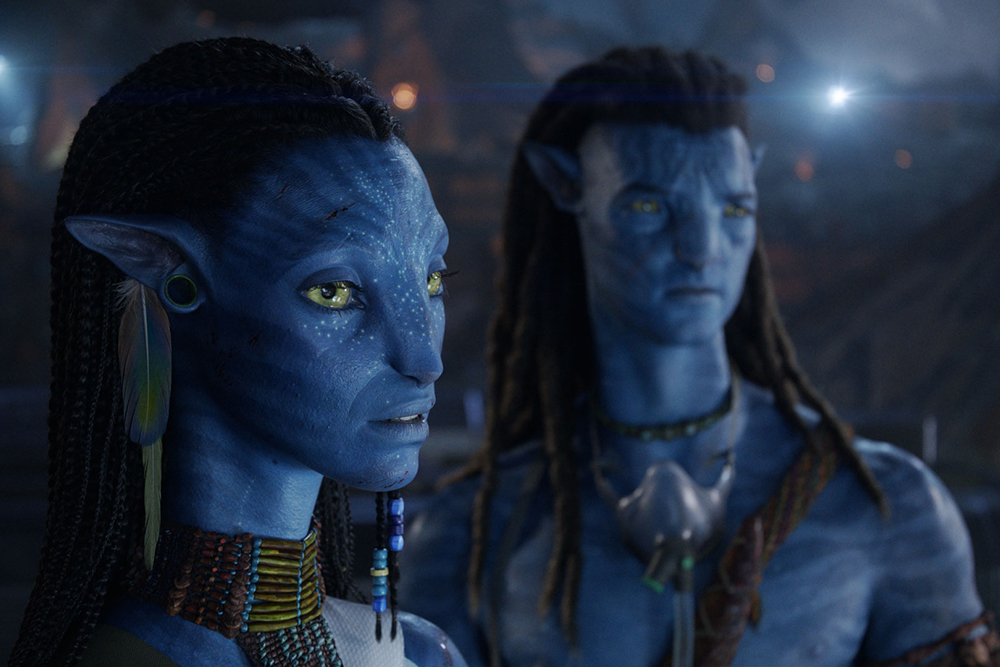
Among all these moving parts, Simon Franglen remains the quiet force giving the film its soul. His sensitivity to character, his profound respect for James Horner, and his instinct for blending electronic detail with orchestral sweep make him not just a successor but a guardian of the Avatar musical lineage. During our SDCC conversation, he mentioned how he still carries James Horner’s teachings with him—an anecdote that brought a hush to the table. It felt like watching an artist hold a legacy in one hand while fearlessly crafting his own in the other. For a saga that often feels larger than life, it’s remarkable how much of its emotional truth is held in the hands of one composer whose greatest strength might just be his humility.
Avatar: Fire and Ash arrives on December 19, 2025, distributed by 20th Century Studios and The Walt Disney Company France. With cinematography by Russell Carpenter, editing by a powerhouse team including Stephen E. Rivkin, David Brenner, Nicolas de Toth, John Refoua, Jason Gaudio, and James Cameron himself, and production under James Cameron and Jon Landau, this third chapter stands as both a tribute to its past and a leap into its future. And thanks to the artistry of Simon Franglen, its emotional resonance may very well become one of the most enduring components of the saga.

Synopsis :
The family of Jake Sully and Neytiri is still grappling with the grief caused by Neteyam's death. They encounter a new aggressive Na'vi tribe, the Ash People, led by the fiery Varang, as the conflict on Pandora intensifies.
Avatar: Fire and Ash
Directed by James Cameron
Written by James Cameron, Rick Jaffa, Amanda Silver
Story by James Cameron, Rick Jaffa, Amanda Silver, Josh Friedman, Shane Salerno
Produced by James Cameron, Jon Landau
Starring Sam Worthington, Zoe Saldaña, Sigourney Weaver, Stephen Lang, Kate Winslet
Cinematography : Russell Carpenter
Edited by Stephen E. Rivkin, David Brenner, Nicolas de Toth, John Refoua, Jason Gaudio, James Cameron
Music by Simon Franglen
Production Company : Lightstorm Entertainment
Distributed by : 20th Century Studios (United States), The Walt Disney Company France (France)
Release dates : December 1, 2025 (Dolby Theatre), December 17, 2025 (France), December 19, 2025 (United States)
Running time : 197 minutes
Video 4K SDCC 2025 : Boris Colletier / Mulderville
Photo SDCC 2025 : Boris Colletier / Mulderville
Photos Avatar: Fire and Ash : Copyright 20th Century Studios. All Rights Reserved.
With many thanks to Costa Communications