 English
Movies - Gérald the Conqueror: a fast-paced mockumentary that transforms Normandy into a battlefield of identity.
By Mulder, 29 november 2025
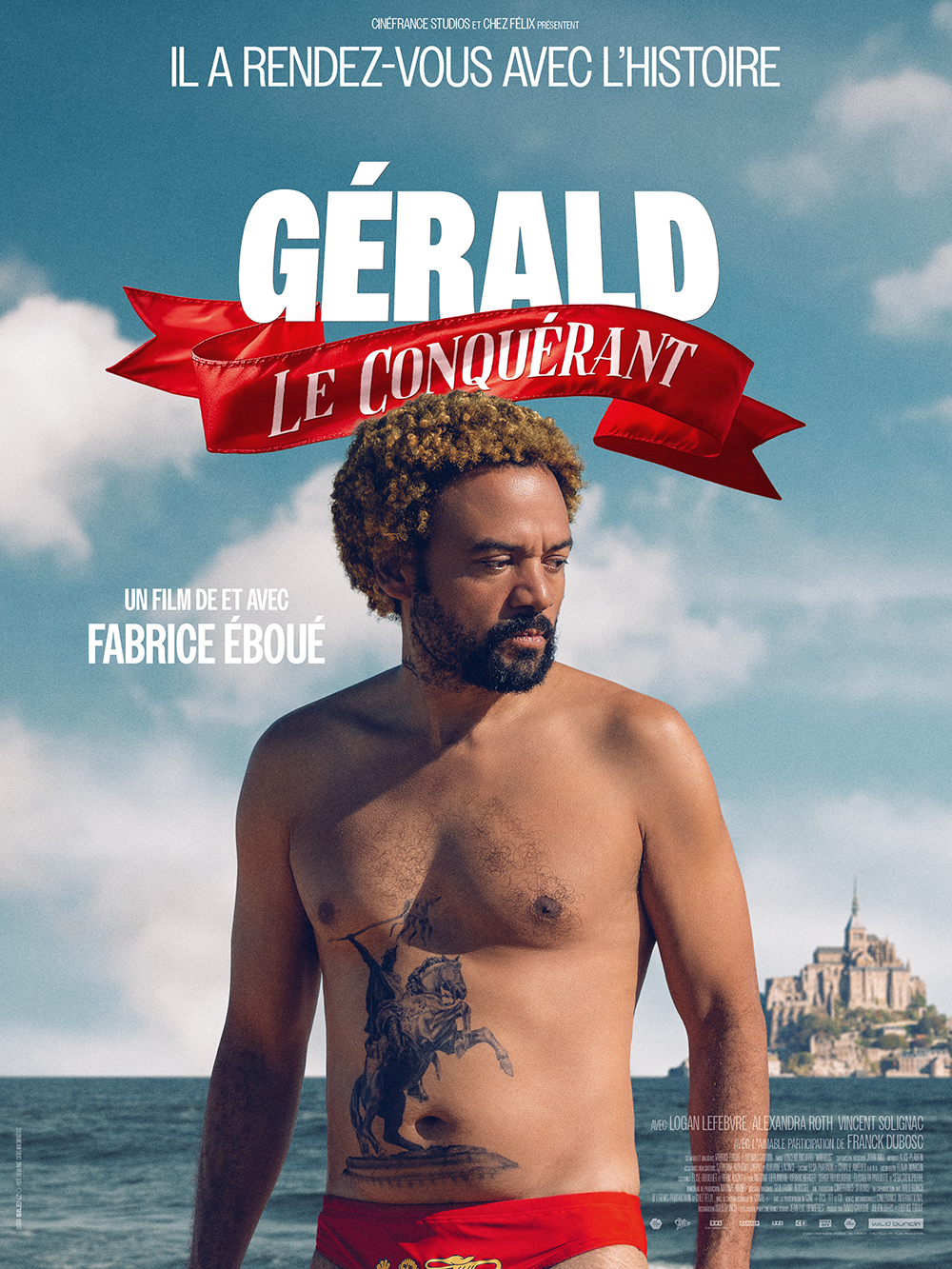
Just look at the poster—the one where Fabrice Éboué poses in red underpants in front of Mont-Saint-Michel—to sense that Gérald the Conqueror will be a film that refuses to take half measures. Behind its appearance as a schoolboy comedy, Fabrice Éboué's fifth feature film, written with Thomas Gaudin, produced by Julien Deris and David Gauquié, and distributed by Wild Bunch, is actually a mockumentary that is much more corrosive than it seems. The film follows Gérald, a Norman by adoption obsessed with the idea of restoring the region's reputation by building the largest historical park in France, dedicated to William the Conqueror. A delusional ambition that will lead him to the darkest extremes of identity radicalization. The film was shot in the Île-de-France and Normandy regions (Bayeux, Caen, Lisieux, Pont-l'Évêque), giving it an authentic, almost documentary feel that reinforces the satirical tone of this portrait of a man who dreams of being a local hero but slips into madness in his desire to be “more Norman than the Normans.” What is immediately striking about the genesis of the project is Fabrice Éboué's personal attachment to the region)
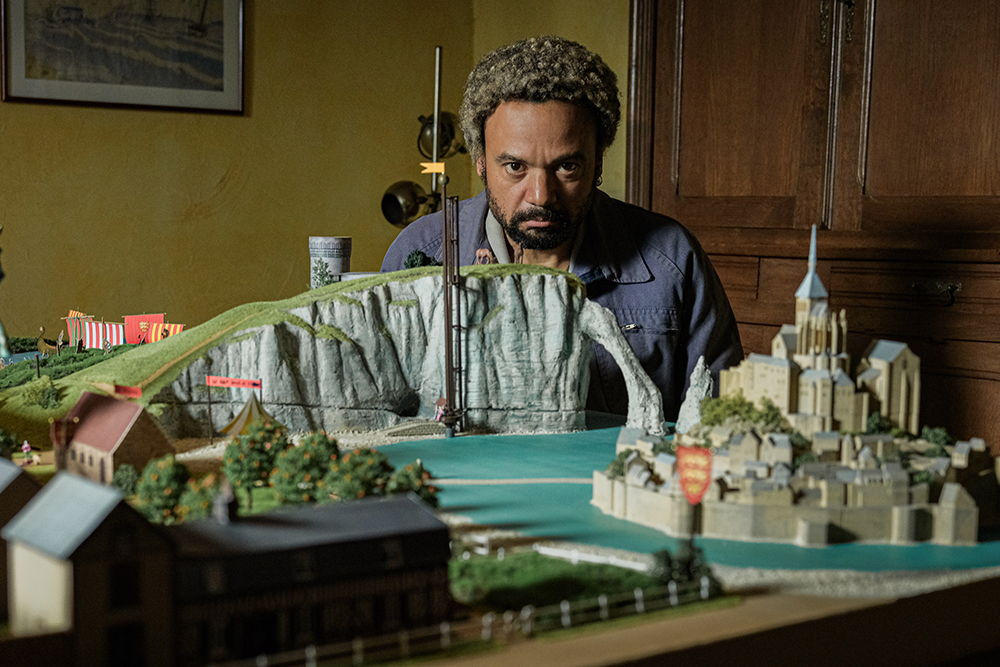
Normandy is the land of his childhood, his vacations, his first family ties. After devoting several films to his Afro-Caribbean identity, he returns here to his maternal side: a Normandy to which he pays tribute, but which he also questions through a character in search of belonging. The inspiration claimed from the TV show Strip-Tease is strongly felt: Gérald belongs to the lineage of those all-too-human, touching, and pathetic figures whose disproportionate dreams reveal their deep flaws. The film borrows heavily from this way of filming the awkwardness, excessive ambitions, and lost illusions of ordinary people convinced that they are invested with a titanic mission. By adopting this hybrid tone—between immersive documentary and fiction—Fabrice Éboué finds the ideal terrain for questioning the rise of identity politics and the need to exist in a society where recognition sometimes comes through excess, even extremism.
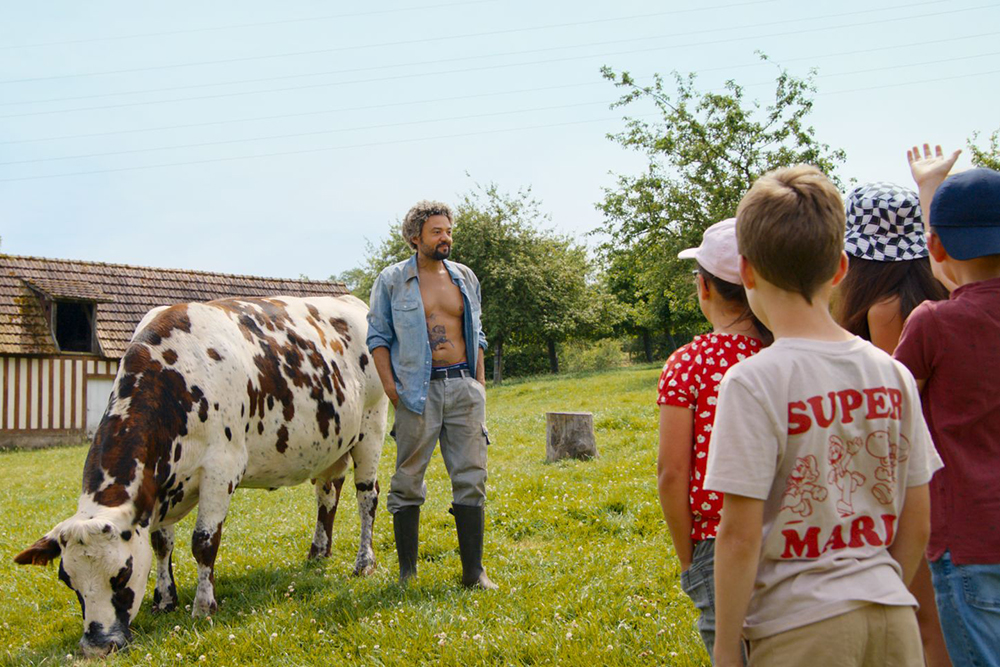
A much more serious mechanism emerges behind the humor of the project. Gérald's slow radicalization echoes contemporary phenomena: frustrated, socially fragile individuals who find a way to finally be visible through identity politics. The idea that “some people only exist in tension” returns like a leitmotif in Fabrice Éboué's analysis, and it fuels this mockumentary, which gradually shifts toward something darker, almost disturbing. The director already emphasized this shift during filming, but says he is struck by how much more resonant the film is today, given the increasing intensity of social tensions. The presence of Gérald's mother, described as a tough but protective woman, adds an intimate dimension: the character's quest for identity is also a repercussion of family secrets, old lies, and a complicated legacy. The autobiographical echo brings unexpected depth to this farce, which suddenly touches on personal wounds and a complex family memory. The casting plays an essential role in the film's success, and each actor seems to have been chosen with the precision of a documentary where spontaneity reigns supreme. Alexandra Roth, who plays Gérald's wife, brings a gentleness, patience, and realism that contrast perfectly with the protagonist's growing madness.
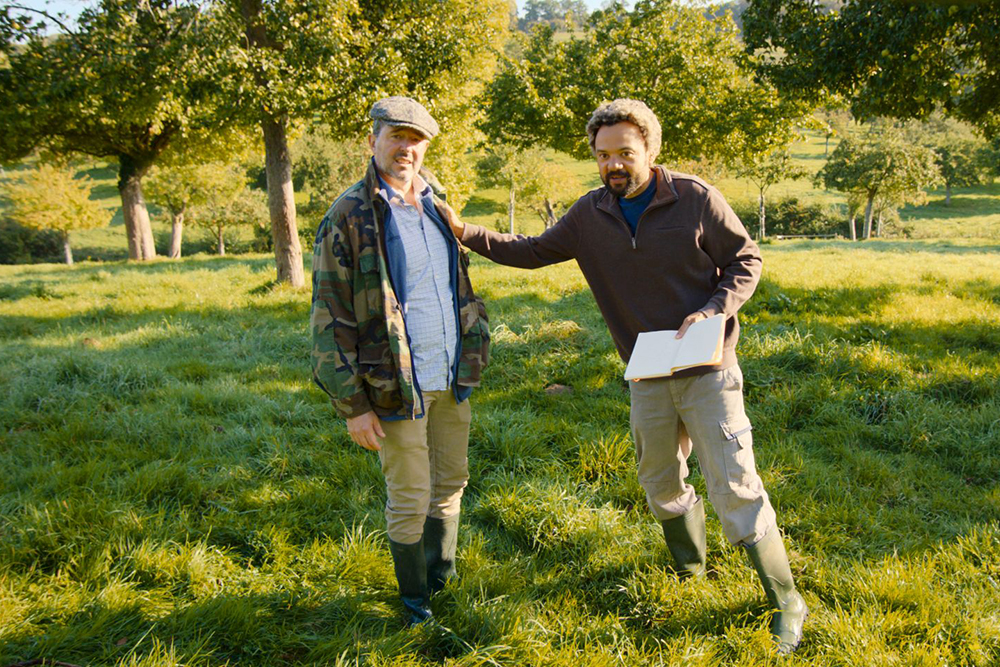
Logan Lefebvre, a true revelation and discovered through open casting, surprises with his naturalness and accuracy in demanding sequence shots. The appearance of Franck Dubosc, filmed entirely in sequence to preserve the authenticity of the moment, is a small event in itself: the actor plays in a surprisingly sober register, surrounded, in Éboué's words, by madmen, which further reinforces the comic contrast. All of them make up a gallery of deeply human characters, who oscillate between absurdity and tenderness, and contribute to the illusion of reality that is the film's strength. Vincent Richard Marquis's photography, Alice Plantin's editing, and Guillaume Roussel's music also contribute to this false realism: never too polished, never too stylized, they offer a raw texture faithful to the spirit of Strip-Tease, which makes Gérald's excesses seem even more real.
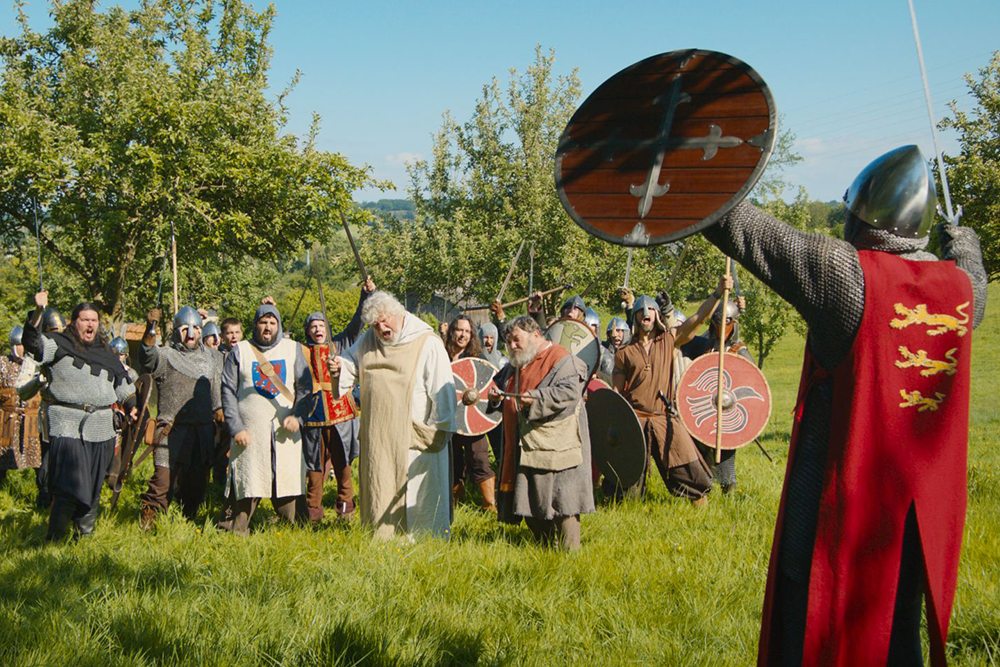
The technical approach to the film, described in detail in the dossier, reveals a particularly ambitious directorial effort. The choice of sequence shots, used as much as possible, is a difficult exercise: the camera must follow the action as if it were unaware of what is going to happen, capturing the moment, the unexpected, spontaneous speech, and nervous gestures. Fabrice Éboué, who has already experimented with this format in Inside Jamel Comedy Club and Tout simplement noir, finds it to be an incomparably accurate technique here: the awkwardness, hesitations, and strange behavior of Gérald and his entourage become clues to a broader social malaise. Everything from Flavia Marcon's artistic direction to Élise Bouquet and Reem Kuzayli's costumes, to Antoine Deflandre and Cédric Berger's sound recording, contributes to this effect of reality, which makes us believe that we are witnessing the downfall of a man filmed by an overwhelmed crew, powerless witnesses to his growing madness. Beyond its formal prowess, Gérald le conquérant appears to be a turning point in the director's career: a confident, more risky, more grounded auteur comedy that combines laughter, discomfort, politics, and intimacy with a boldness rarely seen in contemporary French cinema.
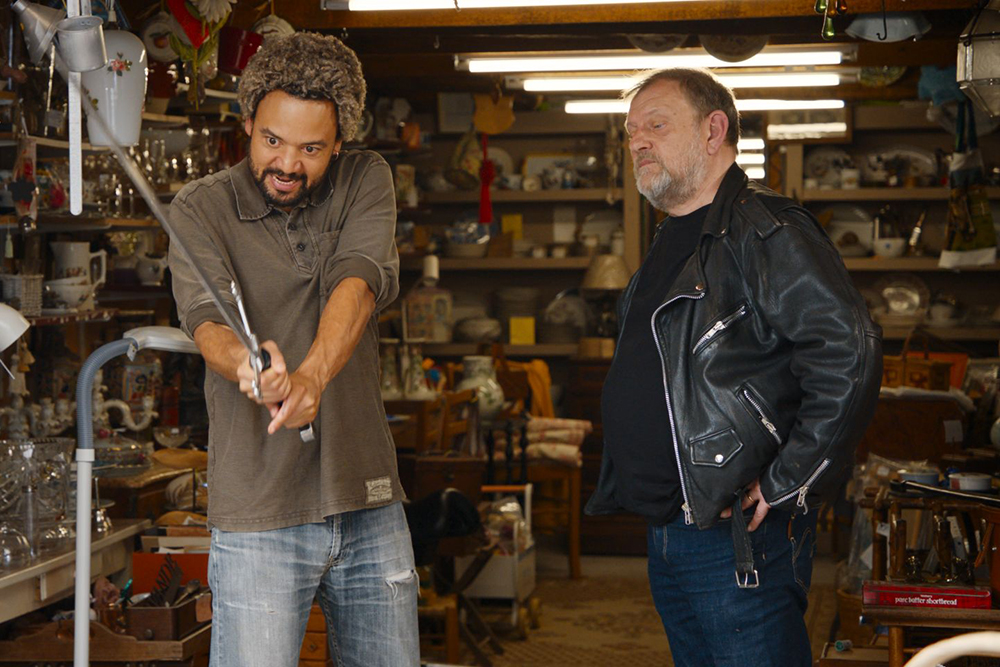
The film, presented as a comedy, gradually moves towards a deeper reflection on contemporary France. Fabrice Éboué admits in his notes that he takes advantage of the low-budget format to enjoy precious creative freedom in a market saturated with blockbusters. Gérald le conquérant is part of a regionalist and identity-based trend which, according to the director, could represent the future of French cinema in the face of global standardization. The film will be released in theaters on December 3, 2025, distributed by Wild Bunch, after filming supported by CNC, CANAL+, and Cinéfrance Studios, among others. With its compact 83-minute running time, vitriolic humor, virtuoso sequence shots, and almost exponential rise in tension, it seems destined to become a singular, disturbing, and memorable work. By mixing personal anecdotes, political satire, and genuine questions about identity, Fabrice Éboué has created a surprisingly intimate work beneath its faux documentary veneer. We bet that Gérald, in all its tragic absurdity, is set to leave its mark on the French film landscape.
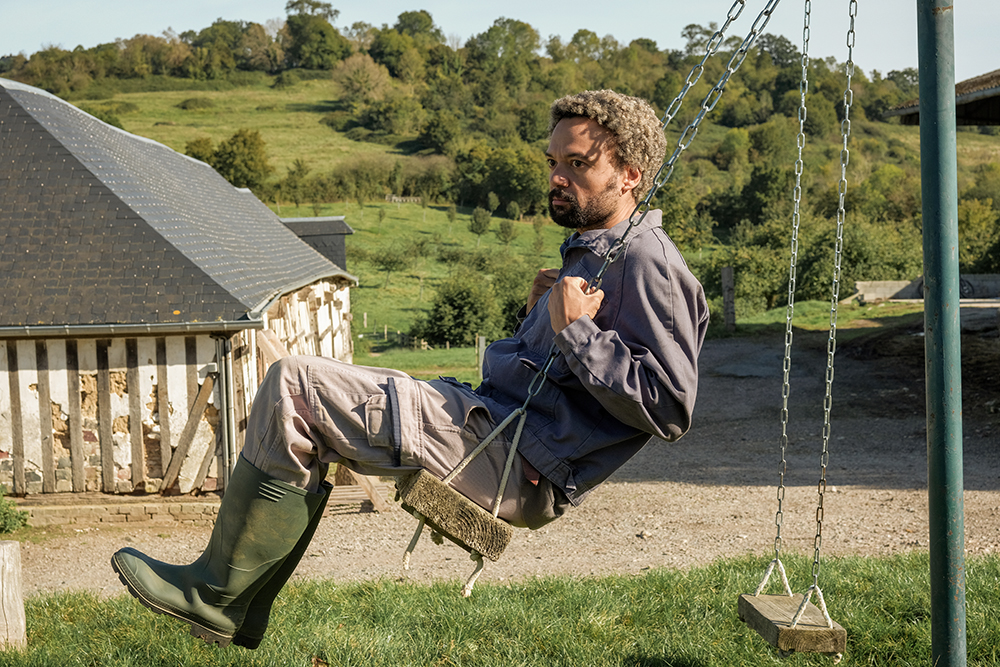
Synopsis:
His name is Gérald. His goal: to restore the reputation of his beloved region, Normandy. His method: to build the largest amusement park in the country, in honor of William the Conqueror. And to achieve this, he is prepared to do anything... Remember this name, because it will go down in history!
Gérald le conquérant
Directed by Fabrice Éboué
Written by Fabrice Éboué, Thomas Gaudin
Produced by Julien Deris, David Gauquié
Starring Fabrice Éboué, Jean-François Cayrey, Alexandra Roth, Vincent Solignac, Joaquim Fossi, Gaëtan Cotigny, Franck Dubosc, Laura Lieblein Adam
Director of photography: Vincent Richard Marquis
Editing: Alice Plantin
Music: Guillaume Roussel
Production companies: Cinéfrance Studios
Distribution: Wild Bunch (France)
Release date: December 3, 2025 (France)
Running time: 83 minutes
Photos: Copyright Wild Bunch