
 English
Videogames - Bubble Bobble Sugar Dungeons : A Sweet, Unforgiving Reinvention of an Arcade Classic
By Mulder, 27 november 2025
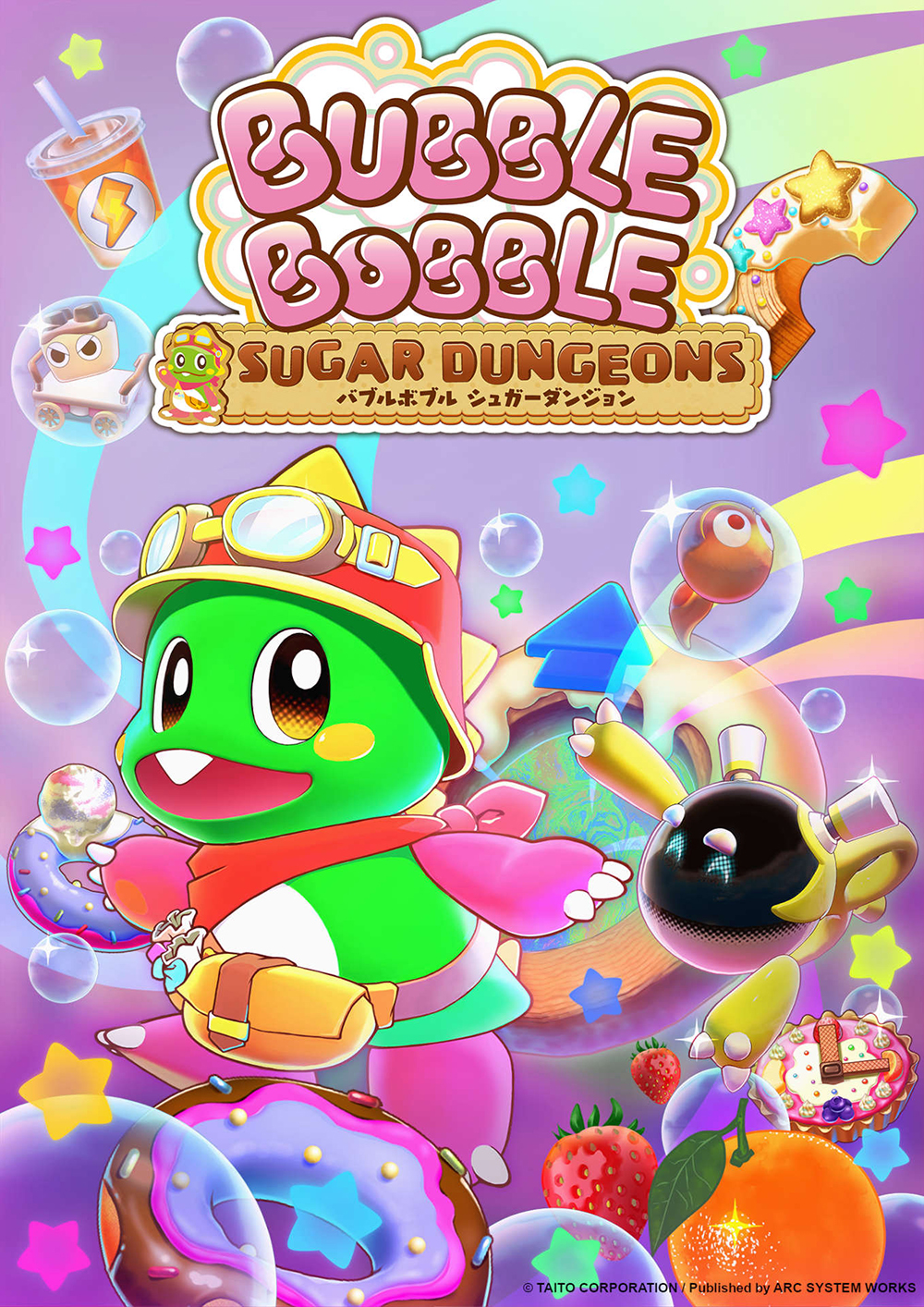
In the sprawling history of arcade icons, few mascots embody pure, uncomplicated joy the way Bub and Bob do, those tiny bubble-spitting dragons who once dominated neon-lit arcades in the late 80s. With Bubble Bobble Sugar Dungeons, developed by the venerable TAITO Corporation and published by Arc System Works Europe S.A.S., the franchise takes its boldest leap in decades, diving headfirst into the roguelite genre while clinging tightly to the cheerful visual identity that made it an all-ages phenomenon. What immediately stands out is the audacity of the premise: taking one of gaming’s most accessible, optimistic titles and transforming it into a merciless descent through procedural dungeons full of traps, candy-themed enemies, and one-hit-death tension. Yet that tension is wrapped in so much pastel-colored charm that the contrast feels strangely invigorating. Having followed the franchise since my own arcade days, I found myself pulled between nostalgia and discovery, between the comforting rhythms of bubble trapping and the ruthless unpredictability of roguelite design — a blend that, when it works, feels like a daring reinvention of a classic that refuses to grow old.
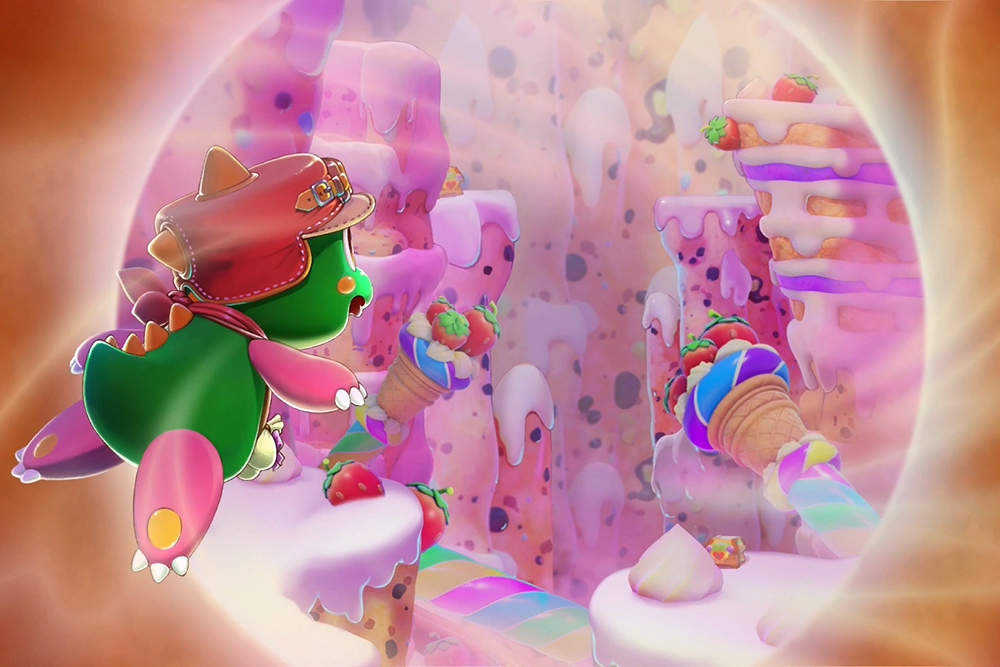
The game’s opening hours quickly reveal the new ambition driving Bubble Bobble Sugar Dungeons, particularly through its narrative frame. Instead of the simple “rescue the girlfriend” premise of 1986, developer Tomohito Oka and his team introduce the mysterious candy collector Don Dolcen and the energetic robot assistant Ammie, who enlist Bub to explore unstable, treasure-filled dungeons that shift at every attempt. When I interviewed Tomohito Oka at Japan Expo 2025, his eyes lit up as he described how procedural generation was chosen to “surprise players who think they already know Bubble Bobble.” That philosophy becomes clear as soon as the player enters the first dungeon: platforms rearrange themselves, enemy clusters shift unpredictably, and the donut-shaped exits appear in different configurations, forcing players to navigate the same universe with renewed caution. This sense of rediscovery is palpable, reminding me of the first time I wandered into a Bubble Bobble secret room as a kid, except now the surprises come from algorithmic chaos rather than fixed design. The whimsical aesthetic softens the learning curve, but the dungeons themselves never let you relax — this is Bubble Bobble with a pulse of adrenaline it has never had before.

Mechanically, Bubble Bobble Sugar Dungeons is both deeply familiar and surprisingly dense. The core bubble mechanics remain intact — trapping enemies, chaining bubble pops, using bubbles as platforms — but the roguelite structure pushes players to recontextualize these old habits. New elemental bubbles such as fire, electricity, and tidal water introduce tactical wrinkles, and Bub’s new dash-style roll makes the action more kinetic without betraying the franchise’s simplicity. The meta-progression system, however, is the true backbone of this reinvention. Between runs, players can spend collected items on permanent upgrades or consumables, slowly transforming Bub from a fragile mascot into a customizable adventurer with offensive, defensive, and traversal-based builds. As Tomohito Oka explained in our conversation, this persistent progression was designed specifically to address long-time fan feedback asking for “more challenge and more rewarding improvement.” The result is a satisfying sense of growth that helps offset the punishing one-hit-death structure, which otherwise might discourage newcomers accustomed to lighter, more generous platformers.
Yet for all these improvements, the game’s difficulty balance remains one of its most divisive elements. True to its arcade heritage, Sugar Dungeons is brutally unforgiving: one collision with an enemy, one misjudged jump, or one unlucky procedural trap can instantly wipe a run that took 20 minutes to build up. Early missions often feel like a slog, requiring repetitive item collection or obscure objectives without particularly exciting rewards. The procedural layouts, while refreshing at first, begin to reveal recycled room patterns after several hours — a limitation that undermines the long-term sense of discovery the game aspires to cultivate. More than once, I found myself restarting runs simply because the dungeon offered too few item opportunities to make meaningful progress, a pacing issue that becomes increasingly visible as players attempt deeper levels. Still, I would be lying if I said I didn’t feel the old arcade thrill rise in me whenever I dodged a complex enemy cluster by the skin of my teeth. There’s something intoxicating about a game that can make you curse and smile in the same breath, even if consistency remains an ongoing battle.
Visually, Bubble Bobble Sugar Dungeons is an absolute treat, even if not every artistic choice will please purists. The modernized 2.5D characters, with their rounded, toy-like proportions, are expressive enough to keep Bub endlessly endearing, and the candy-themed worlds — from crystalline sugar caverns to syrup waterfalls — demonstrate a clear attempt to bring Bubble Bobble’s famous color palette into a contemporary aesthetic. Tomohito Oka mentioned that he wanted to avoid the “dark” atmosphere commonly associated with roguelites, and this becomes evident in every frame: even the deadliest traps look like they belong in a children’s candy commercial. The soundtrack carries the typical TAITO DNA — high-energy loops with catchy melodies — though some tracks may become repetitive during long sessions. Technically, the game holds strong across platforms, though visual variety in deeper dungeon levels could use more diversity to match the constant escalation in difficulty.
One major surprise — and for some fans, a disappointment — is the absence of cooperative multiplayer, a feature synonymous with the Bubble Bobble name for nearly forty years. The emotional memory of playing Bubble Bobble with friends or siblings is so deeply embedded in gaming culture that its omission here feels strange, especially given how well the bubble mechanics could complement co-op strategies in a roguelite framework. Tomohito Oka told us the team is listening to feedback and considering future updates, leaving a glimmer of hope, but for now, the single-player focus may limit the game’s appeal among nostalgists who grew up treating Bub and Bob as inseparable partners rather than solo adventurers. Fortunately, the inclusion of Bubble Symphony — an enormously influential 90s sequel long unavailable in standalone form — softens the blow and provides a historical anchor that enriches the package considerably. For hardcore fans, this bonus alone might justify the purchase.
Despite its stumbles, Bubble Bobble Sugar Dungeons succeeds in its most essential mission: it breathes new life into a franchise that could easily have remained a museum piece. The game dares to evolve, and in doing so, it reignites the curiosity that defined Bubble Bobble’s golden years. While repetition and difficulty issues occasionally cloud the experience, the charm is undeniable — from Don Dolcen’s mischievous smile to the thrill of escaping a collapsing dungeon seconds before the timer summons an unstoppable pursuer. More importantly, the game reflects a team that respects its own heritage while embracing contemporary design philosophies, striking a tone that is both reverent and boldly forward-looking. It may not convert every player into a roguelite enthusiast, but it offers a compelling invitation to rediscover an icon under a new, sugar-coated light.
In the end, Bubble Bobble Sugar Dungeons is a daring hybrid, sometimes uneven but always heartfelt — a game crafted with genuine affection for its legacy and a willingness to venture into unfamiliar territory. Whether you approach it as a nostalgic return to Bub’s bubbly adventures or as a modern roguelite challenge wrapped in cheerful colors, there is magic here, even if that magic occasionally sticks to your fingers like too much cotton candy. As a reinvention, it is courageous; as a tribute, it is charming; and as a game, it is both flawed and fascinating in equal measure.
Score : 3.5/5