
 English
Videogames - Bubble Bobble Sugar Dungeons: the bold revival of a cult franchise, blending nostalgia and innovation
By Mulder, 20 november 2025
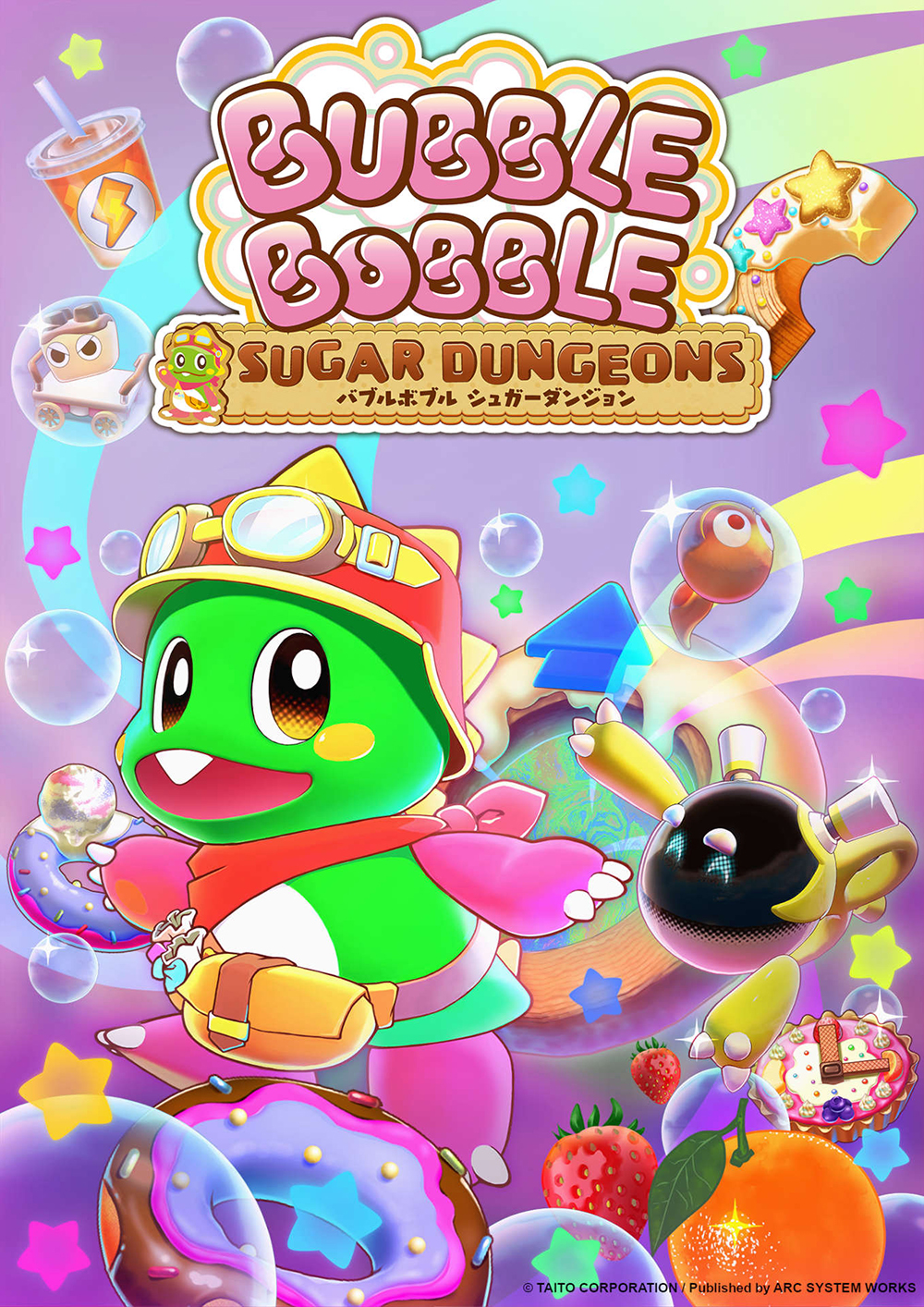
Bubble Bobble Sugar Dungeons will arrive next thursday on PlayStation 5, Nintendo Switch, and PC Steam, with the assurance of a franchise finally ready to evolve while retaining the sweet spirit that has made Bub and Bob icons since 1986. Published by Arc System Works Europe S.A.S. and developed in partnership with TAITO CORPORATION, this new installment takes the beloved bubble-trapping, enemy-popping platformer formula and adds procedural dungeons, a sprawling labyrinthine castle, and a surprising layer of RPG-style progression that radically changes the pace. The package is generous from the outset: the standard edition includes the full Bubble Bobble Sugar Dungeons experience as well as the console version of Bubble Symphony, while the deluxe edition adds a 25-track soundtrack and a 100-page digital artbook, a nod to the nostalgia of longtime fans and the meticulous work behind this reinvention.
This is the first major evolution of the franchise: the procedural structure means that no two dungeon runs are the same, with platforms, enemy locations, and item opportunities changing with each playthrough. This design choice, which removes the comfortable repetition traditionally associated with the series, was entirely intentional, according to producer Tomohito Oka, whom we had the opportunity to interview at Japan Expo 2025. During our conversation, Tomohito Oka explained that the team wanted to respect the original spirit while daring to try structural ideas that would open up new possibilities. This vision is immediately apparent from the start of the game, when Bub, now revitalized with fluid animations and expressive charm, is plunged into a mysterious laboratory where he meets the enigmatic candy lover Don Dolcen. It is Don Dolcen who summons Bub from his own world and entrusts him with the mission of exploring dungeons and castles to recover ancient treasures, a scenario that transforms the simple rescue mission of the 1986 arcade classic into a more daring, mischievous, and decidedly more whimsical adventure, thanks in part to the addition of the robot guide Ammie, designed by Dolcen to help Bub navigate environments that are as sweet as they are dangerous.

The gameplay refines the classic elements: bubbles still trap enemies, still float in air currents, and still serve as makeshift platforms, but new abilities such as the rolling attack, improved water bubbles, and elements such as fire, electricity, and tides give each game a new tactical flavor. The donut-shaped level exit seems like a playful nod to the sugary worlds the game now celebrates, especially since the enemies themselves take on candy-inspired forms, reinforcing the title's playful aesthetic. Yet beneath the pastel colors and bouncy sound effects lies a real challenge, which some would call old-school cruelty. As noted in early previews, the difficulty curve is intentionally steep: a single mistake in a dungeon often means starting over from the beginning, reminiscent of the unforgiving nature of 1980s arcade machines. Based on our own experience with the test code provided by the publisher, this challenge presents itself quickly and early on. The procedural levels may be fresh, but they can also trap inattentive players, and the timer system, which summons an invincible pursuer if it expires, adds pressure that forces you to make quick decisions, use items wisely, and accept defeat when things go wrong. Each set of ten dungeon levels culminates in a boss battle, and this is where the homage to Taito's legacy shines: the patterns, reflexes, and learning through failure all echo the golden age of arcade game design. At the same time, Castle Mode takes exploration further, creating a huge interconnected map in which progression requires memory, experimentation, and mastery of Bub's upgraded skills.
Much like the original Bubble Bobble, in which Bubby and Bobby were cursed and turned into bubble-spitting dragons, descending 100 levels to rescue their kidnapped girlfriends, Bubble Bobble Sugar Dungeons pays homage to the past while shifting the focus: the adventure now revolves around curiosity, treasure hunting, and encounters with eccentric characters like Don Dolcen, whose motivations remain delightfully ambiguous. Fans of Puzzle Bobble will recognize the visual cues of the narrative, the rhythmic sound design, and the undeniable charm of Bub and Bob, but they will also discover a level of strategic thinking that was previously absent from the series. Items act as equipable skills, and since players can only take a limited selection into each dungeon or castle, the choices have real weight: should you prioritize offensive tools, mobility boosts, defensive abilities, or options to improve treasures? Determining priorities for which levels to upgrade becomes a meta-game in its own right that really makes you think. The press release describes this as a deliberate attempt to “let players define their style,” and indeed, the freedom to make Bub a powerhouse or a mobility specialist adds significant replay value.
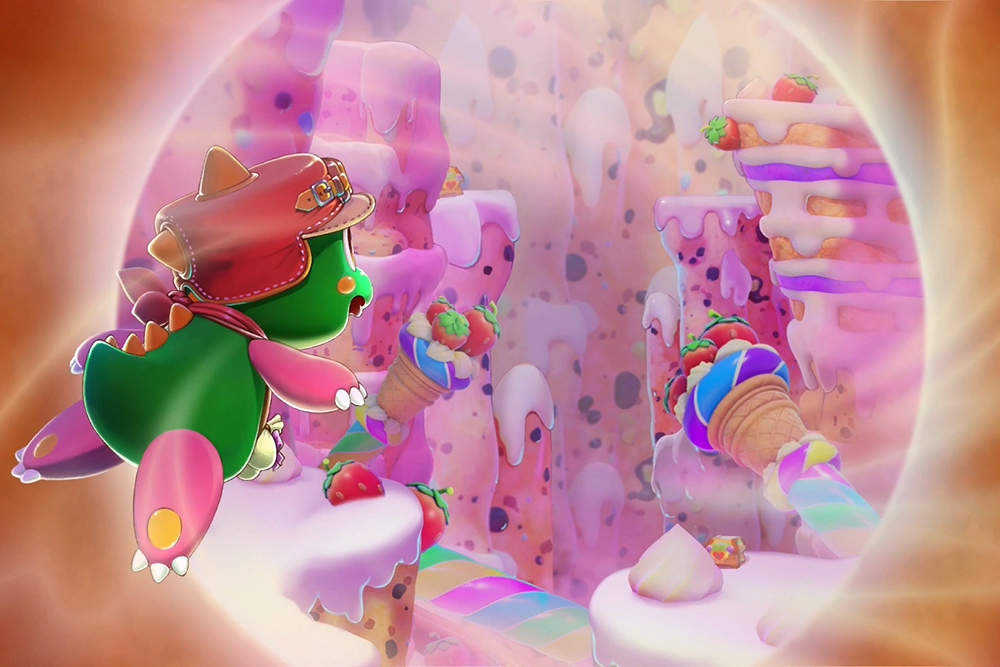
From a technical standpoint, the game is colorful, readable, and cheerful, although some players may find the environments a bit visually repetitive during long sessions. The music draws inspiration from Taito's classic energy—catchy, upbeat, and sweet—but it can become slightly repetitive after several games, reflecting an intentional retro touch that not everyone will appreciate. Nevertheless, the overall production retains a friendly charm reinforced by candy-themed biomes and vibrant animations that evoke the franchise's 80s DNA. The only major omission is the lack of a two-player mode, which fans nostalgically associate with Bubble Bobble since its inception. Several testers strongly felt this omission, especially since the series has always been synonymous with friendly cooperative play. However, the game makes up for this with quest systems, treasure-hunting progression, and a surprisingly rich customization framework.
Our conversation with Tomohito Oka at Japan Expo also gave us a better understanding of why the game focuses so much on playful experimentation. He cheerfully explained that the team wanted to surprise longtime fans without alienating them, a delicate balance that, according to him, is perfectly achieved thanks to procedural generation and the castle maze: “When players enter a dungeon, we want them to feel like they're rediscovering Bubble Bobble for the first time,” he told us. Amidst the noise of the exhibition hall, as Tomohito Oka enthusiastically explained the creative process, the excitement of the project was palpable, and that passion is clearly reflected in the final version.
Bubble Bobble Sugar Dungeons is both a tribute and a reinvention, an attempt to perpetuate nearly forty years of video game history while embracing modern design concepts. It's sweeter, harder, more experimental, and undeniably bold. Not all choices will appeal to everyone: the increasing difficulty, occasional repetitiveness, and focus on single-player mode may frustrate newcomers, but its heart is undeniably in the right place, beating to the joyful rhythm of a dragon who still believes that adventure tastes better when sprinkled with sugar. For fans of platform games, the retro spirit of arcade games, or simply the timeless charm of Bub, this latest chapter is a delightful curiosity, an exciting challenge, and a reassuring reminder that even decades later, some characters never stop bubbling, but bigger, bolder, and more deliciously unpredictable than ever.