
 English
Movies - Song Sung Blue – A Journey of Dreams, Devotion, and the Unlikely Magic of Lightning & Thunder
By Mulder, 04 november 2025
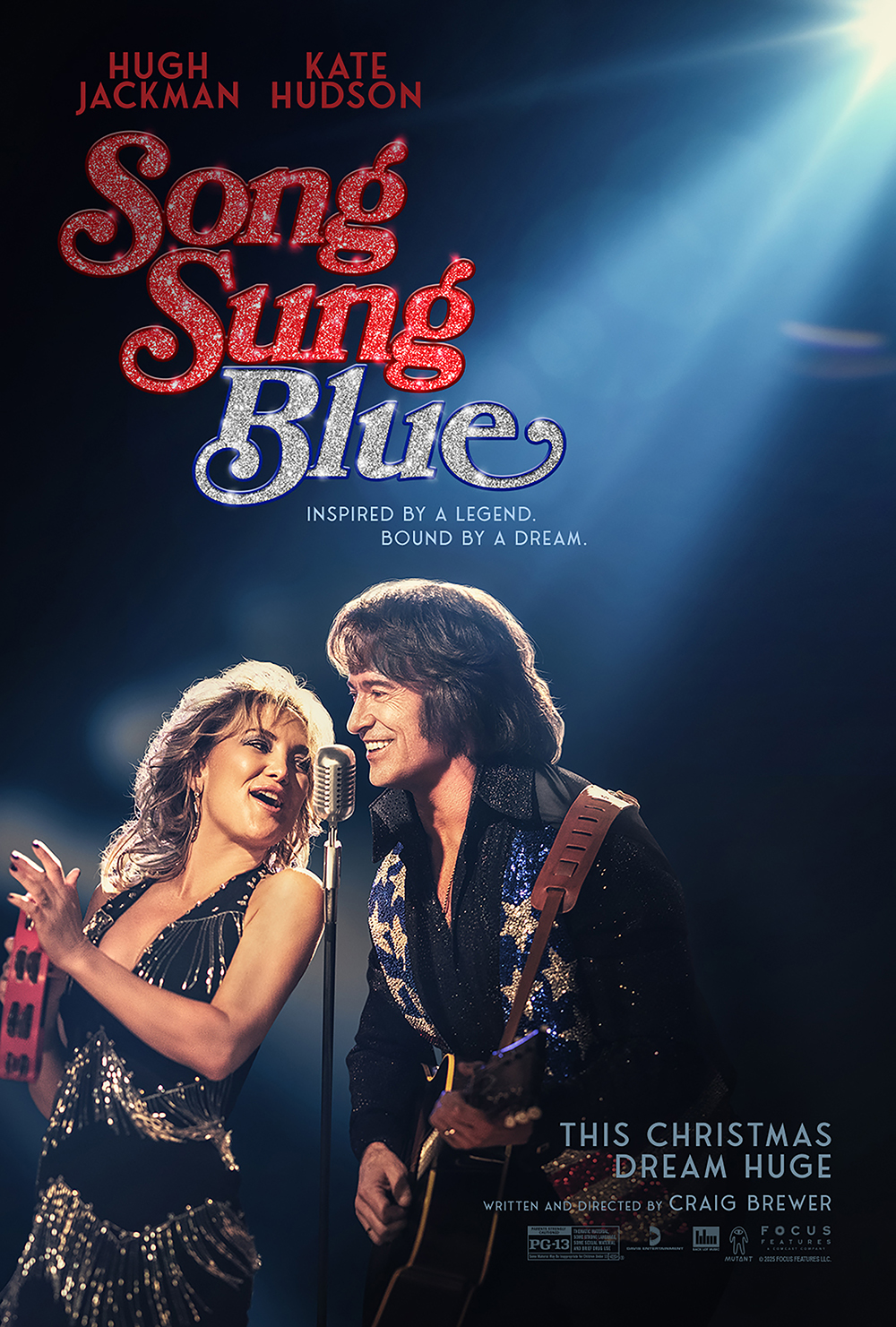
Long before Craig Brewer turned Song Sung Blue into a sweeping, emotional, full-throttle biographical musical drama, the real story of Mike Sardina and Claire Stengl lingered in the shadows of Milwaukee’s dive bars, county fairs, and neighborhood haunts. What Brewer captures in the film—starring Hugh Jackman and Kate Hudson in two of the most impassioned performances of their careers—is the fragile, intoxicating beauty of dreamers who find their calling late in life and cling to it with a devotion that feels almost mythic. Based on Greg Kohs’s documentary and infused with Brewer’s love for underdog musicians, the film becomes a heartfelt ode to those who play their hearts out even when the applause is faint, the stage lights flicker, and the gigs barely pay the rent. Brewer, a chronicler of working-class heroes since Hustle & Flow, explains how the documentary struck him like lightning, revealing a couple whose losses, triumphs, and persistent hope echoed the very fabric of the American dream. “We root for underdogs because their struggle is our song,” he says in the production notes—a sentiment that beats at the center of every frame of this deeply human film.
From its earliest scenes, Song Sung Blue establishes itself as more than a simple chronicle of a tribute act. It’s a film about a mechanic and recovering alcoholic—Hugh Jackman’s Mike Sardina—whose love of performing keeps him spiritually afloat, and a single mother—Kate Hudson’s luminous and volatile Claire Stengl—whose Patsy Cline act is both an escape and a lifeline. Their first meeting is anything but glamorous, but Brewer spins it like destiny: two bruised souls recognizing the same flicker of fervor in each other. As Lightning & Thunder, they build a life that feels rickety yet radiant, a union forged through late-night rehearsals, cheap costuming, the neon glow of dive bars, and Neil Diamond songs that become the soundtrack of their romance. The film carefully recreates this world—its scrappy charm, its chaotic tenderness—by grounding it in the research and real anecdotes Brewer collected directly from the Sardina family. These personal details shape scenes that feel lived-in and emotionally rich, bridging the gaps between documentary realism and cinematic mythology.
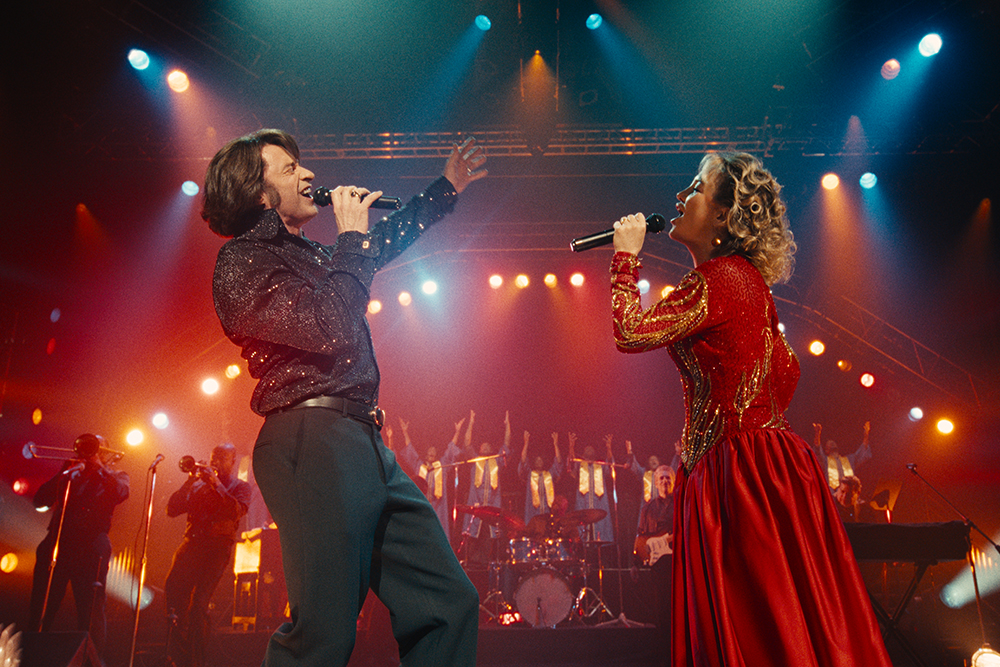
A major heartbeat of the film comes from the raw chemistry between Hugh Jackman and Kate Hudson, whose performances evolve like a duet—improvised, instinctive, and full of texture. Jackman’s take on Mike is a revelation: messy, hopeful, unfiltered, and laced with a kind of desperate optimism that radiated through the real Mike Sardina’s life. Crew members—according to Brewer—were often moved to tears as Jackman performed, seeing their own fathers or unspoken struggles reflected in the character’s vulnerability. This is complemented by Hudson’s portrayal of Claire, which oscillates between electrifying charisma and devastating fragility. Brewer wasn’t merely casting actors; he was assembling performers who understood the hunger to be onstage, to find salvation in song. Hudson’s background as a singer shines through, and her emotional precision becomes essential when tragedy strikes the Sardinas—a dark turn that sends Claire into a spiral and forces the couple to confront pain with the same courage they once used to chase applause.
The supporting cast weaves an equally resonant tapestry. Michael Imperioli brings grounded, soulful authenticity to guitarist Mark Shurilla, capturing the spirit of a musician who believes in the band more than fame itself. Ella Anderson, as Claire’s daughter Rachel, delivers a breakout performance shaped by her personal connection to growing up around musicians. King Princess surprises with a nuanced portrayal of Angelina, while Mustafa Shakir injects flamboyant charisma as a James Brown impersonator known as Sex Machine. Fisher Stevens and Jim Belushi contribute humor and heart, embodying the offbeat characters who populate the Sardinas’ world and give the film its distinct sense of community. Each casting choice feels handpicked for authenticity, echoing the real personalities who animated the Lightning & Thunder experience.
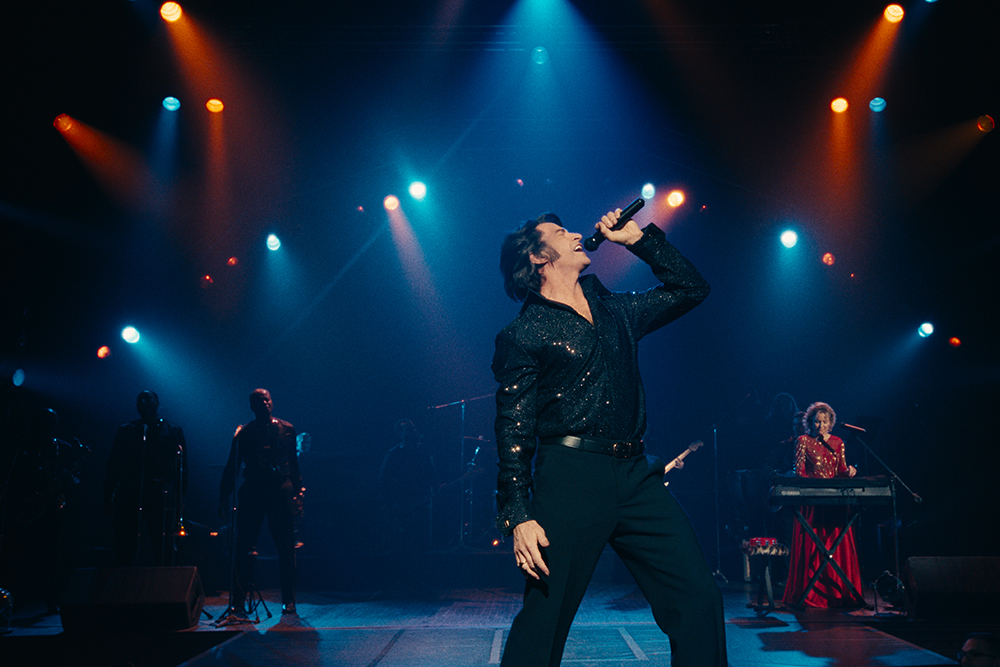
A musical drama lives or dies by its soundtrack, and Song Sung Blue approaches Neil Diamond’s catalog with reverence, precision, and a deep emotional compass. With executive music producer Scott Bomar, Brewer orchestrates a lineup of songs that aren’t just performances—they’re narrative engines. “Play Me,” reimagined as a duet between Mike and Claire, becomes their emotional ignition point, while “Forever in Blue Jeans”—recorded with real-life musician Richard Bennett, who co-wrote the original—serves as a joyous homage to the couple’s bond and even references the real Eddie Vedder encounter that inspired the scene. Brewer is careful, even daring, with “Sweet Caroline,” teasing it rather than overselling it, letting anticipation build until the payoff lands with full emotional force. The pre-recording sessions in Memphis not only honed the musical identity of the film but also became the place where Jackman and Hudson found the rhythm of their on-screen partnership.
Behind the camera, the film thrives on the visual poetry of cinematographer Amy Vincent, who crafts a world that oscillates between gritty realism and luminous fantasy. Bars lit by scavenged fixtures glow with unexpected magic, while concert scenes channel the texture of Purple Rain and classic 1980s lighting rigs. The dream sequence—Claire wandering through a surreal red-tinged dreamscape—stands out as a haunting, painterly interlude inspired by Andrew Wyeth’s “Christina’s World,” showcasing Brewer and Vincent’s shared love for blending emotional reality with stylized visual metaphor. The production design by Clay Griffith mirrors this duality, reconstructing a home filled with mismatched furniture and decades-old paneling that tells the story of a family scraping by yet full of warmth, humor, and heartbreak.
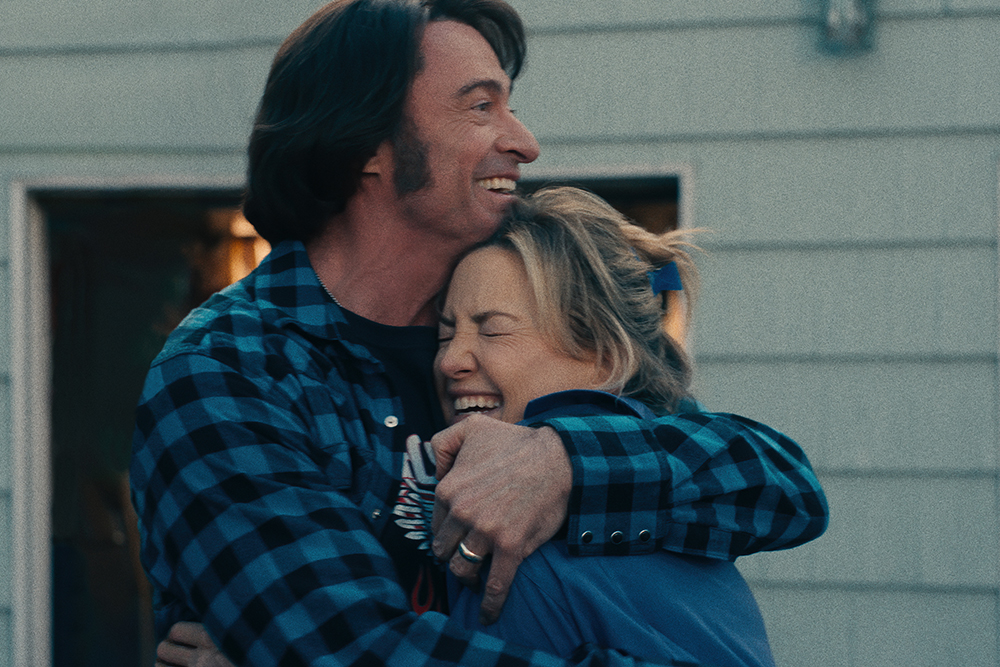
The costumes by Ernesto Martinez, the period-specific hairstyles devised by Alicia Zavarella, and the intimate makeup work of Anouck Sullivan deepen the film’s authenticity. Lightning & Thunder’s stage looks balance showbiz shimmer with small-town budget constraints, creating a visual identity that feels simultaneously charming and earnest. These choices reflect the film’s core idea: that beauty and meaning can blossom from imperfection, from sincerity rather than spectacle.
Ultimately, Song Sung Blue stands as a cinematic love letter—one addressed to dreamers, to musicians without record deals, to families held together by duct tape and passion, to performers whose stages may be small but whose hearts are enormous. Hugh Jackman calls it “a celebration of tip-jar musicians,” and that spirit powers every melodic swell, every dive-bar spotlight, and every quiet moment shared between Mike and Claire. The real Claire Stengl, reflecting on seeing her life brought to the big screen, describes it as a surreal dream from which she doesn’t want to wake. Brewer believes Mike Sardina would have loved it: the idea that the biggest star on the planet would step into his shoes, that their unlikely love story would premiere on Christmas Day, that people across the world would sit in theaters and root for Lightning & Thunder.

And that’s the film’s final magic trick—turning two ordinary Milwaukee musicians into extraordinary cinematic icons, not by embellishing their story beyond recognition, but by capturing its truth: love, loss, music, hardship, and the wild, unshakable belief that dreams are worth chasing no matter how late they arrive.
Synopsis :
Based on a true story, Hugh Jackman and Kate Hudson play two broke musicians who breathe new life into Neil Diamond's music by forming a tribute band. Together, they prove that it's never too late to follow your heart and fulfill your dreams.
Song Sung Blue
Written and directed by Craig Brewer
Based on Song Sung Blue by Greg Kohs
Produced by Craig Brewer, John Davis, John Fox
Starring Hugh Jackman, Kate Hudson, Michael Imperioli, Ella Anderson, King Princess, Mustafa Shakir, Jayson Warner Smith, Hudson Hensley, Fisher Stevens, Jim Belushi
Cinematography : Amy Vincent
Edited by Billy Fox
Music by Scott Bomar
Production company : Davis Entertainment
Distributed by Focus Features (United States), Universal Pictures (International)
Release dates : October 26, 2025 (AFI Film Festival), December 25, 2025 (United States)
Running time : 131 minutes
Photos : Copyright 2025 Focus Features, LLC. All Rights Reserved.
(Source : press notes)