
 English
Movies - Marty Supreme – A24’s Daring Ping-Pong Epic Smashes Its Way Into Prestige Cinema
By Mulder, 18 november 2025

There’s something instantly magnetic about a film that takes a seemingly quiet sport and turns it into an arena of obsession, sweat, ego, and near-mythic ambition, and Marty Supreme leans into that energy with the swagger and eccentricity you’d expect from Josh Safdie at his most unleashed. Built as a feverish sports comedy-drama and loosely inspired by the unforgettable personality of table-tennis legend Marty Reisman, this 1950s New York odyssey becomes a sprawling portrait of reinvention and grit, elevated by the raw intensity of Timothée Chalamet, who not only stars but also co-produces. What truly struck me, digging through the film’s notes and comparing them to the impressions left by those lucky enough to attend the “secret screening” at the 2025 New York Film Festival, is how much personal history flows through every frame. Josh Safdie’s love for table tennis didn’t appear out of nowhere; it was practically embedded into his DNA, shaped by a childhood filled with eccentric Lower East Side relatives who treated ping-pong as both ritual and spectacle. This early fascination, combined with the serendipity of executive producer Sara Rossein gifting him Marty Reisman’s autobiography The Money Player, laid the groundwork for what is now A24’s most ambitious and expensive production to date.

The film centers on Marty Mauser, a young man so consumed by the idea of greatness that he willingly tests the limits of sanity, sacrifice, and self-destruction. The synopsis sounds deceptively simple—an ambitious kid chasing an impossible dream—but the execution is wildly textured, buzzing with that familiar Safdie tension that turns every encounter into its own high-voltage event. What adds even more charm is the way Josh Safdie has written the movie with Timothée Chalamet in mind from the start, openly admitting during the NYFF premiere that the story was “written for him and his essence.” You can see how deeply this influenced the production: from the physical resemblance to Marty Reisman, to the actor’s complete immersion in training, Chalamet threw himself into the role as if he were preparing for a ballet, a boxing match, and a street brawl all at once. Months of ping-pong coaching under experts like Diego Schaaf and Olympian Wei Wang, the decision to perform many of his own stunts, and even the bizarre but fascinating aesthetic choice of having him wear prescription glasses layered on top of contact lenses—a technique proposed by Safdie to shrink the appearance of his eyes—speak volumes about how far the production pushed itself in the pursuit of authenticity.

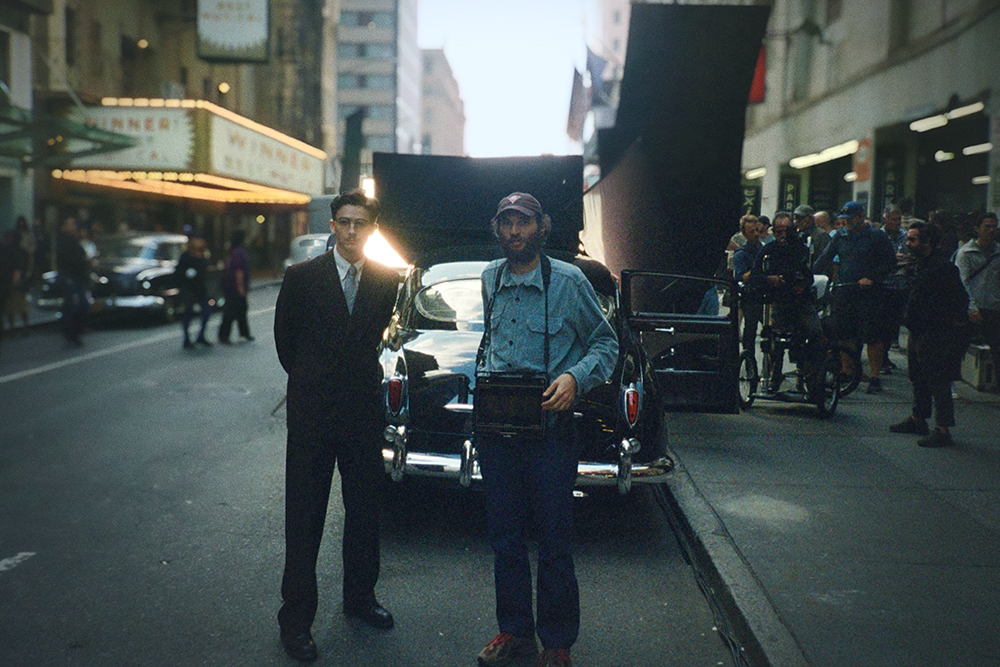
Behind the camera, the film assembles a dream technical team that gives Marty Supreme the gritty elegance and vintage texture of a long-lost urban sports legend. Veteran cinematographer Darius Khondji shot the entire project on 35mm film, which instantly gives it that tactile 1950s grain that digital simply can’t fake. His collaboration with production designer Jack Fisk, a master of atmospheric period detail, transforms New York City into something both recognizable and mythologized. The inclusion of around 140 non-actors—including highwire icon Philippe Petit—shows how committed Safdie was to capturing a raw, unpolished world where talent, madness, and charisma collide. It echoes filming anecdotes suggesting that Safdie wanted real “street souls” on set, people whose presence felt lived-in rather than cast. The film then took this authenticity further by extending production abroad with additional shoots in Japan, reinforcing the global pull of competitive table tennis. Principal photography, which began in New York City in September 2024 and wrapped in December before the Japanese segment, appears to have unfolded with the same nervous, playful energy usually associated with the Safdie filmmaking process—fast, immersive, and intoxicatingly chaotic.
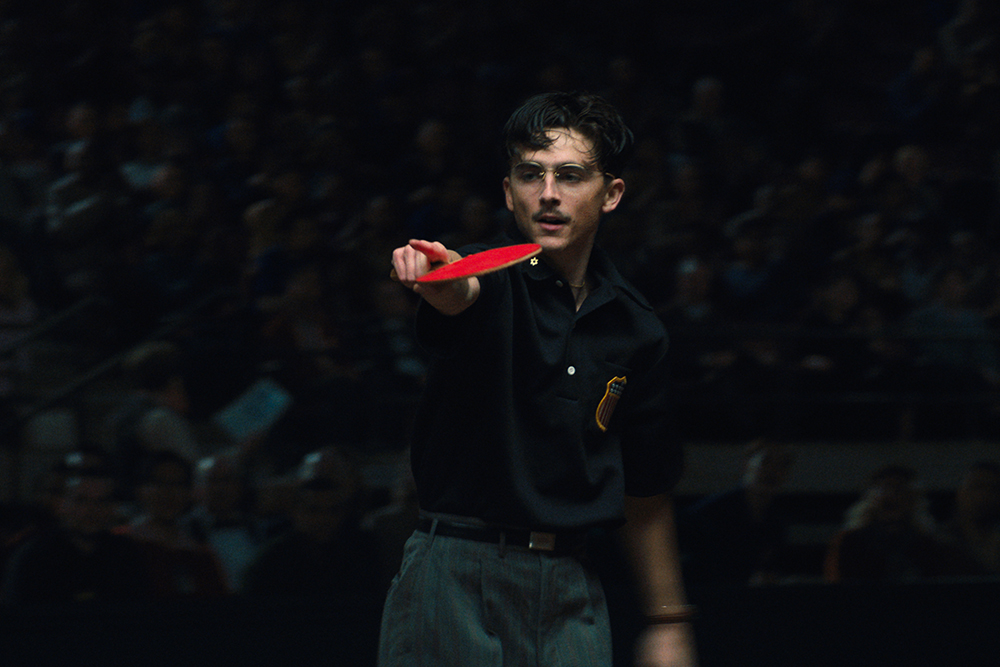
Performance-wise, Marty Supreme is shaping up to offer one of the most eclectic ensembles of any 2025 release. Surrounding Timothée Chalamet is an unexpected but thrilling cast including Gwyneth Paltrow, Odessa A’zion, Kevin O’Leary, Tyler Okonma, Abel Ferrara, and Fran Drescher—names you wouldn’t immediately associate with the same cinematic universe, yet Safdie binds them into the unpredictable mosaic of Marty’s rise and fall. Each character adds another layer of strangeness and vibrancy to Marty’s journey, making the film feel like a carnival of mentors, enemies, opportunists, and strange angels drifting through his orbit. Notably, the movie’s soundtrack is crafted by Daniel Lopatin, whose previous collaborations with Safdie (including Uncut Gems) resulted in unforgettable sonic landscapes. Lopatin’s synth-driven, hypnotic approach seems perfectly suited to table tennis, a sport defined by rhythm, reflex, and tension, and one can already imagine how these high-pitched, pulsating motifs will amplify Marty’s push to transcend the ordinary.
What really stands out when studying both the film’s promotional material and reactions from early viewers is the sense that Marty Supreme is less about sports and more about spectacle—both literal and psychological. Marty’s ambition becomes a prism through which Safdie explores ego, fame, and obsession, intertwined with old-school New York grit. The film, distributed by A24 in the United States and Metropolitan FilmExport in France, runs an impressive 149 minutes, suggesting a deliberately sprawling narrative rather than a simple underdog story. With a budget hovering between $60 and $70 million, A24 has clearly decided to position this film as one of its major year-end awards contenders, releasing it in the U.S. on December 25, 2025 and in France on February 18, 2026. The scale alone signals that Safdie is doing more than returning to feature filmmaking—he’s leveling up, transporting his trademark intensity into a more polished, period-driven, character-focused epic.
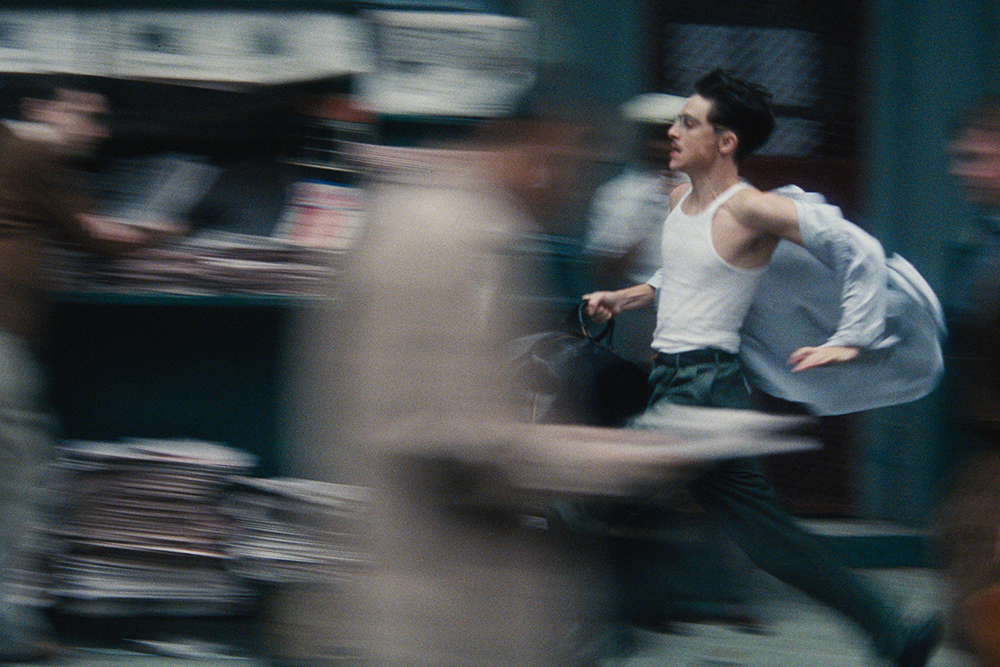
What’s particularly thrilling is how the film balances this larger-than-life production with personal touches. There’s something almost ironic and poetic about Timothée Chalamet—an actor who has become a pop-culture phenomenon—portraying a man whose brilliance is rooted in precision, discipline, and underground flair rather than household fame. Safdie and co-writer Ronald Bronstein crafted the script as a fictionalized riff on Marty Reisman, but it’s clear they want to honor the spirit rather than the literal biography. The movie becomes a love letter to the forgotten athletes who turned skill into theater, a tribute to the New York legends who could own a room simply by holding a paddle, and a meditation on the strange, brilliant people who pursue perfection while everything around them threatens to fall apart. It’s that combination of chaos, nostalgia, humor, and emotional truth that gives Marty Supreme the distinct feeling of something special—something only the Safdie/Bronstein duo could pull off.
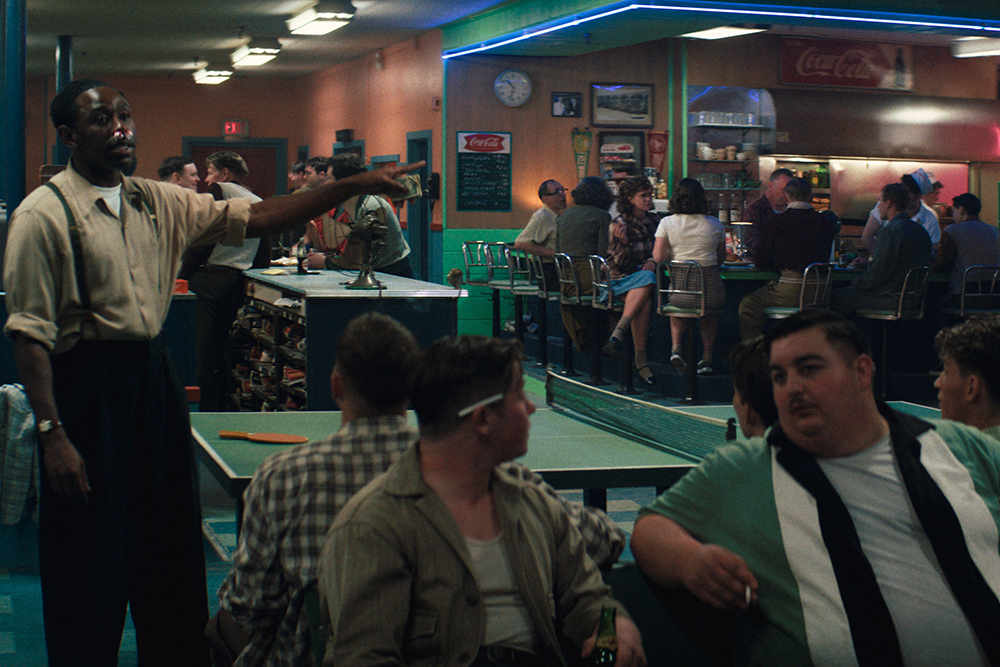
Ultimately, Marty Supreme looks to be one of those rare sports films that transcend the genre, using table tennis not as a gimmick but as a kinetic metaphor for a life lived at full speed, full passion, and full risk. With its blend of immersive period filmmaking, a daring central performance by Timothée Chalamet, an ensemble cast bursting with personality, and direction from Josh Safdie that channels personal memories into cinematic fury, the film promises to be both a crowd-pleaser and a cinephile’s treasure. If the early festival buzz and the meticulously crafted press material are any indication, A24 may have another cultural phenomenon on its hands—one that spins, smashes, and slices its way into the year’s most unforgettable releases.
Synopsis :
Marty Mauser, a young man with boundless ambition, is willing to do anything to achieve his dream and prove to the world that nothing is impossible for him.
Marty Supreme
Directed by Josh Safdie
Written by Ronald Bronstein, Josh Safdie
Produced by Josh Safdie, Ronald Bronstein, Eli Bush, Anthony Katagas, Timothée Chalamet
Starring Timothée Chalamet, Gwyneth Paltrow, Odessa A'zion, Kevin O'Leary, Tyler Okonma, Abel Ferrara, Fran Drescher
Cinematography : Darius Khondji
Edited by Ronald Bronstein, Josh Safdie
Music by Daniel Lopatin
Production company : Central Group
Distributed by A24 (United States), Metropolitan FilmExport (France)
Release dates : October 6, 2025 (NYFF), December 25, 2025 (United States), February 18, 2026 (France)
Running time : 149 minutes
Photos : Copyright A24