
 English
Movies - The Return: Ralph Fiennes and Juliette Binoche elevate a deeply moving inner odyssey
By Mulder, 01 june 2025
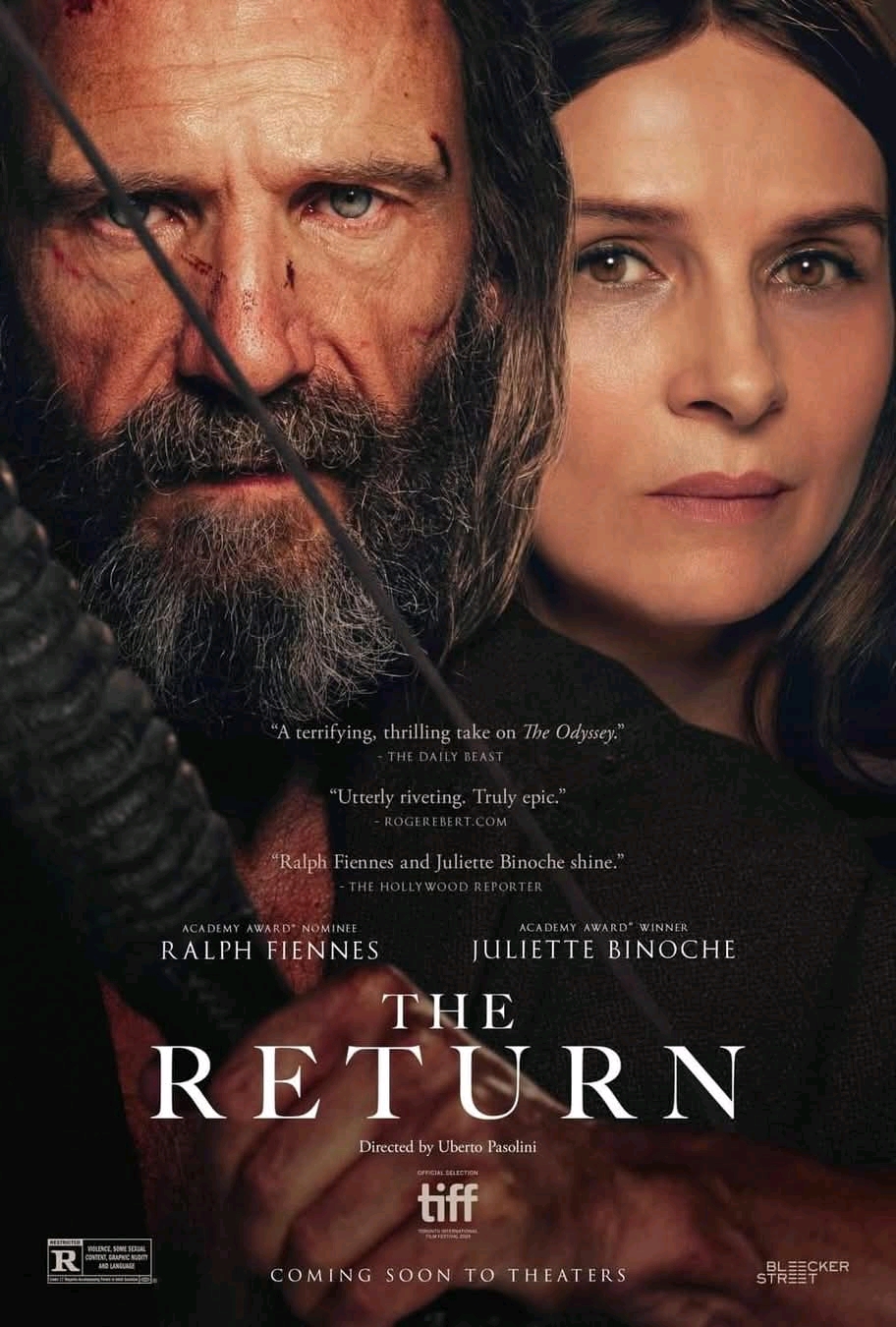
With The Return, director Uberto Pasolini pulls off a daring feat: demystifying one of the founding narratives of Western civilization to reveal its torn, often silent human substance. Freely adapted from the end of The Odyssey, this feature film, which premiered at the Toronto Film Festival in 2024 and is expected to be released in France on June 18, 2025, brings together two icons of arthouse cinema for the third time: Ralph Fiennes and Juliette Binoche. More than 25 years after The English Patient, their artistic complicity remains intact, but is expressed here in a radically different register: restraint, the wear and tear of time, and the pain of reunion. This film is not an epic historical drama in the style of Peter Jackson or Ridley Scott, but an inner odyssey reminiscent of a Greek tragedy, shot with an almost monastic sobriety, magnified by the camera work of director of photography Marius Panduru.
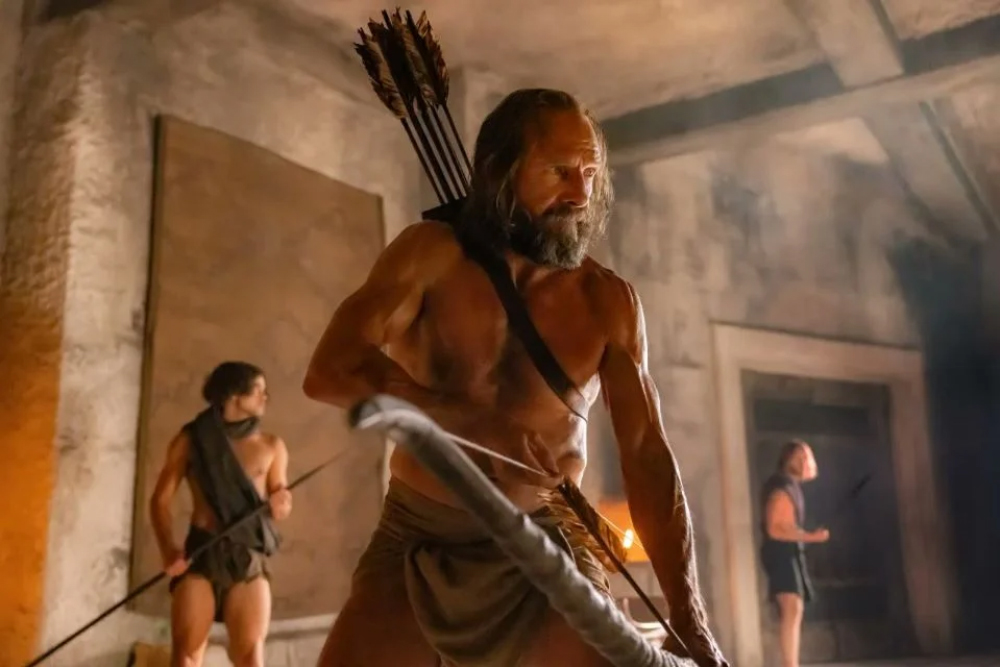
The project, which Uberto Pasolini has been developing for over 30 years, draws its strength from a dense script, crafted by Edward Bond, John Collee and Uberto Pasolini himself, which rejects any form of grandiloquence. The film is set at the very end of the story of Ulysses: he returns to Ithaca after twenty years of war, unrecognizable, stripped of all heroism. He is no longer the man of tricks but a wandering ghost, broken, who slips into the ruins of his own kingdom. Ralph Fiennes, who prepared physically to embody this damaged body—“a body like a worn rope,” in his words—delivers one of his most stripped-down, unadorned performances, using his gaze and posture more than words to express the weight of absence, shame, and guilt. Far from tales of monsters and sirens, his Ulysses is first and foremost a lost man, returning to a world that no longer expects him. Opposite him, Juliette Binoche plays a fierce Penelope, sovereign in her silence, imprisoned in a palace occupied by suitors she has stubbornly rejected for two decades.
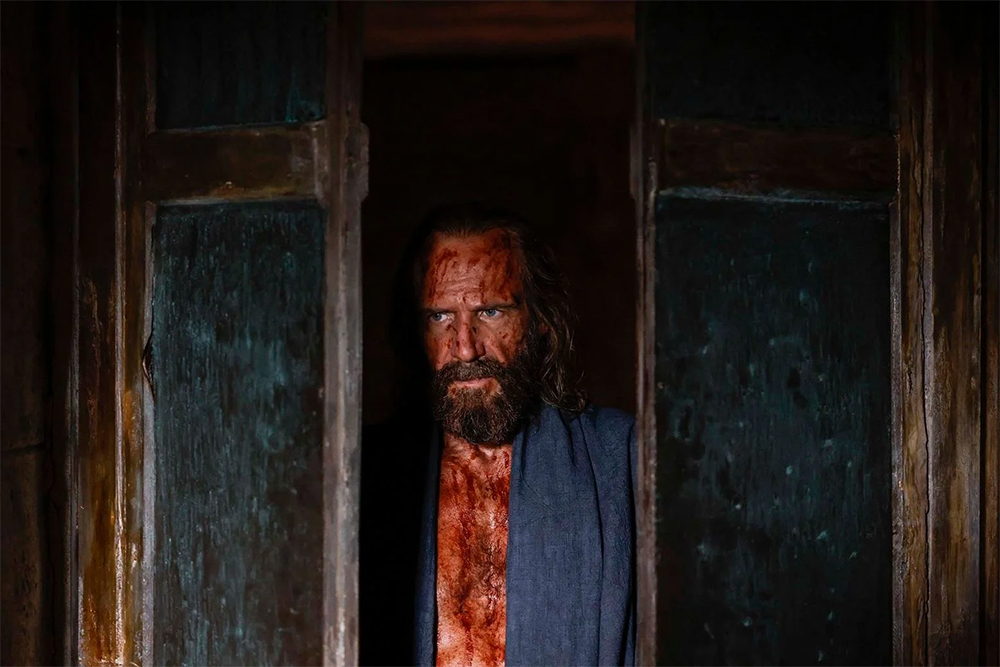
The actress, who found new resonance in this role after reading The Odyssey to her own teenage son, refuses to make Penelope a mere figure of waiting. On the contrary, she embodies a strategic, wounded woman whose stoicism masks immense loneliness. What unfolds between Ralph Fiennes and Juliette Binoche is not a story of rediscovered love, but the difficult reconnection of two people who no longer recognize each other. There is a subtle tension and brutal delicacy in their exchanges. The scarcity and preciousness of words bring to mind Bergman or even Cormac McCarthy's The Road. Every word counts, every glance pierces the surface of the other.
Uberto Pasolini's direction is almost radically sober. Shot on location in Corfu, the Peloponnese, and the Italian countryside, the film follows the slow rhythm of mourning and memory. The natural light, the close-ups of faces, the prolonged silences—everything contributes to making this film a rare sensory experience. The viewer is invited to observe, to wait, to immerse themselves in a space devastated by war, a house in ruins, a faithful dog who only recognizes his master when he is dying. Rachel Portman's minimalist but poignant musical score accompanies this meditation on lost time with a discreet, almost invisible score, whose motifs seep into the soul of the film like waves on the rocks of Ithaca.
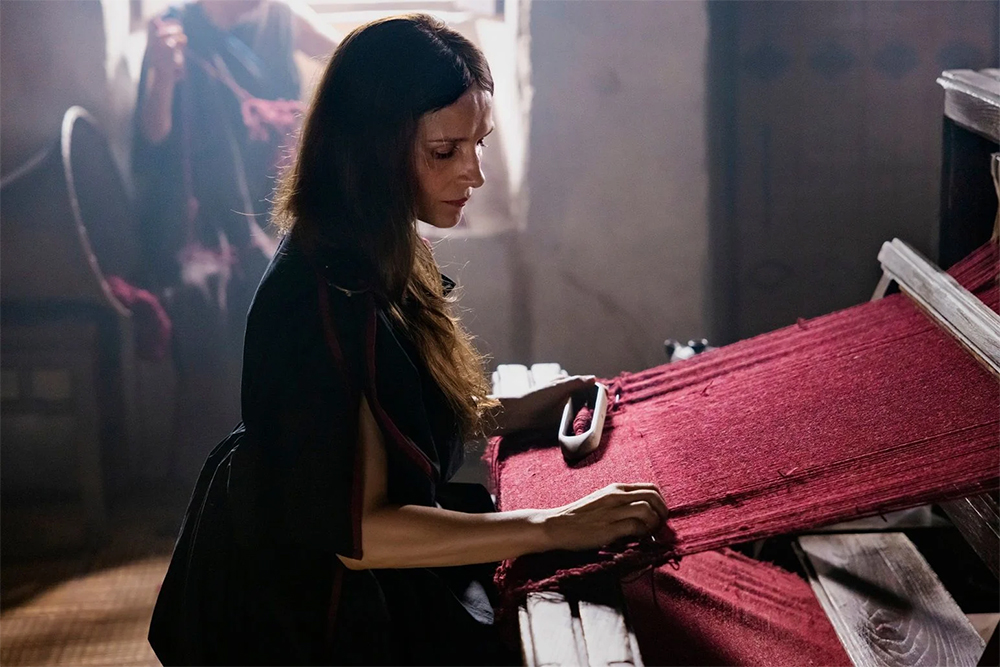
The supporting roles are played with varying degrees of finesse, but a few performances stand out. Charlie Plummer, as Telemachus, accurately portrays this candid yet rebellious son, born in his father's absence, manipulated by suitors but driven by a deep instinct for truth. Marwan Kenzari, chilling in the role of Antinous, imposes a cold, bureaucratic authority that contrasts with the expected brutality. His frozen, almost impassive face becomes the embodiment of illegitimate power and silent threat. The final duel between Ulysses and his usurpers, particularly during the archery contest, is staged without the slightest hint of spectacle: no triumphant music, no exaggerated bloodshed—just the silence of an inevitable act, that of justice being served by the taut bowstring.
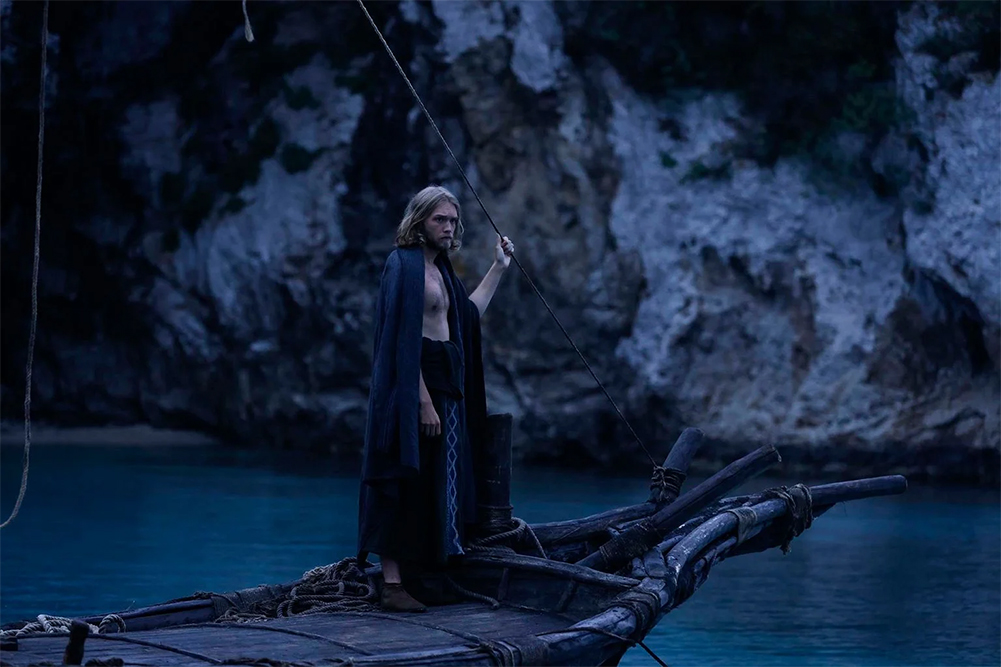
Underlying the film is an exploration of war, masculinity, transmission, and reconstruction. In his production notes, Uberto Pasolini mentions that he wanted to make a film about the consequences of conflict, about the man who returns but never really comes home. The myth thus becomes a parable about all broken soldiers, broken families, and lost kingdoms. Edward Bond, the film's co-writer, who died shortly before its release, described the film's approach as anti-patriarchal and anti-cinematic, with a deliberate desire to break with traditional narrative conventions in order to make room for the human element. This ambition is evident in every shot, even at the risk of losing some of the audience who are unprepared for this cinematic asceticism.
The Return stands out as a major, demanding work, whose emotional power lies in what is left unsaid and in the silences. Carried by two immense actors with raw sensitivity, filmed with rare ethical and aesthetic rigor, it reminds us that the essence of cinema can lie in the purest economy of means. A counter-current odyssey, where the journey matters less than what we find—or don't find—at the end of the road.
Synopsis :
Returning from the Trojan War after 20 years away, Ulysses washes up on the shores of Ithaca, his former kingdom. His wife Penelope, who has remained faithful, lives there as a prisoner in her own home, rejecting all suitors to the throne. Their son Telemachus, who has never known his father, becomes an obstacle to those who want to seize power.
The return
Directed by Uberto Pasolini
Produced by James Clayton, Uberto Pasolini, Konstantinos Kontovrakis
Written by John Collee, Edward Bond, Uberto Pasolini
Starring Ralph Fiennes, Juliette Binoche, Charlie Plummer, Marwan Kenzari, Ángela Molina, Tom Rhys Harries, Amir Wilson, Moe Bar-El Elatus, Jamie Andrew Cutler Polybus, Jaz Hutchins Hippotas, Matthew T. Reynolds , Amesh Edireweera Leocritus, Pavlos Iordanopoulos Stratius
Music by Rachel Portman
Cinematography : Marius Panduru
Edited by David Charap
Production companies : Picomedia, Rai Cinema, Heretic, Ithaca Pictures Inc., Kabo Productions, Marvelous Productions
Distributed by Maverick Distribution (France), Bleecker Street (United States)
Release date : December 6, 2024 (United States), June 18, 2025 (France)
Running time : 118 minutes
Photos : Copyright Ithaca Films / Marvelous Productions