
 English
Prime-Video - I’m your woman : After Stargirl the new Julia Hart’s movie
By Mulder, 28 november 2020

A decidedly female take on the classic crime dramas of the 1970s, filled with impeccable period detail, I’m Your Woman tells the story of one woman’s struggle to survive in a dangerous new world. I’m Your Woman is written and directed by Julia Hart (Fast Color, Miss Stevens). The film is produced by Jordan Horowitz (La La Land, The Kids Are All Right) and Rachel Brosnahan (“The Marvelous Mrs. Maisel,” “House of Cards”). It stars Brosnahan, Marsha Stephanie Blake (“When They See Us,” “Orange Is the New Black”), Arinzé Kene (“Flack,” The Pass), Frankie Faison (Coming to America, Do the Right Thing) and Bill Heck (The Ballad of Buster Scruggs, Pit Stop). Executive producer is Bart Lipton (Little Miss Sunshine, La La Land). The director of photography is Bryce Fortner (Ingrid Goes West, Stargirl). Production designer is Gae S. Buckley (The Book of Eli, Stargirl). Editors are Shayar Bhansali (Stargirl, Against Night) and Tracey Wadmore- Smith (Fool’s Gold, Stargirl). Costume design is by Natalie O’Brien (Honey Boy, Stargirl). Hair department head is Victor L. Jones-Moore. Makeup department head is Darylin Nagy. Original music is by Aska Matsumiya Music supervisor is Dan Wilcox (“Waco,” Fast Color).
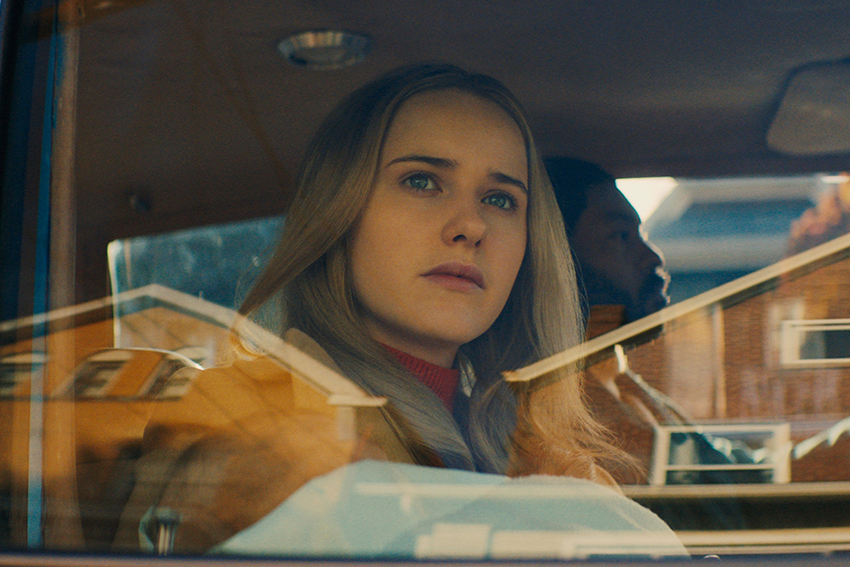
Writer and director Julia Hart has long had a passion for the gritty crime dramas of the 1970s. But it’s not the violent antiheroes played by icons like Al Pacino, Robert De Niro and James Caan that interest her most; it’s the characters on the periphery — the women. “I love those movies in spite of the fact that none of the protagonists represent me,” she explains. “The stars are all men, mostly white men. And then you have all these formidable actresses playing very small roles: Diane Keaton, Tuesday Weld, Teresa Wright, Ali MacGraw, and then when the action gets going, they get kicked out of the movie because the men don’t think they can handle it. The moment the door closes in Diane Keaton’s face in The Godfather. The moment Tuesday Weld gets in the car in Thief. Sure it’s cool to watch the man go take care of business, but I just always found myself wanting to follow the woman. Where is she going? What’s going to happen to her? And since I never got to see that in those movies, I just decided to make that movie myself.” And that movie is I’m Your Woman. From start to finish, the film follows Jean, an initially passive woman who finds courage and strength to prevail when the actions of her husband, Eddie, place her and her child in grave danger. Thrust into an unfamiliar world, Jean must learn on the run how to survive and protect herself and her child.
“Women are mostly in those movies to show what’s at stake for the male protagonist, what he has to lose, rarely do we get to see the interior life of that woman or understand what’s at stake for her,” says Hart. “I wanted to explore every element of that character and give her her own movie, her own story.” Horowitz says Hart’s ability to look at a typical genre story and imagine it in a different light is key to their filmmaking process. “One of the things Julia and I love to do when we make movies is to look at established genres from a new perspective. In this case, Julia said, what if, rather than stripping out the male character and replacing him with a woman, we followed the traditional female character to see what happens? The result is a story that has all the beats of a crime drama in a way that I hope is familiar and accessible but also fresh and distinctive and modern.”
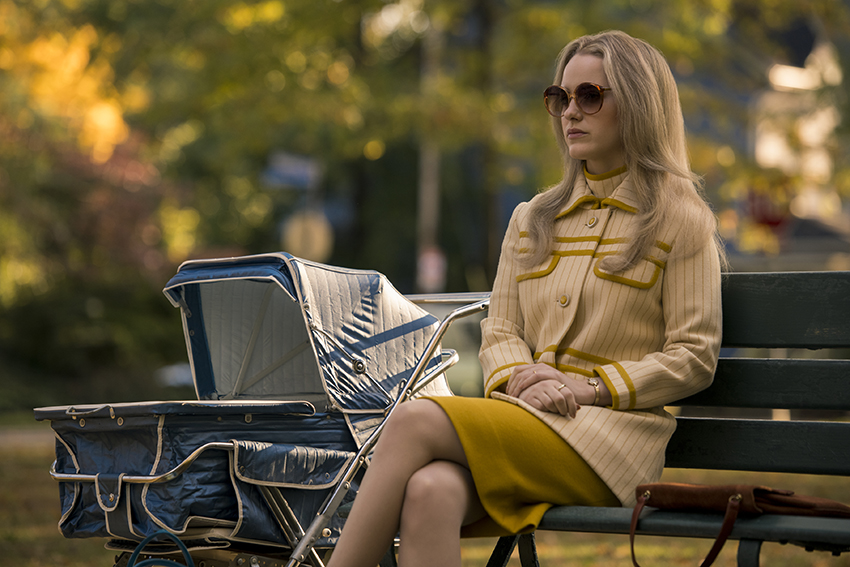
A scene from Michael Mann’s 1981 action thriller Thief inspired the movie’s title, according to Hart. “In it Tuesday Weld tells James Caan, ‘I’m your woman and you’re my man.’ And that really stuck with me. This idea that these women belonged to those men. I wanted to reclaim their stories and their womanhood for themselves. It’s almost like she’s telling the audience, ‘I’m your woman. I’m the one. This is my story.’” It’s a journey Hart is familiar with. While she initially saw herself solely as a writer, during the shooting of her first produced screenplay, The Keeping Room, she was surprised to realize she wanted to take charge of her material. “Not to take anything away from Daniel Barber, the director, but as I sat on set watching, I thought, why am I not doing this? Why am I not the one taking this story across the finish line?” she recalls. “Women are socialized not to take on leadership roles. I was ashamed that I had let that happen to me and my story and I vowed I wouldn’t let it happen again.” Hart and Horowitz started writing together around the same time they started a family. “It was great, you don’t really go out much once you have a baby, so we would put our son to sleep and then stay up late writing together,” Hart recalls.
Of the many scripts they co-wrote, I’m Your Woman was the one they held on to and kept coming back to, revising it and continuing to deepen the story and the characters. “Jordan and I worked on the script for about five years while we were working on other films. We’d make a movie and do a new draft of it. Make another movie, write another draft. We wanted to be patient with it, to make sure we got it right, and we wanted to be sure we could secure the right budget and the right partners to make it given that it’s a period piece with larger set pieces. I also wanted to make sure we found the perfect Jean.” Horowitz insists that producing will always be his priority — he writes only with Hart. “She is the big idea generator,” he explains. “For me, the process is a bit more editorially driven. We talk through a story, give it shape, then we start to write stuff down, and we keep kicking things back and forth. Then Julia usually does a first pass on the script, then I take it, and we go on and on like that until we get to something we both like. It’s a process that has shifted quite a bit over the past four movies, and we’re still refining it. And I think hopefully bettering it? We’re always open to things that make it better.”
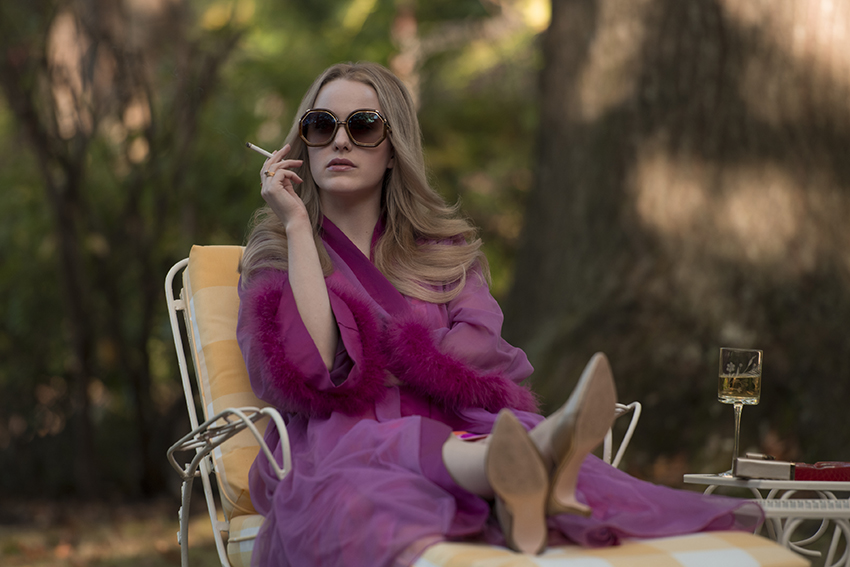
Emmy-winning actress Rachel Brosnahan stars as Jean and is also a producer on the film. Brosnahan was deeply impressed with Hart and Horowitz’s writing as well as their commitment to making a special movie. She was also ready to try her hand at producing. “I can’t express how grateful I am to Julia and Jordan for empowering me in this way for the very first time,” she says. “I loved being part of their collaborative process and I was able to get involved at a much earlier stage than I am usually. They have been incredible mentors.”
The film marks the first time Hart has had a lead actor also serve as a producer, and she says it’s something she would happily do again. “Having your lead actor be a part of production conversations outside of their character was an amazing experience. Rachel is a very committed and talented producer. She and Jordan made a great team. I felt so supported and seen and challenged in all the right ways.” According to Brosnahan, Hart creates an atmosphere on set that promotes acknowledgment and collaboration. “I appreciate the way Julia embraces her femininity as a director,” she says. “The impulse, when a woman finds herself in a powerful position, is often to try and behave in a more masculine way. Julia transformed the energy of the set in her own way. She brought out a unique side of every person working on it. She’s incredibly generous with herself and her time. It made everyone work better and harder and more collaboratively because they were encouraged to be exactly who they are.”
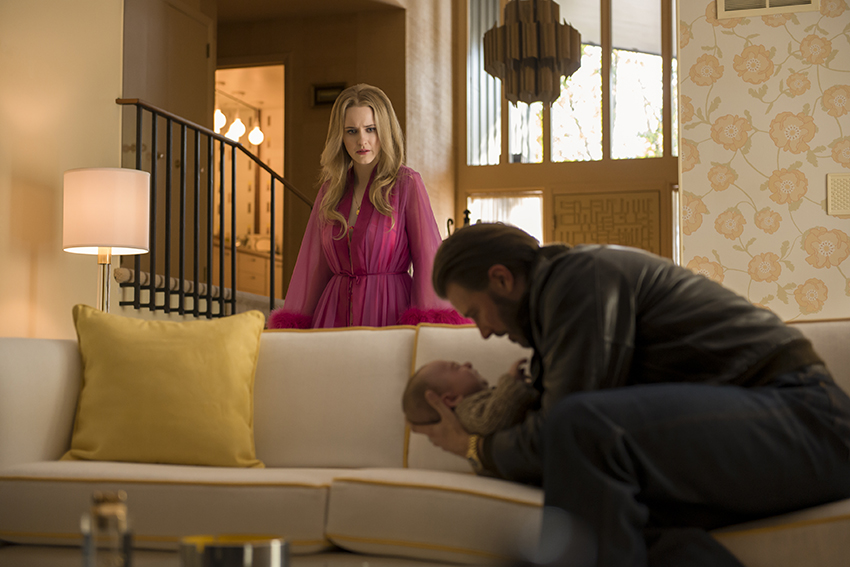
Viewers who are only familiar with Brosnahan’s award-winning role as the sunny, plucky comedian Midge Maisel are in for a surprise, says Hart. “There were times on set when Rachel was unrecognizable to me. I knew her work from ‘House of Cards’ and ‘The Marvelous Mrs. Maisel,’ which are very different performances. Seeing her as Jean is another amazing transformation. She’s really a character actor in a movie star’s body.”
Horowitz is equally effusive in his praise for the actress. “She is quite extraordinary, with exceptional control of her instrument,” says the writer-producer. “I slipped the script to her manager, who has been a friend for a long time. She loved it and when she and Julia met, we could see that this would be an ideal situation. Since Rachel had a deal with Amazon, it made sense to bring it there first.”
After spending the last several years of her life as Mrs. Maisel, Brosnahan was excited by the prospect of tackling a completely different role. “This character is so far away from Midge,” she notes. “I like to play characters I don’t immediately understand. My favorite part of the acting process is the moment I can go from knowing that I haven’t quite got it to seeing the character begin to take shape in front of my eyes.” Brosnahan’s deep investment in the film and the character has been an unexpected gift for Hart. “Jean is such an important character for me,” the director says. “I lived with her so long and to see her brought to life so beautifully has exceeded all my expectations. Rachel does many remarkable things in this movie — and most of them with a baby in her arms.” The actress is fully aware of the extraordinary opportunity she was given to work with Hart to grow the character. “She had been developing this script for a long time,” says Brosnahan. “I knew how special it was for her. But she let me into the process. I loved working with her. She is so talented and has an innate curiosity about people that spills out through her work.”
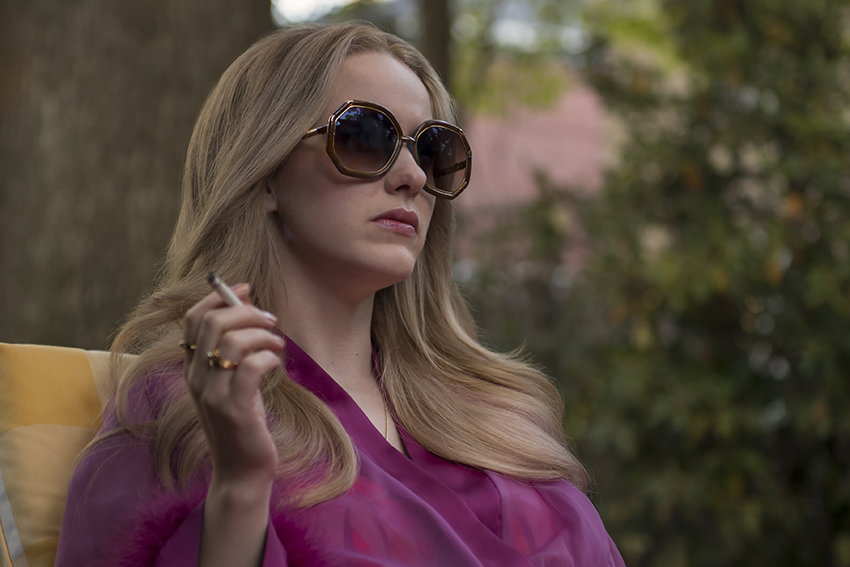
According to Brosnahan, Jean thought she knew who she was and what she wanted, but that changes in a matter of moments. “She doesn’t believe her own instincts. She always feels she is not doing what she should, not living up to expectations, but she learns that she was capable all along, in fact far more capable than she could ever have dreamed.” The question of motherhood is also central to Jean’s dilemma. After wanting a child desperately she resigns herself to the fact she cannot have children. But then she is suddenly left with a baby she did not ask for or plan on. “We rarely see a mother who doesn’t connect with her child on screen, but I think it is something many women fear will happen to them,” says Brosnahan. “And it’s not always perfect. The bond can take a while. I don’t have children but it’s something I have considered myself. I thought it was just me, but it’s apparently not uncommon.”
Hart points out that making one of your main characters an infant is unusual. “You don’t see it much because it’s insane! Babies can only work four hours a day. Babies can’t act. Can’t take direction. And certainly can’t hit a mark. But we felt it was a risk worth taking and the results were magical. Babies are just living their lives and it forced all of us to live in the present moment as well. Which is not an easy thing to do on a film set, but it was such a special experience. In the end, it lends a beautiful authenticity and urgency to what ends up on screen.” Brosnahan credits Hart and Horowitz with providing her an unmatchable foundation in producing. “Julia and Jordan taught me so much. It was a gift to be allowed into their well-oiled machine. Watching their partnership inspired me every day. I hope to produce more films and the amount of learning they gifted to me will be essential to that. I am endlessly grateful for the opportunity. They took a chance on me and I promise I will pay it forward.”
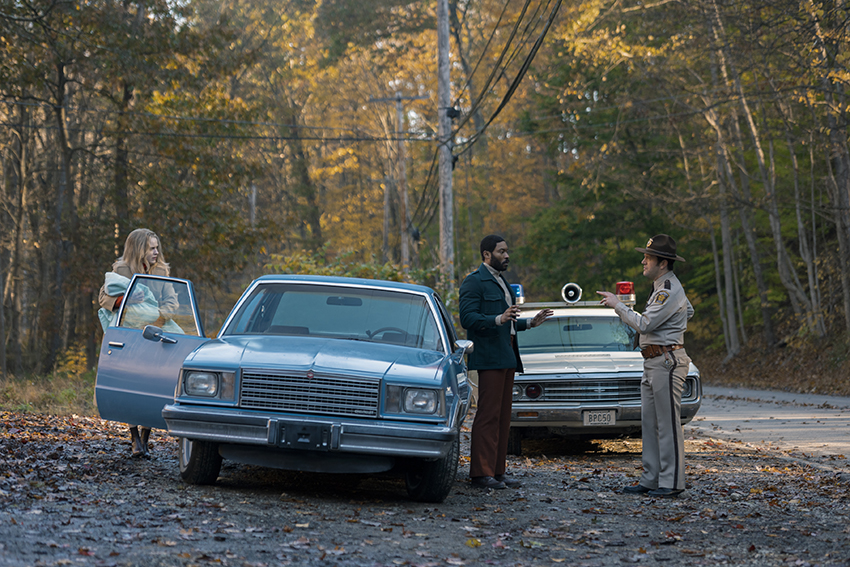
On her first reading of I’m Your Woman, Brosnahan had a casting brainstorm for the character of Teri, the woman who becomes Jean’s friend and guide through the city’s dark underbelly. Actress Marsha Stephanie Blake had built an impressive resume in theater, television and film before earning a 2018 Emmy nomination for the Netflix series “When They See Us.” She and Brosnahan met when they co-starred in a stage production of “Othello.” “During our first conversation about the script, Rachel asked who we had in mind for the role of Teri and she suggested Marsha Stephanie Blake. And once I pictured her, I couldn’t imagine anyone else in the role,” says Hart. “And Rachel and Marsha Stephanie had worked together before and are very good friends. They’re both incredible actors, but I also think their history and real-life intimacy shows up in the space between Teri and Jean in a very powerful way.” Brosnahan says she could not get the image of Blake as Teri out of her head. “She has a directness that instantly makes you trust her. It is a generosity in that she takes care of people. She loves like no one else. I have admired and looked up to her since the day we met.”
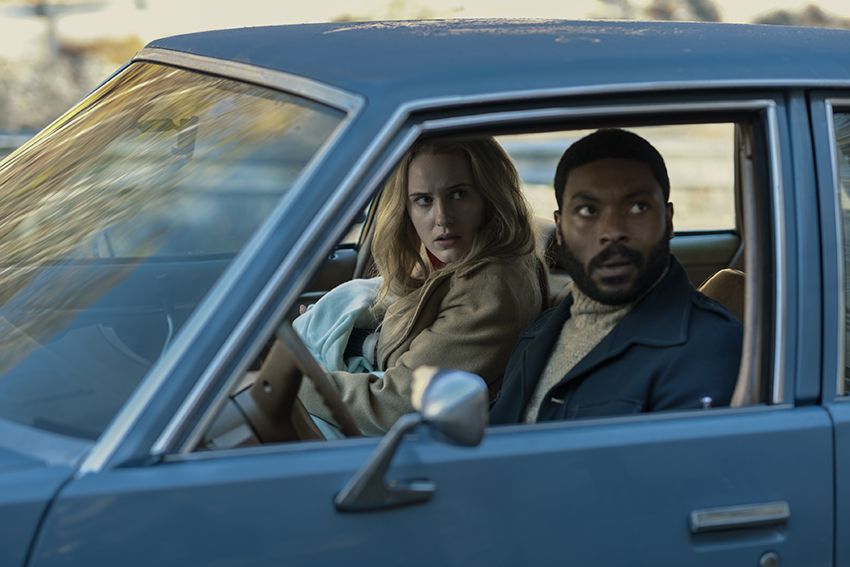
“Rachel kept telling us she couldn’t picture anyone else in the role,” adds Horowitz. “Julia had a call with her and we pitched her to Amazon. Marsha Stephanie brought a gravitas and a sympathetic toughness to Teri. She is herself the mother of two girls, and she brought a lot of that mom energy to the role.” Although Jean doesn’t know it when she first meets her, Teri has already been through what Jean is going through, explains Blake. “The difference is that Jean is a true innocent and Teri never was,” says the actress. “She no longer wants to be involved in that life, but she’s been pulled back in because of a promise she made long ago. So now she has to help save Jean. If Jean was a different kind of person maybe Teri wouldn’t feel so obligated, but she’s so vulnerable and of course she has the baby.” Blake admits that when Brosnahan mentioned the role to her, she didn’t take the possibility seriously. Who, she thought, would take a casting recommendation from an actor? “But they did!” she marvels. “I trusted Rachel’s taste and her ability to know that I would enjoy this. When I read the script, I was impressed by the fact it was a female-driven story. They really are mob wives and this is the side of that world we never get to see. What happens to the women when men create problems for them?” Blake, who has been friends with Brosnahan since before her “Mrs. Maisel” fame, says she has long been impressed by the actress’ maturity and ambition. “She’s very young but seems so much older. Rachel had to do some of the movie’s most physically challenging scenes on the coldest days we had in Pittsburgh and she did them over and over again. Julia is a perfectionist so she does lots of takes. Rachel never hesitated. She would work through the worst nights, sometimes until dawn.”
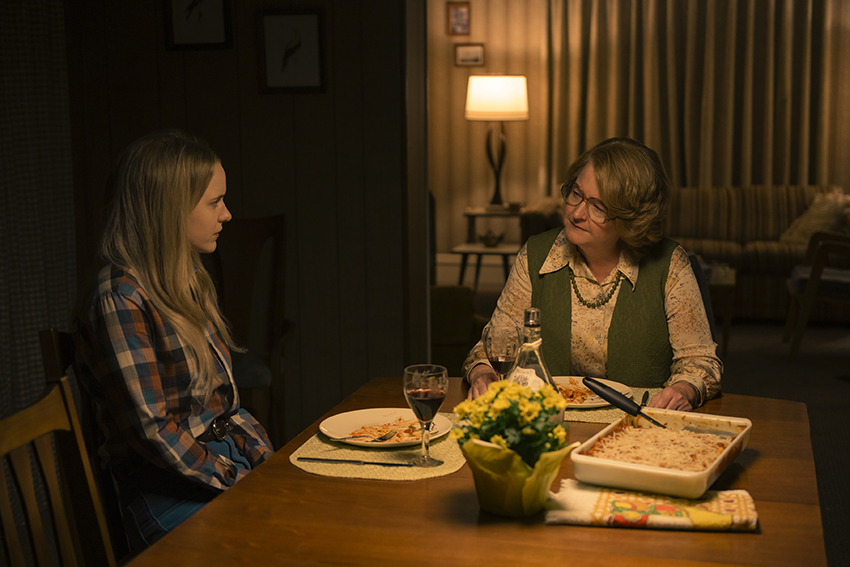
Teri’s husband Cal is played by Arinzé Kene, a British actor whom one of the movie’s casting directors had seen in a London stage production of “Death of a Salesman.” Sent by Eddie to rescue Jean, Cal quickly realizes the assignment is much more than he bargained for. “We had been looking at some wellknown actors, but Julia liked the idea of casting an unknown,” says Horowitz. “We were trying as much as possible to stay true to Jean’s perspective. She is expecting Eddie to come back for her, and when Cal shows up instead, she’s never seen him before. At that point she realizes she has no idea what to expect next.” It was clear to Hart during their first phone call that Kene was the Cal she was looking for. “It was just a Skype conversation, not a formal reading or anything. I couldn’t tell if he was just Cal or if he was giving the greatest audition I’d ever seen. He embodied everything I was looking for. And his American accent is impeccable,” she says. “It feels like he’s wrapping his body around the dialect.” On set, “the babies were obsessed with him, so we have some adorable outtakes. He could calm them down in seconds. His character is distant and intense, but when the babies would arrive he totally melted and became Arinzé again.” Kene says as soon as he began reading I’m Your Woman he realized it was different than most of the scripts he receives. “So much of what I read has supernatural or sci-fi elements and superheroes. I loved the pace and naturalism of this story. It’s quite domestic and emotional.”
Like Teri, Cal spent some time on the wrong side of the law, but managed to extricate himself from that life some time ago — or so he thought. “Someone he owes a favor drags him back in,” Kene says. “He is a good man but in the past he’s done bad things He’s not anticipating this favor will be so complicated, but sometimes the laws of karma apply and what lies dormant in his past comes back to bite him.” The contradictions in Cal’s life make him a complex and mysterious man, says Kene. “That is what drew me to the character,” he continues. “Cal initially appears quite cold, until you understand a bit more about his past. He keeps his head down, works as a moving man, just a low-key everyday job. He honestly felt like such a real person. But the heart of the story is the relationship between Jean and Teri as they learn to work together in order to survive.”
Although stepping into the world of those two powerful women may have been intimidating for Kene, especially since the actresses have a history together, Blake says he had nothing to worry about. “He is such a good guy,” she says. “He’s incredibly smart and thoughtful. I had heard so many wonderful things about him and he was a dream to work with.” Kene was well aware of both of his co-stars’ work before signing on to play Cal. “I knew Rachel from ‘Mrs. Maisel’ and I think she’s brilliant, so getting to act with her was a huge plus,” he says. “I had seen Marsha Stephanie on an episode of ‘Girls’ years ago and something about her stuck with me. The two of them are as good at being people as they are at acting; I could hang all day with them.”
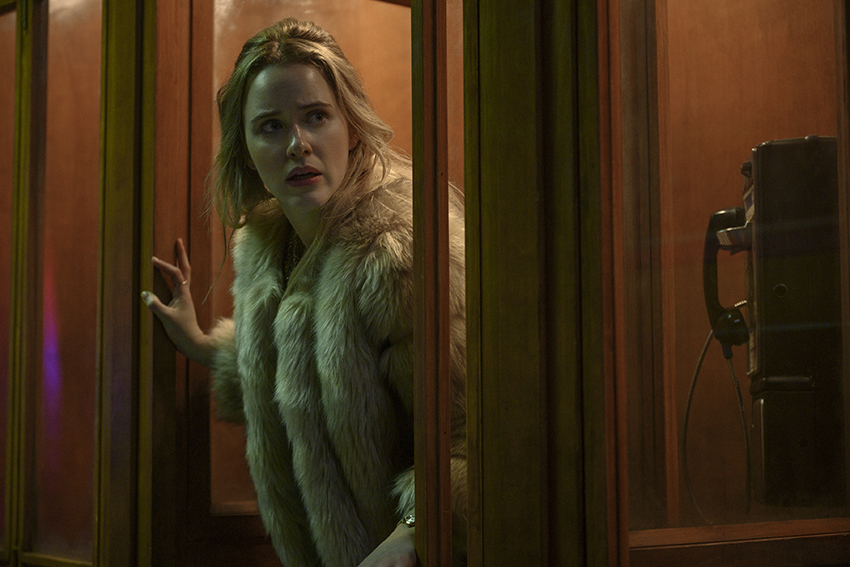
I’m Your Woman is set in an unnamed Northeastern U.S. city at an unspecified point in the 1970s. The film’s designers coordinated locations, wardrobe, hair and makeup, cinematography and set dressing to create a stylish but never stylized impression of a unique decade in American life and cinema. As they began the search for production locations, the filmmakers set out to find a smallish, wellpreserved city with distinctive residential and industrial architecture as well as woodlands for the rustic cabin Jean eventually takes shelter in. Pittsburgh turned out to be a city with all the qualities they needed and then some.
Meetings between Hart, Horowitz and the film’s department heads began with general discussions of color and tone. “It’s always important to me to make sure we are all making the same movie,” the director explains. “Whenever a film has a truly cohesive vision, the director gets the bulk of the credit, but for me, it’s the result of intense collaboration and admiration between my department heads and me.” Rather than a specific city or year, the film exists in the cinematic world of the period, says Hart. “I don’t like it when I see a period movie and everything is from the year it is set in. Every car is from 1975. from 1969. A song from the ’50s. I set out to make a movie that feels like the ’70s, not like a period piece. We tried to avoid stereotypes and tropes as much as possible.” Working with director of photography Bryce Fortner, Horowitz and Hart put together a shot list well in advance of production. “Then during shooting we spent part of every weekend going over the list,” Hart says. “I am a strong believer that a safety net allows you to reach for the trapeze. Being prepared allows me to be more creative on the day.”
Fortner notes that the film was never shot as if it is looking back at the ’70s through the eyes of someone today. “We didn’t use old lenses or try to create the feeling of a gauzy memory,” he says. “We relied on the design, wardrobe, locations and elements like that to speak to the time period rather than what I was doing with the photography.” All involved agreed they wanted to shoot the film with anamorphic lenses that would stretch the frame for a more filmic quality. “We tested a variety of lenses from very old to crisp and modern,” Fortner recalls. “The ones we chose are on the newer side. The image didn’t call attention to itself. It wasn’t too slick, but it helped take the crisp edge off the digital. I used very high ISOs to introduce more grain into the image and give it some texture. You won’t be aware of it but it does bring a little more grit.
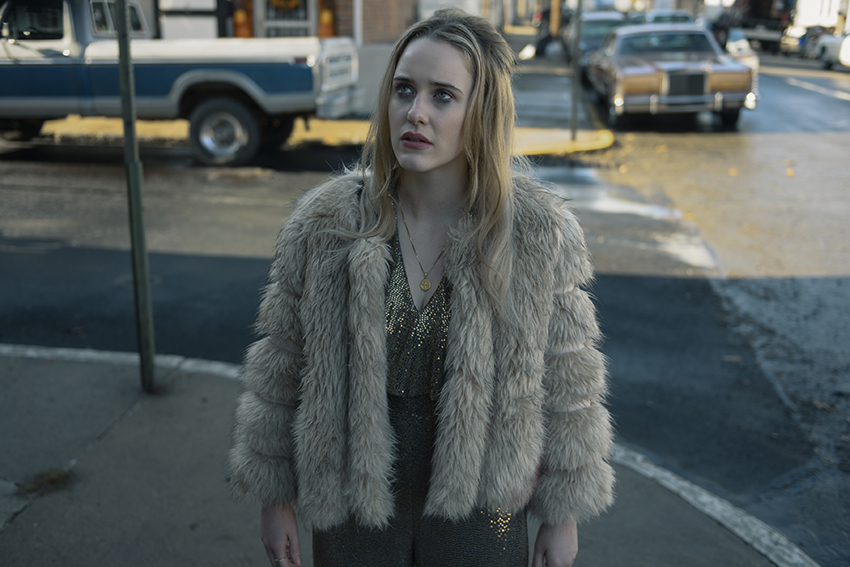
“My job is to make sure the photography bolsters performance and story, and still make it look as pretty as I can,” he adds. “I would describe the look of this film as tangible. It’s not at arm’s length; it’s not glossy or slick. We used available light and natural light when we could. I tried to make it feel as real and experiential as possible.” I’m Your Woman’s numerous and diverse locations include a posh suburban home, a worn-down safe house, a rural cabin, a classic diner, a dingy laundromat and a flashy nightclub. After making three films in total with production designer Gae S. Buckley and set decorator Patrick Cassidy, Hart says she has complete confidence in their vision and ideas.
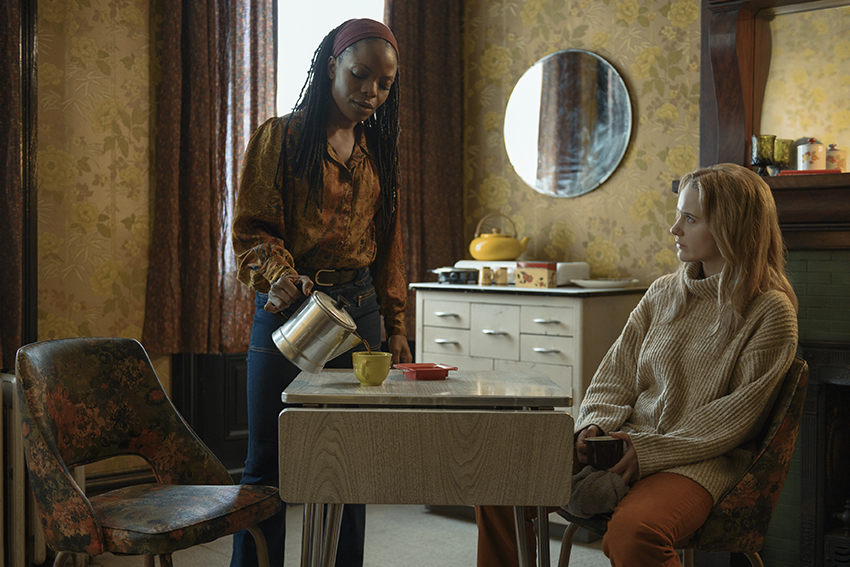
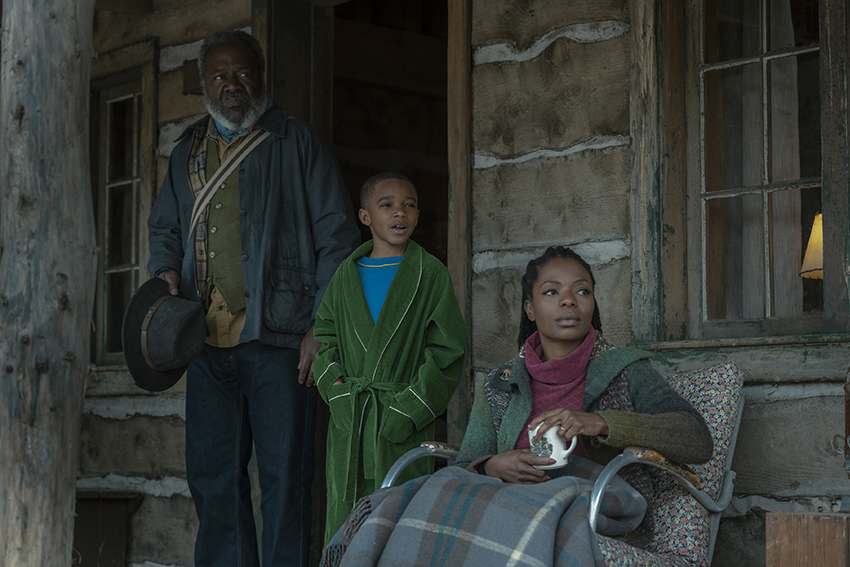
Buckley lined the walls of her office with pictures of all of the film’s settings in the order in which they appear. “Each home in the film is very different and has its own unique feeling,” says the director. “Eddie and Jean’s home is contemporary to the period, clean, stylish and sterile. Everything is about appearances there. The safe house is drab and anonymous. No one really lives there. And then, finally, the cabin is old and rustic. It’s a family home and it’s warm, full of artifacts of real life. Real family. Messy. Lived in. Loved.”
In Pittsburgh, the filmmakers worked with location manager John Adkins to find the right settings. “When we were looking for the safe house, he would drive us through working-class neighborhoods to browse,” says Buckley. “It was a bit tricky because we wanted a house that would be on a smaller scale than Jean’s house, but a house that is smaller on the outside is also smaller on the inside, which can be difficult to shoot. He helped us find the perfect property.” For a crucial scene set in a downtown nightclub, Buckley drew inspiration from classic New York clubs. “I love places like the Palladium that were basically nightspots that had become so run down and then were taken over by these young entrepreneurs who filled them with mirrors and lights and art. I asked John Adkins to find us something that had those bones and he found this old Lithuanian social club we were able to transform.” Cal’s family cabin was built from the ground up for the film. “And it’s pretty darn cute!” says Buckley. “This is where his family would spend weekends and summers. In terms of decor like kitchen curtains and bedding, we wanted it to be basic and lived in, as if a family has been using it for many years.”
Costumer Natalie O’Brien, whose recent credits include Honey Boy and Lizzie, also worked with Hart and Horowitz on their coming-of-age drama Stargirl. “Natalie can make things authentic on whatever budget you have,” says Hart. “The way she blended new items with vintage pieces is pretty miraculous. You can’t tell which is which. And that is incredibly hard to achieve on any budget.” Hart always has clear visual goals for her films, says O’Brien. “But she didn’t want to be so strict that anything after, say, 1978 was off limits. The whole era was wonderful to dive into and so much fun to shop for.”
Blake is often dressed in teals, purples and jewel tones, says the costume designer, while Brosnahan sports orange and gold in many scenes, including a classic two-piece tartan skirt and blazer with an orange turtleneck. “We also used some pastels for Rachel because she really wanted a softer look for the character in the beginning. She was a massive part of the process. We had maybe eight or ten fittings with her because she has so many looks. She was interested in every aspect and great to collaborate with.” Iconic 1970s flares play a big part in both of the women’s wardrobes, the designer observes. “The ladies get to wear some kickass pants that we actually widened a little without letting them get too exaggerated. Anything high-waisted speaks of that time to me. And Rachel has on clogs at times, which were very much of the moment. They’re actually quite comfortable too. She had a lot of physical things to do at that point in the film so I was a little worried. But she pointed out that she had been in heels for most of ‘Mrs. Maisel,’ so clogs were very doable.
“We decided Jean’s look would evolve with her situation,” O’Brien adds. “So in her home she’s wearing a little marabou for glamour, but her wardrobe gets more relaxed when she is alone in the safe house. Then she has to flee and leave everything behind. She starts dressing in thrift-store clothes and sweaters borrowed from Cal. Everything is there to help tell her story.” Buckley walked O’Brien through each of the set-design photos on her office wall. “She took me on a guided tour,” recalls the costume designer. “I was able to see everything exactly as it was envisioned. So I knew that in Eddie and Jean’s house, which has yellow walls, if I brought Eddie in there in a brown leather jacket it would pop. I added a yellow apron at one point to reinforce the color story.” The nightclub scene, which included about 400 extras, was the biggest wardrobe challenge. In addition to dressing the background players, O’Brien needed to find Jean and Teri party clothes that could believably be thrown together on short notice. “It’s not like Jean is Cher at Studio 54,” says O’Brien. “But we did find a gold lamé jumpsuit for her that could have been on the rack at that moment. It also allowed us to put layers under it to keep Rachel warm, as well as knee and elbow pads for her stunts. You always want the actors feeling comfortable as well as looking great.”
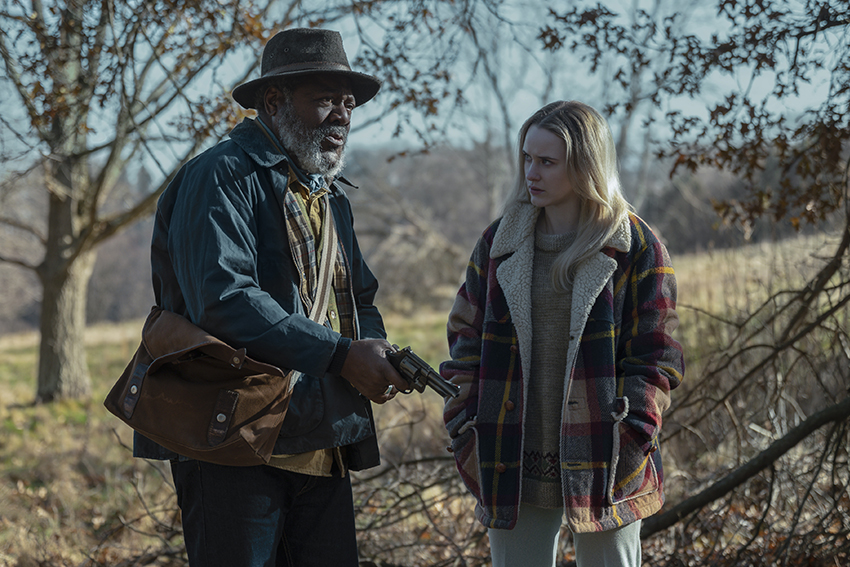
Emmy-nominated stylist Victor L. Jones-Moore, who headed up the hair department, has known Hart and Horowitz since they worked together on their 2018 film Fast Color. “Victor doesn’t just want it to look good,” says Hart. “It has to be correct and real. He does so much research and brings a remarkable team with him. He created so many looks and crushed them all while avoiding clichés.” Jones-Moore, whose credits include multiple Emmy winner “Watchmen” and the upcoming Aretha Franklin biopic Respect, likes to say that he and Hart have an “artist’s connection.” ‘“What I love about Julia is she puts the creative first,” he says. “Ideas are never dismissed because of money. If it’s good, she’ll try and find a way to fit it in. That makes working with her very special.”
For I’m Your Woman, Jones-Moore used period magazines and books, watched films from the era and even sifted through family photographs for references. “Julia wanted realistic ’70s vibes,” he explains. “It was important not to scream, ‘It’s the ’70s!’ with stereotypical oversized afros and things like that. Family photos always tell the truth. I come from a Southern family and they had their share of beehives at the time. Especially for Jean, early Sharon Tate relaxed hippie-style was a big influence. Her hair is soft blond and starts out with a little structure that begins to disappear when she is on the run. “Teri is a different case because Marsha Stephanie has freeform locks, which was kind of a curveball,” says Jones-Moore. “We had originally thought some form of afro would work better, but when we did the research there were plenty of women with locks in the ’70s. It’s Bob Marley’s heyday and reggae was super popular. We considered trying to loosen her locks up, but instead we emphasized her hair with scarves, beads and shells in some places.”
As head of the makeup department, Darylin Nagy was responsible for Jean’s ever-evolving visage. “She took on a lot of challenges and succeeded at them all,” says Hart. “The movie required everything from glam nighttime looks to special effects makeup, and she did amazing work that was authentic and beautiful.” Faced with the same challenges of scale as the wardrobe and hair departments for the expansive nightclub scenes, Nagy and her staff set up facial-hair stations for the male extras to reproduce the era’s ubiquitous moustaches and beards. They also spent time erasing today’s equally ubiquitous tattoos for period accuracy. Nagy, whose numerous credits include Boyhood and last year’s A Beautiful Day in the Neighborhood, says she also took some of her inspiration for Jean from 1970s movie-star-in-the-making Tate. “Jean begins as a sort of kept woman who likes to match her eye shadow to her outfit, but as her life unravels she becomes more understated,” explains Nagy. “As with the other visual elements of the film, there is still some holdover from the ’60s, when women’s makeup progressed from the very stylized cat-eye liner and lashes to a more natural ‘no makeup’ look. It was softer, more subdued and subtle. I liked the idea that her growing empowerment makes her feel more comfortable with herself and she no longer needs to hide behind the makeup.”
Perhaps no element is more evocative of time and place than music. I’m Your Woman features several songs from the era as well as an original score from classical piano-trained composer Aska Matsumiya. “She’s a genius as far as I’m concerned,” Hart says. “She hasn’t scored many feature length films, but after reading the script she sat down and wrote the main theme for this movie within 24 hours. We listened to it in the car on our way to the production office and she knocked it out of the park. We hired her immediately.” Music supervisor Dan Wilcox, who joined Hart’s team for the third time, was tasked with finding the songs that framed each scene in the film. “He always finds awesome obscure tracks as well as really iconic songs,” she says. “The only piece of music I knew I wanted from the beginning was ‘Natural Woman.’ That was actually written into the original script and we just prayed we could get it. As with all the other elements, we didn’t want every single song to come from the ’70s. It’s a range that includes the ’50s and ’60s as well, but that still feel like they are part of the same story.”
In Hart’s mind, I’m Your Woman was always meant to be a 1970s genre entertainment, but it would also contain subtle messages about motherhood, women’s roles and race. “We live in a frustrating and energizing time that is forcing us all to hold a mirror up to ourselves, our loved ones and our country,” she says. “We are craving more connection with family and friends. And in that context we are watching as Jean claims her place in the world. And finds her true family, her community, her people. I wanted the movie to be entertaining and thought provoking, tense and thrilling, but ultimately hopeful. That’s all I want right now, art that makes me optimistic about where we’re headed.” I’m Your Woman completed filming in 2019, and as Hart observes, the world has changed dramatically since then. “So I think the impact of the movie now is somewhat different than it would have been a year or so ago. With the pandemic, the reckoning our country is having with racism and racial justice and so many more things, the idea of taking care of each other has become central to our existence.” Horowitz agrees that the film has unexpectedly intersected with this moment in history. “Not in a literal way, but more in an emotional way that people will recognize,” he says. “It was shot before Covid-19 and the quarantine, but it’s even more interesting to examine the idea of isolation in this context. It is one of the dominant forces in all of our lives right now.
“In today’s world the movie has a different resonance,” he continues. “What is the value of our relationships? What does it mean to be alone, to be forced to spend time with yourself and figure out who you are? How do you find community when your world is fractured? The movie goes to challenging places and the end is a rush of adrenaline, landing in what I think is a hopeful place. I do ultimately think of the movie as hopeful. And I pray that the same holds true for our real lives, too.”
Synopsis
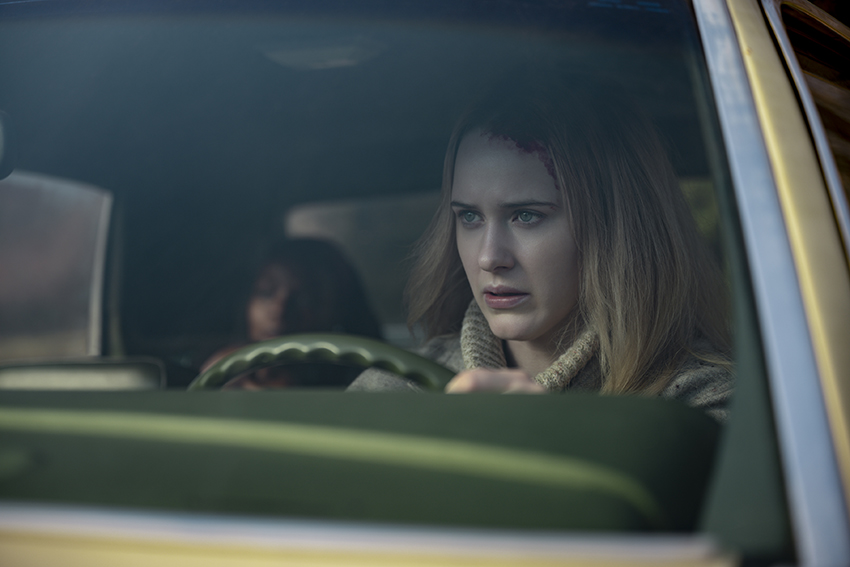
Suburban housewife Jean (Rachel Brosnahan, “The Marvelous Mrs. Maisel”) lives a seemingly easy life, supported by husband Eddie’s (Bill Heck) career as a thief. But when Eddie betrays his partners, Jean and her baby are forced to go on the run, and Eddie’s old friend Cal (Arinzé Kene) is tasked with keeping them safe. After Cal mysteriously disappears, Jean befriends his wife Teri (Marsha Stephanie Blake) and the two women set out on a perilous journey into the heart of Eddie’s criminal underworld. A decidedly female take on crime dramas of the 1970s, I’m Your Woman is a tale of love, betrayal, motherhood — and what it takes to claim your life as your own.
I'm Your Woman
Directed by Julia Hart
Produced by Rachel Brosnahan, Jordan Horowitz
Written by Julia Hart, Jordan Horowitz
Starring Rachel Brosnahan, Arinzé Kene, Marsha Stephanie Blake, Bill Heck, Frankie Faison, Marceline Hugot, James McMenamin
Music by Aska Matsumiya
Cinematography : Bryce Fortner
Edited by Tracey Wadmore-Smith, Shayar Bansali
Production companies : Original Headquarters, Big Indie Pictures, Scrap Paper Pictures
Distributed by Amazon Studios
Release date : October 15, 2020 (AFI), December 4, 2020 (United States)
Running time : 120 minutes
Photos : Copyright Amazon Prime Video