

SDCC 2026 Gaslamp Activations Turn San Diego Into a Fan Playground
Friday 24 July, 7:00 PM PT San Diego Convention Center, Gaslamp Quarter, waterfront venues, Petco Park Interactive Zone and nearby downtown locations 2026-07-23 → 2026-07-26
SDCC 2026 Expanded Far Beyond the Convention Center
San Diego Comic-Con 2026 officially ran from Thursday, July 23, through Sunday, July 26, following Preview Night on Wednesday, July 22, at the San Diego Convention Center. Yet the event’s footprint could not be understood by looking only at the exhibit hall and panel rooms. Across the Gaslamp Quarter, the waterfront, Petco Park’s Interactive Zone and nearby hotels, media companies, game publishers and consumer brands built an unofficial second show: a city-scale network of free or separately ticketed experiences that translated familiar fictional worlds into sets visitors could enter, games they could play and objects they could take home.
That distinction mattered because many outdoor activations welcomed visitors without a Comic-Con badge, even when reservations, capacity limits or queues still controlled access. The result was a more porous version of SDCC, one in which ticket holders moved between official programming and brand installations while local residents and fans without badges could participate in parts of the celebration. Event Marketer’s on-site reporting documented the individual experiences, while official Comic-Con and San Diego Metropolitan Transit System information confirms the convention dates, Preview Night and the transportation framework that supported the crowds.
The most revealing pattern was not simply scale but participation. The strongest installations asked visitors to do something: answer trivia in front of an audience, solve a rescue mission, collect experience points, follow a character path, bid with earned tokens or search the city for an emerald. That shift from display to action explains why the Gaslamp has become so important to Comic-Con. A poster can promote a release, but a physical challenge gives a fan a story about the release—and often a pin, photograph or piece of merchandise that keeps the story circulating after the temporary set disappears.
Adult Swim Turned Bayfront Park Into a Day-to-Night Carnival
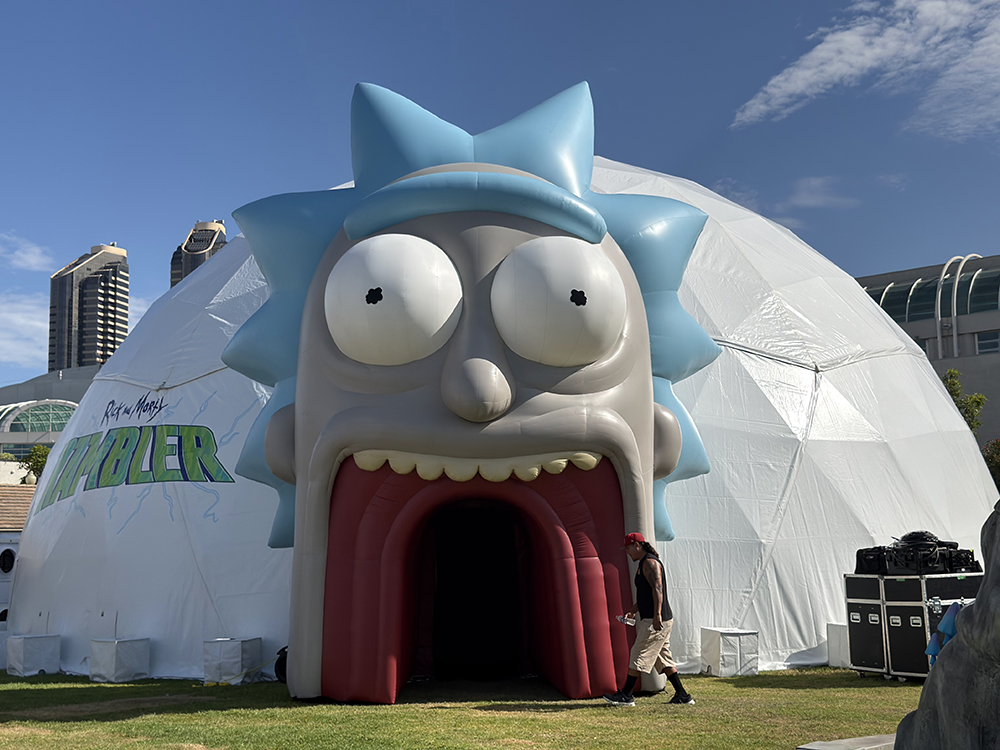
Adult Swim on the Green returned to Bayfront Park with a deliberately unruly carnival atmosphere. During the day, visitors found custom games, airbrush tattoos, rides and giveaways for the first 700 arrivals. A Rick and Morty variation on the Scrambler was renamed the Rambler, a small joke that captured the activation’s strategy: take a recognizable fairground ritual, bend it toward the network’s tone and let the audience become part of the gag. The playful machinery also gave the site kinetic visibility from a distance, a practical advantage in a district crowded with competing installations.
After dark, the central LED screen shifted the venue toward screenings, live table reads and stage programming. A DJ Laser Dance Party closed each night, while a one-night cosplay event featured a live animation set by Afuchs Twin. The day-to-night schedule effectively gave the location two identities and encouraged repeat visits. GDX Studios was credited as the agency behind the experience, which demonstrated how an activation can function as a carnival, screening venue and nightlife destination without losing a coherent brand voice.
HBO Built Two Very Different Worlds Around Participation
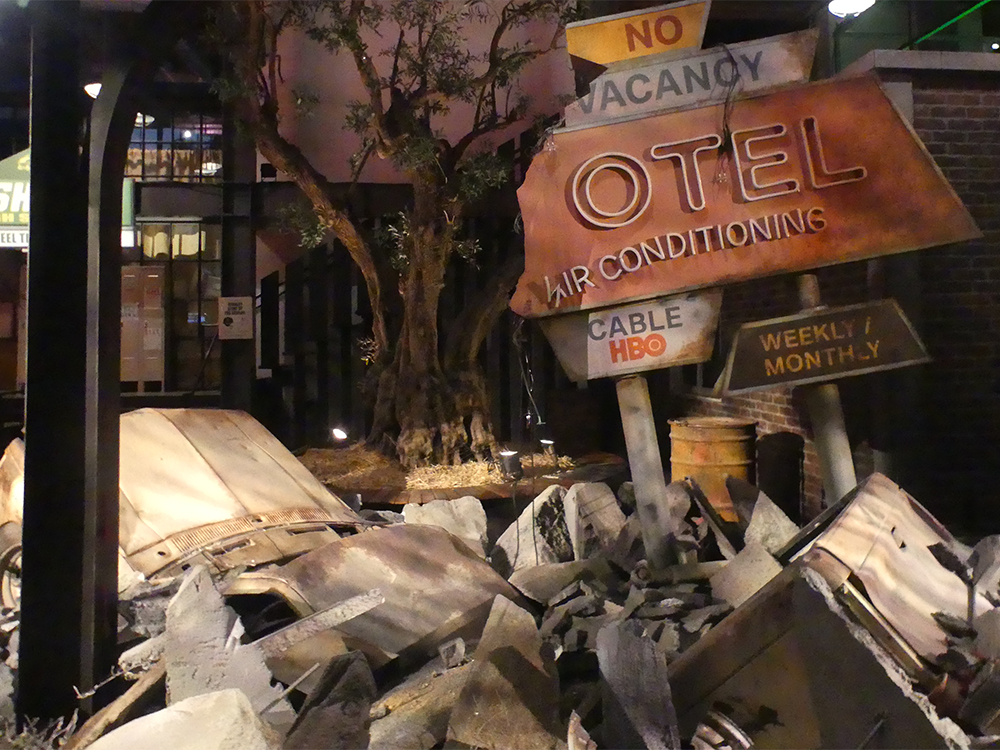
HBO used two Gaslamp venues to introduce Lanterns and Stuart Fails to Save the Universe. Lanterns Training Quarters recruited visitors into the Green Lantern Corps and led them through a recreation of Rushville, Nebraska. Hands-on exercises, mysteries connected to the series and the opportunity to earn a custom Lantern ring framed promotion as induction: the visitor did not merely inspect the world but was temporarily assigned a place inside it. NVE Experience Agency was credited with the activation.
The Comic Center of Pasadena, adapted from the setting of Stuart Fails to Save the Universe, took a lighter multiverse route. Guests traveled through alternate realities, explored personal hero archetypes and encountered show-inspired environments, merchandise, photo moments and personalized keepsakes. Acronym was credited as the agency. Together, the two sites illustrated HBO’s flexible approach: one activation used discipline, testing and corps mythology, while the other used comic-shop intimacy and comic-book multiplicity. Both ended with identity—a ring, archetype or keepsake that connected the guest to the story.
Hulu, Maruchan and Paramount Used Familiar Rituals to Pull in Crowds
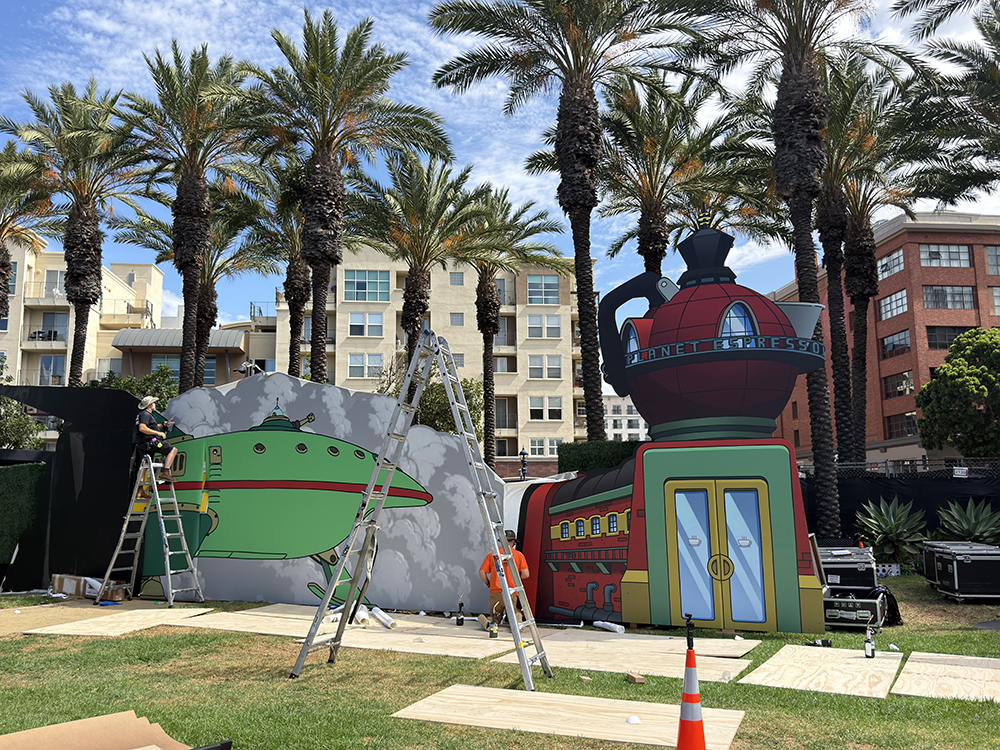
Hulu Animayhem: Fandom Fuel Up returned at Palm Trees Garden with scenes, characters and food inspired by Futurama and King of the Hill. Scenic photo opportunities, a large screen, branded giveaways, refreshments and seating made the installation an intentional pause point. The recharge framing acknowledged a basic truth of Comic-Con: comfort can be a premium experience when people have spent hours walking and waiting. By pairing rest with recognizable animated properties, Hulu turned downtime into continued engagement.
At the Petco Park Interactive Zone, Maruchan brought its MaruMart concept to SDCC in collaboration with Demon Slayer: Kimetsu no Yaiba. MTS’s official Comic-Con guide listed Maruchan’s MaruMart: Demon Slayer Konbini among the free experiences open July 23–26 from 10 a.m. to 5 p.m. Visitors encountered claw machines, character displays, photo moments, giveaways, co-branded merchandise and Yakisoba samples in exclusive packaging. Konnect Agency was credited for public relations. The convenience-store format was effective because product sampling felt native to the fictionalized shop rather than inserted into a separate booth.
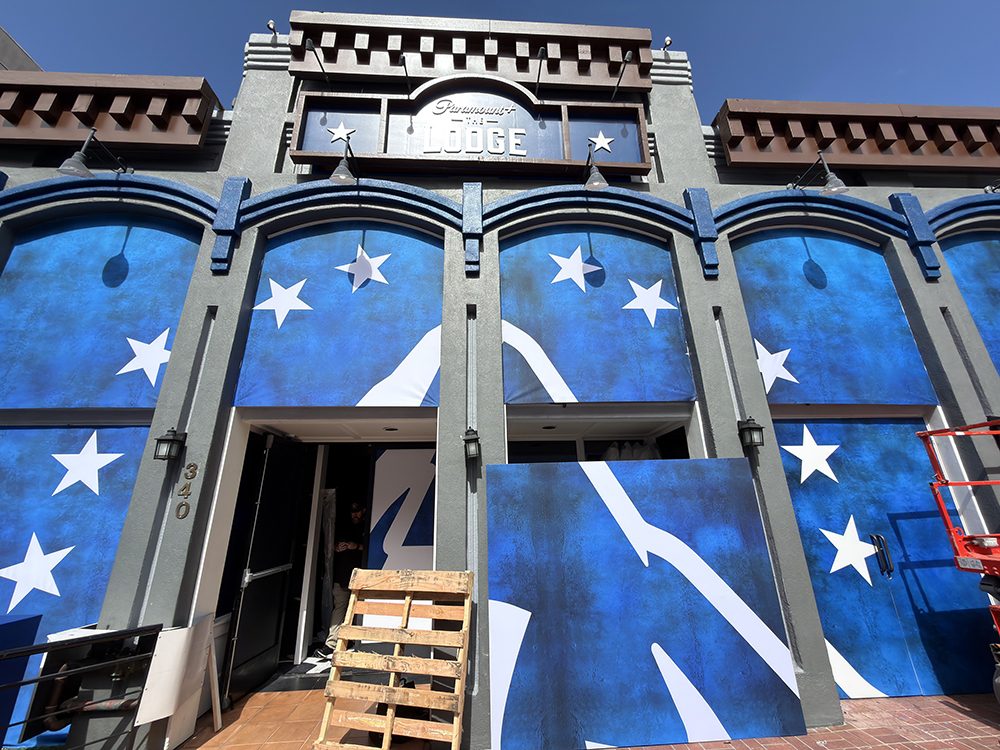
Paramount’s wider presence included Press Play Arcade, the traveling Paramount+ Lodge, a Nickelodeon event and a SpongeBob screening, but its Ebenezer street installation generated particular attention. Built as Scrooge and Marley’s office, the exterior hosted hourly performances by period actors. In one widely discussed appearance, film star Johnny Depp performed in character for the crowd. At night, a Pepper’s Ghost illusion and falling snow animated the main window; inside, visible only when drapes opened, film props, animatronics, lighting and sound completed the Victorian setting. The interior was not open to the public, so the window itself became the stage and controlled the reveal.
Apple TV Made Silo Feel Larger on the Inside
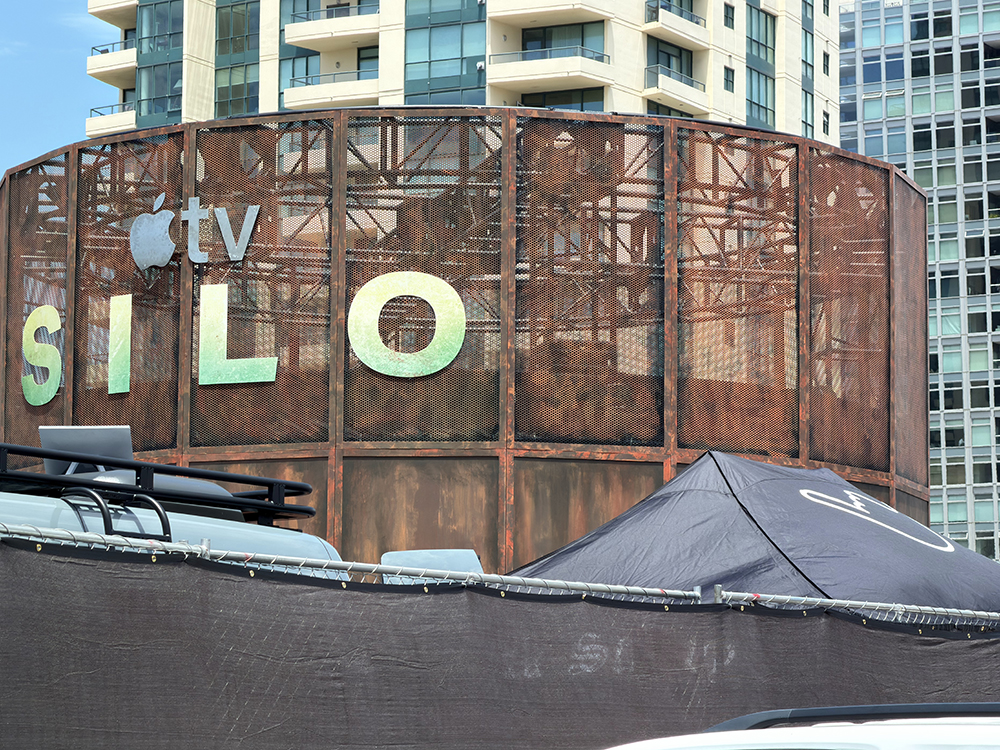
Apple TV transformed a vacant lot into a corroded, ominous environment for Silo. Small groups entered on timed visits, encountering in-character staff, hidden references and unsettling messages. Reflective surfaces and controlled lighting made the interior seem far larger than the temporary structure suggested. The illusion aligned form with subject: a series defined by enclosed space, uncertainty and buried systems was promoted through an environment that made visitors question the building’s true dimensions.
Guests received a commemorative pin before leaving, while rapper and actor Lonnie Rashid Lynn, professionally known as Common, delivered a surprise performance outside the installation. Kamp Grizzly was credited as the agency. The concert expanded the activation’s audience without requiring every passerby to enter the timed experience. It also created a sharp contrast between the oppressive interior and the energy of a live outdoor set—two distinct memories anchored to the same physical landmark.
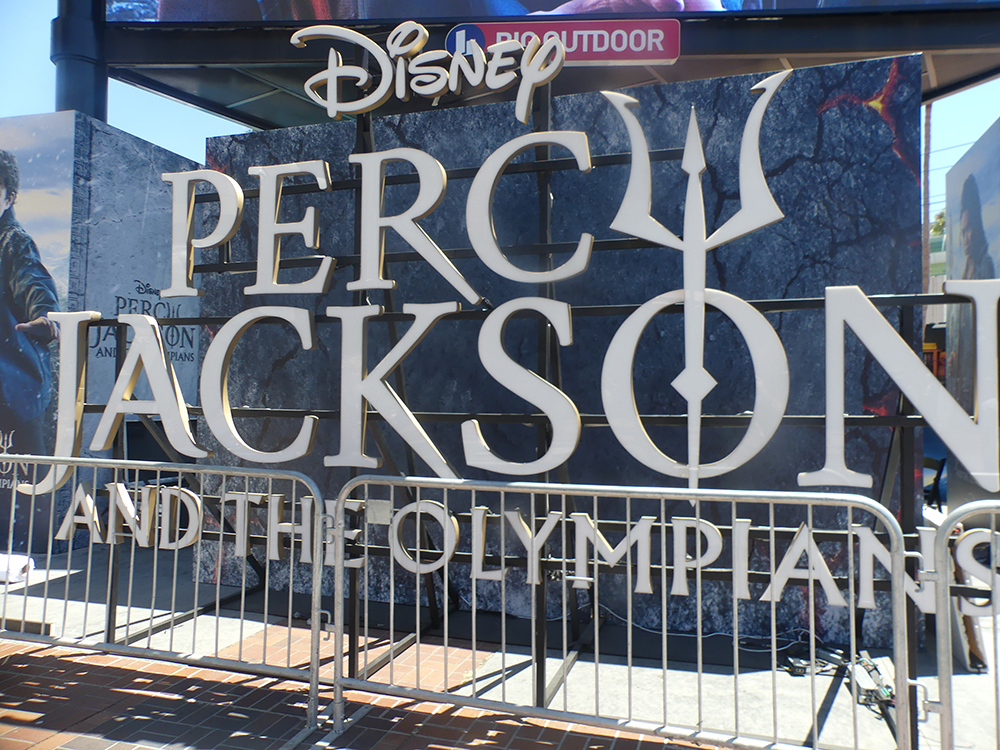
Percy Jackson Offered Three Paths Through The Titan’s Curse
Disney’s Percy Jackson Experience returned with a third-season focus on The Titan’s Curse. A monumental trident served as both icon and navigation device: guests chose a path associated with Percy, Annabeth or Thalia, and each prong led into a different character-driven journey. Prophecy-led clues, detailed scenes, hidden references and Camp Half-Blood pins rewarded close attention. The 15|40 agency was credited with the experience.
The branching design gave repeat visitors something other than a duplicated walkthrough and translated the story’s ensemble into physical choice. It also created natural conversation after the exit, as guests could compare what appeared on different routes. MTS highlighted the experience’s proximity to Gaslamp Quarter Station in its official rider information, showing how transportation and programming were connected in the visitor journey before anyone reached the convention doors.
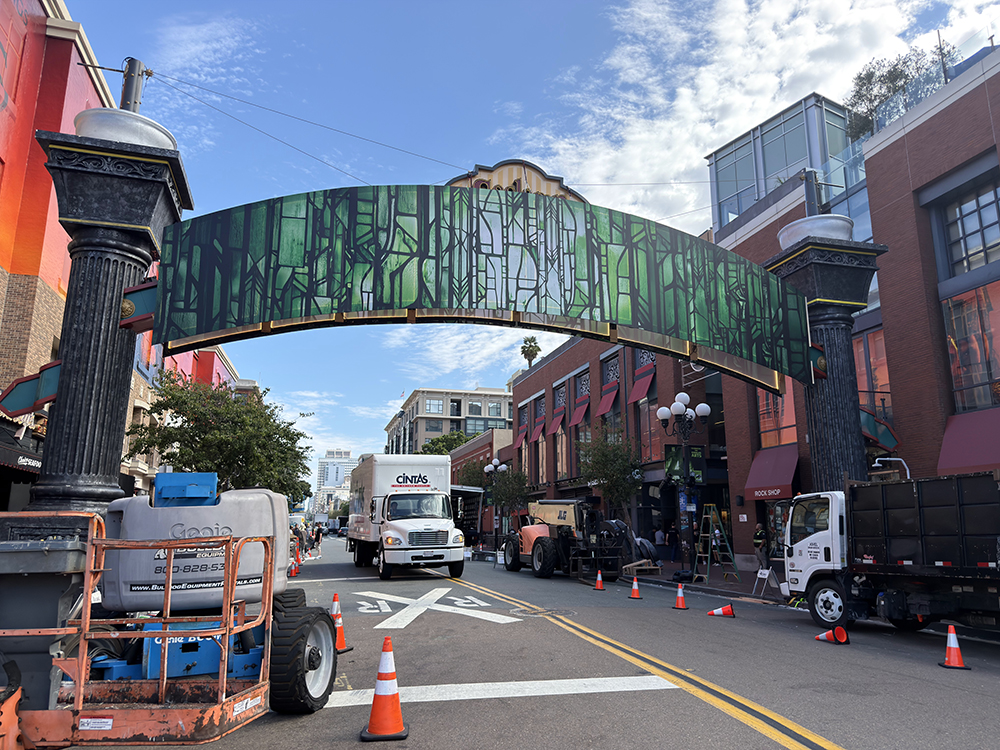
Gaslamp Quarter Station Became Part of the SDCC 2026 Experience
Gaslamp Quarter Station sits close to the San Diego Convention Center, Petco Park and the district’s restaurants and entertainment venues, making it a natural gateway to both official programming and outdoor activations. For SDCC 2026, MTS directed riders to the Convention Center or Gaslamp Quarter stations on the Green Line and added the Magic: The Gathering Event Line between Balboa Avenue Transit Center and 12th & Imperial Transit Center at 15-minute intervals from Thursday through Sunday. The themed service included wrapped train artwork, station announcements, maps, digital displays and station activity.
MTS reported that its Special Event Line grew from 98,747 passenger trips in 2023 to 117,040 in 2025, an 18 percent increase, helping explain why the 2026 route became a sponsorship platform as well as a capacity tool. Official information also offered Comic-Con transit passes covering two to five days and warned of higher-than-normal passenger volumes. Preview Night received 15-minute Green and UC San Diego Blue Line service until 10 p.m., while Comic-Con’s free shuttle network began Wednesday afternoon and continued through Sunday evening.
The station’s history predates the contemporary activation boom. MTS notes that Fifth Avenue Station originally carried the Gaslamp name before the Bayfront Line—today associated with Green Line service—opened and a new Gaslamp Quarter Station was established farther south. For the 2026 visitor, however, the important point was practical and immediate: the station connected the convention center, the Percy Jackson experience and the wider Gaslamp grid. Transit was not background infrastructure; with the Magic: The Gathering wrap and announcements, it became the first branded environment many riders entered.
Why the Best SDCC Activations Felt Like Complete Stories
Across the district, the most effective experiences followed a compact narrative architecture. Visitors crossed a threshold, learned a rule, made a choice, faced a challenge and received proof that they had completed it. The proof might be a Lantern ring, a Camp Half-Blood pin, Google Play tokens, Audible loot, Wolverine claws or a photograph beside a monumental prop. Even food was frequently turned into narrative evidence, from Demon Slayer packaging and Madripoor slushies to Candy Land desserts.
Scarcity remained a powerful engine: limited daily giveaways, timed slots, exclusive merchandise and long queues gave participation urgency. Yet utility softened the pressure. Charging stations, seating, drinks, food samples and transit information gave visitors reasons to stay even when they were not chasing the rarest object. That balance between spectacle and service is a useful lesson from SDCC 2026. A fictional world becomes more convincing when it accommodates the physical needs of the people temporarily living inside it.
The Gaslamp activations also widened Comic-Con’s public edge. The official convention remained centered on badges, panels, previews and its vast exhibit hall, but the surrounding city offered another mode of participation. Free experiences at Petco Park, visible street performances and transport takeovers allowed people to encounter the event without crossing the convention center threshold. SDCC 2026 therefore functioned simultaneously as an industry gathering, a fan convention and a temporary urban festival whose most photographed stages were sometimes sidewalks, hotel facades and trolley platforms.
You can discover our photos in our Flickr page
Photos : Boris Colletier / Mulderville