
 English
Festivals - Japan Expo 2025: 25th Anniversary Exhibition Celebrates a Quarter Century of Europe's Largest Japanese Culture Festival
By Mulder, Villepinte, Parc des expositions, 09 july 2026

One of the first highlights greeting visitors at Japan Expo's landmark 25th edition is an ambitious retrospective exhibition celebrating the festival's remarkable journey from a modest fan gathering to Europe's largest event dedicated to Japanese culture. Simply titled "25th Anniversary", the exhibition offers a fascinating walk through twenty-five years of history, illustrating how an event created by three passionate enthusiasts—Jean-François Dufour, Sandrine Dufour, and Thomas Sirdey—grew into one of France's biggest public events. Combining hundreds of archival photographs, original memorabilia, historical documents, exclusive artwork and previously unseen tributes, the exhibition serves not only as a celebration of the festival itself but also of the extraordinary rise of Japanese popular culture across Europe.
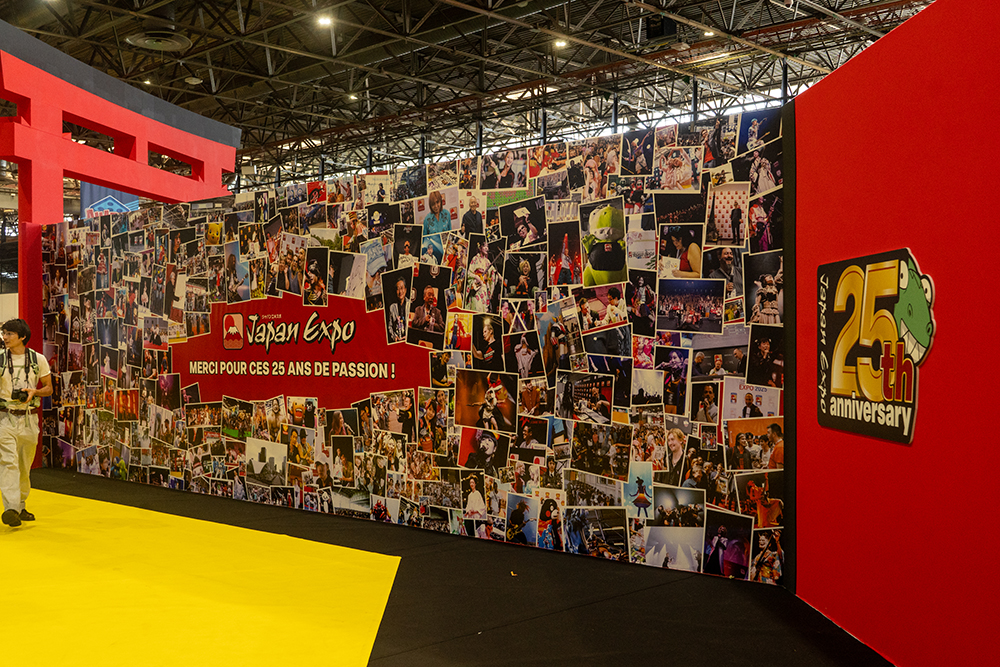
Visitors immediately enter a vast photographic timeline covering every edition since the inaugural "1st Impact" in 2000. The display vividly illustrates the festival's transformation, beginning with the original gathering of just 3,200 attendees inside EPITA's facilities at Le Kremlin-Bicêtre, where manga enthusiasts exchanged books and watched anime on VHS tapes at a time when Japanese animation remained largely misunderstood in France. Year after year, the exhibition documents the explosive growth that forced the organizers to relocate successively to Espace Austerlitz, Espace Champerret and the CNIT at La Défense before finally settling at Paris-Nord Villepinte. Historic images capture packed halls, increasingly elaborate cosplay competitions, legendary concerts, prestigious Japanese guests and the expanding international audience that has become one of Japan Expo's defining characteristics.

Rather than simply presenting dates and attendance figures, the exhibition recreates the atmosphere surrounding each milestone. A giant collage made from hundreds of photographs recalls unforgettable moments shared by generations of visitors, from spontaneous cosplay gatherings to emotional meetings between fans and creators. One wall is entirely dedicated to the people who built the event over the years, highlighting volunteers, exhibitors, performers and organizers whose combined efforts transformed what was once a niche convention into an international institution. The emotional impact is unmistakable: many longtime attendees can identify editions they personally experienced, while newcomers gain a clear sense of the festival's extraordinary evolution.
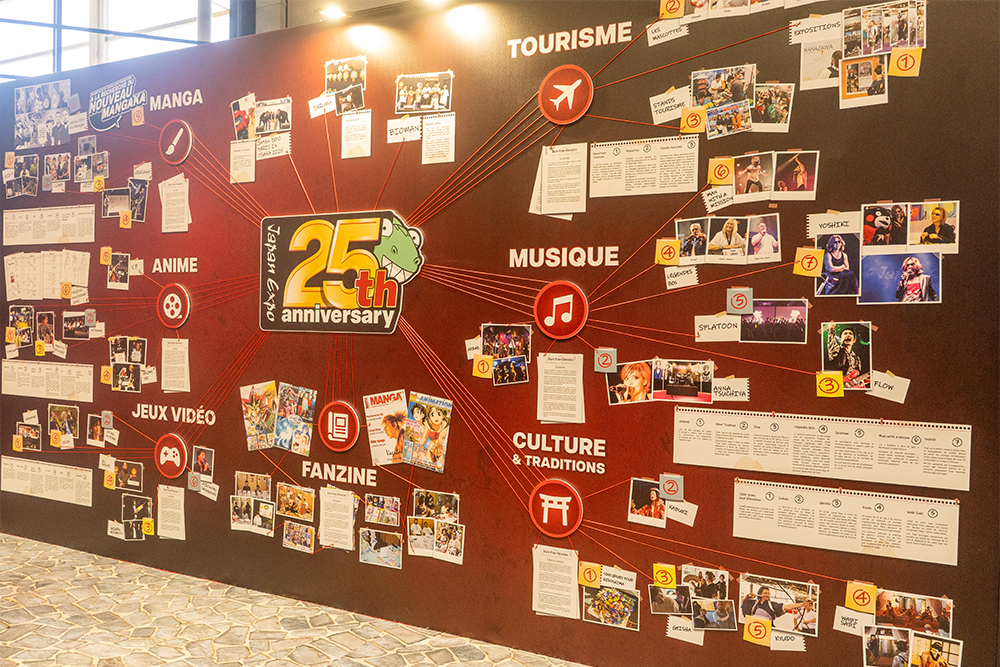
Another major section explores how Japan Expo gradually expanded beyond manga and anime to embrace virtually every aspect of Japanese culture. An impressive infographic radiating from the anniversary logo illustrates the festival's many pillars, including manga, anime, video games, music, tourism, traditional culture, fanzines and contemporary pop culture. This visual presentation demonstrates how the convention has continuously reinvented itself while remaining faithful to its original mission of fostering cultural exchange. Over time, Japan Expo has also broadened its horizons to include other Asian cultural influences, particularly South Korea through K-pop and webtoons, reflecting changing entertainment trends while preserving Japan as its central focus.
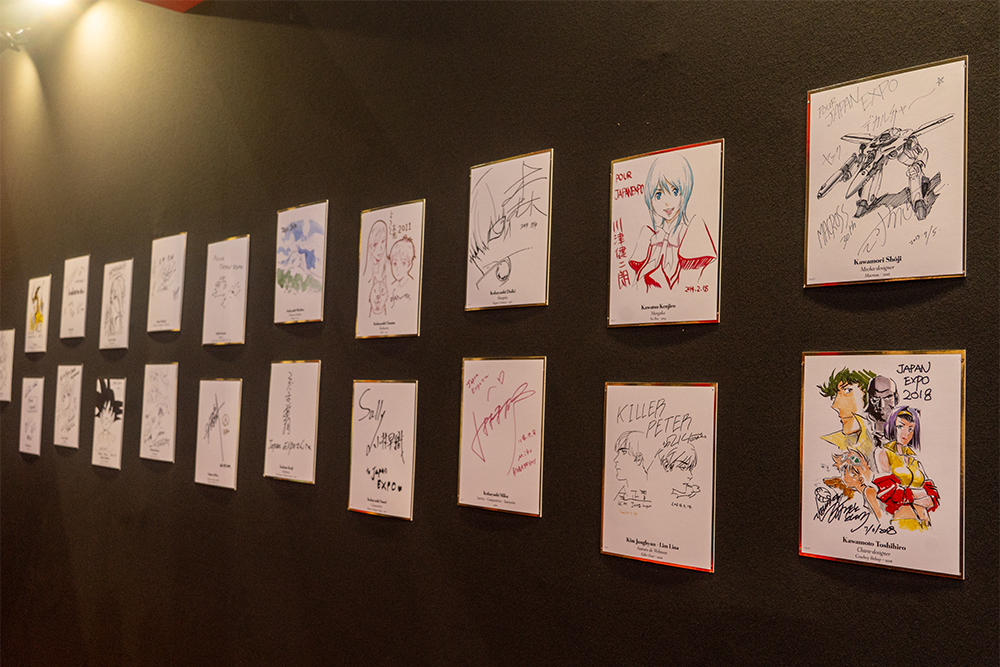
Among the exhibition's greatest treasures is its remarkable collection of shikishi, the traditional illustrated autograph boards cherished by collectors and artists alike. While part of this extensive archive remains protected from photography, visitors can admire hundreds of original works created over the past twenty-five years by mangaka, anime directors, character designers, musicians and illustrators who have visited Japan Expo. The collection includes contributions from internationally acclaimed creators such as Go Nagai, Naoki Urasawa, Hiro Mashima, and Moebius, alongside numerous composers, animation professionals and industry guests. Several artists also produced brand-new commemorative shikishi specifically for the festival's 25th anniversary, further enriching an archive that has become one of Japan Expo's most valuable historical collections.
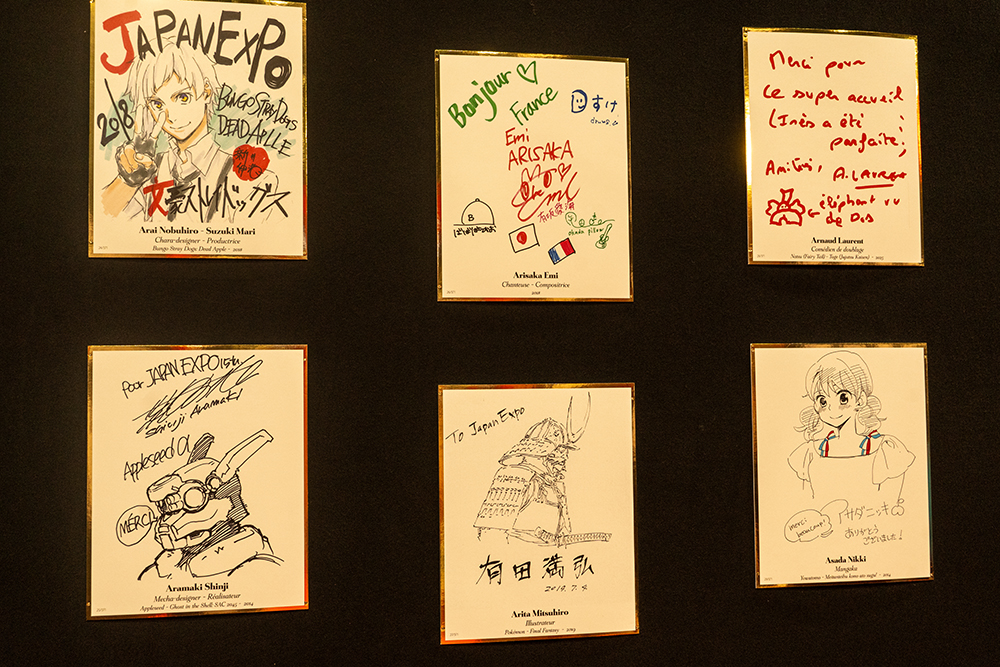
The exhibition also showcases numerous handwritten messages left by former guests throughout the festival's history. These personal notes, sketches and signatures reveal the close relationship Japan Expo has developed with Japanese creators over the decades. Whether humorous, heartfelt or simply expressing gratitude to French fans, the messages collectively demonstrate how the convention has become an important destination for artists seeking to connect with European audiences. Walking along the gallery, visitors encounter contributions from manga authors, composers, voice actors, illustrators and musicians whose appearances helped define successive editions of the festival.

Display cases filled with vintage badges, promotional materials, official programs, collectible merchandise and souvenirs further illustrate the changing identity of Japan Expo. Beyond simple nostalgia, these objects chart the evolution of Japanese pop culture itself, reflecting changing artistic trends, publishing milestones and the emergence of new franchises that have shaped successive generations of fans. Together with the historical posters and anniversary branding, they offer a tangible reminder of how both the festival and its audience have matured over twenty-five years.
The retrospective also places Japan Expo's story within the broader context of France's changing relationship with Japanese culture. When the festival debuted in 2000, manga remained relatively niche and Japanese animation was still frequently dismissed by mainstream media. Today, France is the world's second-largest manga market after Japan, while Japan Expo has become a key showcase for publishers, animation studios, video game developers, musicians and official Japanese institutions. The exhibition subtly illustrates how the festival both benefited from and actively contributed to this cultural transformation, becoming an essential meeting place where creators and audiences from both countries continue to interact.

Ultimately, the 25th Anniversary Exhibition succeeds because it celebrates far more than impressive attendance records or expanding exhibition halls. It tells the story of a passionate community that has grown alongside the festival itself. Many of the teenagers who attended the first editions now return with their own children, giving Japan Expo a genuinely multi-generational identity. Through its carefully curated photographs, historical archives, memorabilia and exceptional collection of artwork, the exhibition captures the remarkable journey of a festival that has become one of Europe's most influential cultural events while preserving the welcoming spirit envisioned by its founders a quarter of a century ago.
You can discover our photos in our Flickr page
Photos : Copyright DreamStudioByPierreChampion