

Japan Expo 2026: Tsume, the Luxembourgish sculptor who transforms major manga franchises into true works of art
Thursday 9 July, 2:30 PM PT Villepinte, Parc des expositions 2026-07-09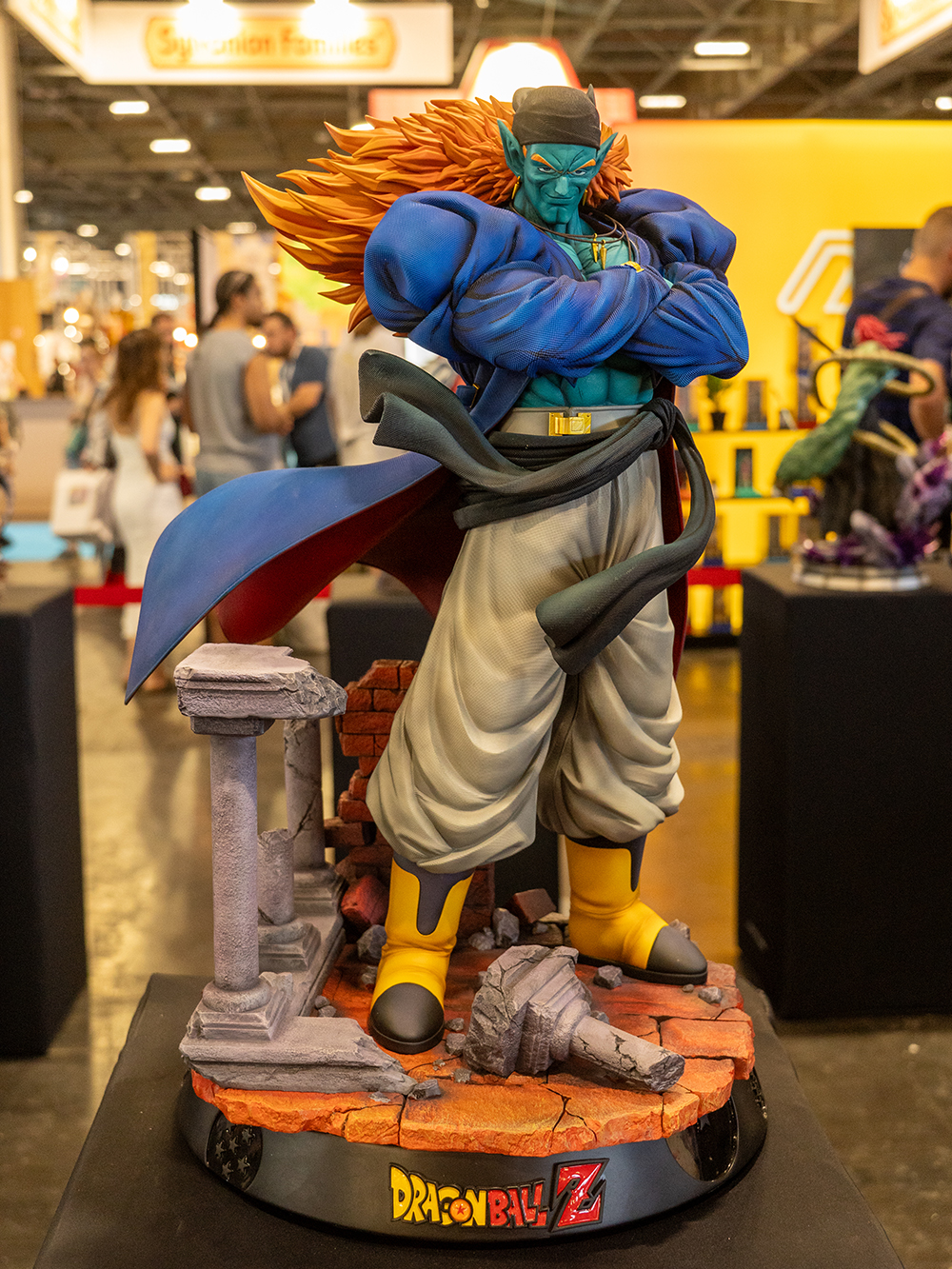
At every Japan Expo, certain booths become must-see stops. Tsume’s booth was once again among those places where visitors naturally slowed their pace. Beyond the simple appeal of new figurines, the Luxembourg-based publisher offered a true journey through several of Japanese culture’s most popular franchises, from Dragon Ball Z to One Piece, including Bleach, Demon Slayer, Naruto, and My Hero Academia. Set up at the Paris-Nord Villepinte Exhibition Center from the very first day of Japan Expo 2026, the booth showcased the constant evolution of a company that, in just fifteen years, has become one of Europe’s leaders in officially licensed collectible figurines. Visitors found themselves face-to-face with creations where the line between artistic sculpture and merchandise seemed blurrier than ever.
Founded in 2010 in Luxembourg by Cyril Marchiol, Tsume S.A. was born out of an ambition that was both simple and demanding: to produce statues capable of capturing the intensity of iconic scenes from manga and anime with a level of craftsmanship rarely achieved in Europe at the time. The company’s beginnings, however, date back to late 2009, when its founder—following the closure of his previous business—envisioned a new venture entirely dedicated to collectible sculpture. By April 2010, Tsume had set up shop in the suburbs of Luxembourg and had embarked on a path of steady growth that would quickly propel it onto the international stage. Today, the company produces several complementary lines: the prestigious HQS resin figurines, the MUBs, the BIJUtsu, the Ikigai, and, of course, the recent PVC line NEON by Tsume, designed to offer more affordable pieces featuring a display system with LED lighting.
This success is based on a particularly rigorous manufacturing process. Contrary to popular belief, the figurines are designed entirely in Luxembourg. In-house teams handle the artistic concepts, 3D modeling, prototype printing, and successive validations before the files are sent to production sites in China. Every step, from digital sculpting to the final painting (“Master Paint”), is monitored internally and then approved by the rights holders of the various licenses. Tsume’s teams then regularly visit the factories to supervise production, inspect the materials used, check the painting and assembly, and ensure fidelity to the original prototype. This organizational structure largely explains the company’s reputation among international collectors.
One of the first impressions upon discovering the new releases on display at Japan Expo 2026 was the company’s ever-more-impressive mastery of textural effects. Translucent flames, waves, bursts of energy, and lightning now seem to constitute a true artistic signature of Tsume. Where other manufacturers sometimes favor a more static approach, the Luxembourg-based company continues to pursue constant movement. The sculptures do more than simply represent a character; they capture the precise moment when the action reaches its climax.
The Dragon Ball Z franchise naturally took center stage. Visitors could admire, in particular, a spectacular Son Goku in Super Saiyan 3 form accompanied by Shenron, a composition that perfectly utilized the dragon’s verticality to highlight the hero. A few meters away, Super Gogeta in his Super Saiyan form displayed all the characteristic power of this iconic fusion thanks to an imposing golden aura crafted from translucent resin. The statue of Cooler in his final form was also among the stand’s most striking pieces, highlighted by a backdrop depicting a gigantic cascade of frozen energy, creating a striking contrast between the backdrop’s bluish tones and the character’s purple hues. Finally, an imposing depiction of Bojack served as a reminder that Tsume doesn’t limit itself to the franchise’s most popular heroes, but also highlights antagonists who are less frequently adapted.
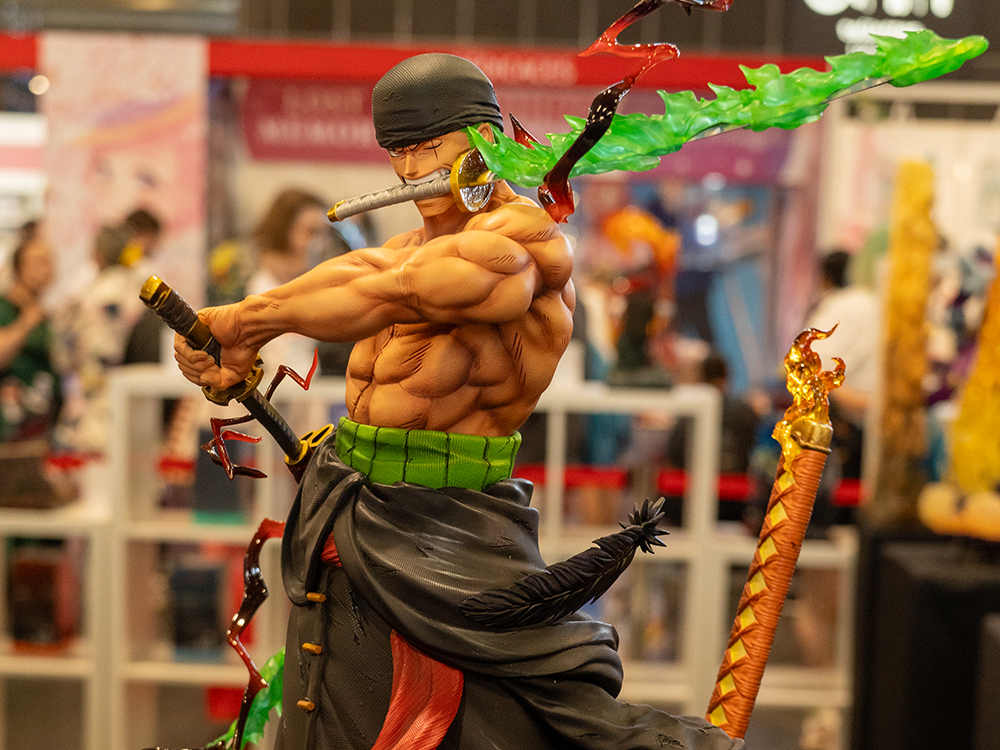
Meanwhile, One Piece fans discovered several new creations brought together under the BIJUtsu banner. Monkey D. Luffy, depicted in a particularly dynamic offensive stance, faced off against Roronoa Zoro, whose extremely detailed musculature was accompanied by numerous green and red energy effects. Sanji, elegantly dressed in his burgundy suit, stood out with a more understated yet particularly refined presentation, centered on his bluish flames and the character’s famous cigarette. An amusing anecdote displayed at the booth also revealed the enthusiasm generated by this collection: information panels already indicated that the limited editions were completely sold out, with only waiting lists still open for certain models—proof that collectors often reserve items several months, or even several years, in advance.
The booth also confirmed the excellent health of the Demon Slayer franchise, which remains extremely popular with the public. The sculptures of Tanjiro Kamado, Nezuko Kamado, Inosuke Hashibira, and Zenitsu Agatsuma showcased Tsume’s mastery of working with translucent materials. Water effects, flames, and lightning seemed to literally surround the characters, almost giving the impression that the famous breathing techniques were coming to life before visitors’ eyes. The transparency of the resins, combined with particularly subtle color gradients, was one of the most striking aspects of these creations.
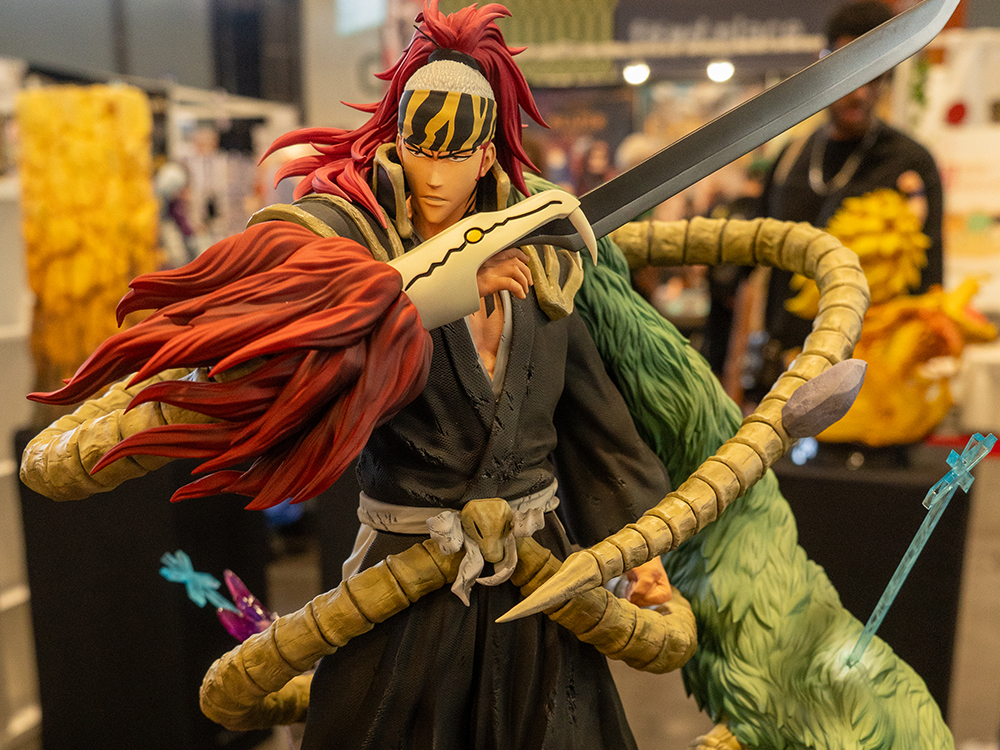
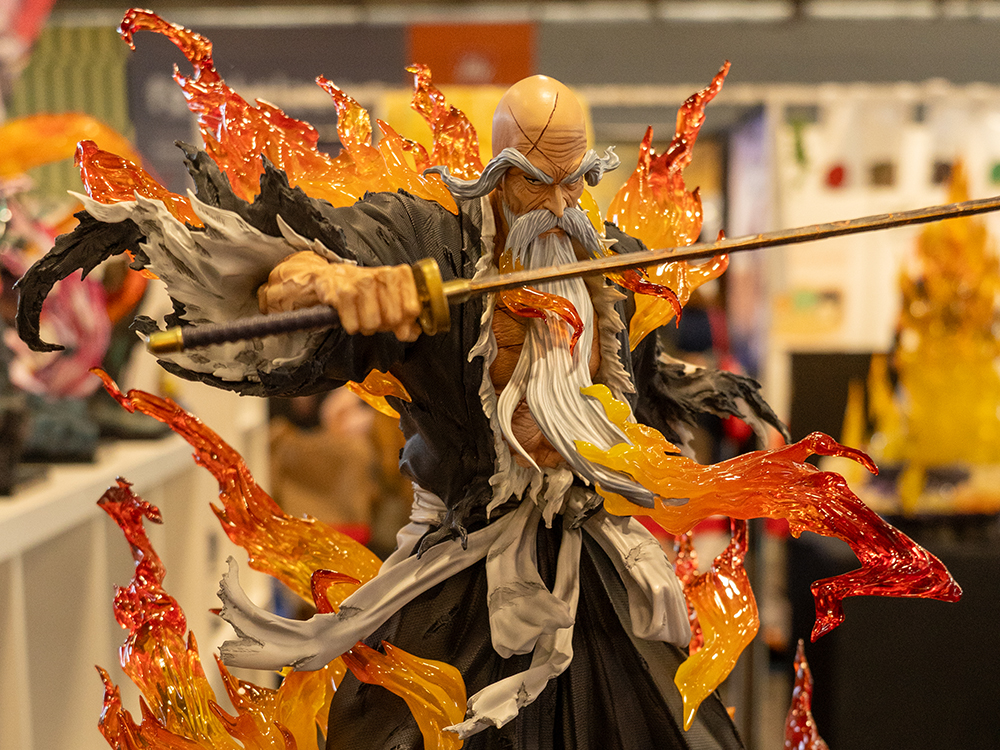
The Bleach franchise was also well represented with several iconic characters. Genryūsai Shigekuni Yamamoto made a strong impression with a composition dominated by monumental flames, perfectly suited to the aura of the Soul Society captain. Not far away, Sōsuke Aizen, accompanied by Kaname Tōsen, presented a far more theatrical scene where the staging focused more on psychological tension than on mere spectacular effects. Finally, Renji Abarai was accompanied by his imposing Zabimaru, whose articulated segments gave the entire display a particularly well-rendered sense of movement.
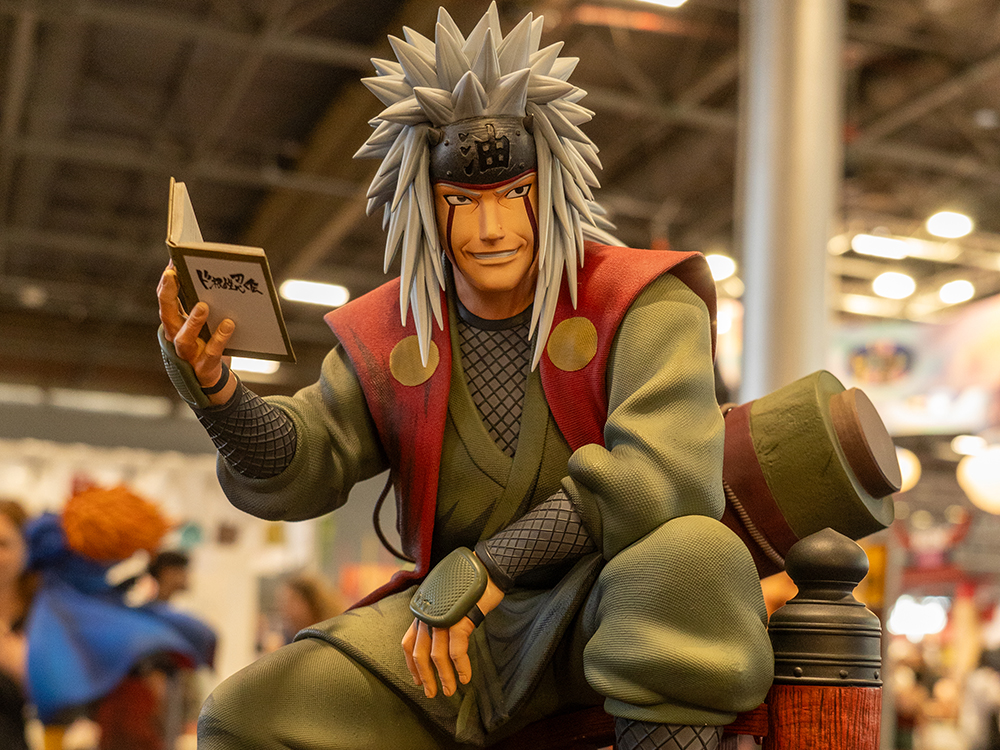
Visitors were also able to discover several heroes from other major universes. Jiraiya, comfortably seated in a pose true to his personality, offered a welcome respite amid the many action scenes. All Might, the central figure of *My Hero Academia*, sported his signature smile in a display that evoked the hero’s full symbolic power. Fans of more contemporary combat could
also admire several exhibits dedicated to today’s most popular franchises.
Tsume’s story, however, isn’t limited to statues. Over the years, the company has gradually developed a true ecosystem centered on manga culture. In 2014, Yoka by Tsume was launched, a line dedicated to officially licensed board games, notably those inspired by *Naruto Shippuden*. In 2015, Iki by Tsume made its debut—a clothing line inspired by Japanese culture. The following year saw the creation of Tsume Entertainment, dedicated to producing shows, events, and audiovisual content. More recently, the company has also ventured into publishing with KuroTsume, offering French manga such as Ragnafall and Imperium Circus. This diversification illustrates the company’s desire to move beyond being merely a figurine manufacturer and become a cultural player in its own right.
Another factor contributes to this close relationship with collectors: Tsume now operates several brick-and-mortar stores, notably in Paris since 2019, in partnership with Manga Story, as well as in Barcelona since 2021 with Global Freaks. These retail locations allow enthusiasts to examine certain pieces before purchasing them—a significant advantage when some statues are several tens of centimeters tall and represent a substantial investment.
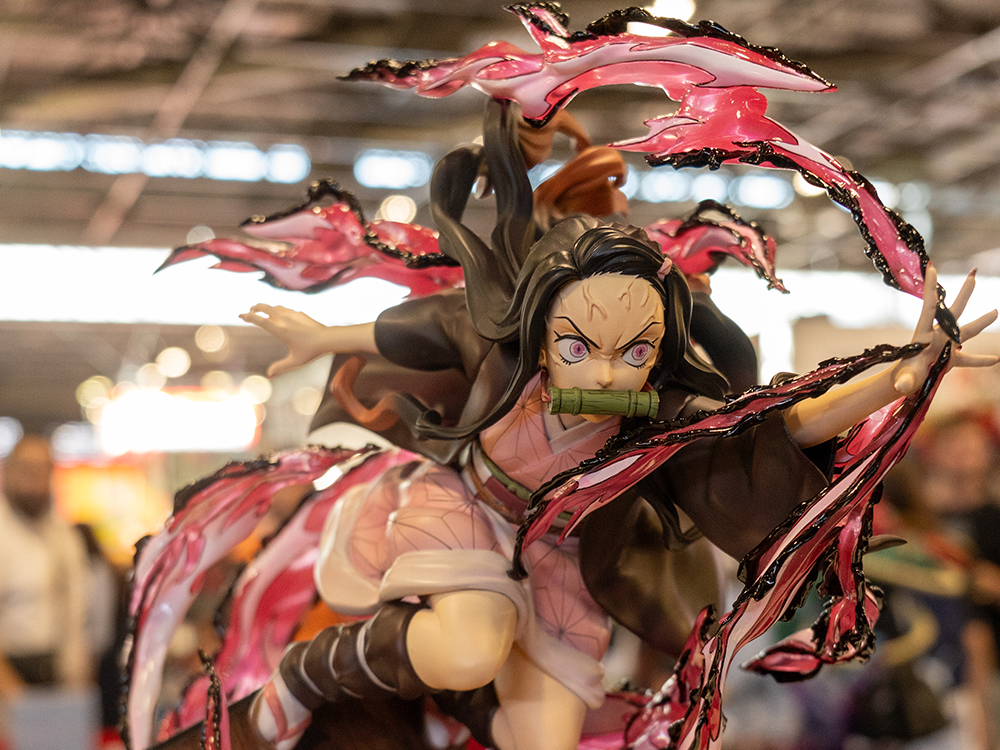
Upon closer inspection, we finally noticed a detail that revealed the market’s evolution. Visitors were no longer content to simply photograph the statues; many took the time to examine the textures of the clothing, the nuances of the paint, or the way light played on the translucent resins. Many conversations focused more on sculpting techniques, manufacturing processes, or limited editions than on the characters themselves. This shift reflects the maturity of an industry where collectible statues are now regarded as true works of art inspired by pop culture, rather than mere merchandise.
At Japan Expo 2026, Tsume once again confirmed its status as the European leader in high-end collectible statues. By combining ambitious artistic direction, meticulously controlled manufacturing, and unwavering fidelity to the original works, the Luxembourg-based studio continues to elevate collectible sculpture to the status of an artistic expression in its own right, while reminding us that behind every iconic character lies a genuine creative process where a passion for manga meets that of contemporary sculpture.
You can view our photos on our Flickr page
Photos: Copyright DreamStudioByPierreChampion