

Lockbox: Daniel Stamm and the Cast on Bringing Psychological Horror to Life
Thursday 2 July, 9:00 AM PT Los Angeles 2026-06-30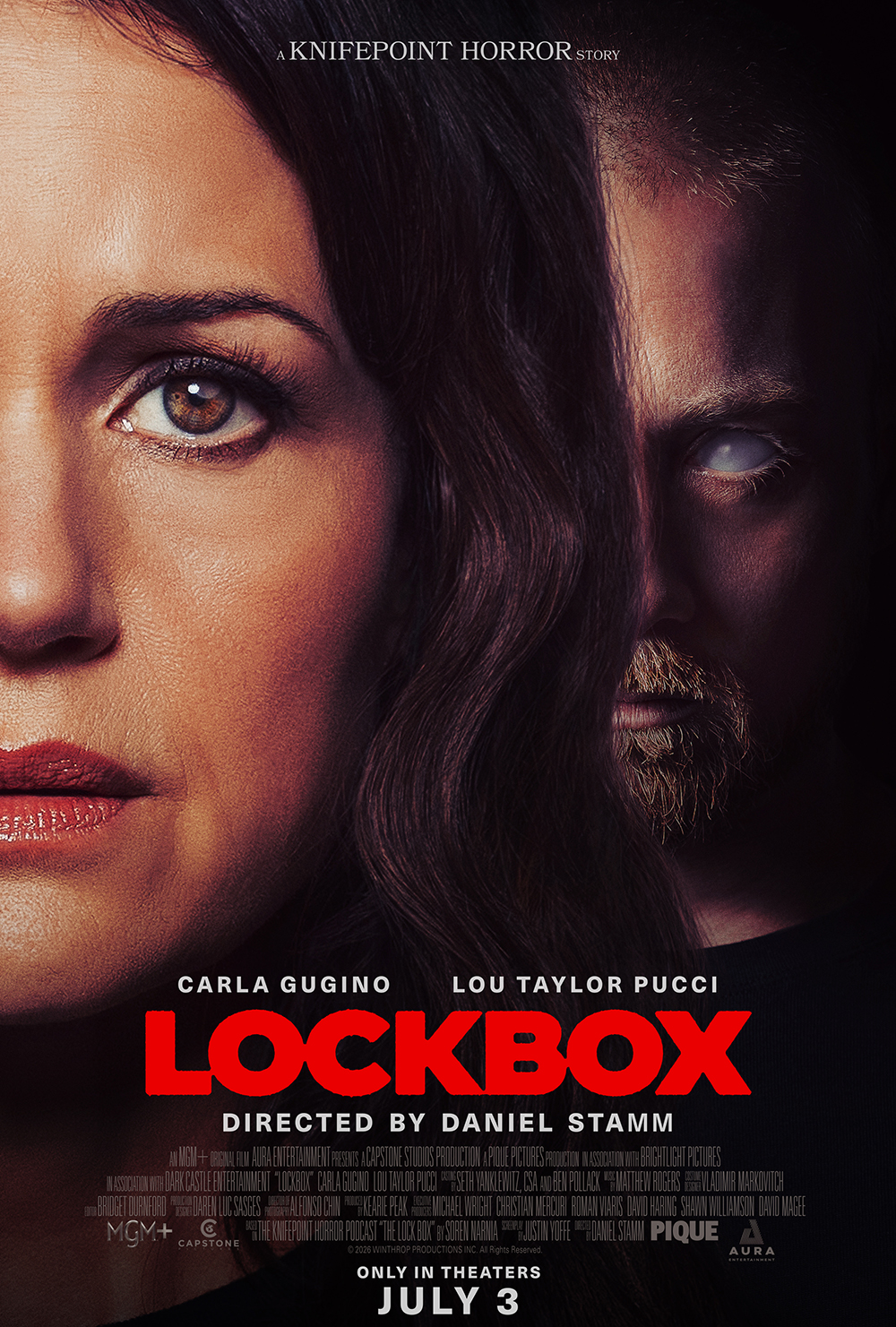
Following our continuing coverage of the summer's most anticipated genre releases, Our media is pleased to announce that we have been invited to sit down with director Daniel Stamm and stars Lou Taylor Pucci and Katharine Isabelle for an exclusive interview on Tuesday, June 30, ahead of the theatrical release of Lockbox. During this special conversation, we'll discuss the film's unique approach to supernatural horror, its literary origins, the creative collaboration behind the project, and the emotional themes that set it apart from more conventional genre fare. Below is a preview of the questions we hope to explore with the filmmakers and cast.
Q: You've said you judge a horror script by asking if it would still work without the horror. What convinced you that Lockbox passed that test?
Daniel Stamm: Well, when I got the Lockbox script, I didn't know anything about it, and I just started reading it at page one, which is rare because usually you get a summary that kind of gives everything away. Luckily, that wasn't the case here. So I really got to experience it the way I thought the audience was going to experience it, which is this roller coaster where you never know what's coming next because it's so unusual in structure, and it's so confident in its characters and its storytelling that it's not a copy of a copy. It's not following any kind of paradigm that you're familiar with, which is really refreshing. You only realize how many copies of copies you are exposed to once something like this comes around that is not that. And you go like, "Oh, that's what storytelling should be." Every time I'm getting a new story told, it should be fresh and unknown. What's next? And that was very much the case here. This roller coaster ride of suspense and whom do you suspect to be the antagonist and what do you... you know? So, the unknown really was amazing to me. And it's more than horror because it's not only horror set pieces. You know, there is a real psychological thriller aspect that I thought was really special.
Q: Your character is both vulnerable and unsettling. How did you find the right balance between those two sides?
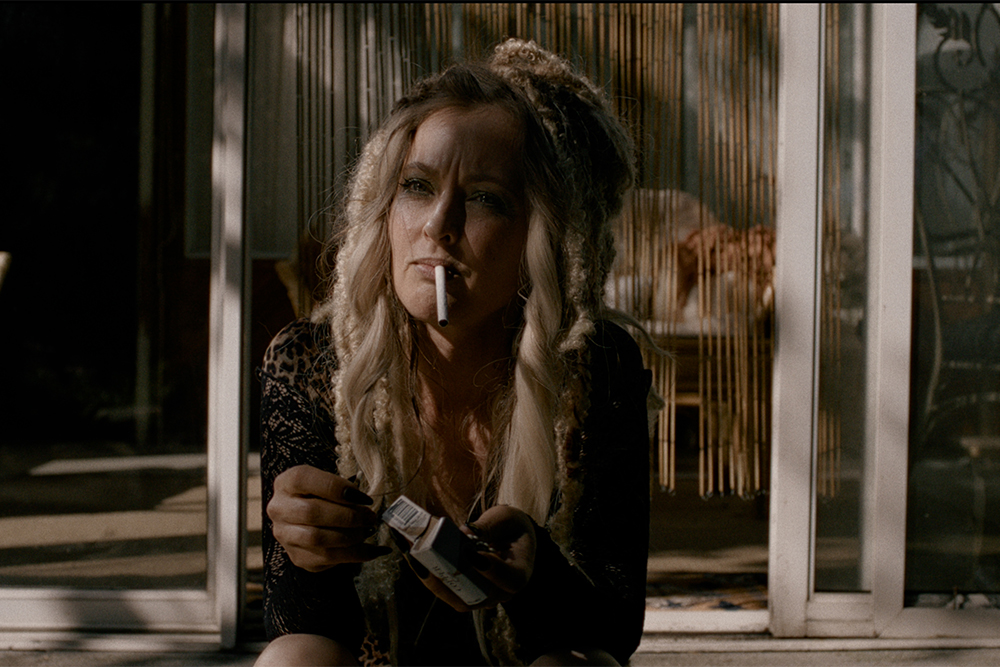
Lou Taylor Pucci: I think that it was very difficult because I had to—we've been talking about this a lot—but I had to put my trust into Daniel and Kerry, who were really going to make this in the editing room because there are certain scenes where you want to choose, as an actor, "I want to be more evil in this scene," or "I want to be more good in this scene," but it might not work for the end product because when they're putting that editing together, they have to create these moments for the audience, and sometimes they have to cut a scene out in order to do it. So, you know, it was all in their hands, and I just wanted to give them the options that I could. So the two options I gave them were: what if he's the innocent boy in this one, and then on take two of the same scene, I want to be the aggressive, scary guy, and you use what you think you need for this later.
Q: You've become one of horror's most recognizable faces. What drew you to Lockbox?
Katharine Isabelle: Immediately, all I knew of this film was just the character. I only got my sides for the audition, and I didn't care what this movie was. I just loved her so much that, regardless of what the movie surrounding her was going to be, I wanted to be involved with her. I just... a character like this that is vulnerable and dangerous and funny and sweet and charming—everything that I love. She's got this dark humor. She's got this real dangerous edge. You just don't know what's going to come out of her at any time. And then to be able to work with these amazing artists and collaborators to put together this iconic look for her is just everything I can want in a character. And then to read the whole script behind it and realize it's this fantastic, uh, roller coaster ride of emotions and a roller coaster ride of just what movie you think you're in—and it changes several times—is just the cherry on top of a character that I was already obsessed with.

Q: The original Knifepoint Horror story relies on subtle dread. How did you preserve that atmosphere on screen?
Daniel Stamm: I think the basis is always that you create characters that the audience cares about, you know, because you can layer on set piece after set piece as much as you want. It becomes kind of a hypothetical exercise if no one is emotionally involved. So, I think you really take your time and invest in the characters and bring in real character actors that are not just beautiful faces, but people that have humanity and a spectrum of emotions and a darkness and are just interesting to look at. If you met them in real life, any one of these people should be the single most interesting person you've ever met, you know. And once you create that, I think you have a basis for your kind of dread and the big mystery. I'm always trying to create this question mark that Hitchcock talked about. He said, "Always create a big question mark for your audience that they would not leave the theater because they don't have the answer to that question yet. And always have the next question mark ready to go before you resolve your last question mark." And I think that's how you kind of get the audience to really invest in the movie. And ideally, you put those two things together, the interest in the mystery and the character, and make it the mystery of the character. And then I think you've got what you're looking for.
Q: Did you listen to Soren Narnia's original story before filming, or did you prefer discovering your character through the script alone?
Lou Taylor Pucci: I started by just working with the script, and I didn't want it to inform me. But then I had one of those nights where I was up all night, and I was like, "I just want to listen to it." So I listened to it, and it is so similar to our story. It really is. So many of the plot points are very similar, um, that it didn't change anything for me. Nothing informed me in some different way that we weren't using. Nothing. Nothing was hard to cope with between what we were making and what had been made. It was really kind of the same story but done in a different medium. And that medium was also really cool. The podcast was really good. It was really fun to listen to.
Q: You've worked with every kind of horror, from practical effects to CGI. What impressed you most about the way Lockbox creates fear?
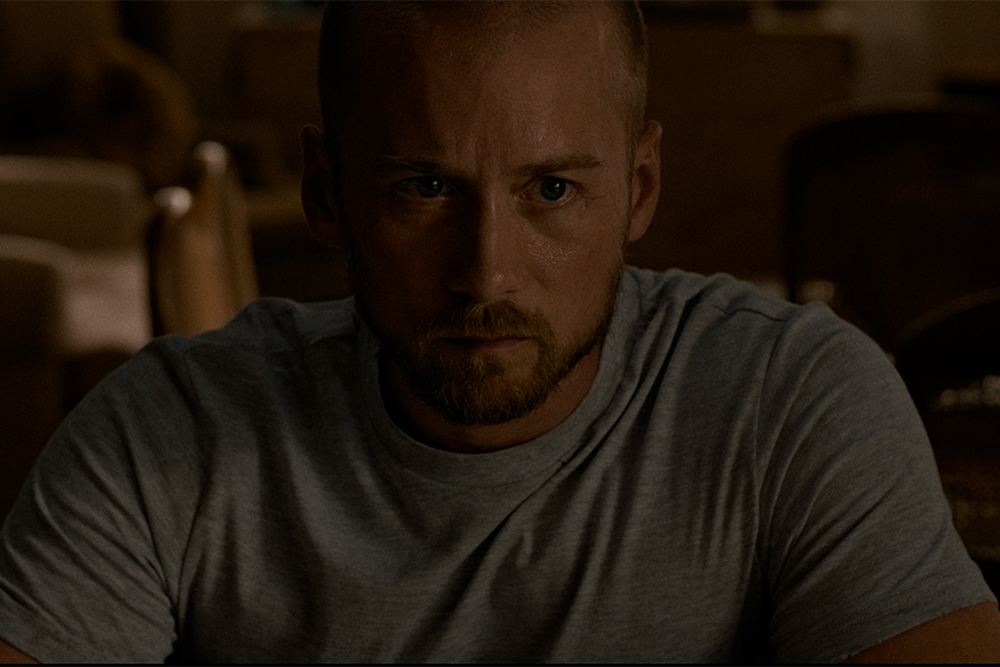
Katharine Isabelle: I think the slow ramp-up of tension, where for a good part of the movie nothing really extreme is happening, but you just keep getting filled up more and more with a sense of dread, and you don't know what direction it's coming from. You don't know if it's coming from Vana. You don't know if it's coming from Winthrop. You don't know if it's coming from Alan. You know something bad's about to happen, but you don't know what it is, and that sort of unsettling aspect of it kind of creates this fear. And that was already there. Then you put in the great work that the director and the photographer and everybody—the production designer, everybody—did to create the world around it, and I think it was just there. I felt it watching it on my phone, unfortunately. That was my first experience, Daniel. I apologize. But yeah, I think that came through, and I just love practical effects. They stand the test of time, and they're always my favorite if you can put aside the physical torment of getting there.
Lou Taylor Pucci: It's so worth it. The practical effects are so worth it.
Q: Was there a moment during filming when you realized this story was really about grief and family as much as horror?
Katharine Isabelle: Yeah, I think that, for me, it's sort of more about trauma and the grief of the life you could have lived if you hadn't had the horrors of human nature's worst inflicted upon you. And I think that's what Vana goes through, and that's what Winthrop goes through. That jumped off the page to me immediately, just those two characters and what happened to them and how they are, you know, behaving. The behavioral manifestation of that is different for everybody.
Lou Taylor Pucci: I think what was really nice, that Daniel gave to me, was that Carla and I got to do a rehearsal day where we just talked about creating some childhood moments that had happened between us when we were kids, or when she was... you know, 30 years ago for both of us. And having those memories in both of our backgrounds that we could kind of talk about whenever we needed to, if it was necessary, or just have them in the back of your brain—all this past. I think the prep was where I found how much this is about grief and family. Less during actually filming it, but more during the rehearsal period and the prep for this work because you had to come into it with a lot of feelings of abuse and neglect and the horror of this horrific background of watching your parents die in a crash and all this. All these things had to be already ingrained in there for us to be able to make the movie and for something to be behind Winthrop's eyes because he doesn't say a lot. You just have to see it in him that he's had a horrible life.
Daniel Stamm: I mean, what Lou just... I always love these interviews afterwards. I always wish I could make the movie again because I suddenly understand the movie because everything is now verbalized, right? The right questions are being asked. That just struck me again, which seems banal and obvious, but in the end everything is about relationships. What audiences really care about is, really, are Vana and Ellen going to be friends? You want them to be friends, but Vana might also be too far gone to be friends. Is Lou the bad guy or the good guy? You only care because it means something in relation to Ellen. Can they have a family relationship? And that, you know, it's a relationship. And when you're asking about, "Is this more than horror?" I think that is always the basis. I always forget it, and then it comes to me as a big epiphany. It's like, "Oh, it's about relationships." So I'll just remember that for the next movie: just start there. It's about relationships. But I agree with Lou. This one day that we did of them just connecting, half, I think, in character but half also not in character—that one day that you spend is an investment that will fuel the entire movie, will fuel every moment between them, and makes it real. As much as Lou and Katie not having that relationship, because in the movie their characters don't have a history. So every moment is observing the other person, getting to know them, judging them, trying to figure them out. And if you can preserve that and have it be real on screen for the audience to witness, I think that's huge. And I hope that we achieved that here.

Originally announced under the working title Winthrop, Lockbox has quietly evolved into one of the most intriguing supernatural horror films of 2026. Directed by Daniel Stamm (The Last Exorcism, Prey for the Devil), the film adapts Soren Narnia's acclaimed The Lockbox story from the celebrated Knifepoint Horror podcast, with a screenplay by Justin Yoffe. Starring Carla Gugino, Lou Taylor Pucci, and Katharine Isabelle, the story follows Ellen, who retreats to a remote community after her mother's death to care for her traumatized cousin Winthrop. When a mysterious neighbor warns her that Winthrop himself may be the danger, she finds herself confronting an ancient supernatural force while navigating themes of grief, family, and inherited trauma. Rather than relying on familiar possession-movie conventions, Lockbox promises a slow-burning psychological mystery where emotional storytelling is just as important as the horror itself.
Behind the camera, Stamm has described Lockbox as one of the rare horror scripts that would remain compelling even if every supernatural element were removed a philosophy that immediately convinced him to direct the project. Filmed in and around Vancouver during the summer of 2025, the production combines atmospheric cinematography by Alfonso Chin, a score by Matthew Rogers, practical creature work, and visual effects to create a distinctive sense of unease. With its roots in one of Knifepoint Horror's most beloved stories and a cast featuring two of genre cinema's most respected performers alongside Lou Taylor Pucci in one of his most demanding roles, Lockbox is shaping up to be one of the standout horror releases of the year when it opens in U.S. theaters on July 3, 2026.
Synopsis :
A woman risks her life to protect her cousin, Winthrop, who is being hunted by a powerful supernatural force.
Lockbox
Directed by Daniel Stamm
Written by Justin Yoffe
Based on The Lockbox by Soren Narnia
Produced by Kearie Peak
Starring Carla Gugino, Lou Taylor Pucci, Katharine Isabelle
Cinematography : Alfonso Chin
Edited by Bridget Durnford
Music by Matthew Rogers
Production companies : Peak Pictures, Capstone Studios, Dark Castle Entertainment
Distributed by Aura Entertainment (United States)
Release date : July 3, 2026 (United States)
Our sincere thanks to director Daniel Stamm and cast members Lou Taylor Pucci and Katharine Isabelle for their time and generosity during our interview on Tuesday, June 30.