

VivaTech 2026: Bertrand Piccard and Climate Impulse Bring the Dream of Zero-Emission Aviation to the Champs-Élysées
Sunday 14 June, 11:00 AM PT Paris, Champs-Élysées 2026-06-14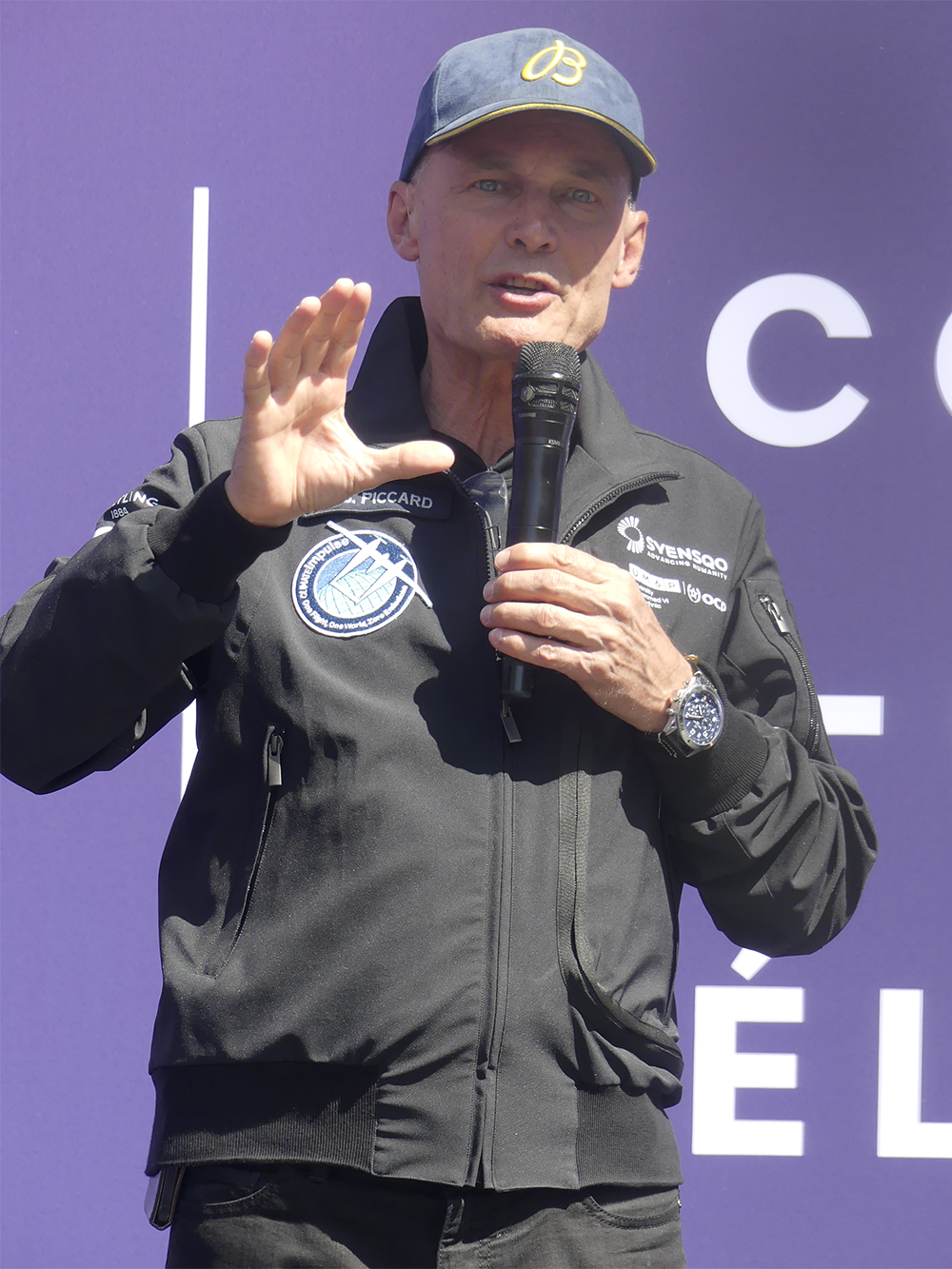
Among the many technological showcases that transformed the world’s most famous avenue into an open-air innovation laboratory during VivaTech 2026, few projects captured the imagination quite like Climate Impulse, the ambitious hydrogen-powered aircraft championed by Bertrand Piccard. Positioned within the “Impact & Planète” section of the event, Climate Impulse stood not merely as an aviation project but as a symbol of the same pioneering spirit that has defined Bertrand Piccard’s career for more than three decades. The project occupied a prominent place in the experiential route designed for VivaTech’s special Champs-Élysées edition, where visitors could explore innovations dedicated to sustainability, mobility, robotics, artificial intelligence, and the future of society. The event itself transformed a significant stretch of the avenue into a living exhibition, organized around thematic zones and immersive demonstrations designed to bring emerging technologies closer to the general public.
For anyone familiar with the history of modern exploration, Bertrand Piccard needs little introduction. Born in Lausanne, Switzerland, he comes from one of the most extraordinary families of explorers in modern history. His grandfather, Auguste Piccard, became the first human to reach the stratosphere in a balloon in 1931, while his father, Jacques Piccard, descended to the deepest known point on Earth, the Mariana Trench, in 1960. Rather than being intimidated by such a legacy, Bertrand Piccard expanded it into entirely new frontiers. In 1999, alongside Brian Jones, he completed the first nonstop balloon circumnavigation of the globe aboard Breitling Orbiter 3, a 19-day journey covering more than 45,000 kilometers. Years later, he would once again redefine what many considered impossible through Solar Impulse, the revolutionary aircraft powered exclusively by solar energy that completed a round-the-world flight in 2016 together with André Borschberg. Those achievements transformed him from an adventurer into one of the most recognizable ambassadors for technological innovation and environmental progress.
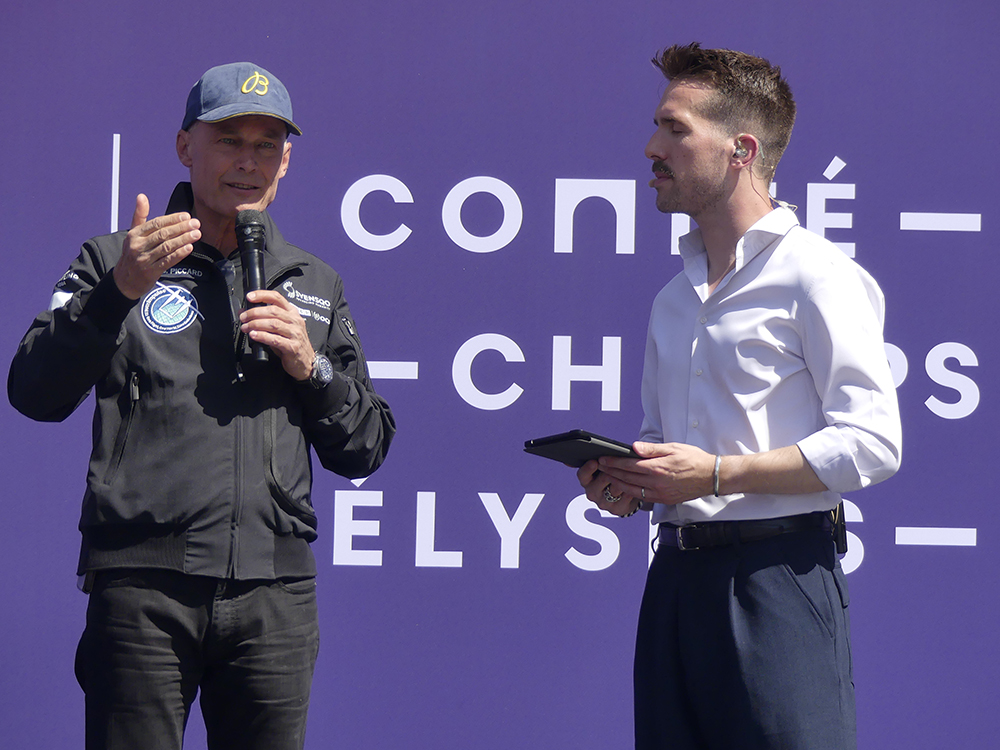
Climate Impulse represents the next chapter of that remarkable journey. Rather than relying on solar energy, the project seeks to demonstrate the viability of green hydrogen as a major solution for the future of aviation. The objective sounds almost impossible at first hearing: a nine-day nonstop flight around the world in an aircraft powered entirely by green hydrogen, producing no carbon emissions during flight. Yet that sense of apparent impossibility is precisely what attracts Bertrand Piccard. Throughout his career, he has repeatedly explained that the most exciting projects are those initially dismissed as unrealistic. Climate Impulse follows exactly that philosophy, attempting to prove that long-range aviation can be decarbonized through innovation rather than sacrifice.
The aircraft currently under construction in Les Sables-d’Olonne already represents a remarkable engineering achievement. Approximately sixty percent of the airplane has been completed, including major sections of the fuselage, cockpit, and wings. Designed with a wingspan of 34 meters and built primarily from advanced composite materials, the aircraft combines lightweight construction with extraordinary energy efficiency. Unlike conventional aircraft, every component has been optimized to reduce drag and energy consumption. According to project engineers, the structural challenges are significant but manageable. The real technological breakthrough lies elsewhere: the storage and utilization of liquid hydrogen over an uninterrupted nine-day mission.
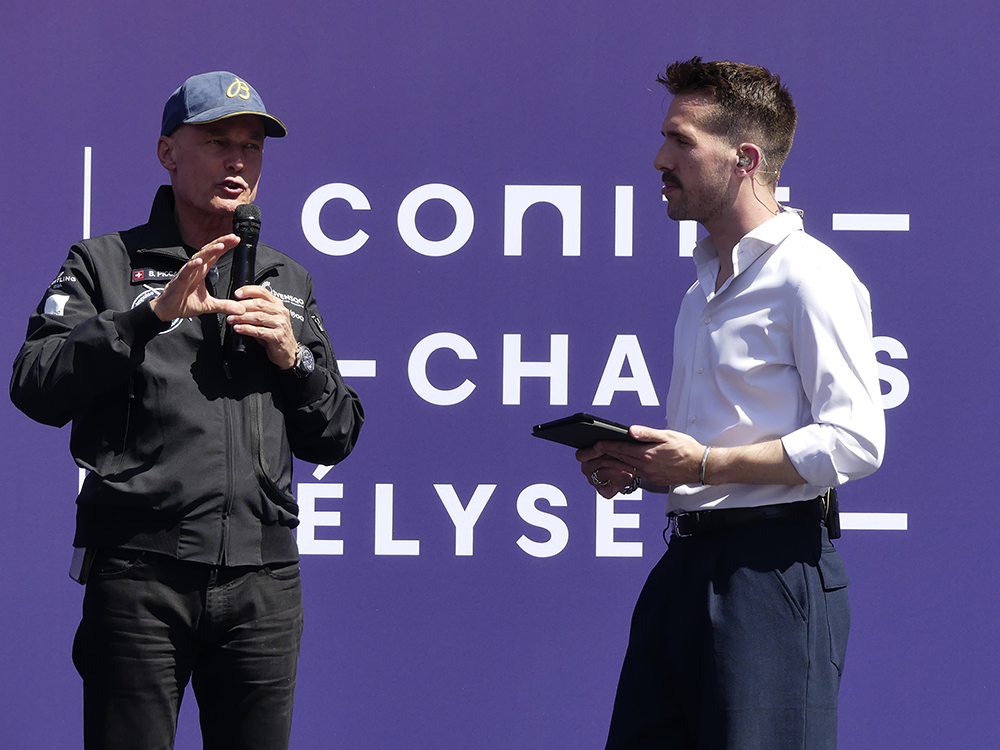
One of the greatest technical hurdles involves maintaining liquid hydrogen at an astonishing temperature of minus 253 degrees Celsius throughout the entire flight. The aircraft’s two large cryogenic tanks, positioned within lateral nacelles near the center of gravity, must preserve these conditions continuously while supplying fuel cells that convert hydrogen into electricity. Those fuel cells then power electric motors and propellers, creating a completely emissions-free propulsion system. While hydrogen-powered demonstrations have already been achieved on a limited scale within the aerospace sector, Climate Impulse aims to push those technologies to an entirely new level of endurance. According to the project team, keeping hydrogen cold for nine consecutive days remains one of the most complex engineering challenges ever attempted in sustainable aviation.
Supporting this endeavor is an extensive ecosystem of industrial, academic, and technological partners. Among the most important is Syensqo, the global specialty chemicals company that serves as the project’s primary technology partner. The relationship between Bertrand Piccard and the company stretches back to the Solar Impulse era, when advanced materials developed through the former Solvay group played a critical role in making solar-powered flight possible. Today, Syensqo contributes not only materials expertise but also access to a network of innovative startups capable of accelerating development cycles and introducing new manufacturing techniques.
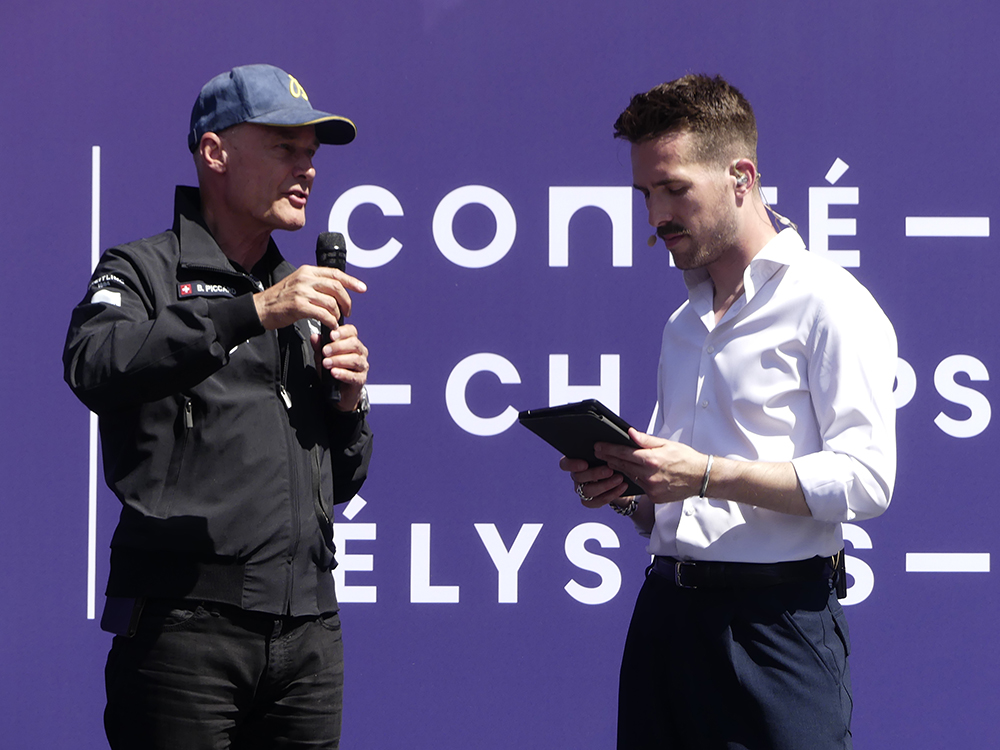
One particularly fascinating contributor is the British company Plyable, whose artificial intelligence-powered digital manufacturing platform helps optimize component design and tooling processes. Through AI-driven simulations and rapid prototyping, Plyable enables engineers to refine critical aerodynamic elements such as winglets and the aircraft’s nose structure while dramatically reducing production timelines. According to project partners, tooling and manufacturing processes that once required four or five months can now be completed in approximately eight weeks. Such gains are not merely conveniences; they illustrate how digital technologies and artificial intelligence are increasingly becoming essential tools in the development of sustainable transportation.
What makes Climate Impulse especially relevant within the context of VivaTech is that it perfectly embodies the event’s central philosophy. The 2026 edition on the Champs-Élysées was organized around themes including mobility, sustainability, health, robotics, artificial intelligence, employment, culture, and future technologies. Climate Impulse stood at the intersection of several of these categories, combining advanced materials, clean energy, AI-assisted design, industrial innovation, and environmental responsibility into a single project. Its presence alongside other showcased innovations such as urban agriculture solutions, autonomous vehicles, space technologies, robotics, and climate adaptation initiatives highlighted the increasingly interconnected nature of technological progress.
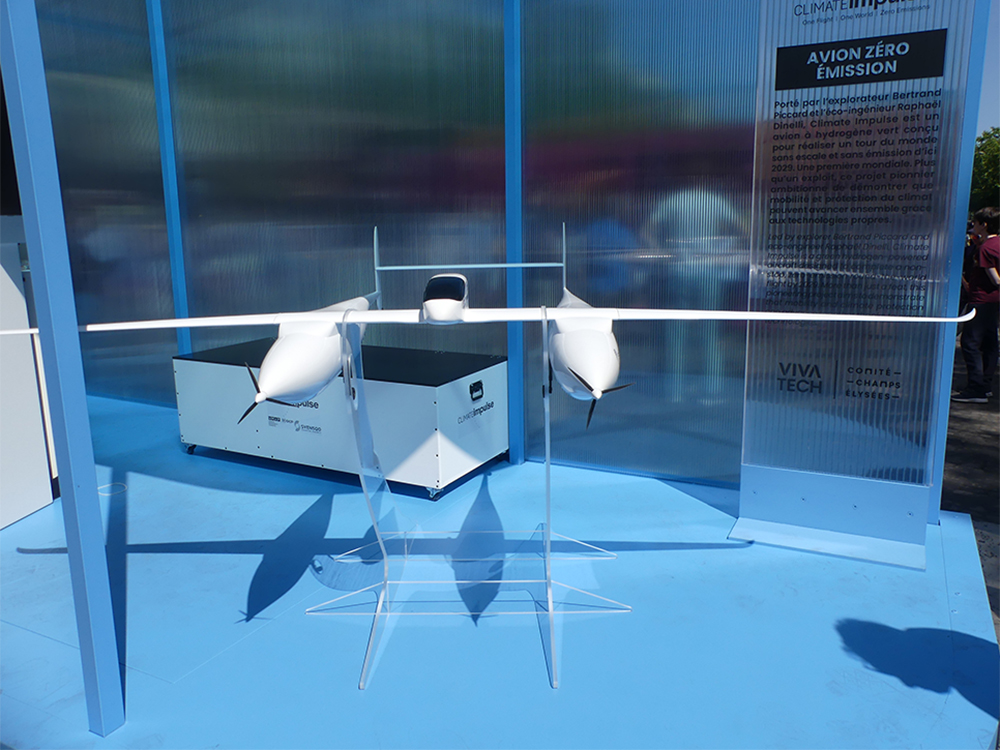
Equally important is the symbolic message behind the project. At a time when aviation frequently finds itself at the center of environmental debates, Bertrand Piccard argues that innovation should replace pessimism. Rather than framing sustainability as a limitation, Climate Impulse presents it as an opportunity to reinvent an entire industry. This perspective has become a hallmark of the explorer’s work through the Solar Impulse Foundation, which has identified and certified more than a thousand profitable environmental solutions capable of addressing global sustainability challenges. His philosophy remains consistent: ecological progress and economic development are not opposing forces but complementary objectives.
The timeline remains ambitious. Initial flight tests are expected to take place in Châteauroux before the aircraft eventually embarks on its historic mission. If everything proceeds according to plan, Bertrand Piccard and fellow explorer Raphaël Dinelli could attempt their nine-day nonstop circumnavigation around March 2029. The challenge recalls the daring spirit of the great aviation pioneers while simultaneously addressing the urgent environmental questions of the twenty-first century. Standing amid the futuristic displays of VivaTech 2026, Climate Impulse served as a powerful reminder that some of humanity’s most important innovations emerge when visionaries refuse to accept the limits of what is considered possible. In many ways, the aircraft under construction today in western France is not simply a machine. It is the latest expression of a family tradition, a technological manifesto, and perhaps a glimpse into the future of global aviation.
You can view our photos on our Flickr page
Photos and 4K video: Boris Colletier / Mulderville