

VivaTech 2026: Dancing robots take over the most beautiful avenue in the world
Sunday 14 June, 11:00 AM PT Paris, Champs-Élysées 2026-06-14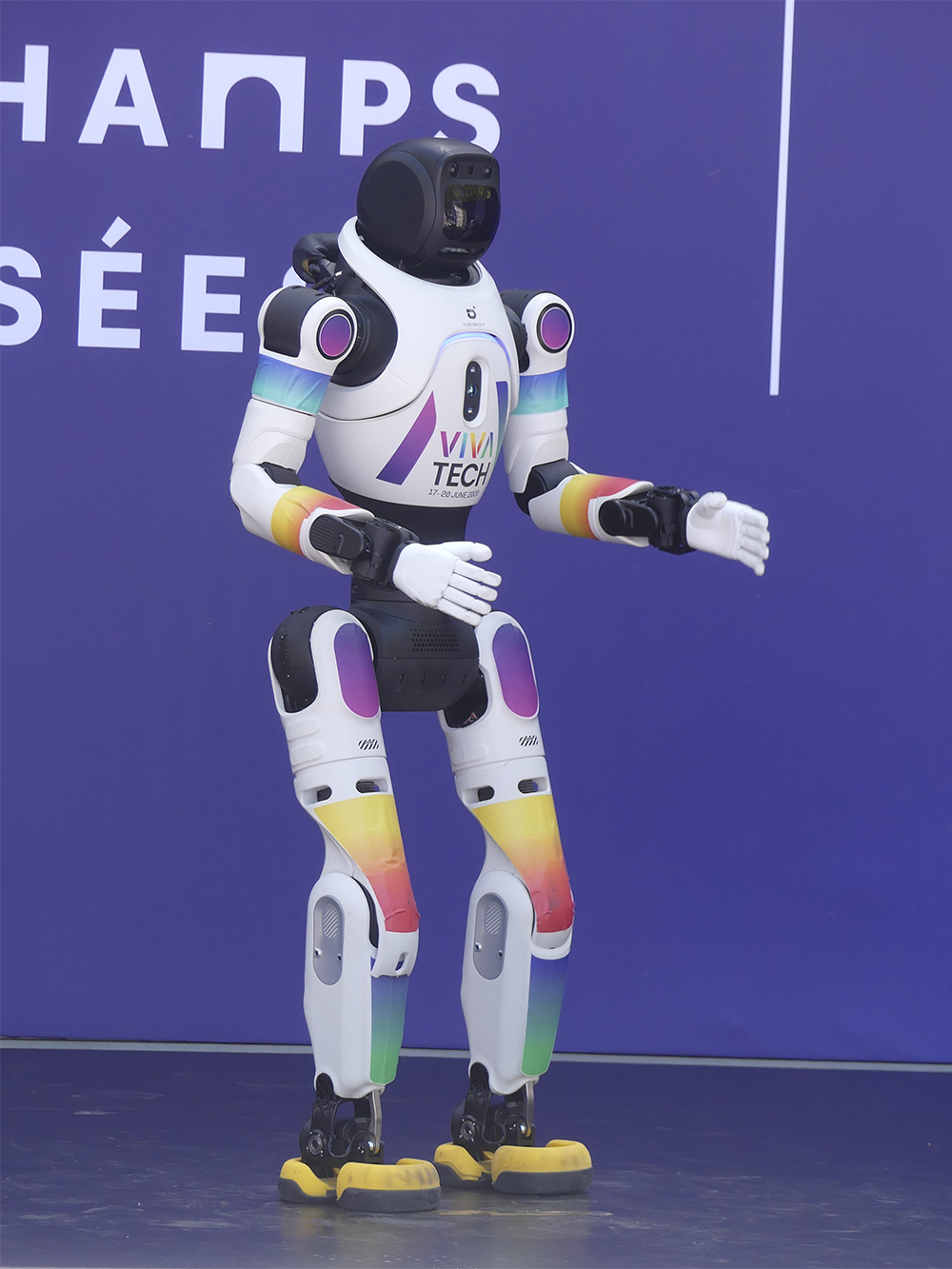
To celebrate its tenth anniversary, VivaTech decided to step outside the walls of the Porte de Versailles to offer the general public a spectacular demonstration of what our near future might look like. On Sunday, June 14, 2026, the Champs-Élysées was transformed into a veritable open-air laboratory thanks to a partnership between VivaTech and the Champs-Élysées Committee. More than thirty-five free technology demonstrations were spread out along the avenue, combining artificial intelligence, mobility, drones, sustainable technologies, and above all robotics, which became one of the event’s most photographed attractions. The organizers’ stated goal was simple: to make innovation accessible to everyone and allow visitors to get hands-on experience with technologies that, until recently, still seemed like science fiction.
At the heart of this exceptional edition, however, it was the humanoid robots that created the most striking surprise. On a stage decked out in the colors of Startup Germany—the guest of honor at VivaTech 2026—several humanoid robots treated visitors to a demonstration combining synchronized choreography, autonomous movement, and visual interactions. The models on stage immediately brought to mind recent advances in humanoid robotics popularized by major industry players such as Unitree Robotics. In an almost festive atmosphere, the machines performed dance moves, raised their arms, struck poses inspired by popular culture, and responded to the audience’s cheers. Behind the spectacle, however, lay a serious technological demonstration: maintaining dynamic balance, coordinating the movements of dozens of joints, and interpreting the environment in real time remain some of the most complex challenges in modern robotics.
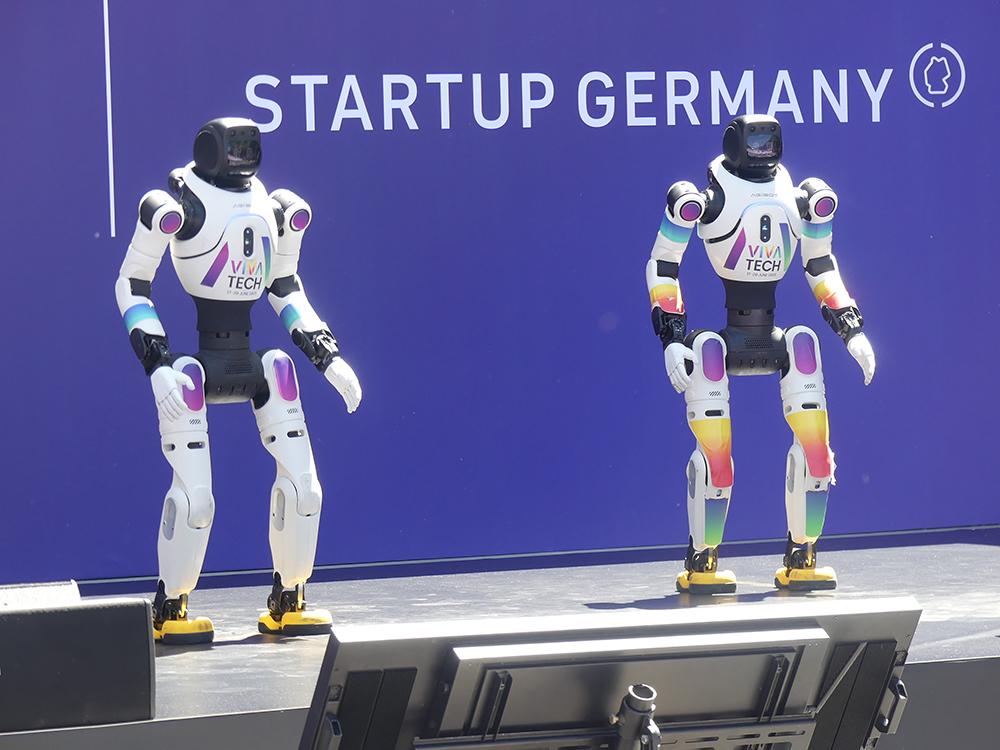
One of the most revealing anecdotes of the day concerned precisely the visitors’ reaction. Whereas previous generations often associated robots with industrial arms locked behind safety barriers, children and adults alike now found themselves applauding humanoids capable of exhibiting almost familiar behaviors. This evolution perfectly illustrates the paradigm shift observed in the industry. Robotics is no longer viewed solely as a production tool but also as a vehicle for social interaction, mediation, and communication. The comments heard throughout the day also highlighted just how much dance has become a preferred means of demonstrating robots’ motor capabilities today. On social media as well as in specialized communities, demonstrations of dancing robots have become one of the most visible symbols of progress made in dynamic balance and autonomous locomotion.
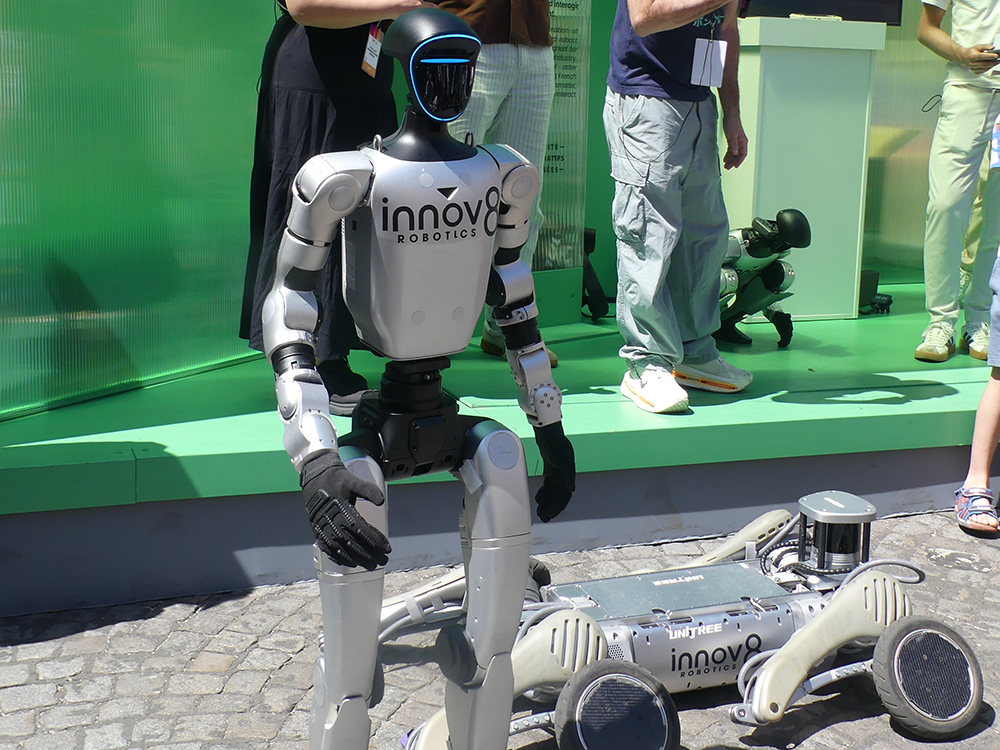
Just a few meters from the main stage, the area dedicated to robotics offered a glimpse beyond mere spectacle. Visitors could explore several generations of robots designed for a wide range of applications. Among them were humanoid robots presented by Innov8 Robotics in partnership with Unitree Robotics. Explanatory panels noted that these platforms are intended for education as well as research and certain industrial applications. Their presence on the Champs-Élysées had a symbolic quality: a few decades ago, Parisian world’s fairs showcased the major mechanical innovations of their time; today, it is machines capable of moving on their own, interacting with their environment, and performing complex movements that draw crowds.
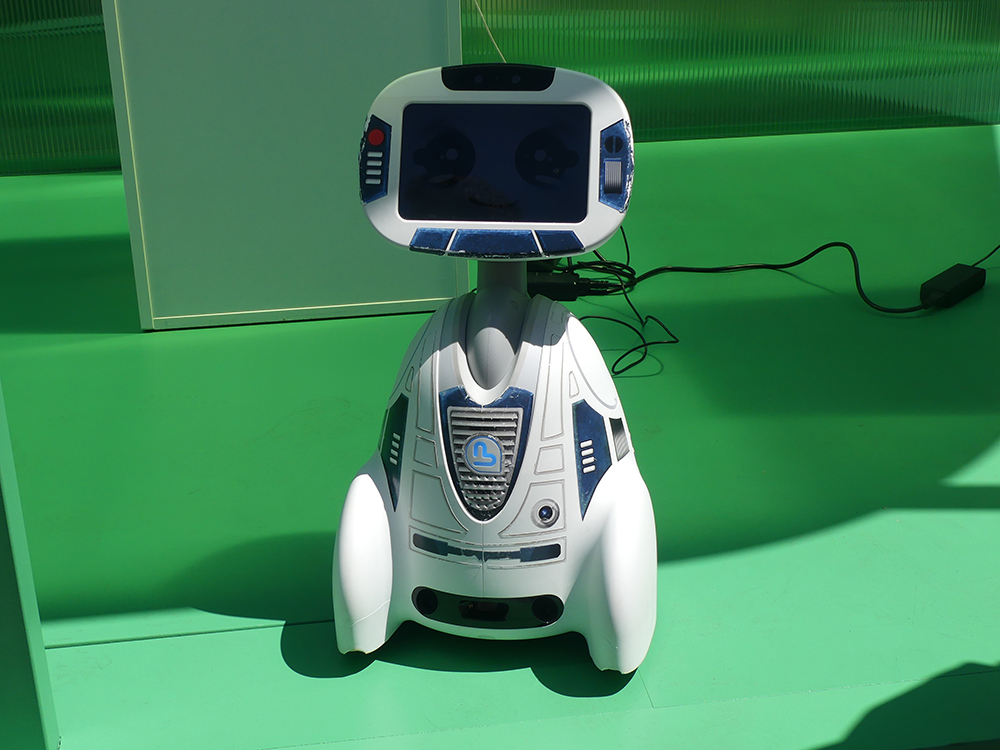
Another particularly notable attraction: the Buddy companion robot developed by Blue Frog Robotics. Unlike the dancing humanoids, which sought above all to demonstrate their physical prowess, Buddy emphasized human interaction. Capable of greeting visitors, answering questions, or even accompanying certain groups in specific environments, this robot embodied a different vision of robotics, one closer to everyday assistance. The on-site demonstrations highlighted potential applications in education, healthcare, hospitality, and support for vulnerable individuals. This coexistence of spectacular robots and utilitarian robots perfectly illustrated the sector’s current diversity.
The Startup Germany area also added an interesting geopolitical dimension to the event. Germany, named Country of the Year at VivaTech 2026, had mobilized a record-breaking delegation comprising hundreds of startups, industrial partners, and institutional stakeholders. This massive presence underscored the growing importance placed on European cooperation in the fields of artificial intelligence, robotics, digital health, energy, and resilient infrastructure. The decision to host the most spectacular robotic demonstrations in this space was therefore no coincidence: the aim was to show that European innovation intends to play a major role in the next global technological revolution.
What was also striking during this technological stroll was the contrast between the historic setting of the Champs-Élysées and these machines from the future. Under the Parisian sun, between Haussmann-style facades and luxury storefronts, humanoid robots moved about in front of thousands of curious onlookers armed with smartphones. This encounter between heritage and innovation was likely the event’s most powerful image. It echoed the words of Maurice Lévy, co-founder of VivaTech, who had sought from the outset to democratize access to technological innovations and bring them out of the exclusive circle of experts. It also echoed the vision championed by Marc-Antoine Jamet, president of the Champs-Élysées Committee, for whom the avenue needed to reconnect with its historic tradition as a showcase for the great innovations of its time.
This special edition of VivaTech Champs-Élysées demonstrated that robotics has entered a new phase of its development. Visitors were no longer simply spectators of isolated technological experiences; they were discovering machines capable of communicating, entertaining, assisting, and potentially working alongside humans. The dancing robots obviously drew attention thanks to their spectacular nature, but above all, they represented the visible part of a much deeper revolution. Behind every movement performed on stage lie years of research in artificial intelligence, mechatronics, and machine learning. And if this day on the Champs-Élysées had a message to convey, it is undoubtedly this: the future of robotics is no longer a distant concept confined to laboratories. It now mingles with the public, dances to applause, and has become a part of our daily lives.
You can view our photos on our Flickr page
Photos and 4K video: Boris Colletier / Mulderville